Muscle Paralysis
Sudden Facial Droop
One side of your smile may move less, and lip control can make drinking or speaking difficult. New facial weakness needs prompt medical assessment.

Sudden facial weakness needs prompt medical assessment. At DakshinRehab in Moosapet, Hyderabad, rehabilitation focuses on gentle facial retraining, mirror feedback and surface EMG biofeedback where appropriate. Your plan follows your movement, eye closure and recovery stage.
Personalised, technology-driven rehabilitation in Moosapet, Hyderabad.
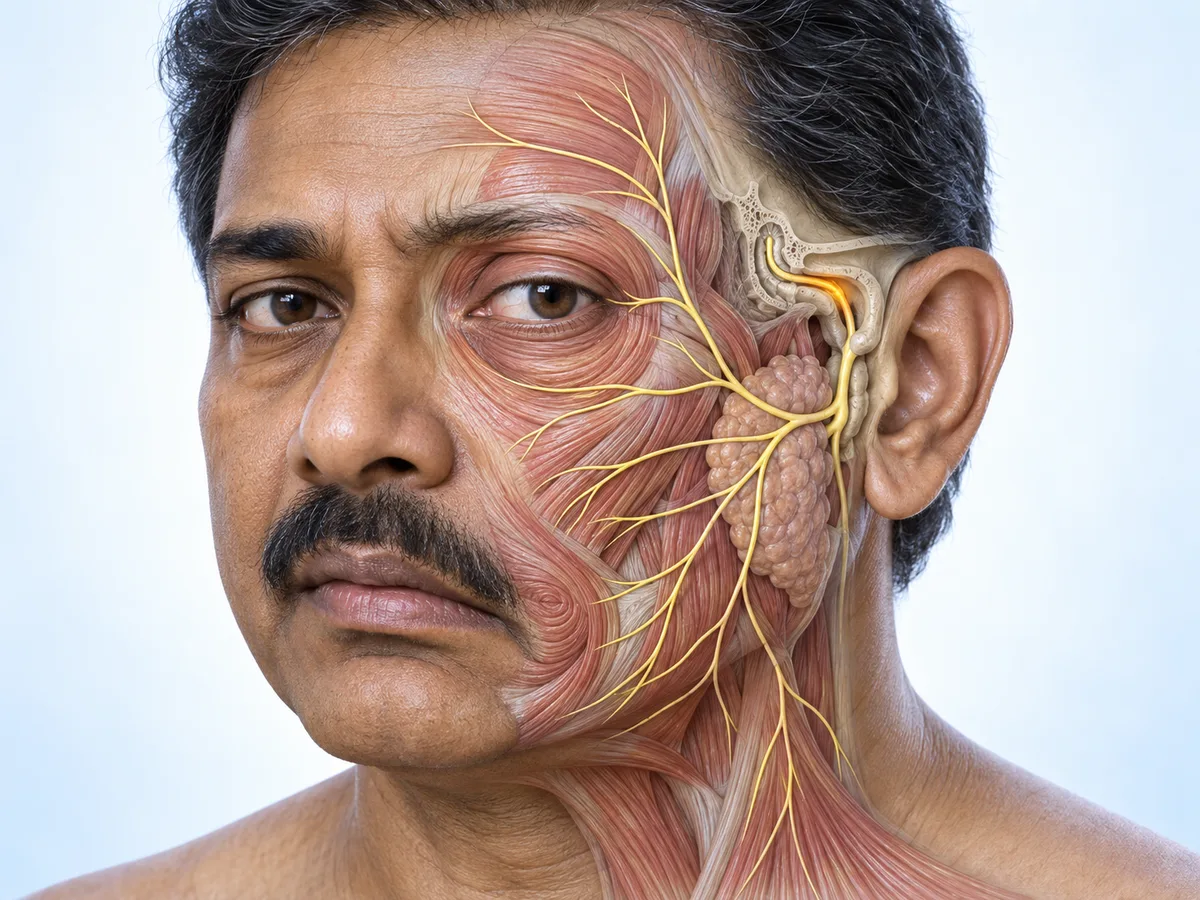
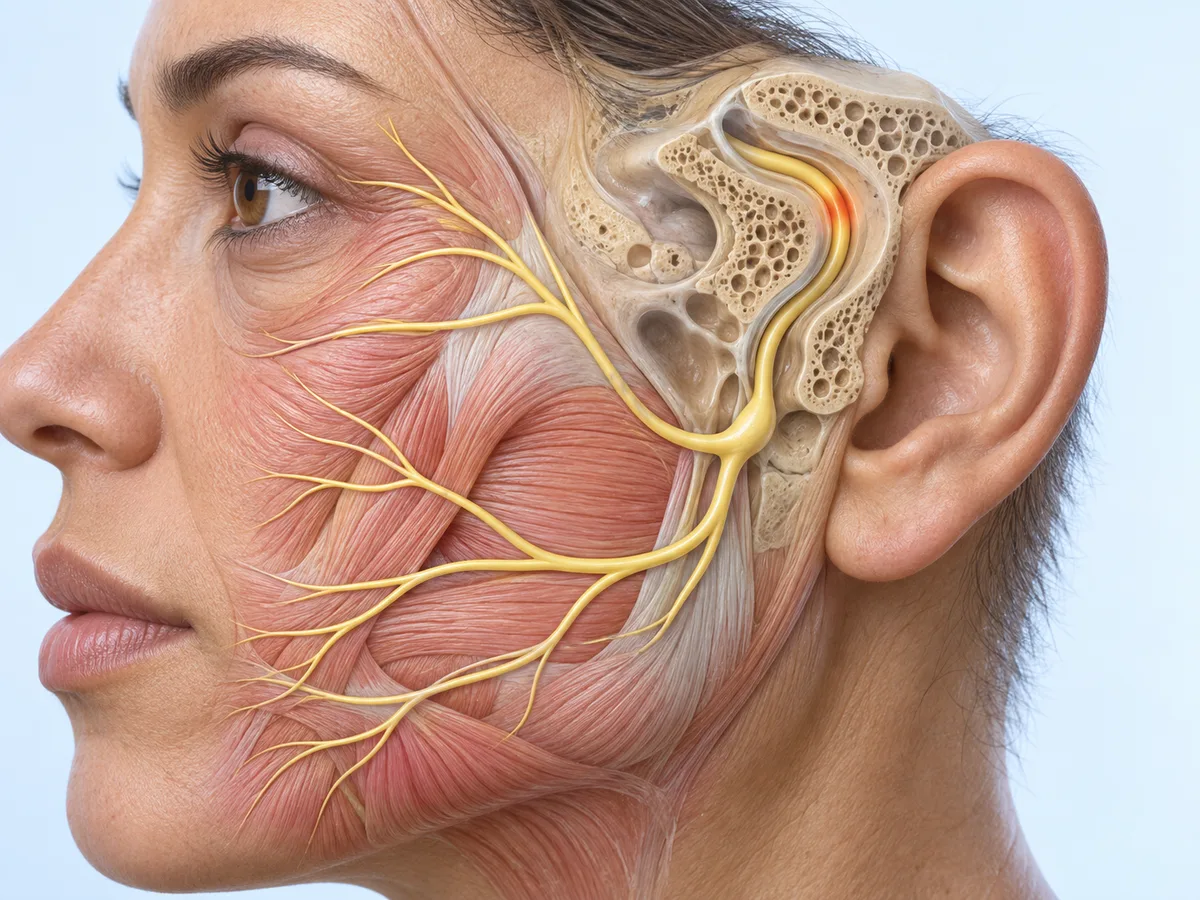
One side of your smile may move less, and lip control can make drinking or speaking difficult.
A weak blink or incomplete eyelid closure can leave the eye surface exposed.
One side of your smile may move less, and lip control can make drinking or speaking difficult. New facial weakness needs prompt medical assessment.
A weak blink or incomplete eyelid closure can leave the eye surface exposed. Eye protection and medical advice take priority over exercise.
During recovery, a smile may also narrow the eye or tighten the neck. Selective movement practice and relaxation help manage these unwanted linked movements.
Assess your current movement, choose focused practice and review what changes.
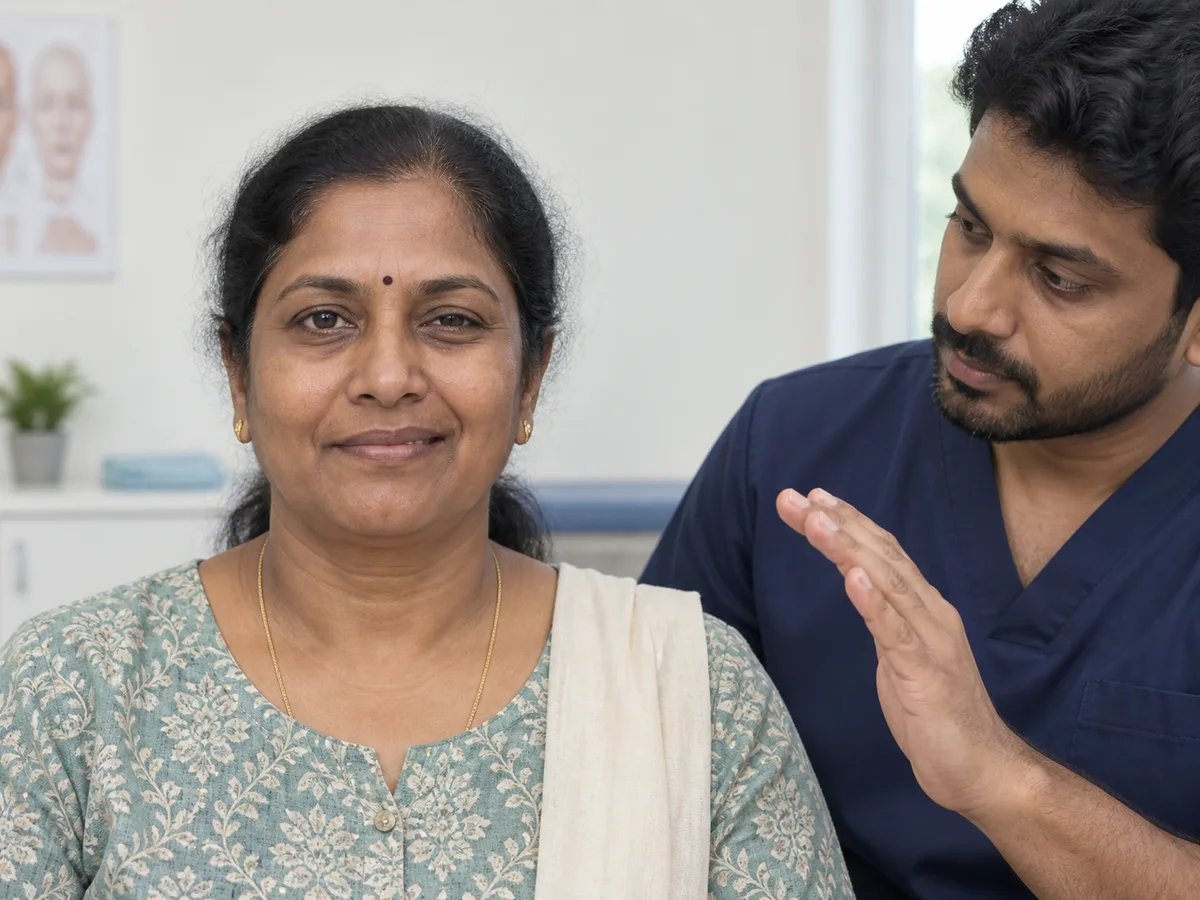
We review onset, medical care, eye closure and facial movement. House–Brackmann grading provides an overall baseline; daily difficulties and unwanted movements guide your goals. New or atypical weakness needs medical assessment.
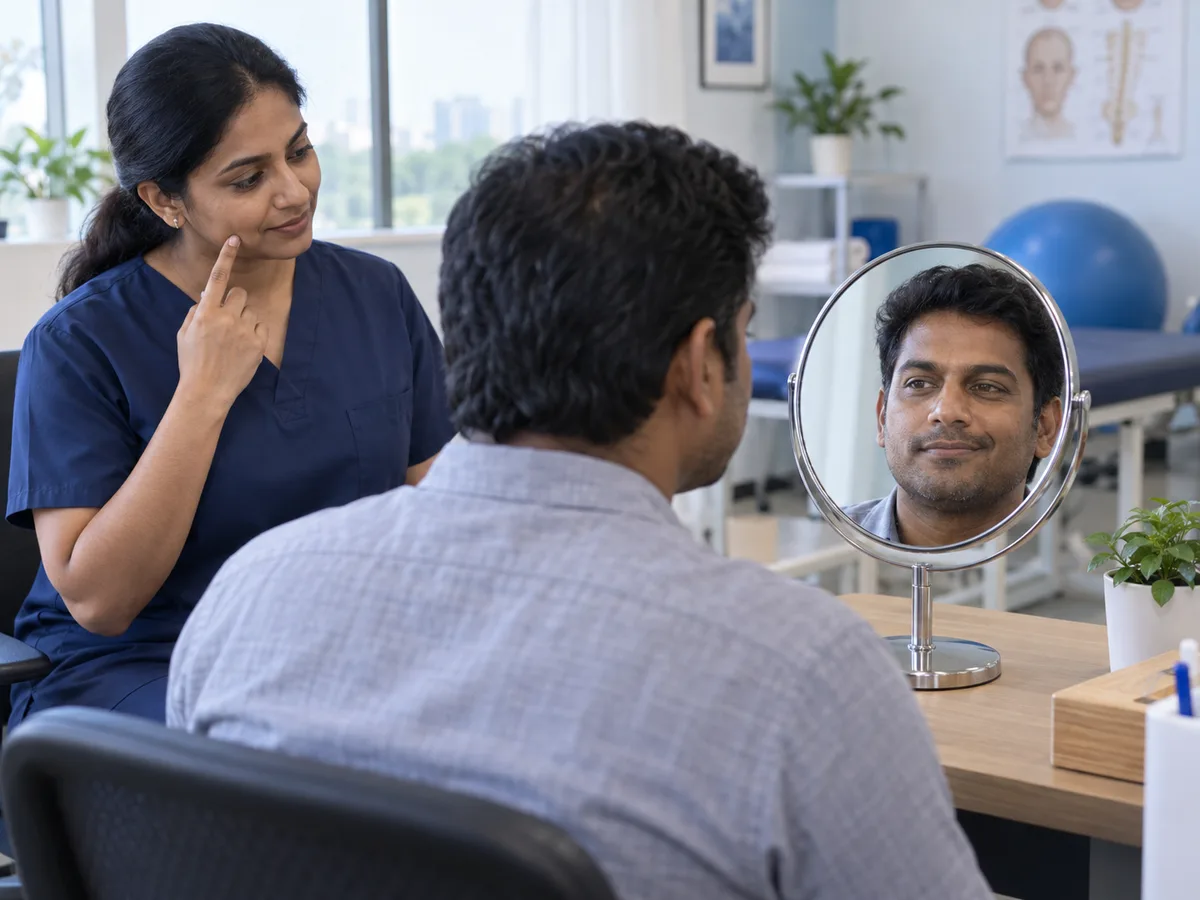
Book Facial AssessmentWhen voluntary movement is present, practise small, comfortable expressions with mirror feedback. We adjust effort and repetition to your response, focusing on control rather than forceful strengthening.
See Your Care JourneySurface EMG feedback may help you recognise activity and relaxation. Persistent weakness or synkinesis calls for tailored retraining, progress review and specialist referral when needed.
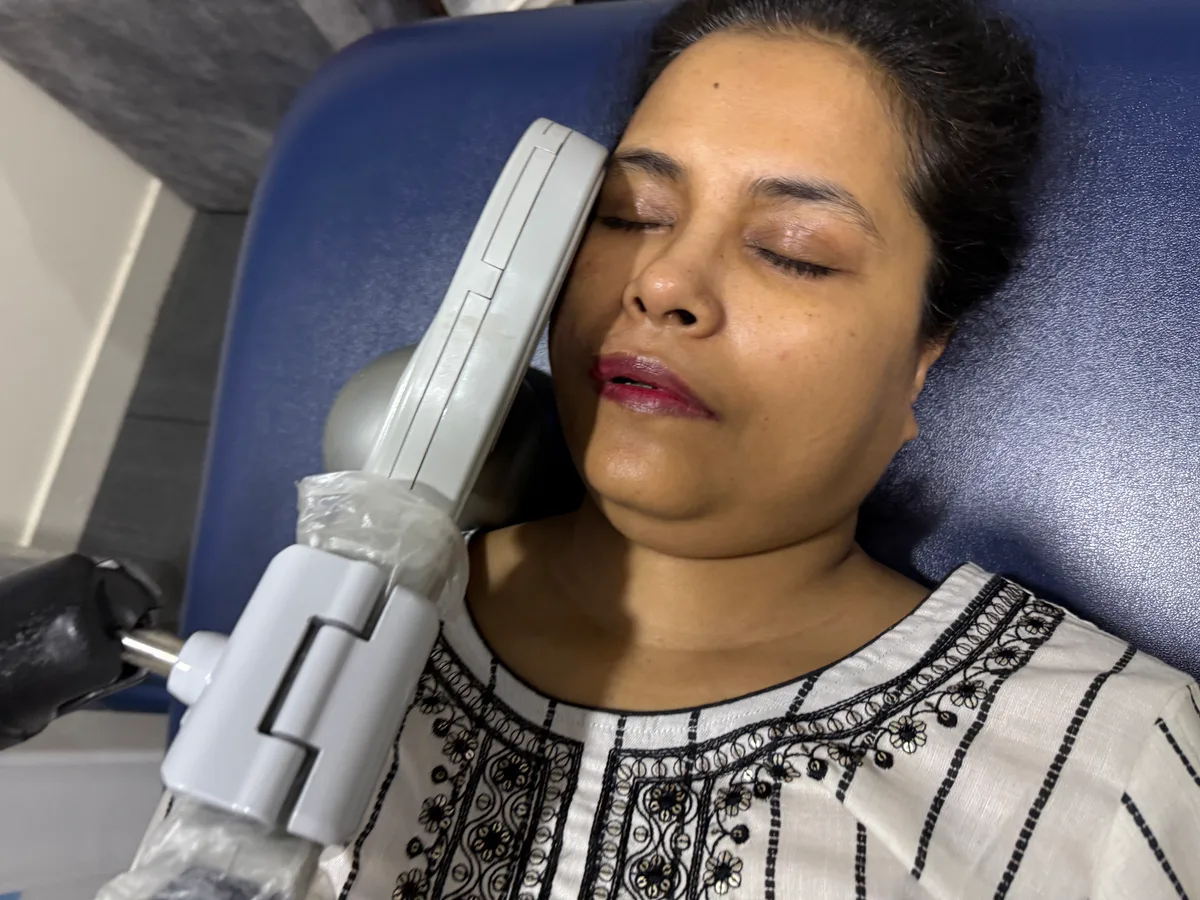
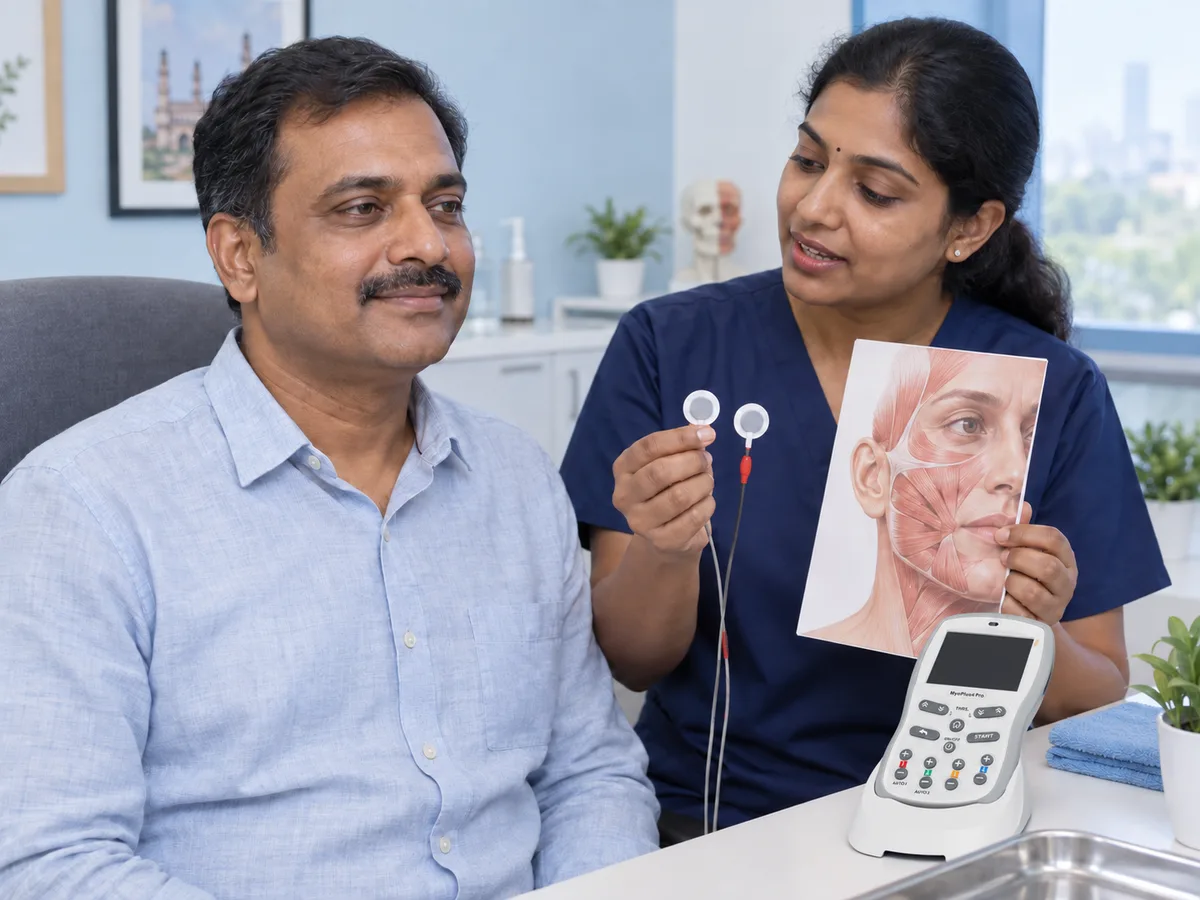
Discuss your care: +91 80192 99888At DakshinRehab, our facial rehabilitation equipment includes Salus Talent Pro, shown here during a clinic session, and NeuroTrac MyoPlus 4 Pro for surface EMG feedback. Your assessment guides equipment selection alongside movement retraining; the devices serve different roles.
For returning movement or persistent weakness, the therapist coaches a small smile, gentle eye closure or lip movement. You watch the movement and reduce extra effort. Practice is individualised, with progress reviewed through your movement control and daily activities.
For suitable returning movement or synkinesis, skin sensors and the MyoPlus display can help you see muscle activity and relaxation. The therapist checks signal quality and unwanted activation. EMG recording itself does not stimulate the muscles.
Electrical stimulation is not automatically required for Bell’s palsy. Older guidelines advised against routine use because the supporting evidence was limited, while newer studies suggest that carefully selected stimulation may benefit some patients. We consider it only after assessing the diagnosis, recovery stage, voluntary movement, unwanted linked movements and treatment goals. If used, stimulation should aim for a small, selective and comfortable response—not a forceful or mass facial contraction. Surface EMG biofeedback records muscle activity and is different from electrical stimulation.
Photobiomodulation has promising studies, but findings do not establish that a Class IV laser removes facial-nerve swelling. Facial taping may offer temporary support or feedback; evidence is limited. Neither replaces medical care or movement retraining.
Clinical comparison
Facial neuromuscular retraining—including small selective movements, relaxation and mirror feedback—has supportive but varied evidence, particularly for persistent weakness and movement-control problems. Surface EMG biofeedback may help patients recognise muscle activity and relaxation. Evidence for electrical stimulation is evolving: older guidance advised against routine use, while newer research reports possible benefit from selected add-on protocols. It is neither an automatic requirement nor a proven method of preventing muscle wasting or synkinesis.
For a tight or overactive face, gentle soft-tissue work and relaxation may improve comfort alongside selective practice. Persistent unwanted movements may need a facial nerve specialist; botulinum toxin or surgery are referral options, not assumed clinic services.
Access Salus Talent Pro and MyoPlus EMG feedback within an individualised rehabilitation service, with home practice and follow-up in Moosapet, Hyderabad. Equipment selection depends on your assessment and goals.
Your programme begins at the stage that fits your movement and symptoms, including persistent weakness or synkinesis. The team selects the exercises and suitable technologies for your individual needs.
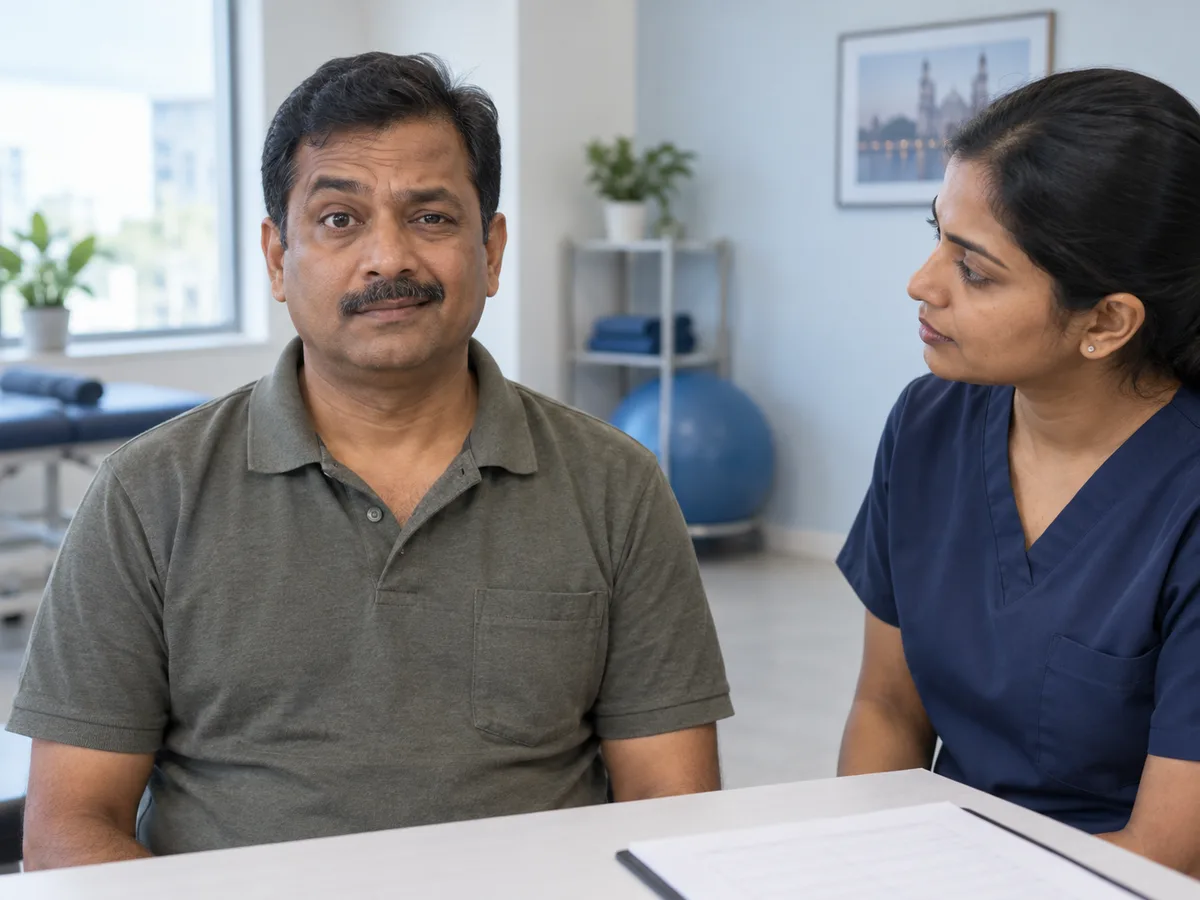
AI-generated illustration
A documented starting point and a plan matched to your current function.

AI-generated illustration
Understand how to protect your eye and manage everyday tasks.
AI-generated illustration
Learn to recognise comfortable, selective movement.
AI-generated illustration
Use feedback to understand movement and relaxation, when it adds value.
AI-generated illustration
A plan for managing unwanted movement and improving daily comfort.

AI-generated illustration
Know what to practise, what has changed and when to seek further review.
New facial weakness needs prompt medical assessment even without other symptoms. If it occurs with any sudden neurological warning sign below, seek emergency hospital care immediately. Do not wait for a physiotherapy appointment or a WhatsApp reply. Forehead movement alone cannot rule out stroke.
Emergency: facial weakness with new arm or leg weakness, numbness, speech difficulty or confusion.
Emergency: sudden severe headache, loss of balance, double vision or other abrupt neurological change.
Urgent eye assessment: eye pain, redness, light sensitivity or blurred vision, especially when the eyelid does not close.
Prompt medical review: new facial weakness, ideally within 72 hours, so a clinician can assess whether early medication is appropriate.
Prompt reassessment: progressive or recurrent weakness, severe ear pain, blisters around the ear, hearing change or involvement of both sides.
Specialist review: incomplete facial recovery at three months; seek review sooner for any new or worsening symptom.
Find DakshinRehab on Google Maps to read reviews shared by patients.
 Related condition
Chronic pain conditions of the head that heavily involve the trigeminal nerve, causing severe facial pain and sensitivity.
Our expert physiotherapists and rehabilitation specialists at DakshinRehab bring decades of combined experience to your recovery.

BPT, MPT, IAP Registered
Director, Human Movement Specialist, Physiotherapist
CPO
Consultant Rehabilitation Specialist, CPO | Founder, DakshinRehab
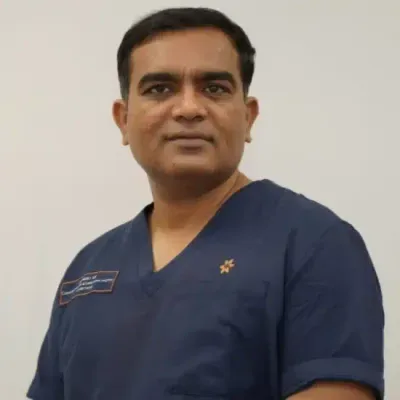
MS (General Surgery), DNB (Vascular Surgery)
Sr. Consultant Vascular & Endovascular Surgeon | Diabetic Foot & Wound Care
Learn more about this condition and treatment options from our expert team.
 Neuro Rehabilitation
April 24, 2026
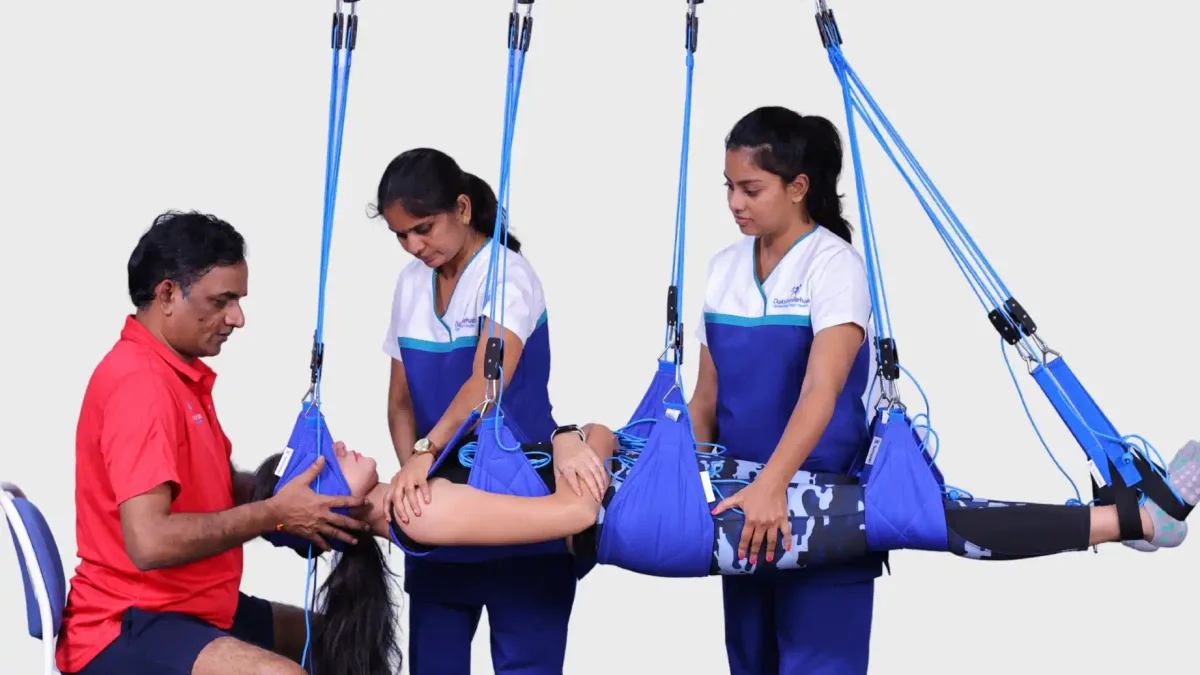
Why the first 3–6 months after a stroke matter most — and how Redcord Neurac suspension therapy at DakshinRehab Moosapet uses graded unloading, vibration and closed-chain instability to drive the neuroplasticity that accelerates arm, leg and gait recovery.
Read More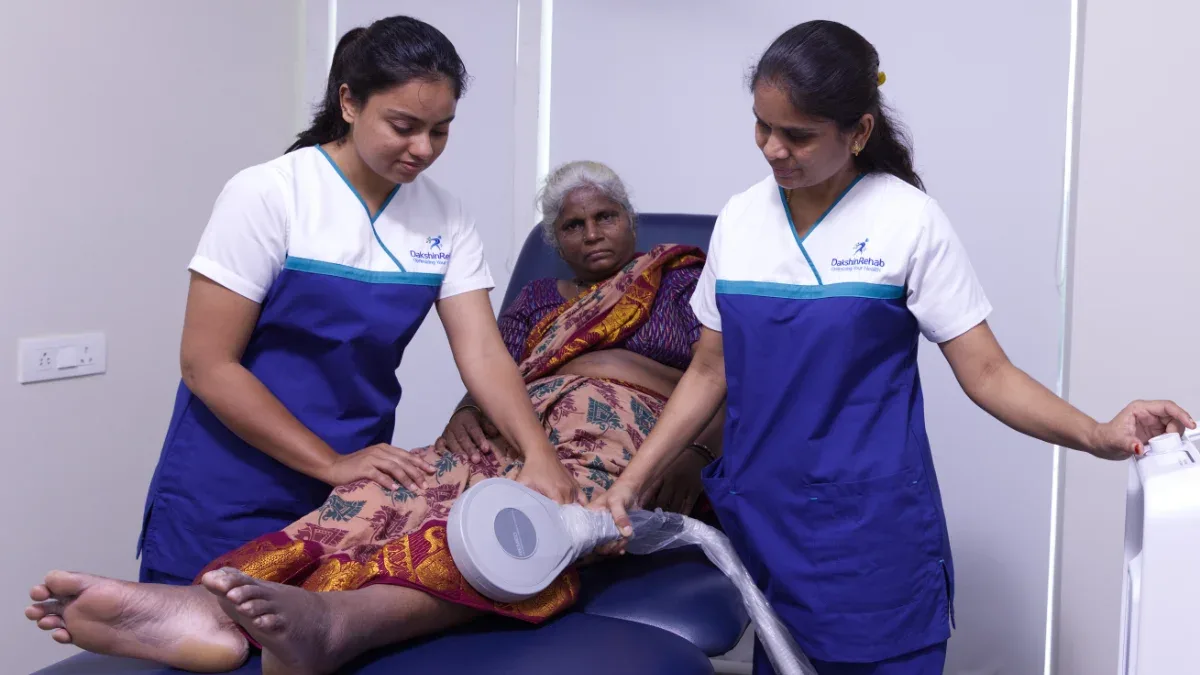 Neuro Rehabilitation
March 15, 2024
Why the first 6 months after a stroke matter most — and how DakshinRehab Moosapet phases neuro-physiotherapy, robotic gait, Redcord Neurac and EMG biofeedback across the acute, sub-acute and chronic stages to drive durable recovery of arm, leg, gait and independence.
Read More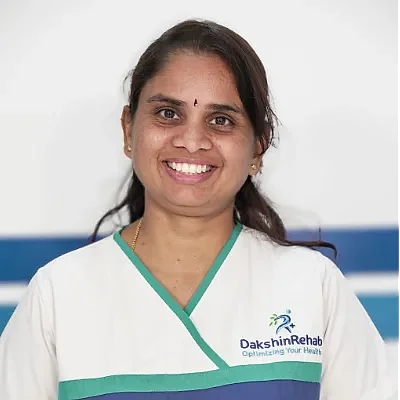
“Every treatment page should help patients understand what is safe, what is urgent, and what care path fits their condition. Clinical review keeps that advice practical and trustworthy.”
- Dr. SwapnagandhiHuman Movement Specialist, Physiotherapist
Credentials: BPT, MPT, IAP Registered
The clinical content on this page is written and independently reviewed by qualified physiotherapists at DakshinRehab, Moosapet, Hyderabad.
Practical guidance on recovery, feedback and when to seek medical care.
Still have questions?
PERSONALISED FACIAL REHABILITATION
Discuss your facial movement, eye comfort and daily goals with our Moosapet team. New facial weakness needs medical assessment first. Treatment options and charges are explained before you decide.
Book Facial Assessment