Stroke rehabilitation is the single most important determinant of how much function a survivor regains — more important than which medication they take or which scan they had. At DakshinRehab in Moosapet, Hyderabad, we run a neuro-rehabilitation programme that delivers phased, technology-assisted recovery from the acute hospital-discharge stage right through to chronic-stage gait restoration. Our stroke and spinal cord rehabilitation service combines Redcord Neurac suspension therapy, robotic gait training, EMG biofeedback and 3D movement analysis with intensive task-specific practice — the four ingredients the published literature consistently identifies as drivers of post-stroke neuroplasticity. The brain has a remarkable ability to reorganise and heal, and recovery is possible even years after the event.
What actually happens to the brain during a stroke — and why physiotherapy works
A stroke occurs when blood flow to part of the brain is interrupted, either by a clot (ischaemic stroke, ~85% of cases) or a bleed (haemorrhagic stroke, ~15%). Brain cells in the affected area die within minutes, producing the patterns we see at the bedside — paralysis on one side of the body (hemiplegia), muscle weakness (hemiparesis), speech difficulty (aphasia), swallowing difficulty (dysphagia), cognitive change, balance loss and loss of functional independence. Crucially, around the dead area sits a band of injured-but-alive neurons — the ischaemic penumbra and surrounding cortex — which can be retrained through intensive, repetitive, task-specific practice to take over the lost function. This rewiring is what we call neuroplasticity, and it is the entire scientific basis for why physiotherapy works after stroke.
Why the first 3-6 months post-stroke matter more than any other window
Neuroplasticity is at its peak in the first 3-6 months after a stroke — the brain releases growth factors, forms new dendritic connections and remaps motor cortex aggressively during this period. This is the recovery window where the same intensity of therapy produces 3-5x more functional gain than therapy delivered a year later. Patients who receive structured, high-intensity neuro-rehabilitation during this window typically recover significantly more arm function, walking independence and activities-of-daily-living capacity than patients who wait. That said, recovery does not stop at 6 months. The published literature is clear that gains continue for years with consistent, targeted training — we have patients at DakshinRehab who made their largest gains in years 2 and 3 post-stroke. The window matters, but it is never closed.
How DakshinRehab uses technology to amplify every minute of stroke therapy
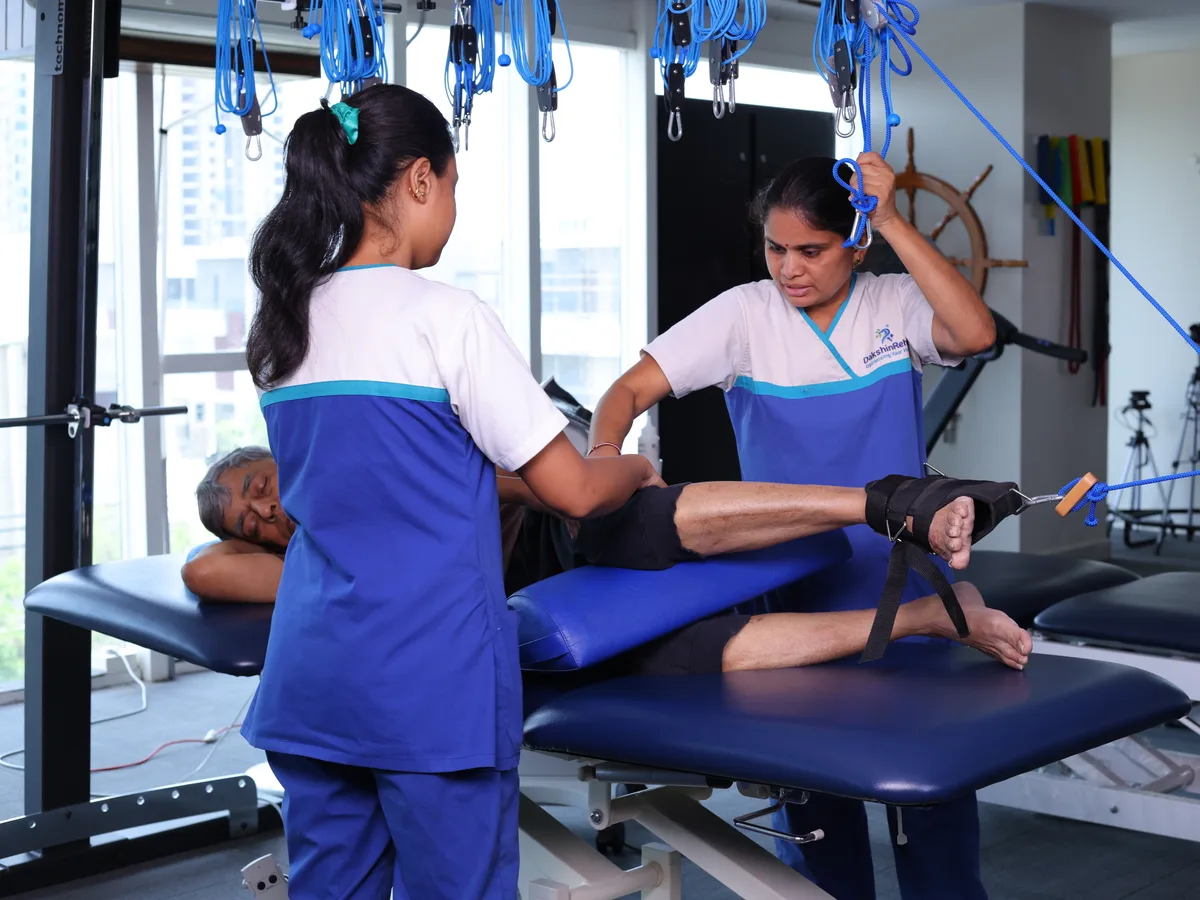
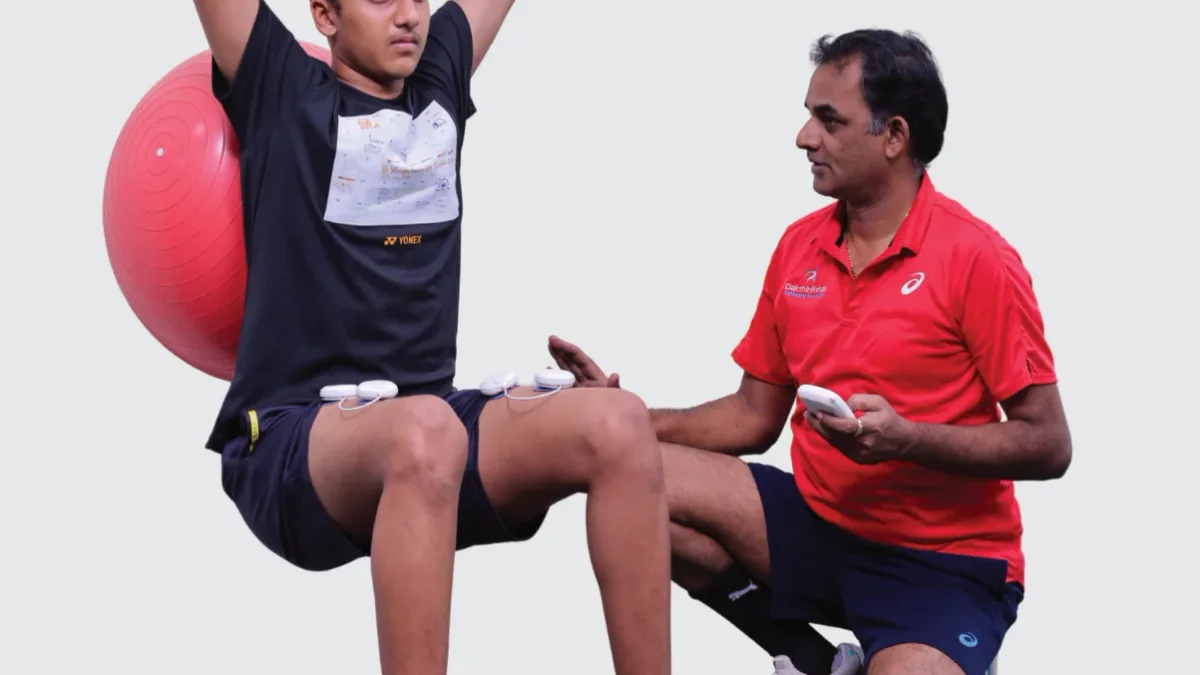
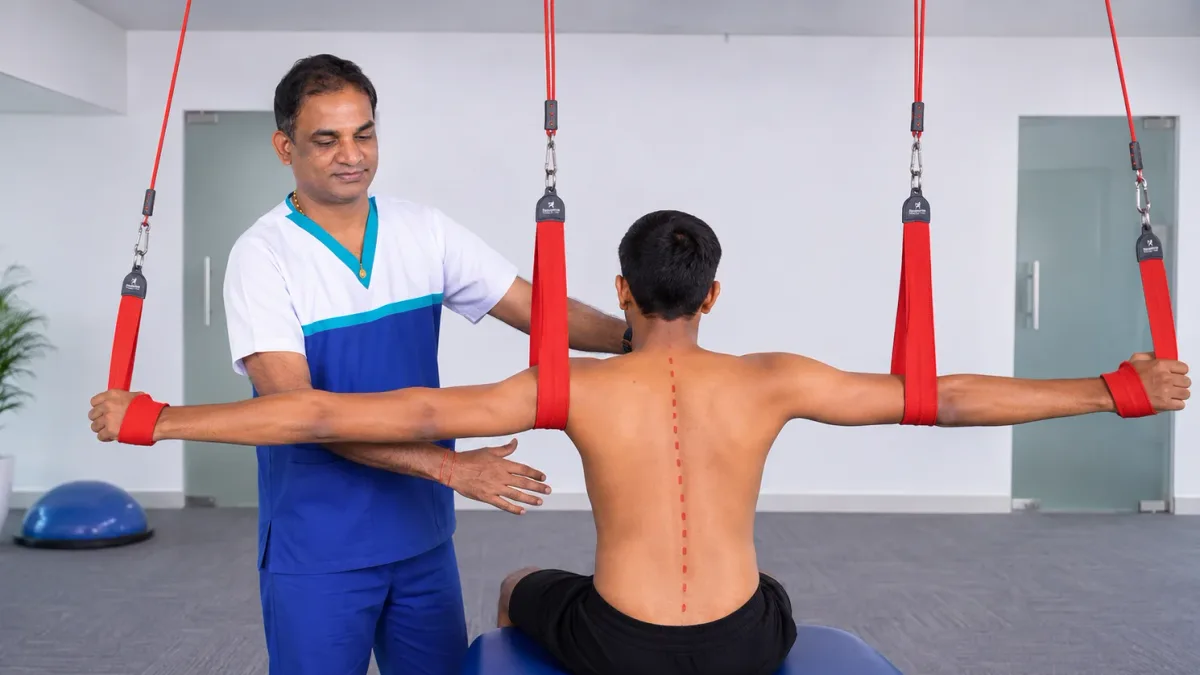
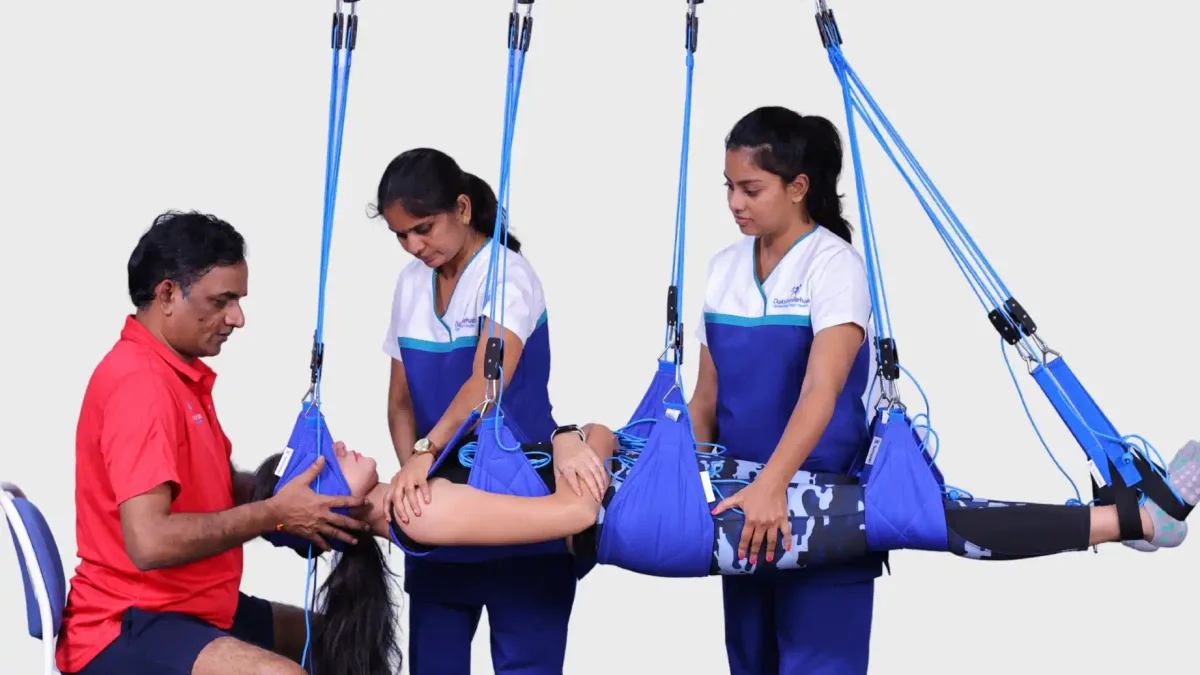
A trained therapist's hands and a few exercises will not, on their own, produce the volume of repetitions the post-stroke brain needs to rewire. We layer four technology systems to multiply the intensity. Redcord Neurac suspension uses graded body-weight unloading and instability so a hemiparetic limb can perform hundreds of pain-free, high-quality repetitions per session — read the deep dive on this in our Neurac and stroke recovery post. Robotic gait trainers drive thousands of stepping cycles per session, far more than any human therapist can manually facilitate. EMG biofeedback shows the patient in real time which muscles are firing, accelerating volitional motor recontrol. 3D gait analysis objectively quantifies recovery so we adjust the protocol on data, not opinion.
Who benefits from structured neuro-rehabilitation at DakshinRehab
Our programme is built for stroke survivors at every stage. Acute-stage patients (recently discharged from a stroke unit at Apollo, KIMS, Continental, Yashoda or AIG) come to us within days for early mobilisation, contracture prevention and DVT/pneumonia risk reduction. Sub-acute patients (2 weeks to 6 months post-stroke) are in the highest-yield window — most of our intensive arm and gait recovery protocols deliver their largest gains here. Chronic patients (6 months and beyond) come to us either after a plateau on standard physiotherapy or after years of self-management, and frequently make significant fresh gains with our intensified, technology-assisted approach. We treat ischaemic stroke, haemorrhagic stroke, brainstem stroke, lacunar stroke, paediatric stroke and post-traumatic-brain-injury patients with similar protocols, and also serve cerebral palsy, Parkinson's disease and peripheral neuropathy patients with adapted versions.
How the acute phase (week 0-2) works at DakshinRehab — and why early matters
For patients within two weeks of stroke onset, we run an intensive in-clinic or inpatient neuro-rehabilitation programme focused on three priorities. First, prevent the secondary complications that derail recovery — deep vein thrombosis, aspiration pneumonia, pressure ulcers and joint contractures — through positioning protocols, early sitting and supervised standing. Second, begin volitional motor activation in the affected limb the moment medical clearance is given; even tiny imagined or attempted movements activate the motor cortex and seed neuroplasticity. Third, train the family. Family members are the patient's recovery team for the next year — we teach safe transfers, swallowing precautions, communication strategies for aphasia and the home exercises that fill the hours between formal sessions.
How the sub-acute phase (week 2 to month 6) works — the highest-yield window
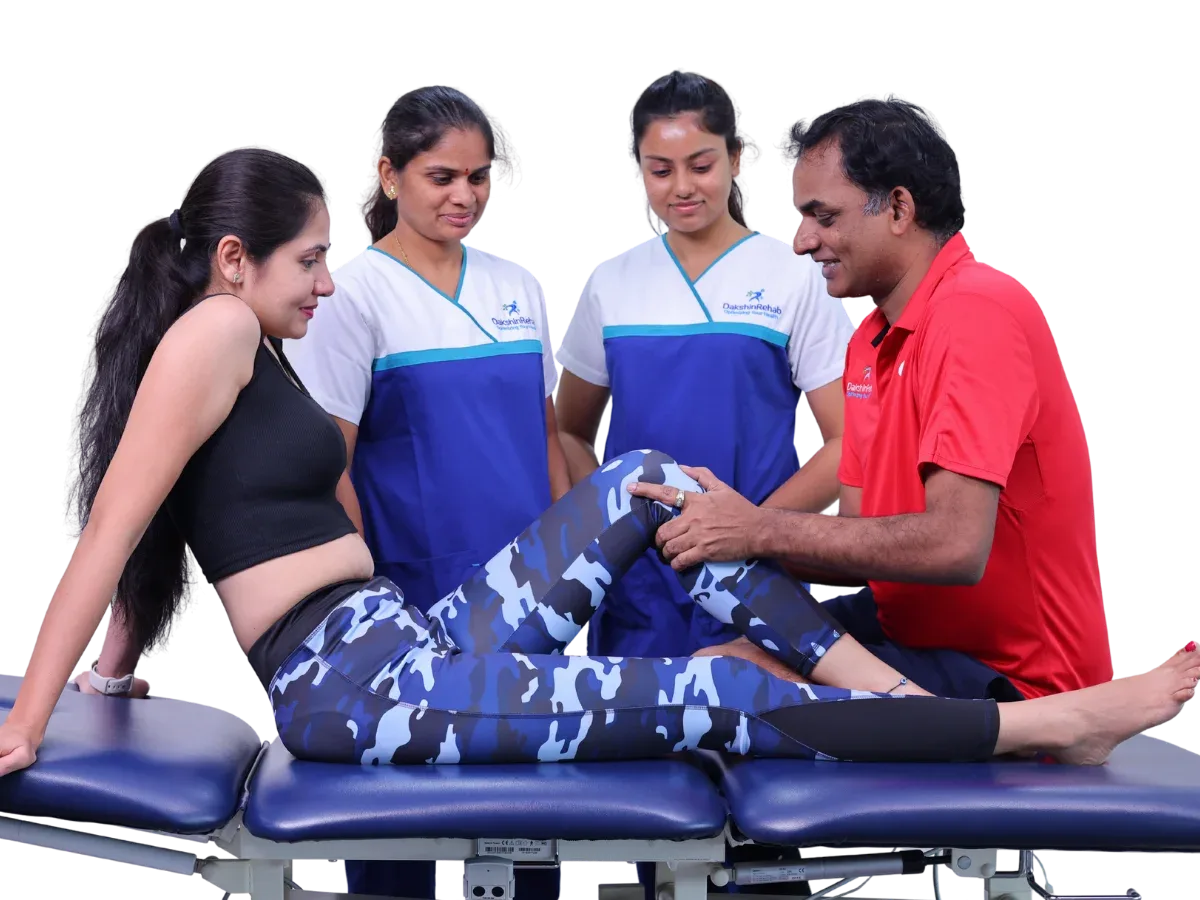
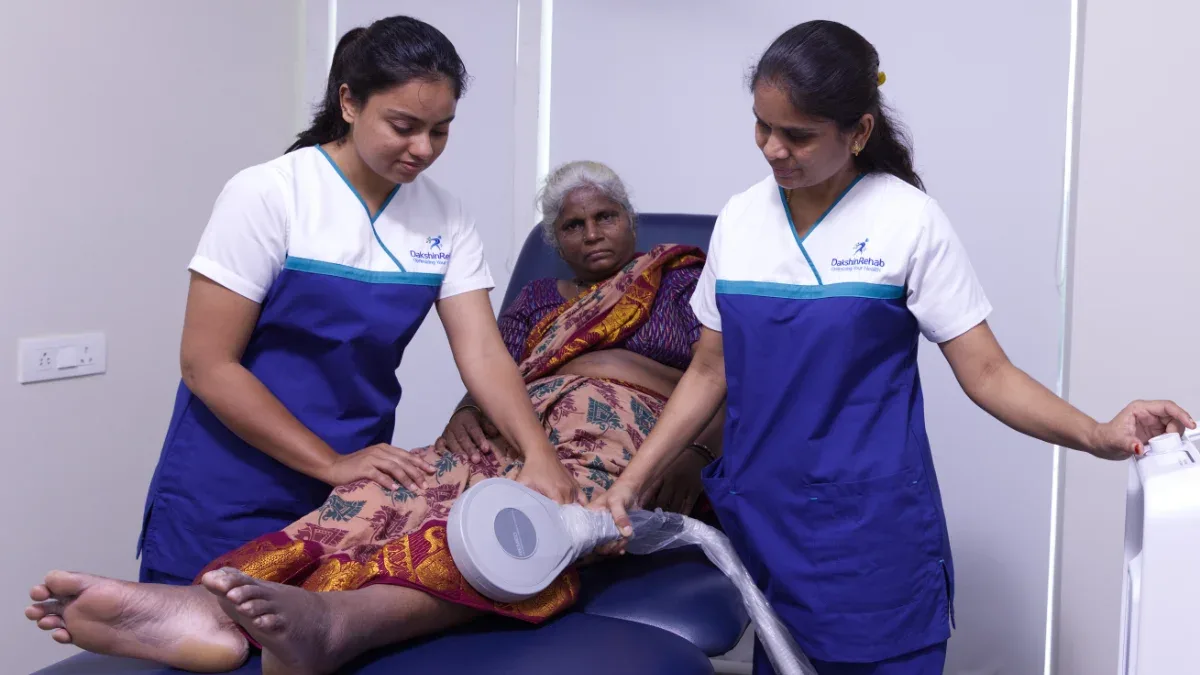
This is the phase in which recovery accelerates most dramatically. Sessions run 5-6 days per week, typically 90-120 minutes, structured around the specific motor goals identified in your assessment — usually some combination of arm reach and grasp, sit-to-stand, single-limb balance, weight transfer through the affected leg, and progressive walking. We use mirror therapy and modified constraint-induced movement therapy (mCIMT) for arm recovery, Redcord Neurac for trunk and limb stabiliser retraining, robotic gait training and treadmill work for stepping, and electrical stimulation for foot drop. Patients with persistent foot drop also receive a custom-fitted ankle-foot orthosis (AFO) from our in-house prosthetics and orthotics service so they can walk safely while motor recovery continues underneath the splint.
How the chronic phase (month 6 and beyond) keeps recovery moving
Many stroke programmes effectively discharge patients at 6 months, telling them this is what they will live with. We do not. Our chronic-phase programme is built around two ideas. First, plateau is rarely a true biological ceiling — it is usually a training plateau caused by therapy that has stopped progressing. Reintroducing intensity, novel tasks and technology often unlocks fresh gains. Second, maintenance matters. We design clear, simple home exercise programmes you can run independently, with quarterly in-clinic reviews to progress the dose and catch deteriorations early. Patients in the chronic phase frequently come to us for community-walking endurance, arm function for specific tasks (cooking, using a phone, signing), driving readiness assessment and fall prevention.
Evidence and expected outcomes from intensive post-stroke rehabilitation
The published literature on stroke neuro-rehabilitation is clear on three points that shape our protocol. First, intensity matters — the AVERT trial and subsequent systematic reviews show that higher-dose, more-frequent therapy produces better outcomes. Second, task-specificity matters — practising the actual task you want to recover (walking, reaching, gripping) drives more recovery than generic strengthening. Third, technology-assisted protocols (robotic gait, suspension therapy, EMG biofeedback) consistently outperform conventional therapy alone for selected outcomes, especially in the sub-acute window. We track recovery objectively using validated measures — the Fugl-Meyer Assessment for motor function, the Berg Balance Scale for balance, gait speed (10-metre walk test), the Functional Independence Measure (FIM) and the Modified Rankin Scale — and review every 4 weeks against your personal goals.
When stroke symptoms or new symptoms in a survivor need urgent medical attention — not physiotherapy
Time is brain. Any sudden new neurological symptom in a stroke survivor — sudden weakness on the opposite side, sudden severe headache, sudden vision loss, sudden speech difficulty, sudden facial droop or sudden imbalance — must be treated as a possible new stroke. Call emergency services or the nearest stroke unit immediately; do not come to physiotherapy first. Other red flags during rehabilitation include calf pain or swelling (possible DVT), chest pain or breathlessness (possible pulmonary embolism), fever with worsening cough (possible aspiration pneumonia), unexplained weight loss, new seizures, and rapid worsening of cognition. We screen for all of these at every session and refer back to the treating neurologist or physician immediately when present.
Who else we support — caregivers, families and international patients from the Gulf
Stroke recovery is a family endeavour, and caregiver burnout is the single biggest reason home programmes fail. We run dedicated family training sessions covering safe transfers, fall prevention, communication strategies for aphasia, swallowing precautions for dysphagia and structured home-exercise progressions. Our location in Moosapet, Kukatpally, with lift access and dedicated parking at ARD Magnum, makes regular visits practical for families across KPHB, Miyapur, Madhapur, Hitec City, Gachibowli, Kondapur, Manikonda and Bachupally. We are also a recognised neuro-rehabilitation destination for international patients travelling from the Gulf — UAE (Dubai, Abu Dhabi, Sharjah), Saudi Arabia (Riyadh, Jeddah, Dammam), Qatar (Doha), Kuwait, Bahrain and Oman — for whom we coordinate accommodation, transport and accelerated multi-week intensive programmes that fit a single visit. For full-time inpatient care, see our 24/7 inpatient neuro-rehabilitation page.
Conclusion — recovery is a programme, not a verdict
A stroke is one of the most disorienting events a family can face, and the diagnoses you receive in the first week often sound final. They are not. The right neuro-rehabilitation programme — phased, intensive, technology-assisted, family-supported and progressed against objective data — restores function across all stages of recovery, and continues delivering gains years after the event. At DakshinRehab Moosapet we bring this programme to stroke survivors across Hyderabad and to international patients travelling from the Gulf. Book your stroke assessment, WhatsApp us on +91 80192 99888, or call +91 80192 99888 — and let us help your family rewrite what recovery looks like.