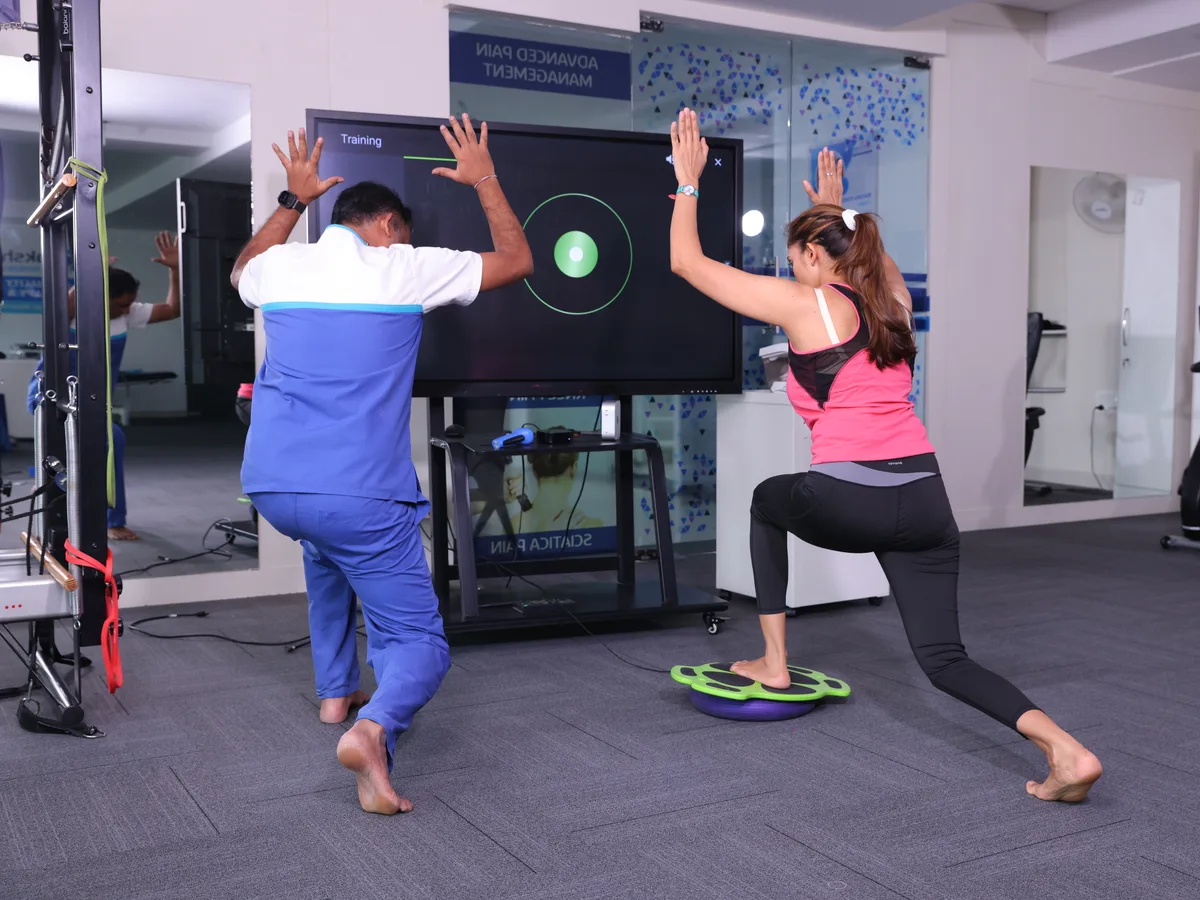
At DakshinRehab in Moosapet, Hyderabad, our assessment-led programme for ACL, knee replacement, knee osteoarthritis, shoulder impingement and rotator cuff problems starts with one question: what is stopping this muscle from working? We combine manual therapy, corrective exercise and targeted NMES to re-activate inhibited muscles — AMI, VMO and scapular control. Serving Kukatpally, KPHB, Miyapur & Gachibowli.
Approach — Assessment-led — we find the block before we treat it
At DakshinRehab in Moosapet, Hyderabad, our assessment-led programme for ACL, knee replacement, knee osteoarthritis, shoulder impingement and rotator cuff problems starts with one question: what is stopping this muscle from working? We combine manual therapy, corrective exercise and targeted NMES to re-activate inhibited muscles — AMI, VMO and scapular control. Serving Kukatpally, KPHB, Miyapur & Gachibowli.
Approach: Assessment-led — we find the block before we treat it
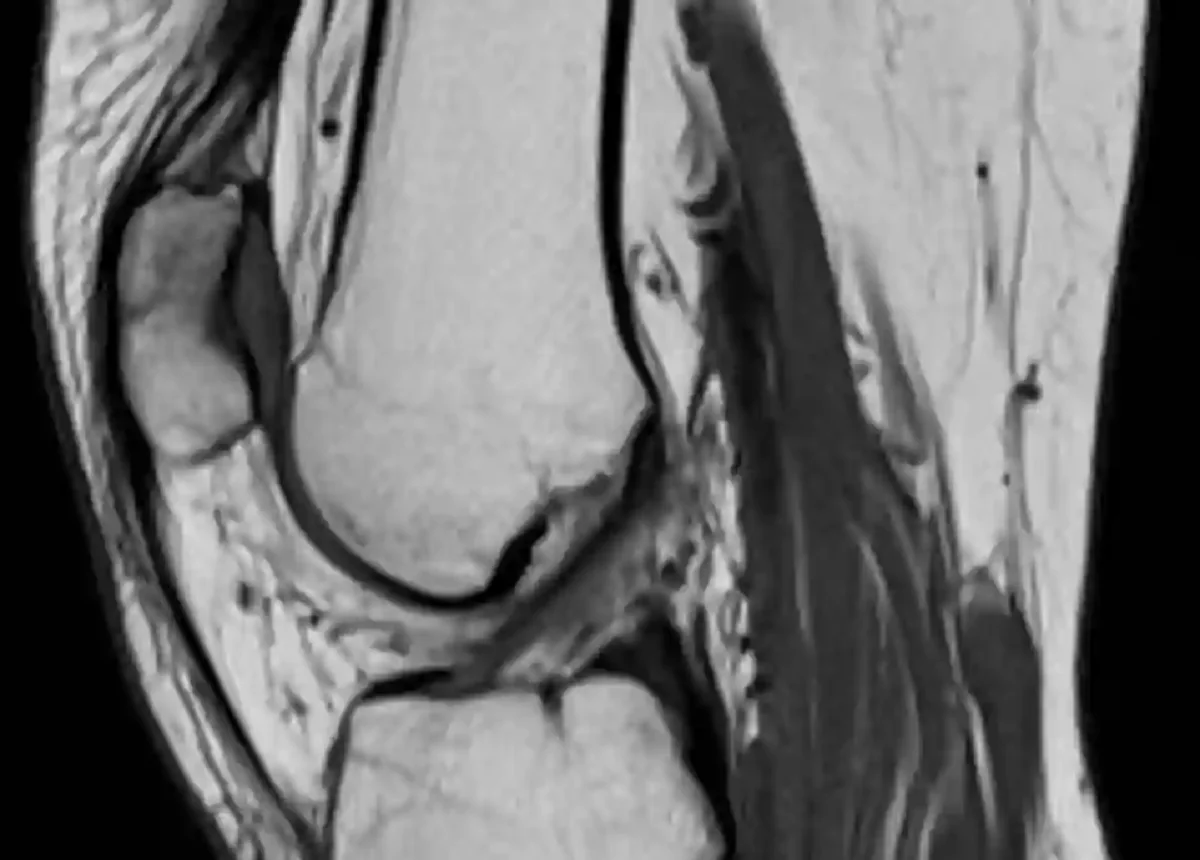
You have been told to do your exercises, and you are trying — but the quadriceps will not contract the way it used to, or the shoulder feels unstable when you lift your arm. This is not a lack of effort. It is a breakdown in neuromuscular control. After a knee injury, surgery or prolonged pain, the brain reduces the signal to the muscles around the joint — arthrogenic muscle inhibition (AMI). Exercise alone is not enough when the muscle is inhibited; the brain needs to be reminded how to activate it first.
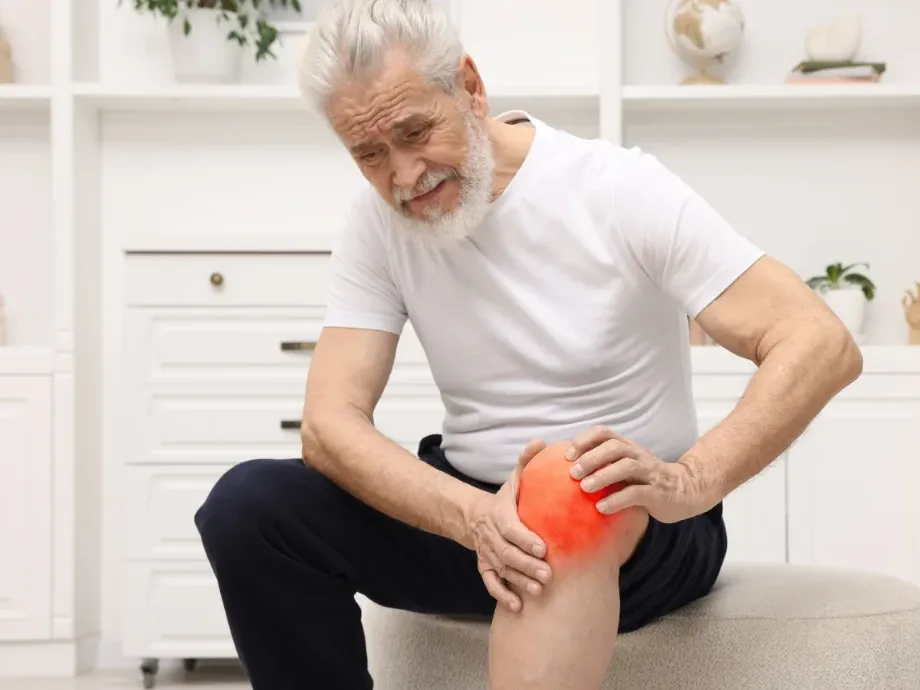
The quadriceps — particularly the VMO — is especially vulnerable after ACL injury, ACL reconstruction and total knee replacement. You cannot fully contract the muscle even with effort. We re-establish activation before loading it.
Rotator Cuff
Shoulder Impingement
The supraspinatus and infraspinatus may fail to activate at the right time, allowing impingement to persist. We restore the timing of cuff activation rather than just strengthening what already works.
Scapula
Scapular Dyskinesis
When the lower trapezius and serratus anterior fire late or weakly, the scapula loses position and the shoulder pinches. We re-pattern scapular control to give the cuff a stable base to work from.
The Compensation
Movement Timing Faults
Standard exercises strengthen the muscles already working while the inhibited muscle stays weak, and the movement pattern compensates — the compensation itself can cause pain. We retrain timing, not just strength.
Swipe to see more
Quadriceps / VMO
AMI After ACL or TKR
Scapula
Scapular Dyskinesis
Rotator Cuff
Shoulder Impingement
The Compensation
Movement Timing Faults
Clinical Strategy
Our Assessment-Led Approach
We find what is limiting your movement — then build a programme around it.
Step01
Assessment
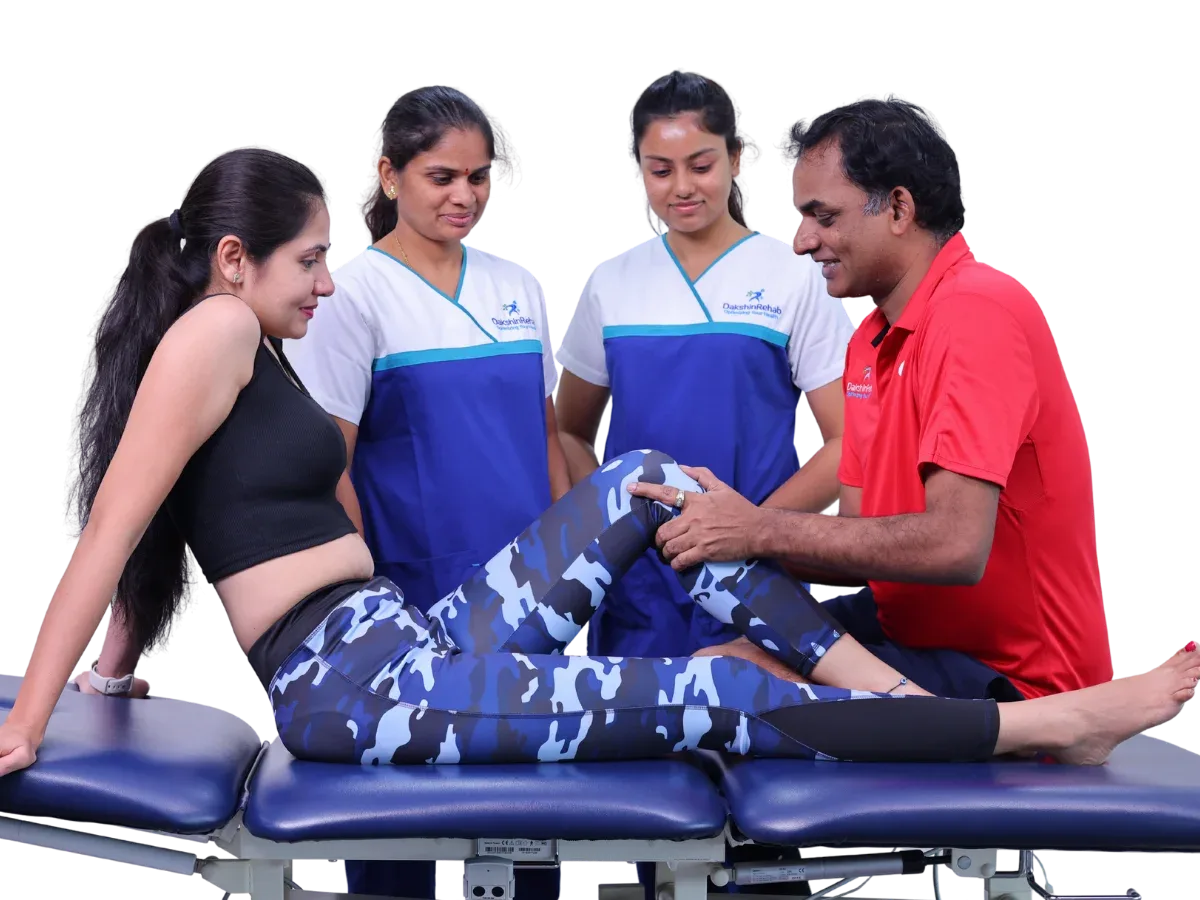
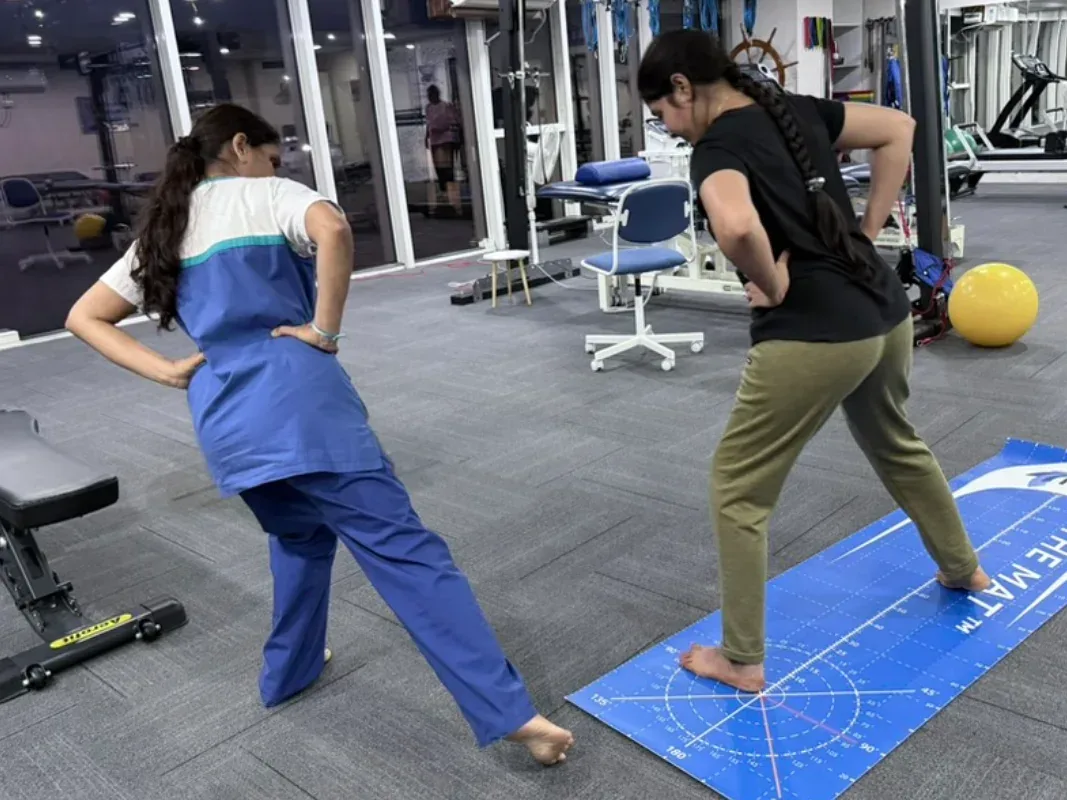
Your first session evaluates the whole movement chain — quadriceps activation, range of motion, swelling, gait, hip and ankle contribution for the knee; scapular control, rotator cuff timing, impingement signs and posture for the shoulder.
We determine whether the primary limitation is inhibition (the brain is suppressing the muscle), weakness, pain or timing. Each answer points to a different first step — NMES, progressive loading, pain relief or movement retraining.
Your programme is unique to you — manual therapy, targeted exercise through the kinetic chain, NMES for re-activation of inhibited muscles, movement retraining for gait, squat or overhead patterns, and a home programme with clear parameters.
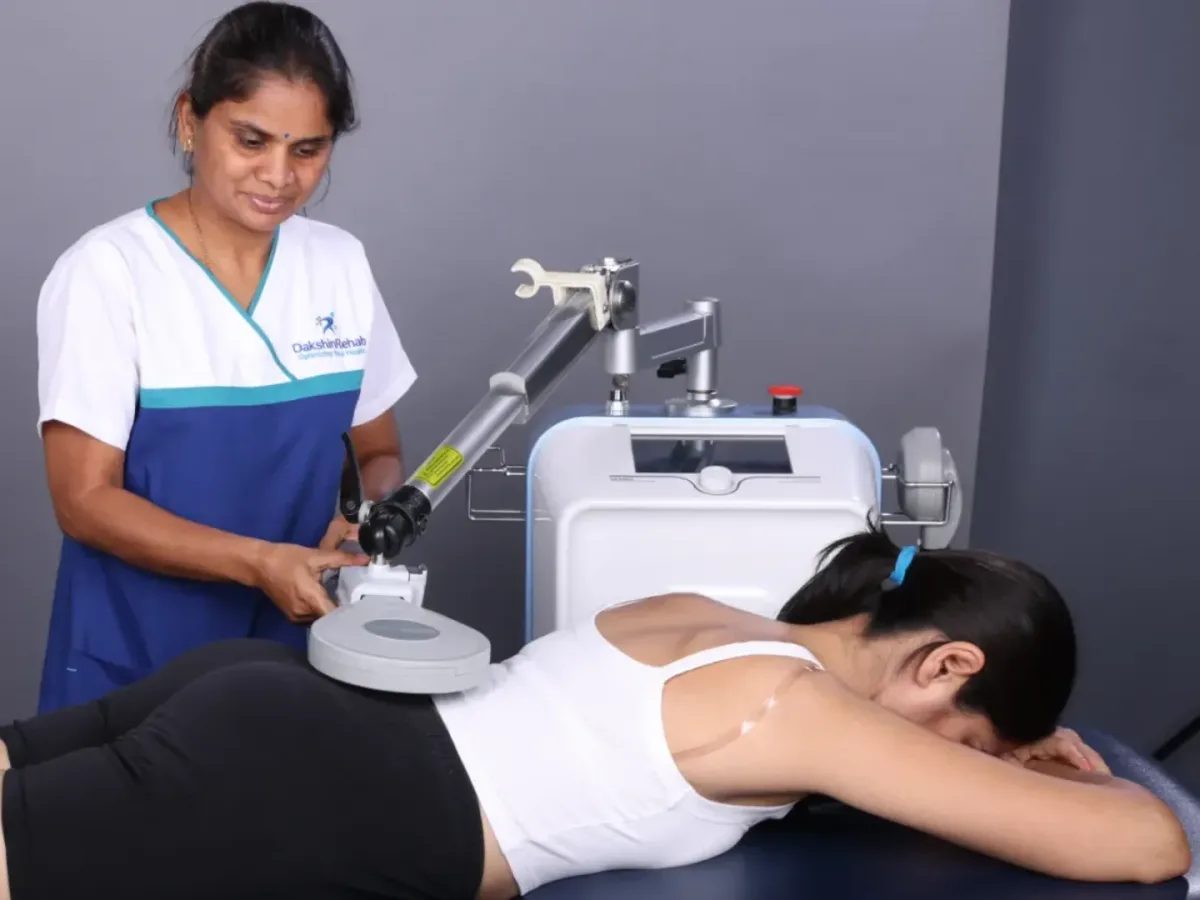
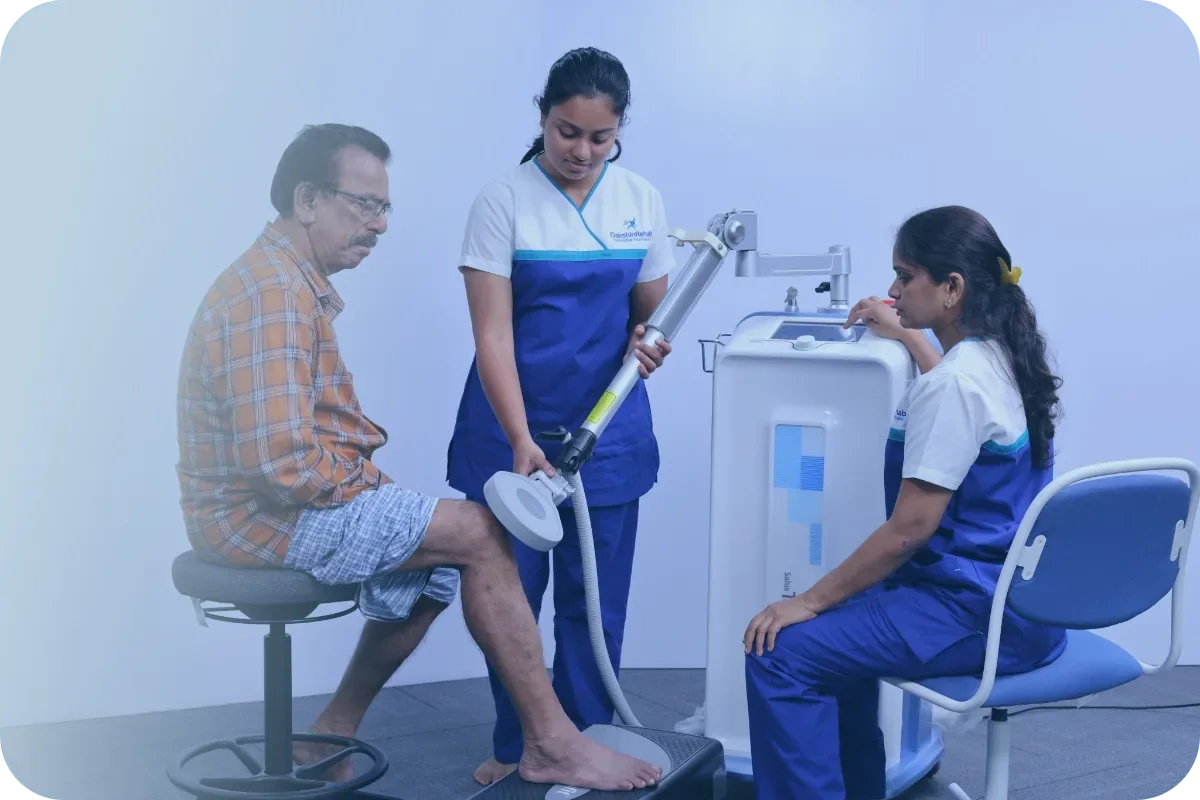
The device is not prescribed to everyone. It is added only when assessment confirms that voluntary activation is impaired. In every case, the device supports the programme — it does not replace it. Read more about the technology itself on our Chattanooga Wireless Professional page.
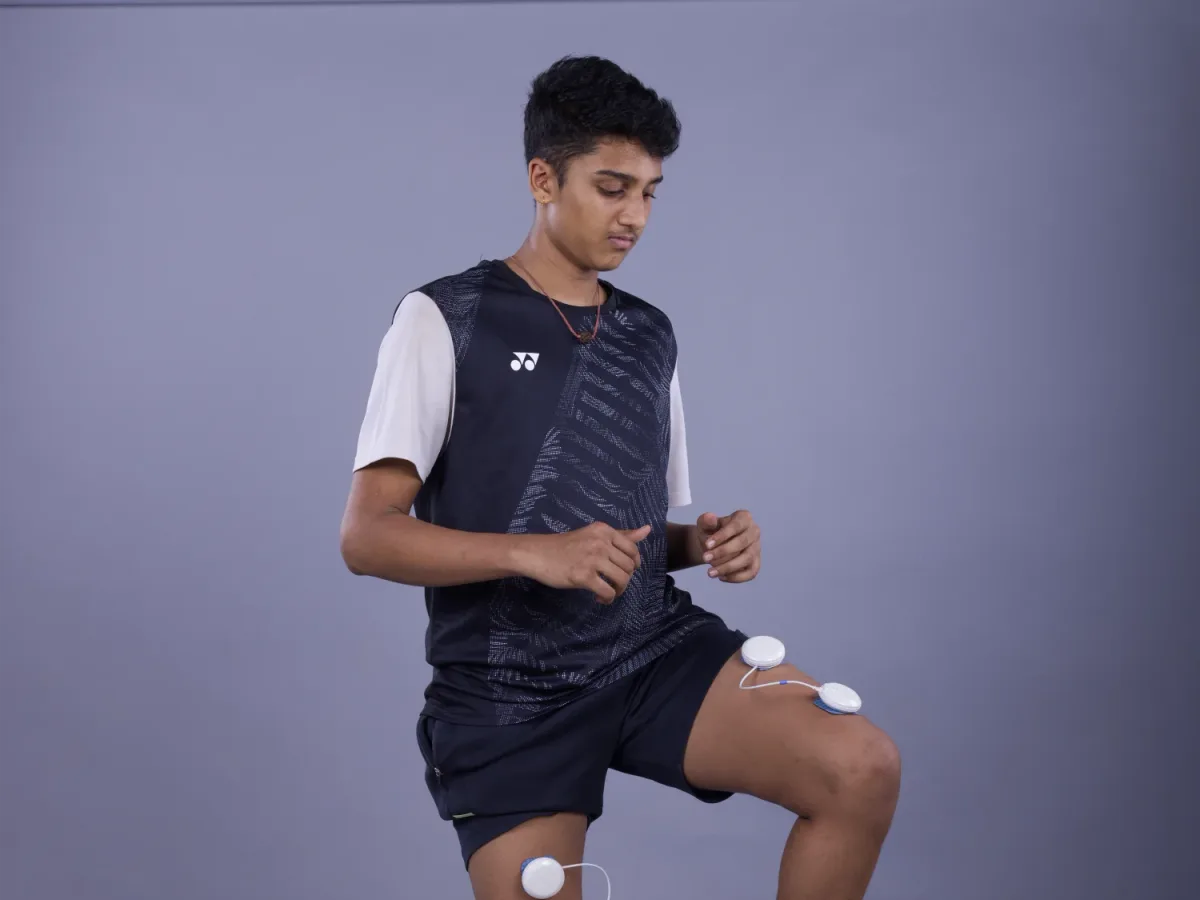
VMO Re-activation (NMES)
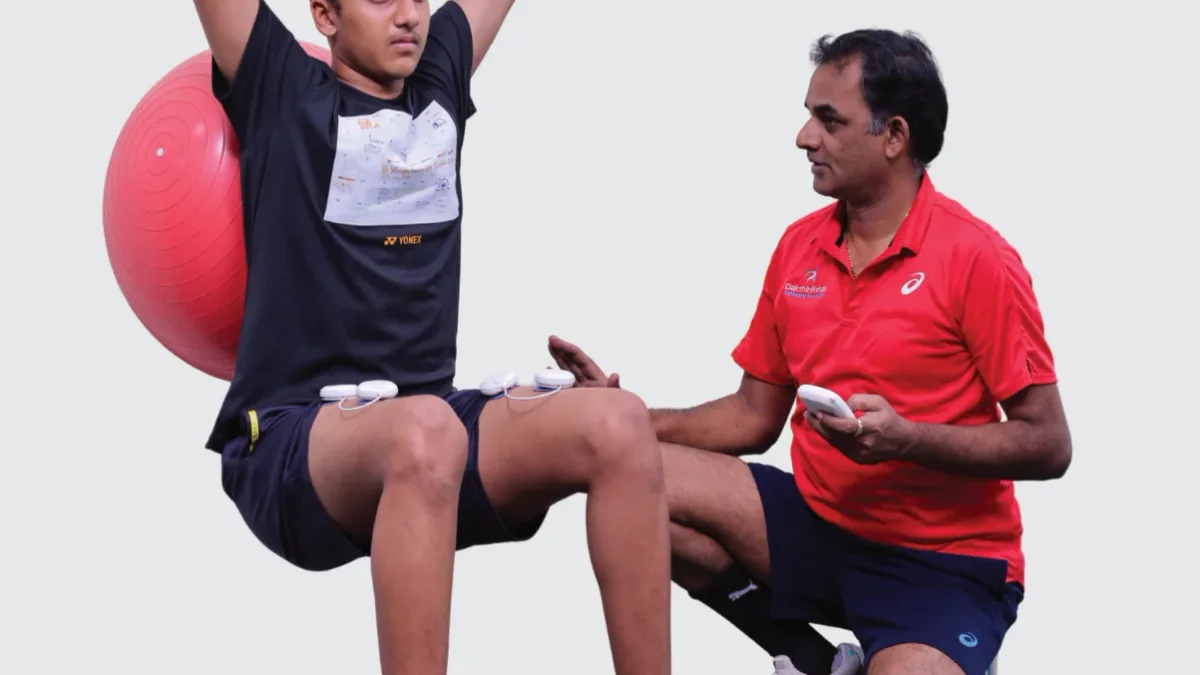
Applied after ACL reconstruction or TKR while you perform quadriceps sets, straight-leg raises and partial squats, helping recruit the VMO at lower activation thresholds.
Early-Grade OA Strengthening
If the quadriceps is weak but not fully inhibited, NMES can support strengthening when you cannot yet load the joint heavily — offloading the knee through stronger muscles.
DakshinRehab clinical pathway
FES Gait Retraining
FES can be timed to stimulate the quadriceps during the stance phase of walking, improving gait symmetry after surgery.
Scapular Re-patterning
NMES of the lower trapezius during arm-raising exercises helps you feel the correct scapular motion in shoulder impingement.
Clinical comparison
Re-activation Before Strengthening
Exercise alone is not enough when the muscle is inhibited. When you perform a straight-leg raise using the hip flexors while the quadriceps stays shut off, the exercise reinforces the compensation. NMES bypasses the inhibited pathway and triggers the motor neurons directly, so the muscle contracts — then we layer in active strengthening. The device is a bridge, not a destination.
Insight 1
Rotator Cuff Activation
Stimulation over the supraspinatus or infraspinatus during abduction or external rotation can help restore the timing of cuff activation after injury.
Insight 2
Local & Accessible
Located in Moosapet, Hyderabad — serving Kukatpally, KPHB, Miyapur, and Gachibowli.
“We assess neuromuscular control, not just strength. Many people can lift heavy weights but cannot voluntarily activate certain muscles. We address that root cause.”
Your Knee & Shoulder Neuromuscular Rehab Recovery Journey
What happens from your first assessment through symptom relief, guided rehabilitation, and long-term prevention.
PHASE 1
Comprehensive Assessment(45-75 min)
Detailed case history
Movement and pain screening
Functional baseline testing
Clear diagnosis and starting point for care
PHASE 2
Treatment Planning & Education(15-20 min)
Recovery goals explained
Care plan and session rhythm
Home precautions and activity advice
You know what we are treating and why
PHASE 3
Pain Relief & Early Control(Week 1-3)
Targeted pain-relief modalities
Gentle mobility work
Protection from flare triggers
Pain and daily irritability begin to reduce
PHASE 4
Tissue Healing & Mobility Restoration(Week 4-8)
Progressive mobility restoration
Technology-assisted healing where indicated
Manual therapy and guided exercise
Movement becomes easier and more predictable
PHASE 5
Strength, Stability & Function(Week 8-12)
Progressive strengthening
Balance and movement retraining
Return-to-work or activity preparation
Function improves with better confidence and control
PHASE 6
Prevention & Long-Term Recovery(Ongoing)
Personalized home exercise plan
Ergonomics and lifestyle guidance
Periodic reassessment when needed
Lower recurrence risk and better self-management
When to Seek Care
Signs You Should Be Assessed
Most knee and shoulder problems respond well to assessment-led rehabilitation. Contact DakshinRehab in Moosapet if pain limits daily activities, a muscle "won't fire," or you notice any of the following.
Persistent Knee or Shoulder Pain — pain that limits daily activities or returns every time you attempt a new movement.
A Muscle That "Won't Respond" — you cannot feel a muscle working or contract it despite genuine effort.
Difficulty Bearing Weight — trouble putting weight through the leg, or the knee feeling unstable when you load it.
New Swelling After Injury or Surgery — fresh or increasing swelling around the knee or shoulder after trauma or an operation.
Told to Strengthen but Cannot Feel It Working — you have been advised to strengthen but cannot feel the muscle engaging.
Recent Injury or Surgery — a recent knee or shoulder injury, or a recent operation that has left the muscle "switched off."
For adhesive capsulitis we combine pain management, gentle mobilisation and movement restoration; NMES may support rotator cuff activation once range improves.
“Every treatment page should help patients understand what is safe, what is urgent, and what care path fits their condition. Clinical review keeps that advice practical and trustworthy.”
The clinical content on this page is written and independently reviewed by qualified physiotherapists at DakshinRehab, Moosapet, Hyderabad.
Knee & Shoulder Rehab FAQs
Answers About Neuromuscular Rehabilitation
Honest answers from the specialists at DakshinRehab Moosapet.
I had ACL surgery six weeks ago and cannot contract my quad. Can you help?
Yes — this is a common pattern after ACL reconstruction. We assess quadriceps activation and, if appropriate, use NMES via the Chattanooga Wireless Professional to support re-activation. Early intervention matters. Our explainer on why the quad switches off describes what is happening.
My shoulder clicks when I lift my arm sideways. Should I see a physiotherapist?
How is DakshinRehab different from a regular gym physio?
How long does a typical knee rehab programme last?
Will I need the Chattanooga Wireless Pro at home?
Do you treat frozen shoulder?
Is knee and shoulder physiotherapy covered by health insurance?
Do I need a doctor's referral, and is there parking at your Moosapet clinic?