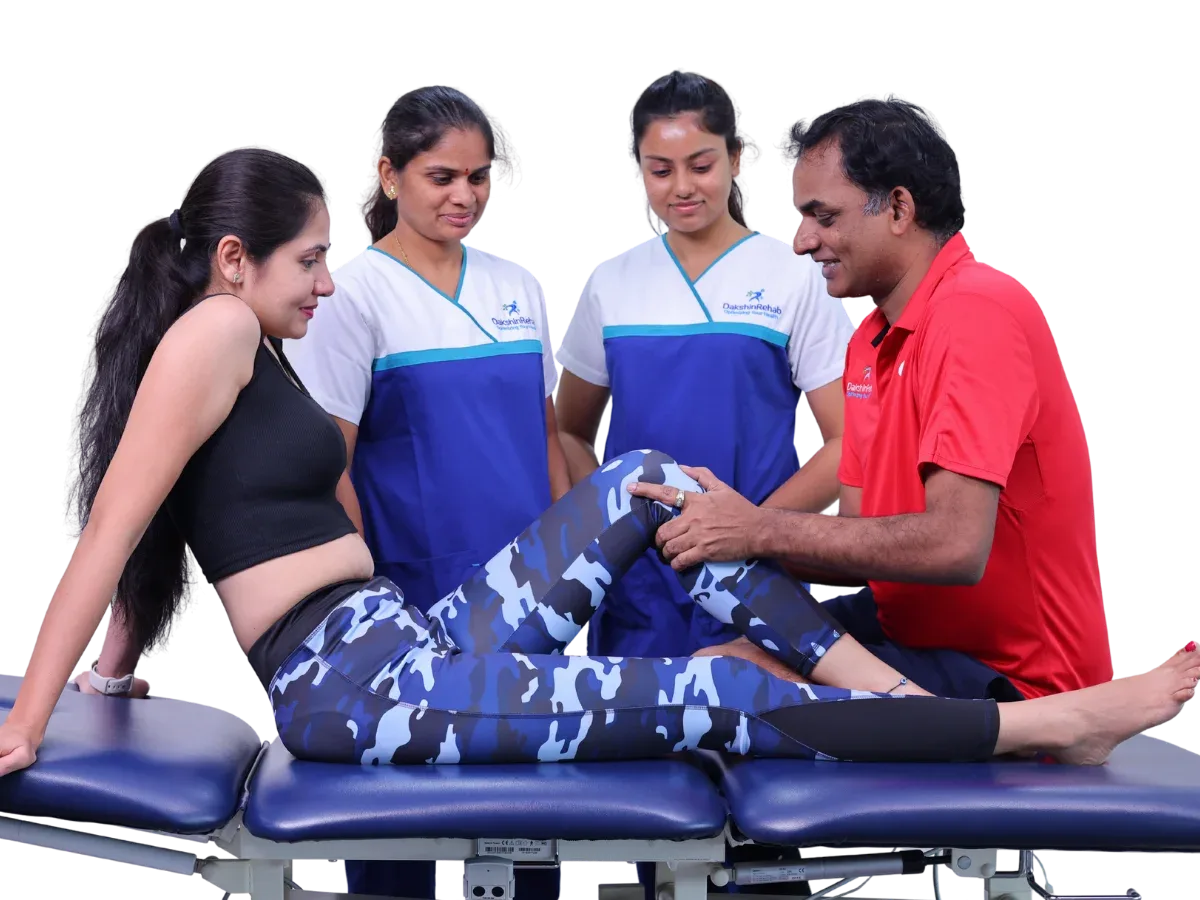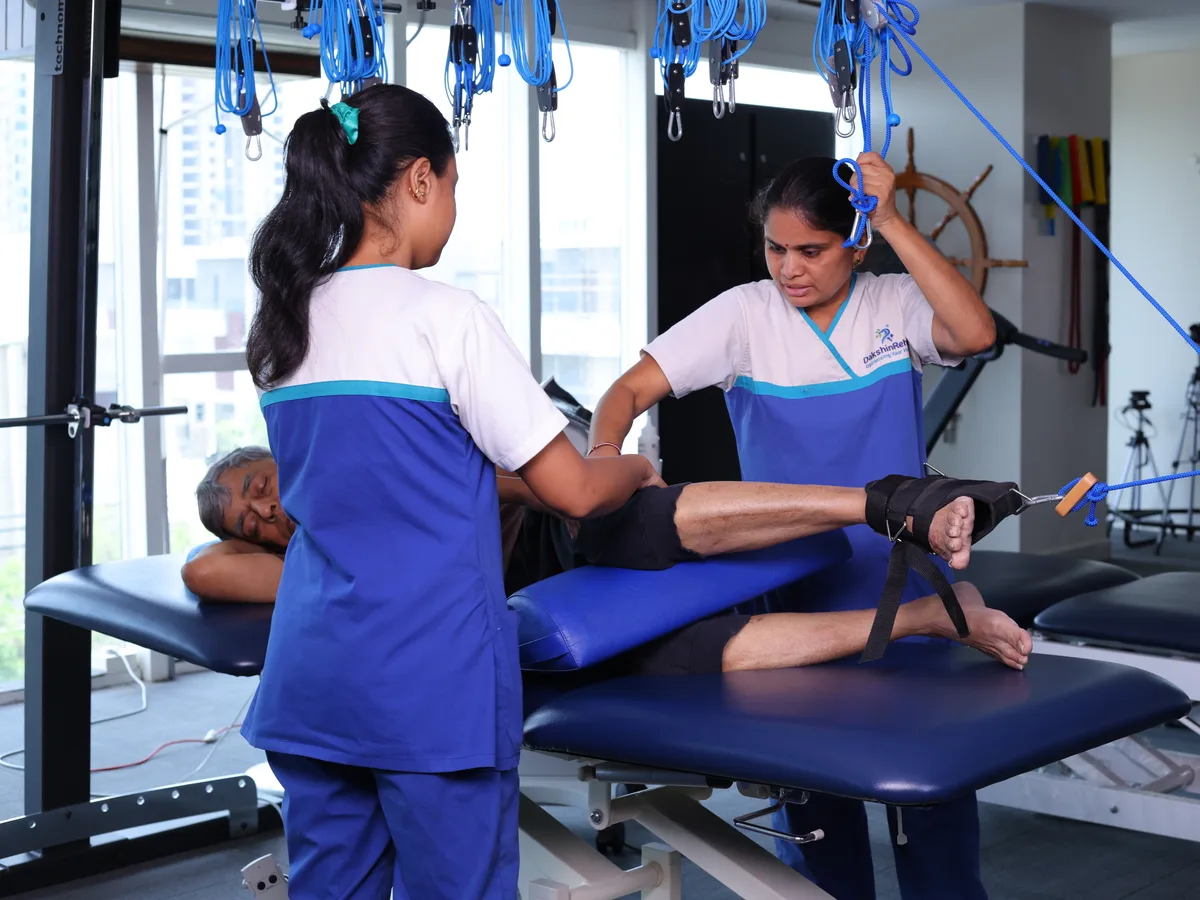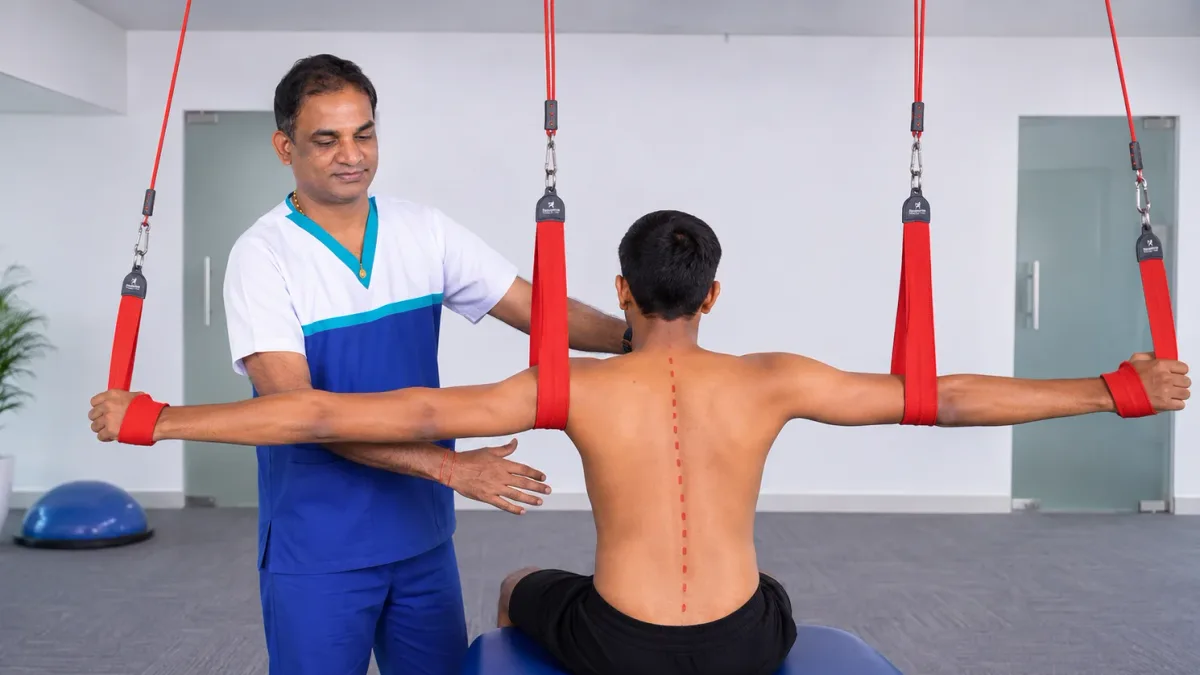
Your knee is injured, or you have had surgery. You are told to do quadriceps sets. You try, and nothing happens. The muscle does not respond the way it used to. At DakshinRehab in Moosapet, Hyderabad, this is one of the most common frustrations we hear. This is not laziness, and it is not weakness in the usual sense. It is arthrogenic muscle inhibition (AMI) — a protective response from your brain that reduces the signal to your quadriceps. Understanding why it happens, and what to do about it, can save you weeks of stalled rehab.
What is arthrogenic muscle inhibition? AMI is a reflex. After joint injury, trauma, or surgery, sensory signals from the joint — from damaged ligaments, swelling, or pain receptors — travel to the spinal cord and brain. The central nervous system responds by turning down the motor signal to the surrounding muscles. Think of it as the brain saying
this joint is injured, so I will reduce power to the muscles that move it. The result is that you cannot fully contract the quadriceps voluntarily. Even if you push hard, only a fraction of the fibres respond; the rest stay silent. That matters because the quadriceps — especially the vastus medialis obliquus (VMO) — is the knee's primary shock absorber. When it stops working, load shifts elsewhere, gait changes, the other leg takes over, and overactive hamstrings and hip flexors pull the joint out of balance.
When does AMI happen? It is most pronounced in a few scenarios. In an acute ACL tear, quadriceps activation can drop within hours of injury, as swelling and instability trigger the inhibition reflex. After ACL reconstruction, the graft tunnel, swelling, and pain keep inhibition active for weeks — a major cause of post-operative quadriceps wasting. After total knee replacement, surgical trauma to the joint capsule and quadriceps tendon produces deep inhibition; many patients say the operated-side quad feels "dead" for weeks. And in chronic knee pain or osteoarthritis, low-grade inhibition can persist even without acute injury, as the brain down-regulates the quad to reduce load on a painful joint.
Why traditional rehab falls short when inhibition is present
A standard programme includes quadriceps sets, straight-leg raises, heel slides, and later squats and lunges. These assume the muscle is available to work. When AMI is present, they fall short — you perform the straight-leg raise using the hip flexors while the quadriceps stays shut off, and the exercise reinforces the compensation without restoring quad function. This is why neuromuscular activation must be addressed before, or alongside, strengthening, and why our assessment-led knee and shoulder neuromuscular rehabilitation programme always starts by identifying the block rather than handing you a generic exercise sheet.
How wireless NMES can help
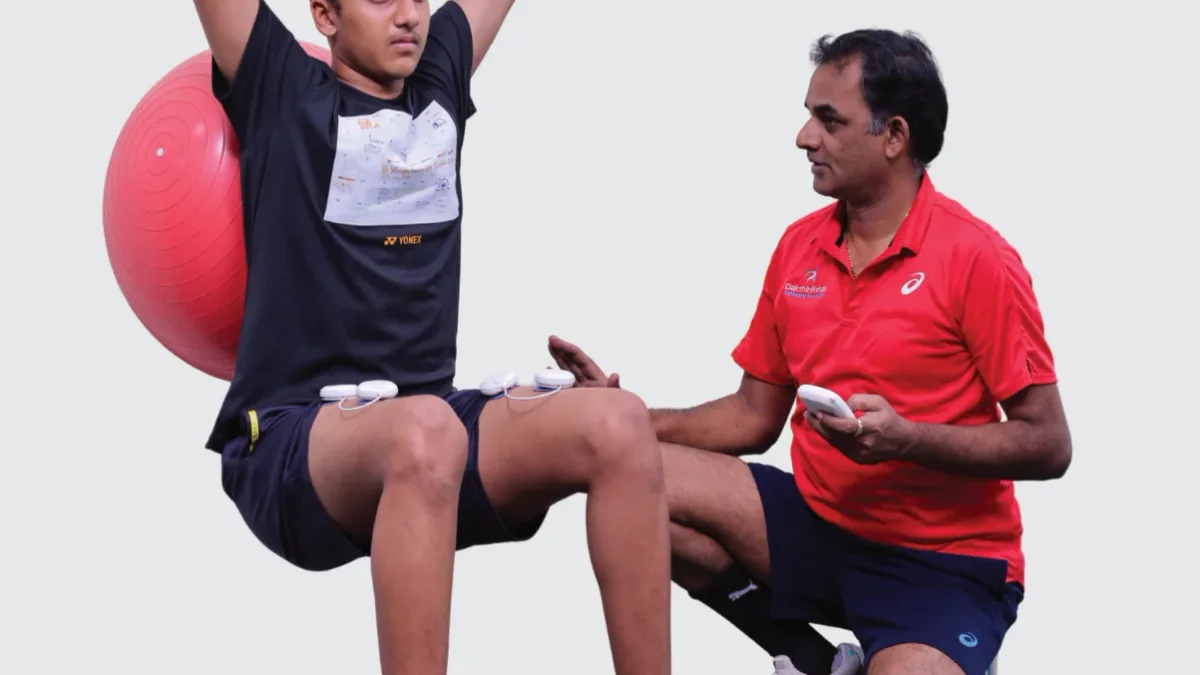
Neuromuscular electrical stimulation is not new — it has been used in rehabilitation for decades. What a wireless device adds is the ability to move freely while the stimulation is active. The mechanism: NMES delivers impulses through electrodes over the motor points of the quadriceps. The current bypasses the inhibited neural pathway and triggers the motor neurons directly, so the muscle contracts even when the brain will not initiate the signal. This serves two purposes. It helps maintain muscle mass during the period when voluntary activation is poor, and it gives the brain repeated sensory feedback from each stimulated contraction, so over sessions the inhibition can gradually reduce and voluntary activation improve. At DakshinRehab we deliver this with the Chattanooga Wireless Professional, set up and calibrated by your physiotherapist.
The wired-versus-wireless difference matters here. With a wired stimulator you sit still, the muscle contracts statically, and the effect does not carry over to function. With a wireless unit the electrodes stay on under clothing and you can walk, squat, or step while the muscle is stimulated. Pairing stimulation with a real movement pattern supports better motor learning and carryover. Movement during stimulation is limited to sitting or lying with a wired unit, but full — walk, squat, step — with a wireless one; home use is tethered to a wall outlet versus portable and rechargeable; and gait retraining, which is not practical with wires, is well suited to wireless. Both can be effective; the wireless option offers more flexibility, especially when stimulation needs to be integrated into functional movement.
Does this apply to the shoulder? Yes. The same principle applies where arthrogenic inhibition affects the rotator cuff after injury, impingement, or surgery. A shoulder with impingement may have a supraspinatus that is "asleep" — unable to activate at the right moment during arm elevation. NMES over the supraspinatus or infraspinatus during controlled arm movements can help restore the timing of activation so the shoulder moves without impingement. The goal is the same: wake up the inhibited muscle, restore the timing of contraction, then strengthen the whole chain — the approach we use across our shoulder rehabilitation work too.
When to seek care — red flags worth acting on
If you struggle to contract your quadriceps, notice your thigh getting smaller, or cannot perform a straight-leg raise after injury or surgery, you should be assessed. Common signs of quadriceps inhibition include difficulty with a straight-leg raise (the leg drops or you use hip flexors to lift it), visible thigh wasting, a muscle that will not "engage," or a sense that the operated leg feels "dead" when you try to move it. Do not stop your rehab, but tell your physiotherapist — pushing through inhibition without addressing it reinforces compensation patterns. New swelling, an inability to bear weight, or a joint that gives way also warrant prompt review, and we will coordinate with your surgeon or doctor where needed.
What this means for you
If you have had a knee injury or surgery and cannot feel your quadriceps working, do not just push harder into exercises that are not producing results. The problem may be inhibition, not effort. An assessment can identify whether NMES is appropriate for your situation. The device is not a magic tool, and it will not restore strength in one session. But used correctly — the right parameters, the right electrode placement, and a progressive exercise programme — it can support a faster return of quadriceps activation than exercise alone, confirmed against your own progress. Recovery is a series of small, consistent gains. The first gain is getting the muscle to turn back on.
Conclusion — start by getting the muscle to switch back on
Quadriceps inhibition is a reflex, not a verdict on your effort. Whether you are recovering from an ACL tear, an ACL reconstruction, a knee replacement, or persistent osteoarthritic pain, the path forward runs through accurate assessment, targeted re-activation, and a progressive programme built around your specific block. At DakshinRehab in Moosapet, Hyderabad, we combine clinician-led wireless NMES with manual therapy and exercise across our knee and shoulder neuromuscular rehabilitation programme, and you can read how the device itself works on our Chattanooga Wireless Professional page. Book your assessment, WhatsApp us on +91 80192 99888, or call +91 80 19 299 888.