
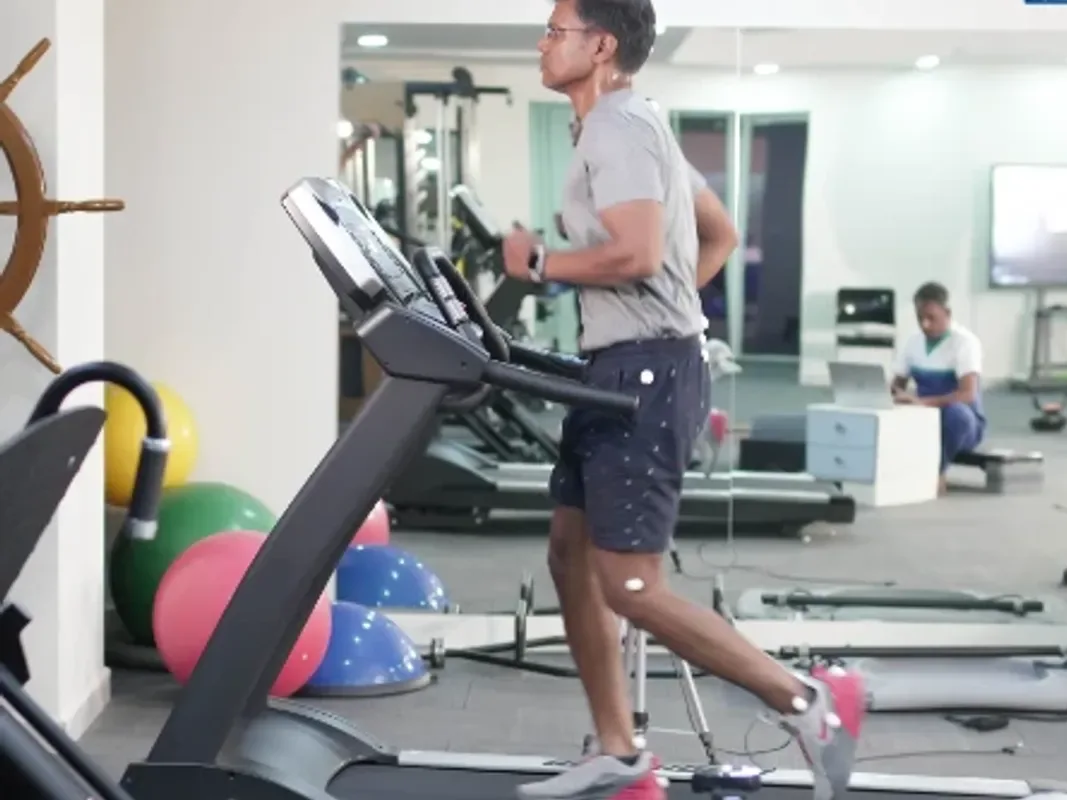
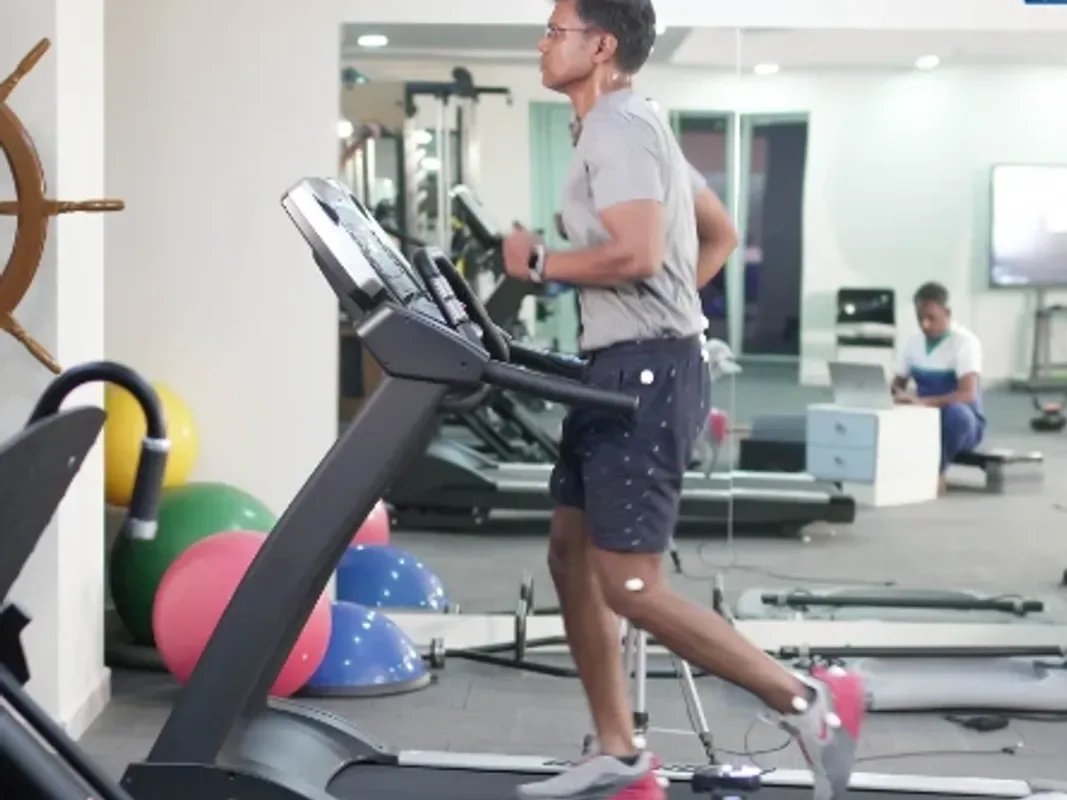
Plumb-Line Posture Analysis
The GaitON Posture variant overlays gravity plumb-lines onto your spine and lower limbs, making hidden postural misalignments obvious and measurable.
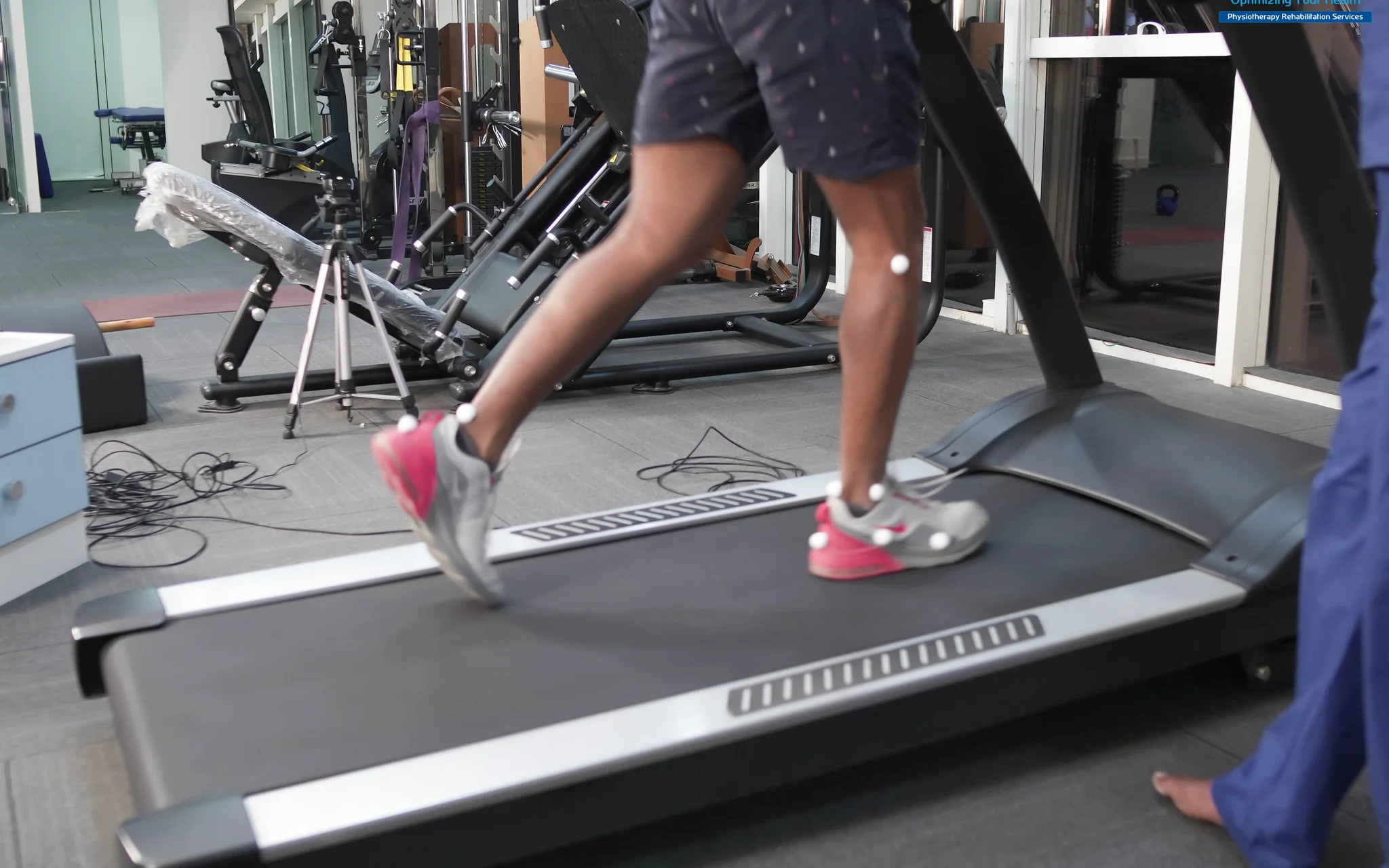
At DakshinRehab we use the Auptimo® GaitON® computerised 2D/3D motion-analysis system — medical-grade multi-camera capture with reflective markers — to measure how your joints move when you walk, run and stand. Mapped to Rancho Los Amigos (RLA) clinical terminology, it tracks pelvis, hip, knee and foot angles across every plane, exposing hidden faults like overstriding or pelvic drop that a basic 'watch-you-walk' assessment misses.
Personalised, technology-driven rehabilitation in Moosapet, Hyderabad.
3D gait analysis provides objective biomechanical data for runners, athletes, and patients recovering from lower limb injury or surgery.
If you keep getting runner's knee, shin splints, or stress fractures despite rest and stretching, 3D gait analysis identifies the biomechanical root cause.
After ACL reconstruction, ankle surgery, or stress fracture, objective biomechanical data determines when you are truly ready to resume running safely.
Optimizing running economy through gait retraining can improve marathon times by 2–5% without additional fitness training — validated by 3D data.
Neurological conditions, stroke, and orthopedic injuries alter walking patterns. 3D analysis quantifies these deviations and tracks rehabilitation progress.
Basic clinics guess by watching you walk across a room. Auptimo GaitON uses medical-grade motion-capture cameras and reflective markers to measure your exact joint angles — down to a fraction of a degree — across every plane of movement.
Synchronised high-speed cameras track reflective markers on your bony landmarks over a treadmill or overground — clinical motion capture, not a single phone camera or a wearable sensor.
Ankle, knee, hip and pelvis angles are measured in the sagittal, frontal and transverse planes — capturing patterns like stiff-knee gait, dynamic knee valgus (Q-angle) and pelvic drop.
 DakshinRehab clinical pathway
Stance vs swing %, single- vs double-support time, step and stride length, cadence and gait-cycle variability are quantified for each side.
For runners, the system algorithmically flags overstriding, crossover gait and excessive vertical oscillation (bounding) — common drivers of recurring running injuries.
Clinical comparison
GaitON follows a three-step pipeline — capture, digital protocol parsing, then an automated evidence-based report. Reflective markers on bony landmarks are tracked by synchronised cameras while you walk, run or stand, and the software calculates joint angles at the pelvis, hip, knee and ankle across the sagittal, frontal and transverse planes, all mapped to Rancho Los Amigos terminology. It compares your movement curves against normal patterns to flag hidden faults — for example, a gluteus-medius weakness showing up as a pelvic drop, or a knee that tracks inward. This is a kinematic joint-angle system; foot-pressure and loading are measured separately by our pedobarography platform.
The GaitON Posture variant overlays gravity plumb-lines onto your spine and lower limbs, making hidden postural misalignments obvious and measurable.
Past sessions are overlaid on current curves to prove real change over time, and findings export as an evidence-based report you can share with your surgeon.
“You cannot retrain a movement you have not measured. Seeing the exact joint angles — not a hunch — is what makes the plan specific to you.”
An Auptimo GaitON Assessment
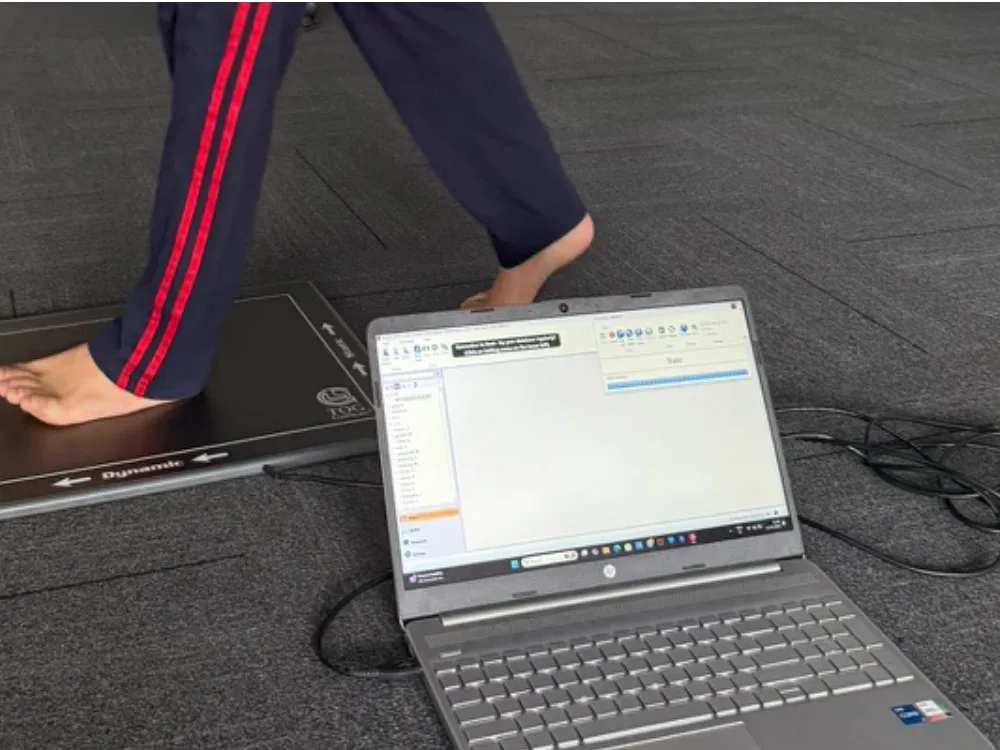
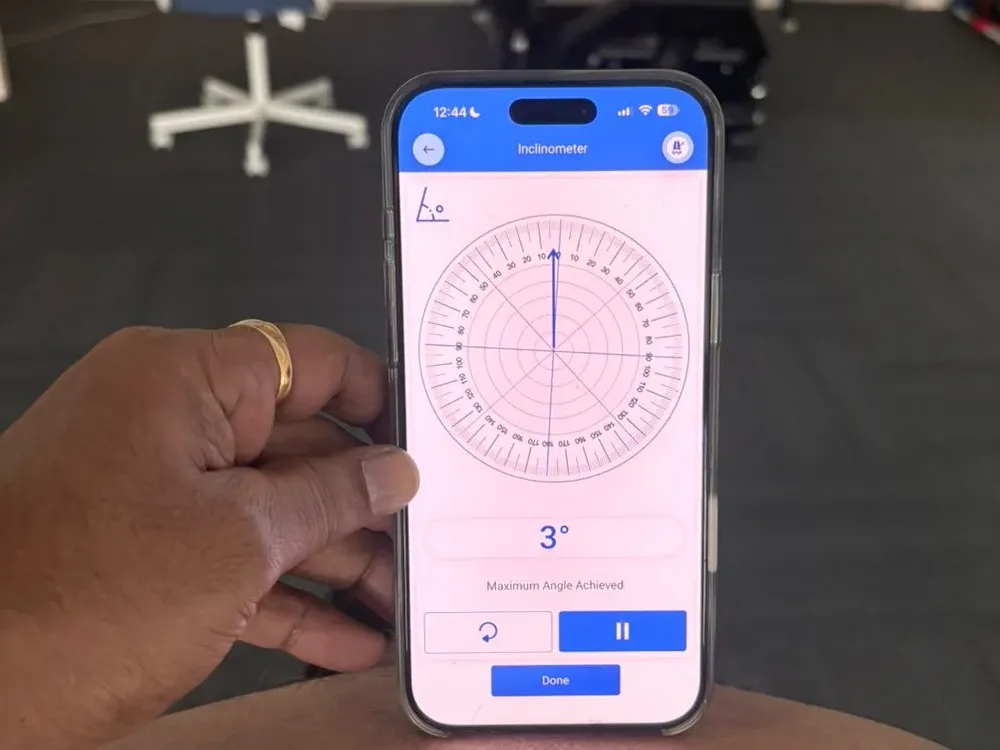
Assessment focus agreed
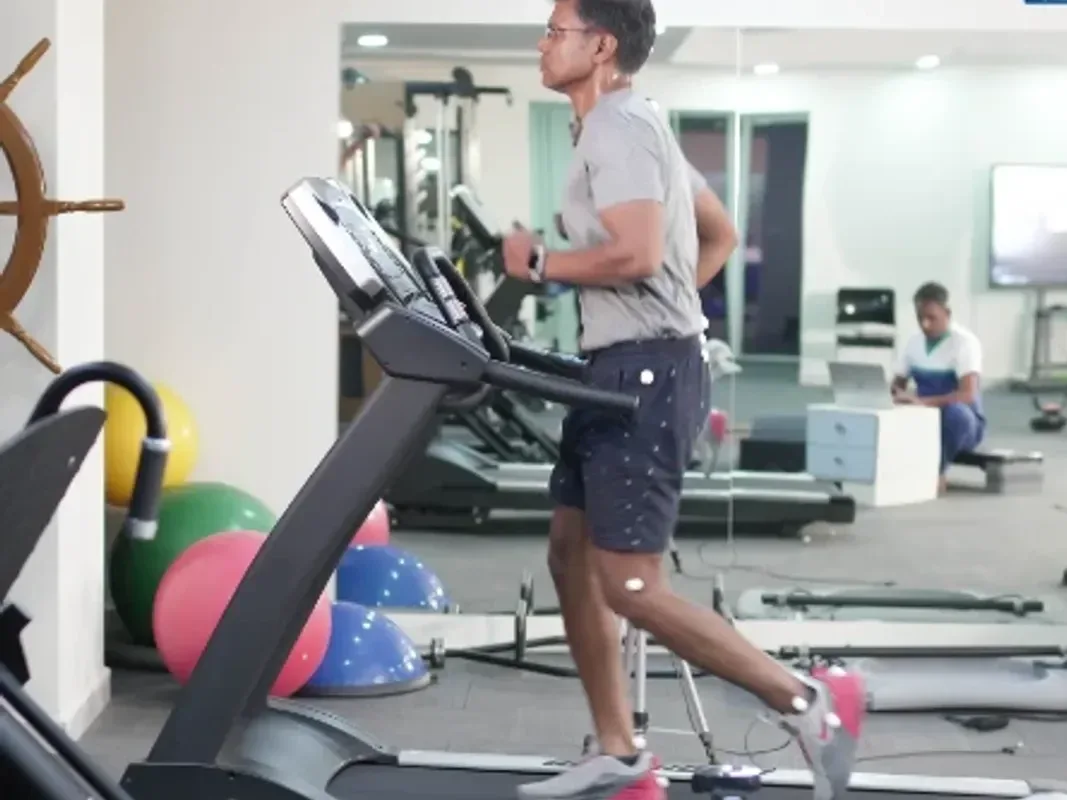
System calibrated for capture
Walking kinematics captured
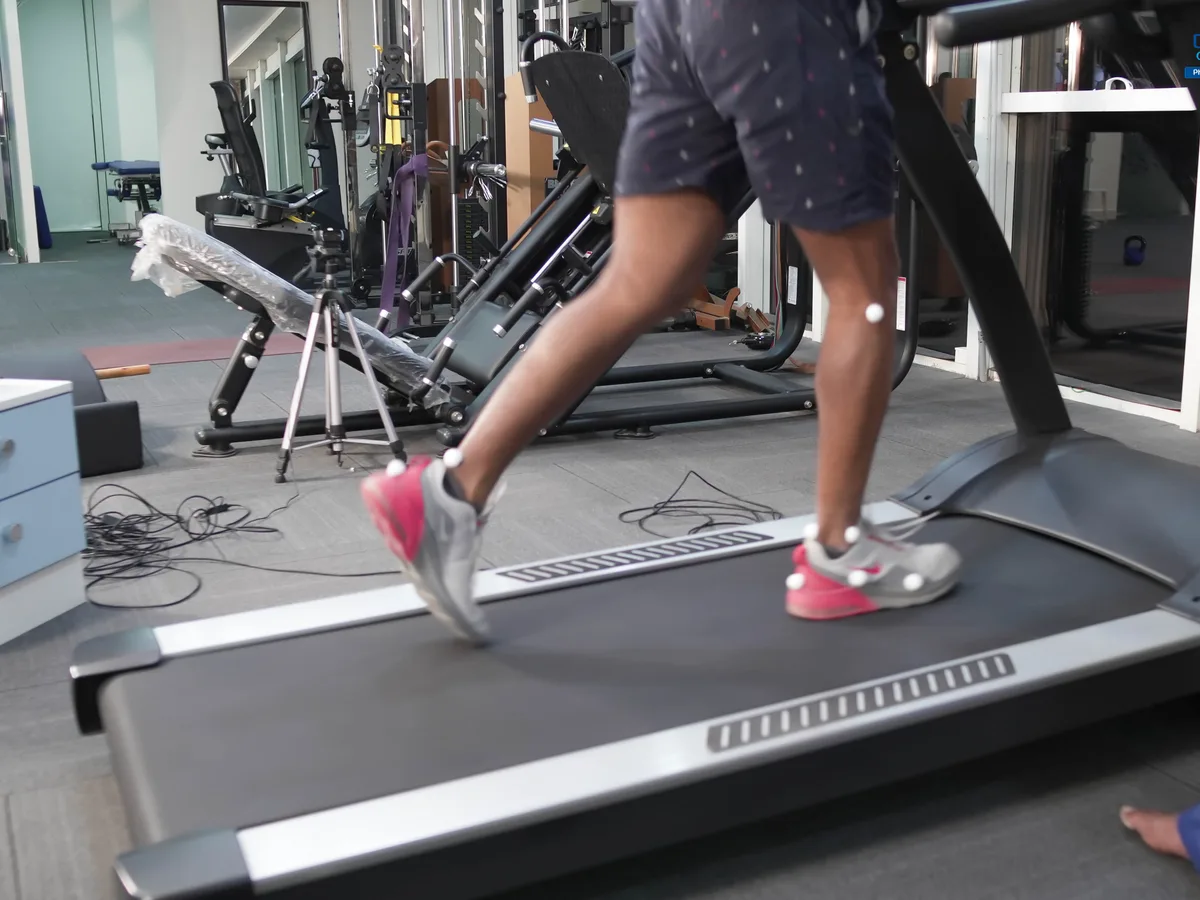
Running mechanics documented
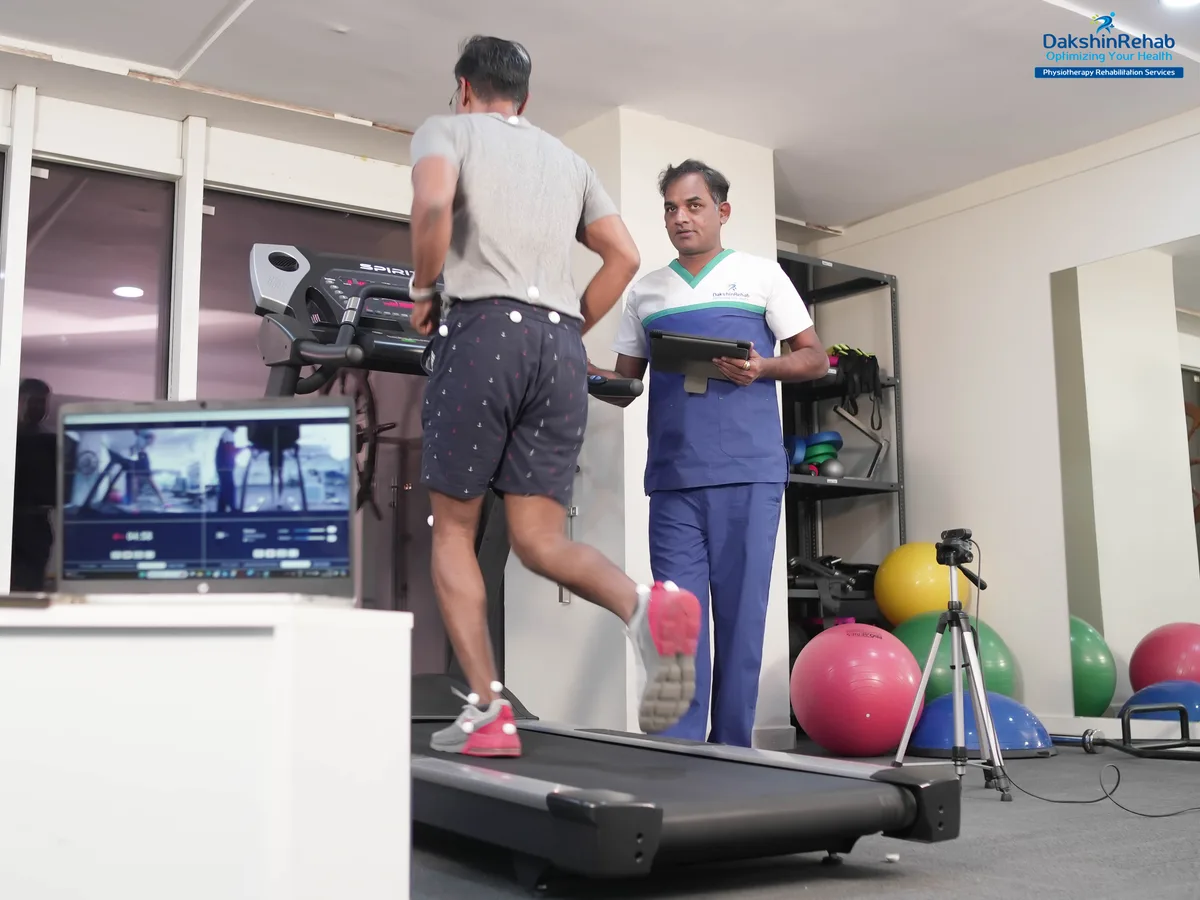
Postural profile captured
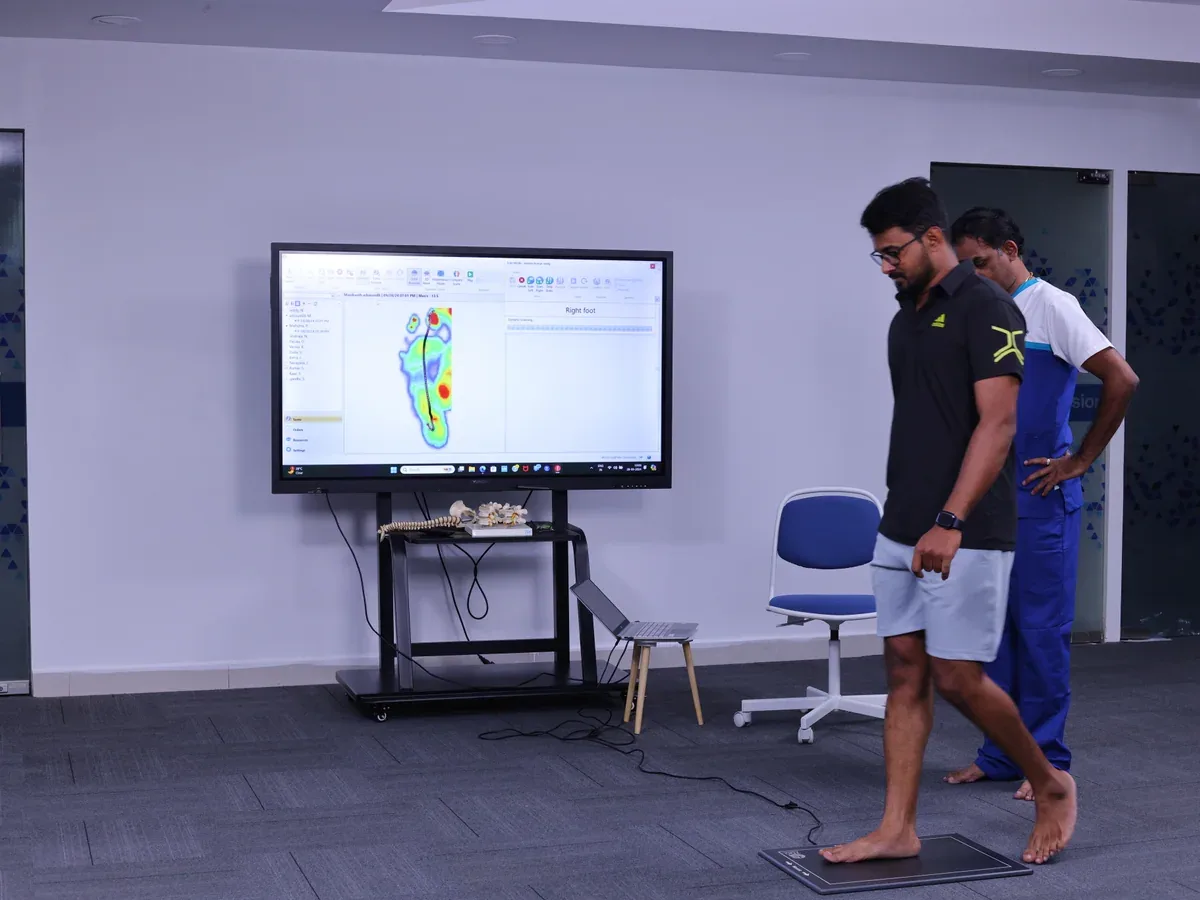
Clear plan and shareable report if requested
Hyderabad's only clinical 3D running biomechanics lab
3D motion capture measures joint angles with precision impossible to achieve with video or visual observation.
Identify biomechanical risk factors before injury occurs. Hip adduction >15° increases patellofemoral pain risk by 8×.
Instead of generic advice, you receive specific, measurable cues based on your unique biomechanical profile.
Optimizing running economy through gait retraining can improve marathon times by 2–5% without additional fitness training.
Objective biomechanical data determines when post-surgical runners are ready to resume training safely.
Test multiple shoe models under 3D capture to identify which shoe optimizes your individual biomechanics.
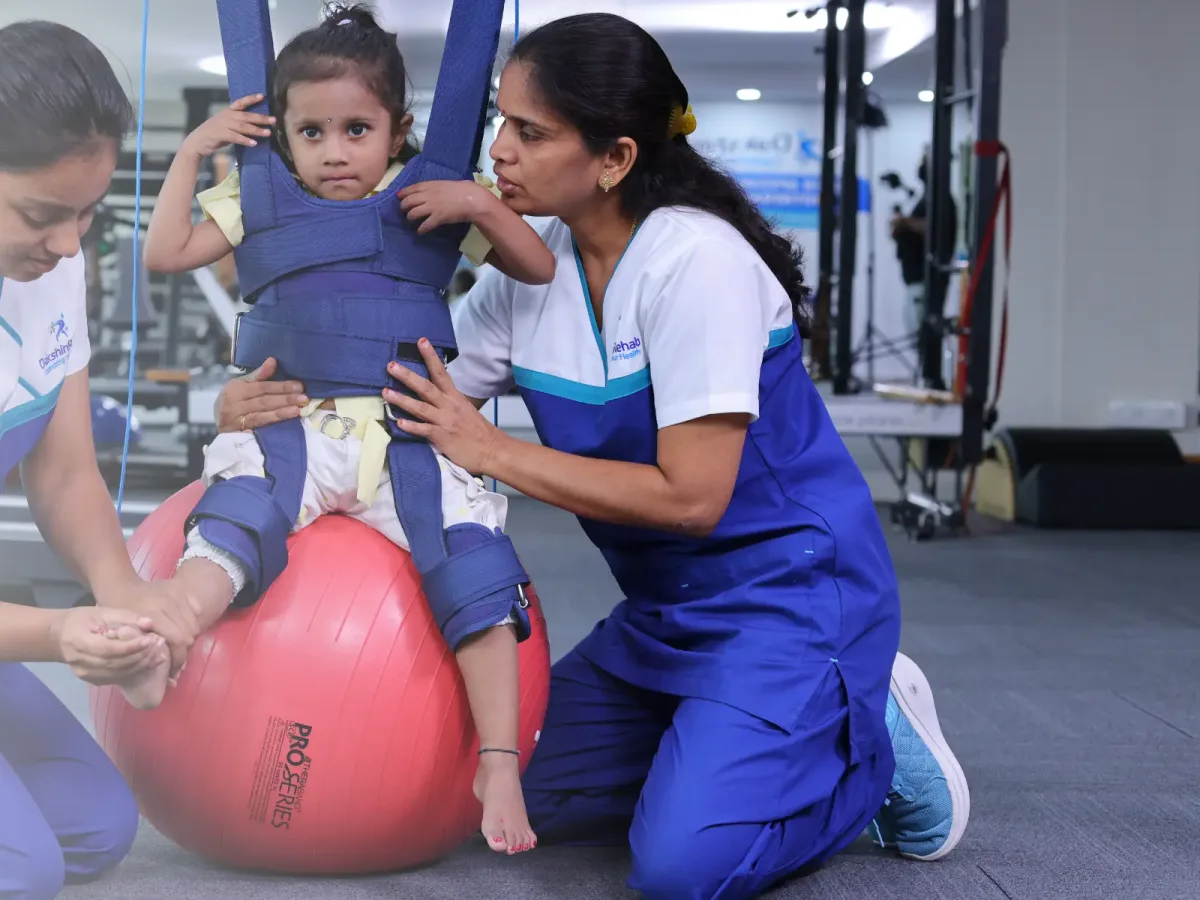
Gait analysis is safe for most runners, but certain acute conditions require stabilization before testing.
Acute fracture or stress fracture in the lower limb
Severe acute sprain with inability to bear weight
Unhealed surgical incision or wound on marker placement sites
Severe cardiovascular limitation preventing treadmill running
Acute flare of inflammatory arthritis
Recent concussion with persistent symptoms (for dual-task testing)
Severe claustrophobia affecting treadmill use
Pregnancy with high-risk complications (treadmill exertion)
Find DakshinRehab on Google Maps to read reviews shared by patients.
Clear answers about how Auptimo GaitON kinematic motion analysis works, what it measures, and who benefits at DakshinRehab Moosapet.
Our expert physiotherapists and rehabilitation specialists at DakshinRehab bring decades of combined experience to your recovery.
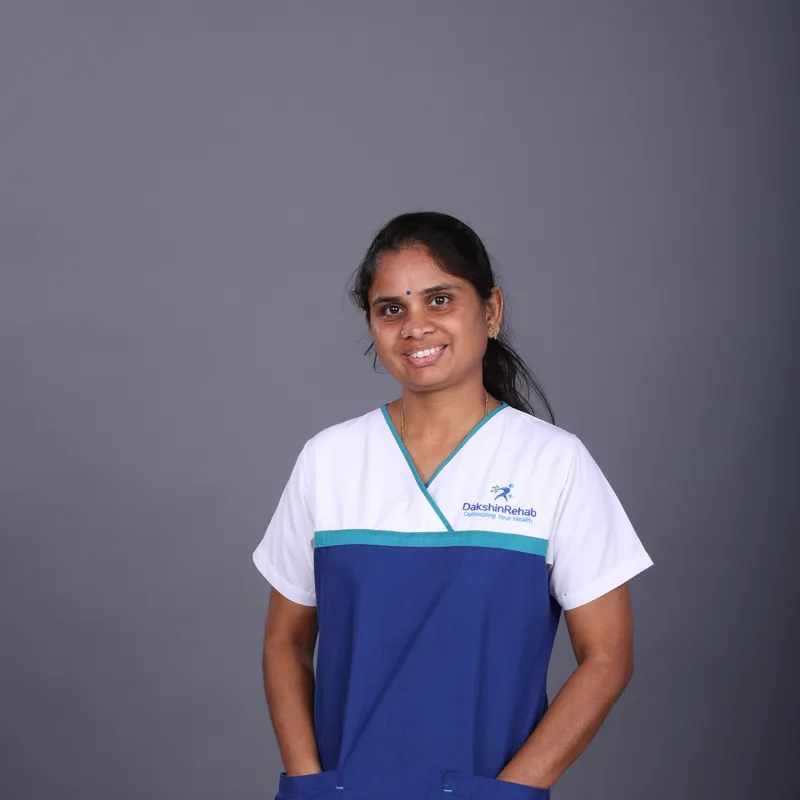
BPT, MPT, IAP Registered
Director, Human Movement Specialist, Physiotherapist
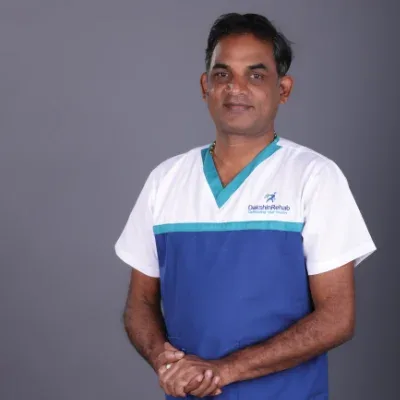
CPO
Consultant Rehabilitation Specialist, CPO | Founder, DakshinRehab
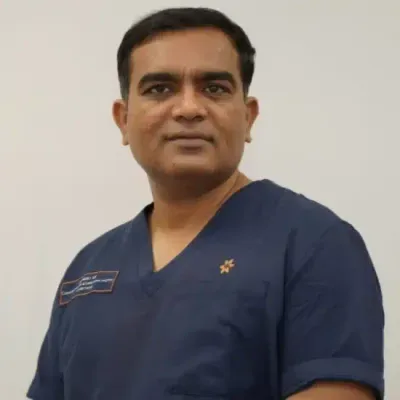
MS (General Surgery), DNB (Vascular Surgery)
Sr. Consultant Vascular & Endovascular Surgeon | Diabetic Foot & Wound Care
Your next step
We have treated approximately 20,000 patients. Your initial assessment is free only when you book an appointment online and attend your confirmed time slot. Treatment charges are explained before treatment begins.
Book an AppointmentHow clinical 3D motion capture compares to conventional running assessment methods
2D smartphone video introduces 5–15° of measurement error and cannot capture frontal or transverse plane motion. 3D motion capture measures all three planes with sub-degree precision.
Learn MoreShoe store assessments use basic pressure plates and generic software. Our clinical 3D lab uses infrared motion capture, instrumented force measurement, and physiotherapist interpretation for medical-grade analysis.
Learn MoreRest treats symptoms temporarily; medication masks pain. 3D gait analysis identifies the biomechanical cause of injury, enabling targeted correction that prevents recurrence.
Learn More