Micro-Lift Effect
Skin Decompression
Tape recoil creates microscopic skin lift (0.5–2 mm), reducing pressure on pain receptors and improving interstitial fluid flow.
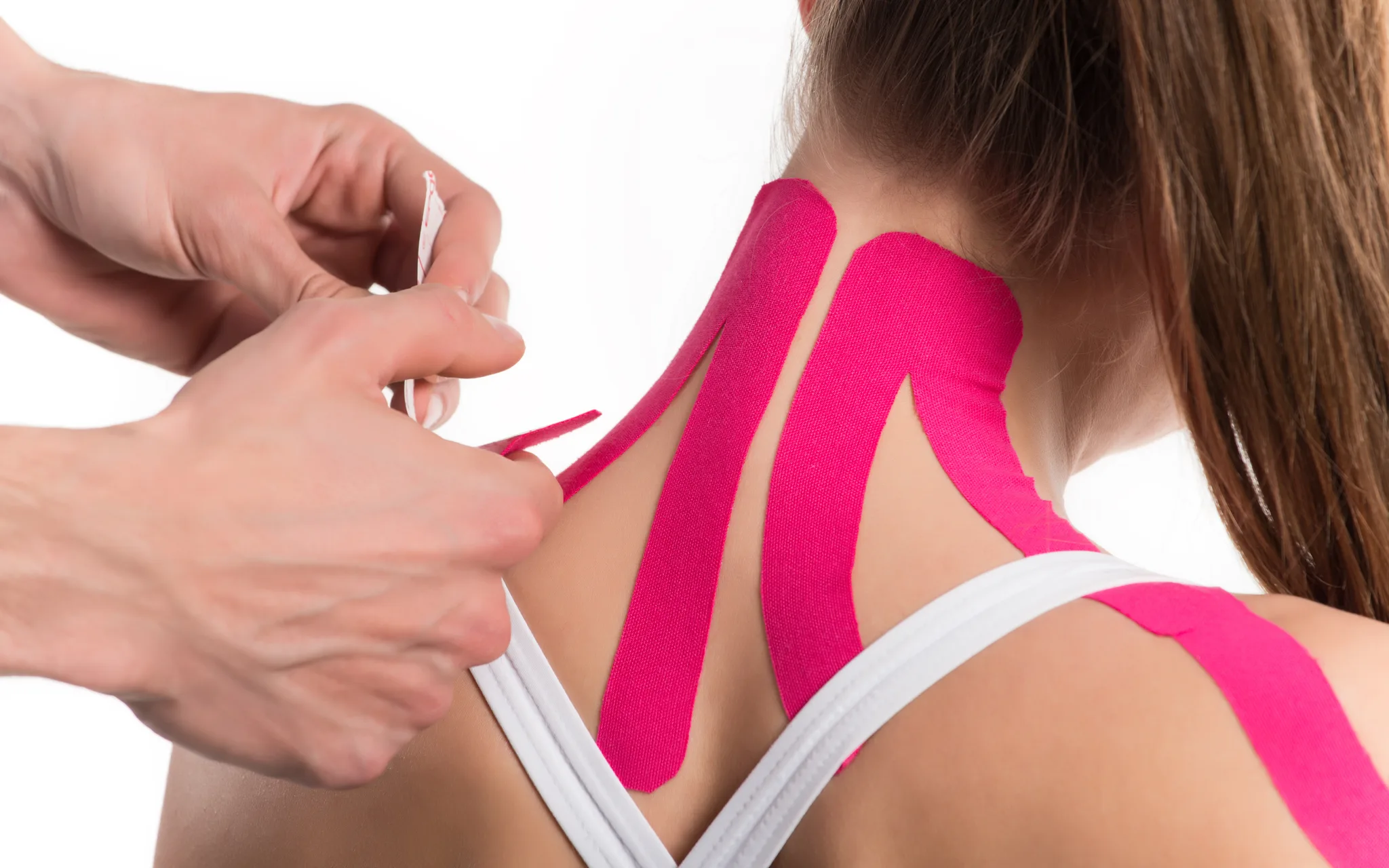
MPT-certified application of elastic therapeutic tape for muscle support, swelling reduction and postural correction — used as an adjunct to your physiotherapy plan at our Moosapet clinic.
Personalised, technology-driven rehabilitation in Moosapet, Hyderabad.
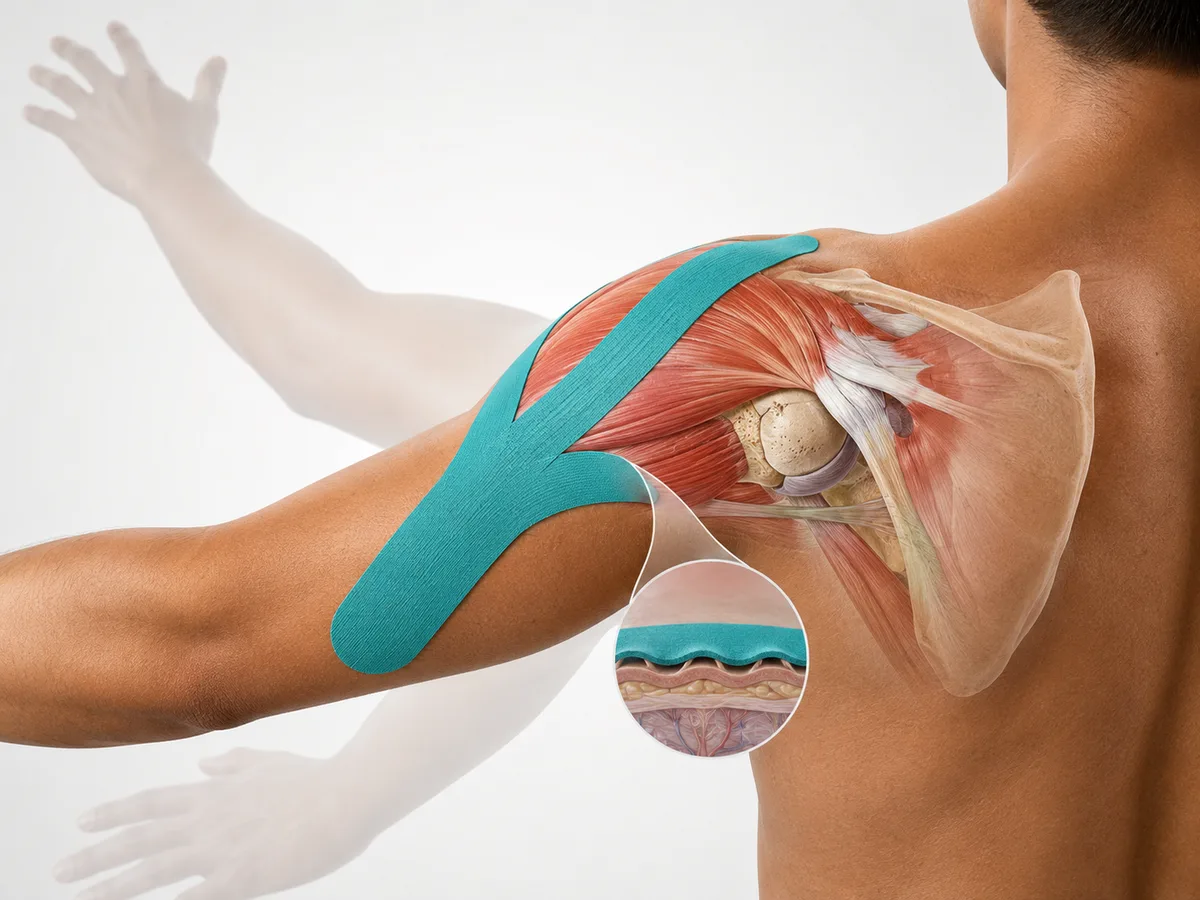
Tape recoil creates microscopic skin lift (0.5–2 mm), reducing pressure on pain receptors and improving interstitial fluid flow.
Constant tactile stimulation enhances body awareness, helping patients maintain correct posture and movement patterns between sessions.
Tape recoil creates microscopic skin lift (0.5–2 mm), reducing pressure on pain receptors and improving interstitial fluid flow.
Constant tactile stimulation enhances body awareness, helping patients maintain correct posture and movement patterns between sessions.
Wave or fan-shaped applications create channels that direct excess fluid toward lymph nodes, reducing edema faster than compression.
When applied with the right tension and direction, kinesiology tape lifts the skin slightly off the tissue beneath it. That microscopic gap is where the proposed mechanism happens: pressure on pain receptors drops, lymph and blood circulate more freely, and proprioceptive feedback helps you move with better control.
Kinesio Taping uses an elastic cotton tape with a medical-grade acrylic adhesive that activates with body heat. Unlike rigid athletic tape, it stretches up to ~140% of its resting length, so it supports without immobilising — you keep full range of motion.
We use it as an adjunct alongside manual therapy, exercise prescription and our technology-led protocols (3-Tesla EMTT, Shockwave, Redcord). On its own, KT is unlikely to resolve the underlying pathology.
Evidence for KT is mixed and condition-specific. Where research supports it, effect sizes are typically small-to-moderate — best used as part of a wider rehab plan.
The cut shape is matched to the tissue we're treating. Your physiotherapist will choose the right one after assessment — you should never need to guess which strip you're getting.
Single straight strip — the workhorse. Used along the line of pull of a single muscle.
Anchor splits into two tails to wrap around a muscle belly — e.g. biceps or hamstrings.
Two tails crossing at the focal point — used for trigger points and broader muscle groups.
Multiple thin tails fan out from one anchor — used for swelling and lymphatic drainage.
Both ends anchored, with a webbed centre — for bruising, contusions and localised edema.
The same tape can do four very different jobs depending on direction, anchor and tension. Picking the wrong one is a common DIY mistake — assessment first, taping second.
| Technique | Direction | Purpose |
|---|---|---|
1Facilitation | Origin → Insertion | Activates an under-firing or weak muscle — used to support recovery and re-engage stabilisers. |
2Inhibition | Insertion → Origin | Down-regulates an over-active or guarded muscle for relaxation and pain relief. |
3Mechanical Correction | Directional pull | Applies a specific tension to nudge joint or postural alignment — e.g. patella tracking. |
4Lymphatic Correction | Fan toward node | Light-tension fan to channel interstitial fluid toward lymph nodes and reduce swelling. |
We don't oversell taping. Used in the right context it's a low-risk, low-cost adjunct — but it isn't right for every patient or condition.
Safety note — when KT is not appropriate. We will not apply kinesiology tape over open wounds, active skin infections, known allergy to acrylic adhesives, the area of a deep vein thrombosis (DVT), the site of a known malignancy, or directly over fragile / broken skin. Pregnancy, advanced diabetes and lymphatic conditions require physician clearance — please tell us about any active conditions during assessment.
Taping itself takes minutes — most of the appointment is the assessment that makes the tape work.
Brief history, posture screen and movement test to confirm KT is appropriate for your condition.
10–15 minWe clean the area, clip excess hair if needed, and check for any allergy or sensitivity history.
2–3 minRight strip shape, direction and tension applied to your specific muscle, joint or lymph pathway.
5–8 minYou leave with clear wear, water and removal instructions — and your home exercise plan.
5 minA quick side-by-side so you know where KT fits in your wider rehab plan — and where another option may serve you better.
| Feature | Kinesio Taping | Rigid sports taping | Brace / orthosis | Manual therapy |
|---|---|---|---|---|
| Allows full range of motion | Not available | Partial | ||
| Wearable for 3–5 days | 1–2 days | Not available | ||
| Targets swelling & lymph | Not available | Not available | Partial | |
| Strong joint immobilisation | Not available | Not available | ||
| Drug-free, non-invasive | ||||
| Addresses underlying cause | Not available | Not available | Not available | |
| Typical cost / session | ₹400–₹800 | ₹300–₹600 | ₹1,500–₹6,000 one-off | ₹600–₹1,200 |
Comparison based on publicly available information. Prices and services vary by clinic.
The tape is doing its job between sessions, so a little aftercare matters. Save or download the full guide for your fridge / phone.
One-pager covering wear, water, removal and red-flag signs — written by our MPT team.
KT is most often delivered as part of a wider physiotherapy package — which works out cheaper than booking it as a stand-alone session. Both options below.
For maintenance use, sports events, or as a follow-up between full physio sessions.
Our 12-week musculoskeletal protocols include KT applications at no extra cost where clinically indicated — typically saving ₹2,400–₹4,800 over the course.
View packagesEvery taping at DakshinRehab is performed by an MPT-qualified physiotherapist, not a technician. You’ll get the same clinician across your sessions wherever possible.
Quick, plain-English answers to the questions our patients ask most often, written by the MPT-certified team at DakshinRehab Moosapet.
Still have questions?
Trusted by patients across Hyderabad — we serve Moosapet, Kukatpally, KPHB, Miyapur, Gachibowli and Hitec City, with easy metro and on-site parking access.
This week · Free movement assessment
Book a free 15-minute assessment with our MPT team. We’ll tell you honestly whether Kinesio Taping will help — or whether a different protocol is the better next step.
Book Free KT Assessment