Protect
Respect the wound
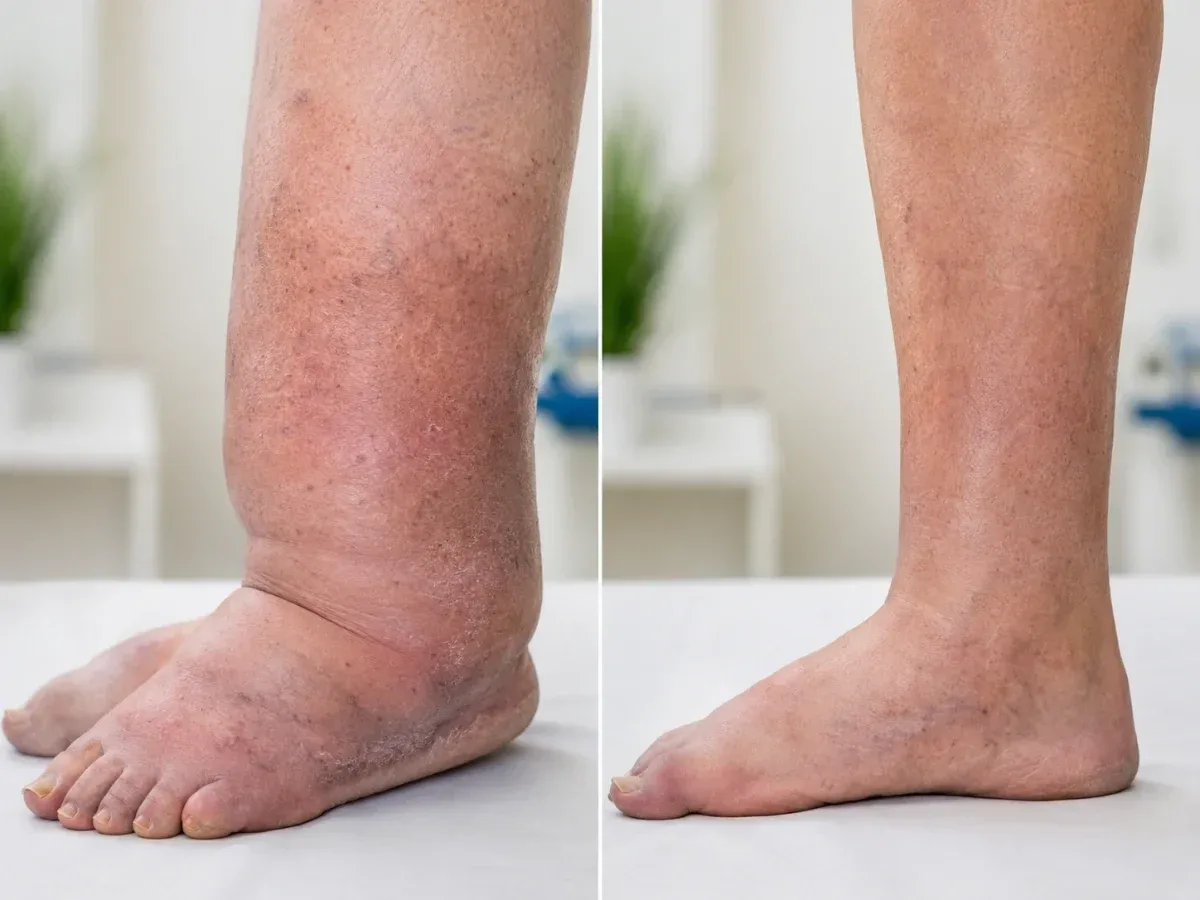
Follow offloading, skin protection and weight-bearing instructions.
DakshinRehab combines pressure protection, orthotic support, selected technology and safe movement alongside your medical wound-care plan. Assessment guides which options suit your wound and daily activities.
Personalised, technology-driven rehabilitation in Moosapet, Hyderabad.
We begin with your medical history, wound-care instructions and current mobility. Your assessment identifies the support you need and any medical or surgical review needed first.
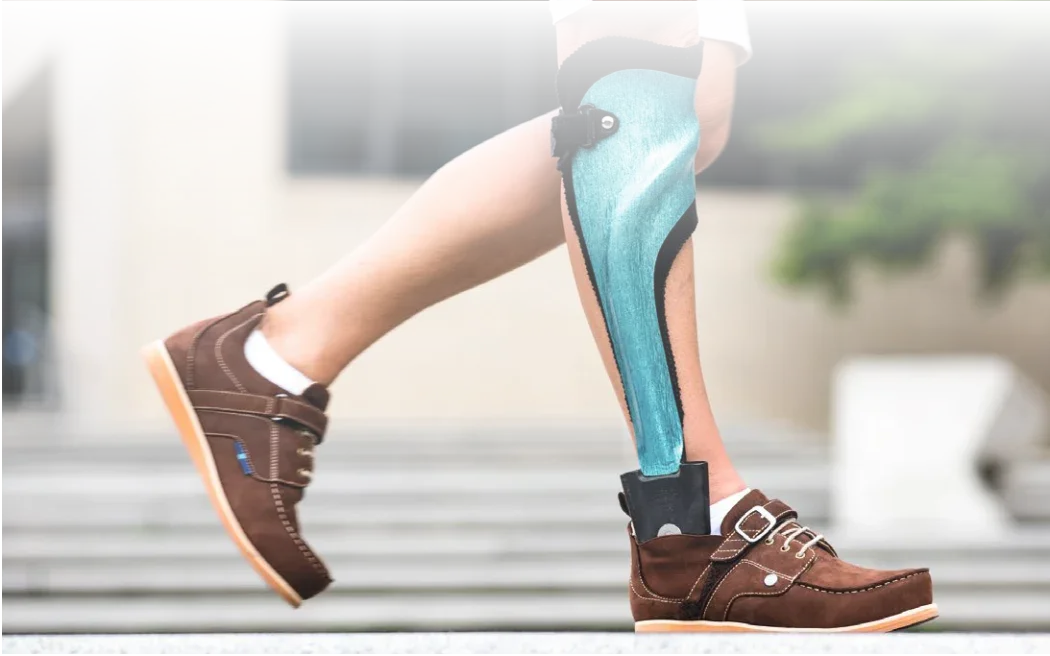
Pressure protection, walking aids, orthoses, technology and movement training are selected for your presentation. The plan progresses with your response and your treating team’s advice.
Follow offloading, skin protection and weight-bearing instructions.
Build a practical plan for walking, transfers and daily activities.
Adjust care to your function, clinical progress and medical advice.
Your wound-care instructions and everyday needs guide the plan. Assessment comes before technology, and medical wound care continues alongside rehabilitation.
Review the wound history, medical or surgical advice, circulation concerns, current dressings and weight-bearing restrictions.
Discuss prescribed offloading, positioning, footwear, orthoses and walking aids. Protecting the wound does not mean simply walking more.
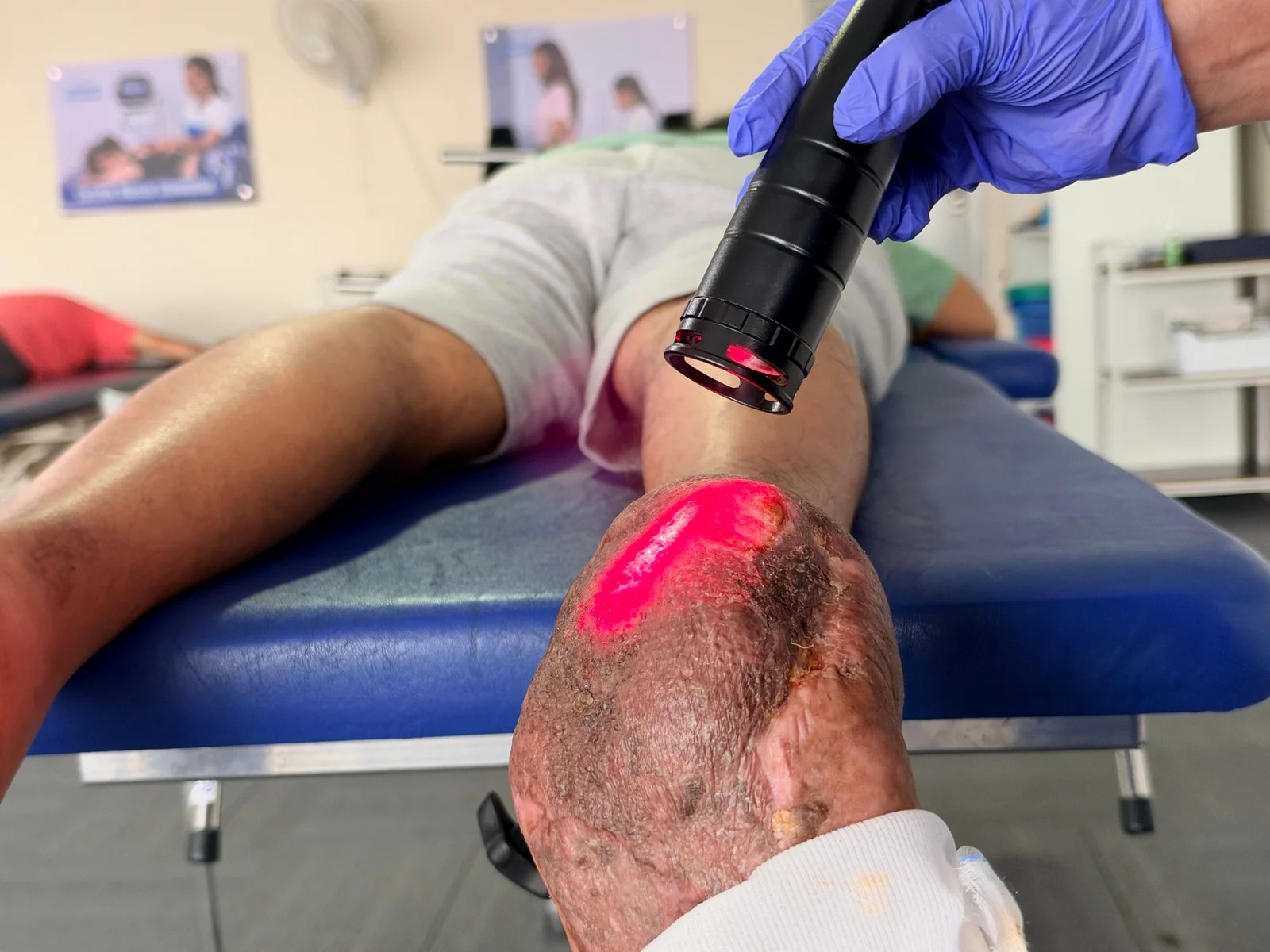
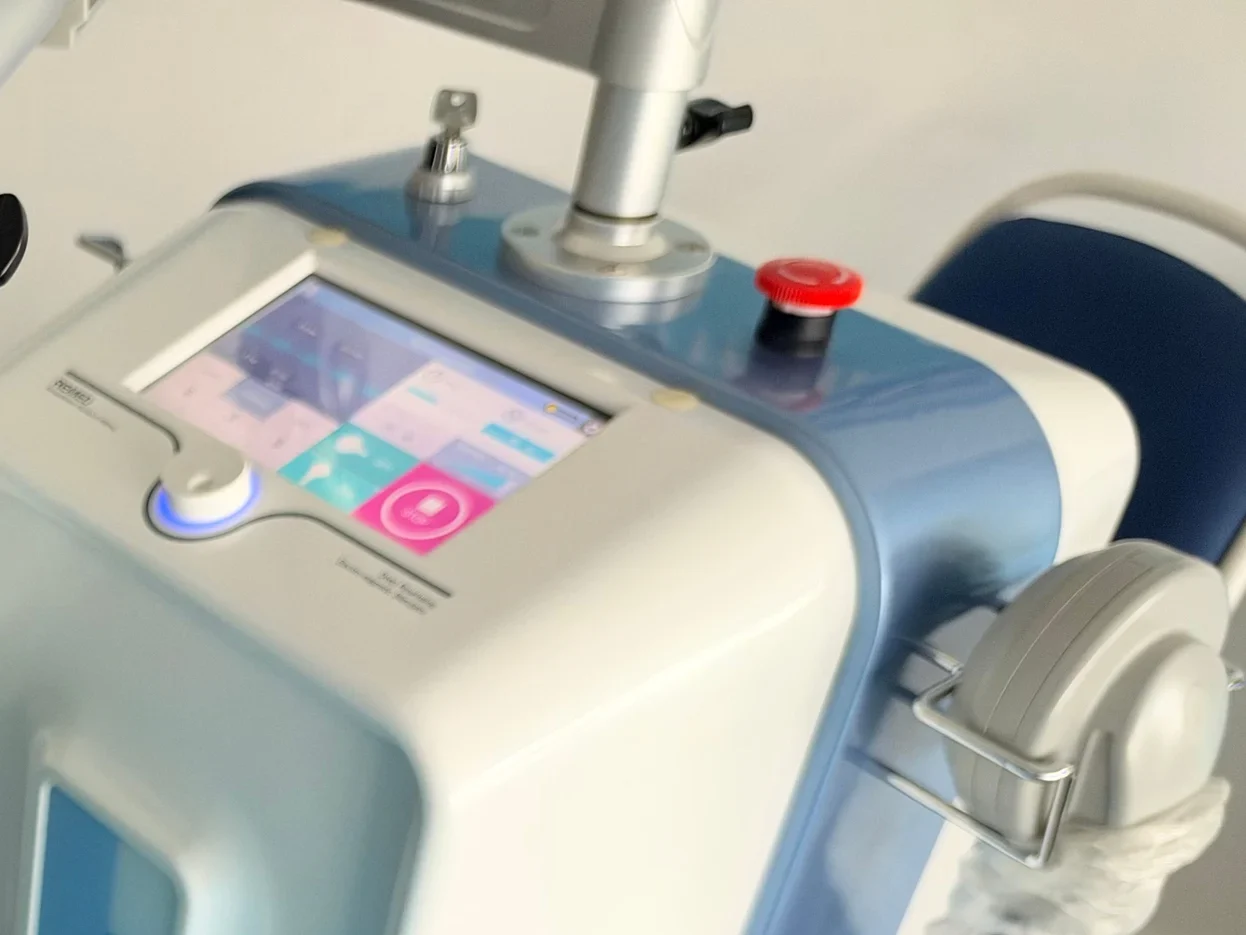
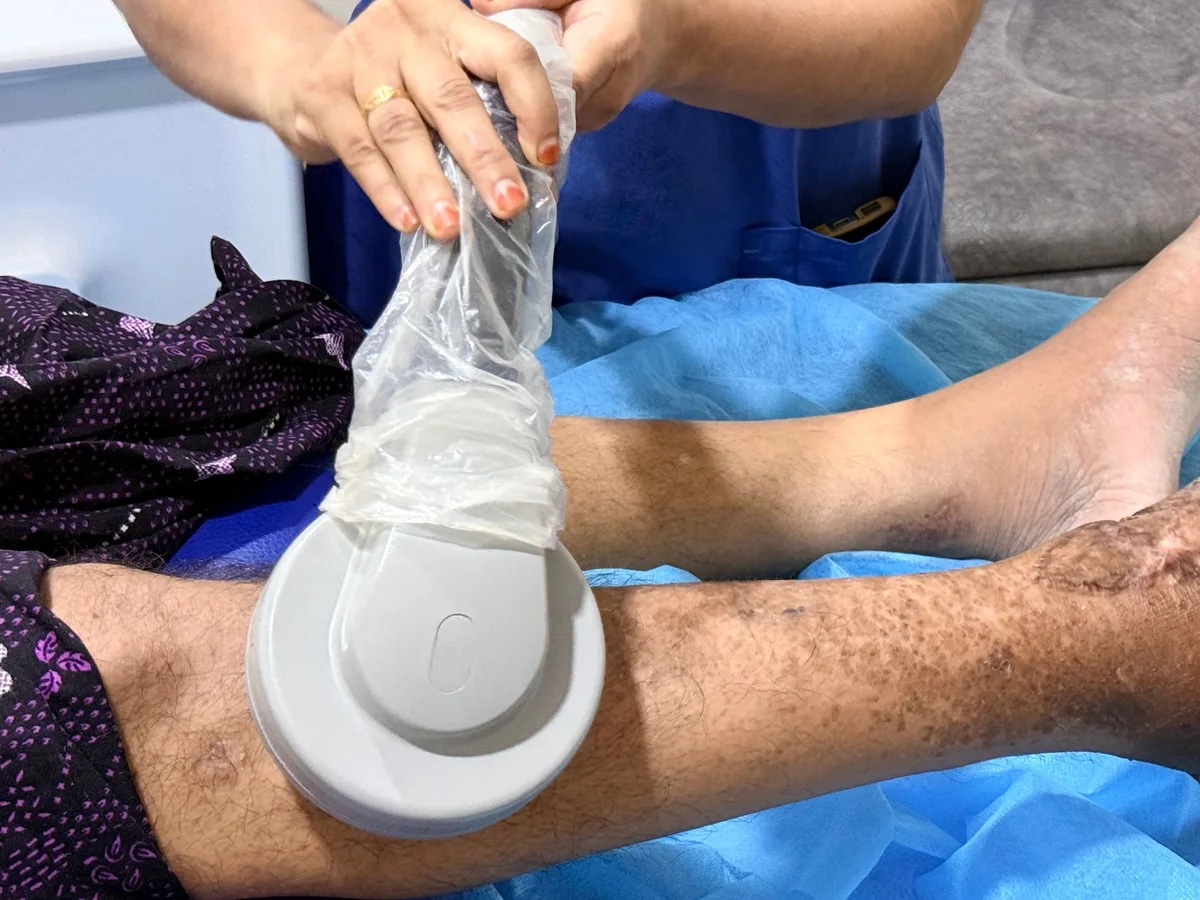
Class IV laser and Salus Talent Pro 3 Tesla rPMS may be considered individually after device-specific screening. They do not replace definitive wound, infection, vascular or surgical care.
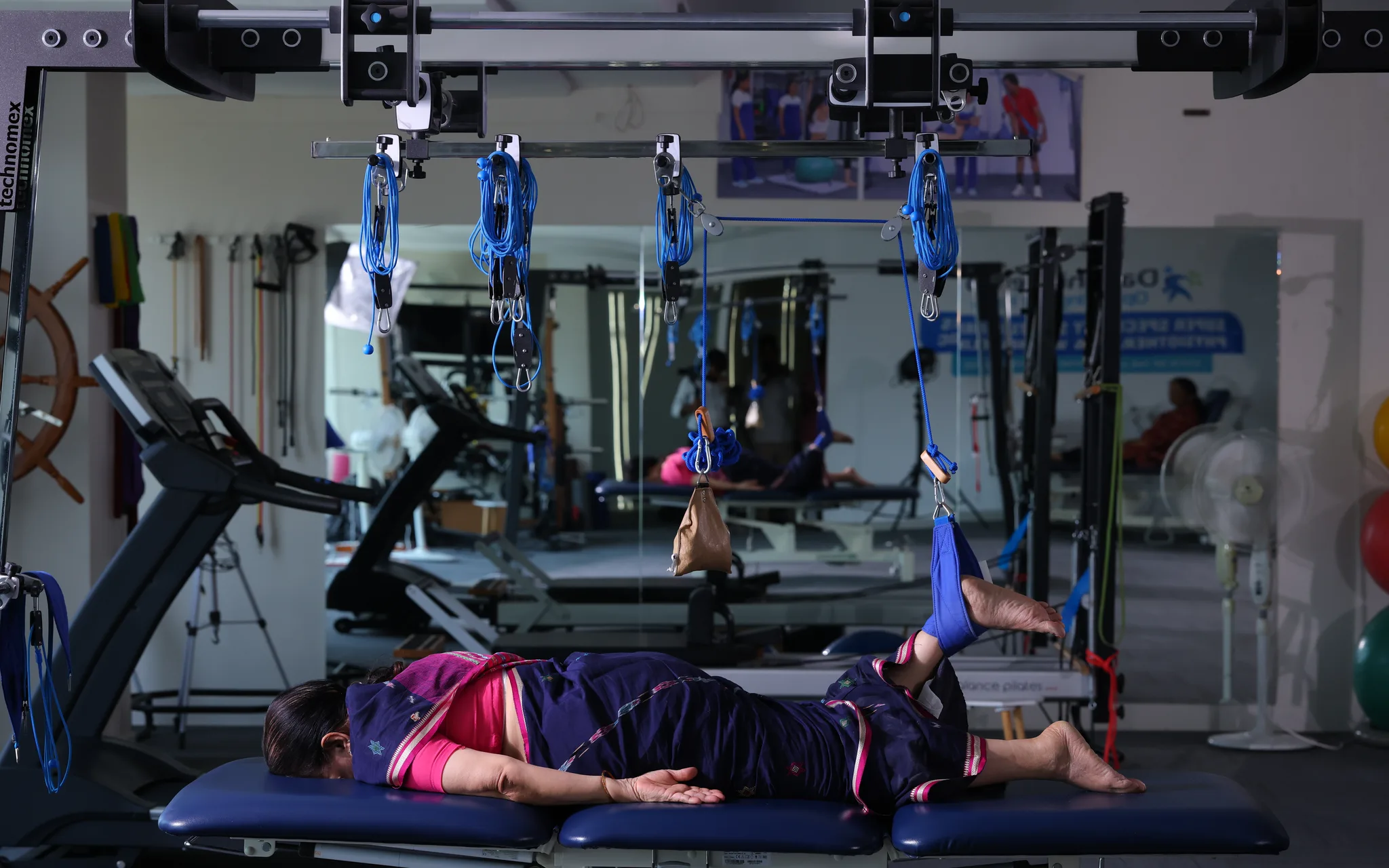
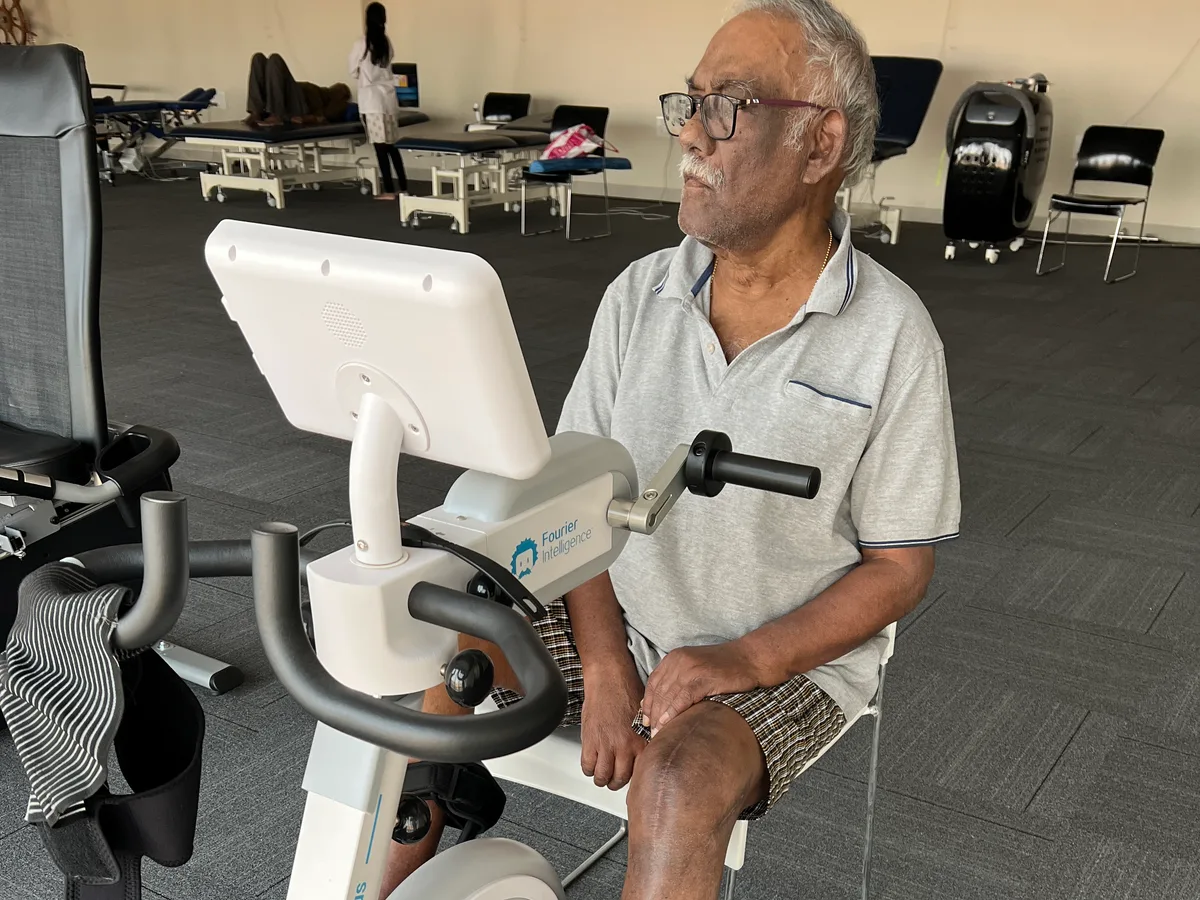
Assess transfers, balance, walking and adapted exercise within your precautions. Hands-on rehabilitation is selected for movement needs, away from vulnerable wound tissue.
Track comfort, daily tasks and clinical changes. Progress follows your assessment and treating team’s advice, with no fixed healing promise.
Traumatic, diabetic, pressure-related and vascular wounds have different needs. Coordinate surgeon, vascular, diabetes or wound-team review when appropriate; urgent concerns need medical care first.
Bring referral notes, medication details, wound-care instructions and your prescribed walking aids or offloading device.
Our clinic-owned photographs and recordings show selected technology, wound protection and clinician-led movement assessment. They make the care easier to understand; your treatment is based on your own assessment.
The following clinic videos show a foot affected by a wound and may be uncomfortable to view. They are examples of clinician-led care, not instructions for home treatment. Audio has been removed; descriptive captions and text are provided.
DakshinRehab treatment record · 24 seconds
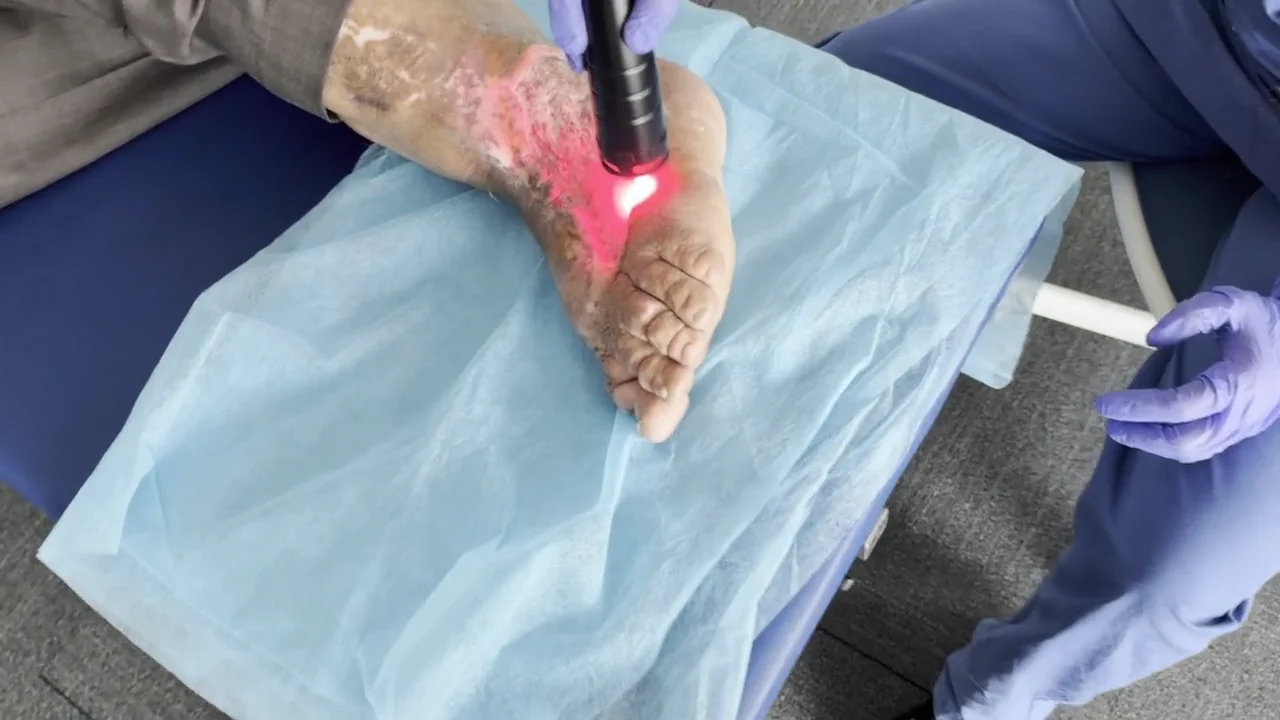
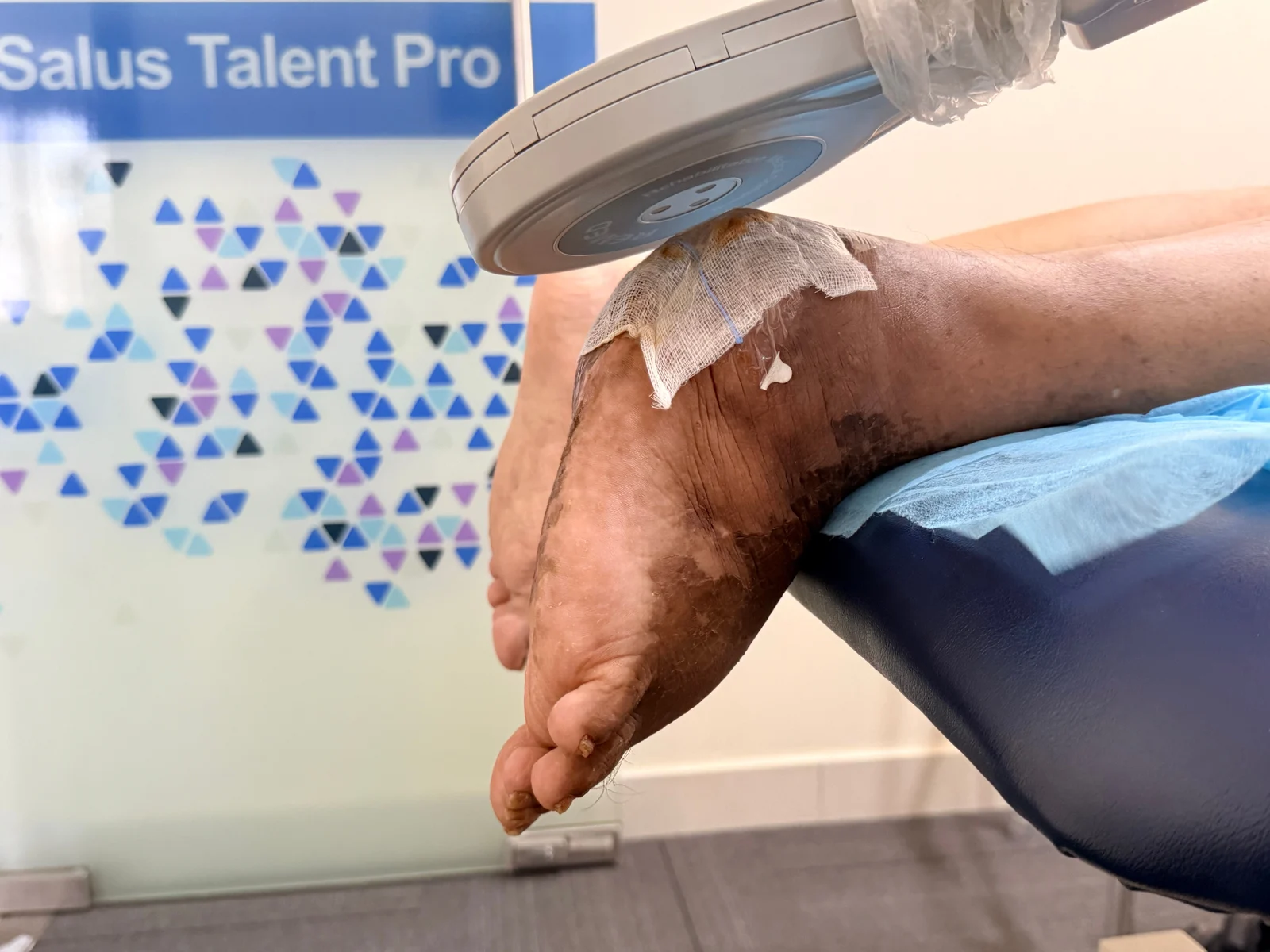
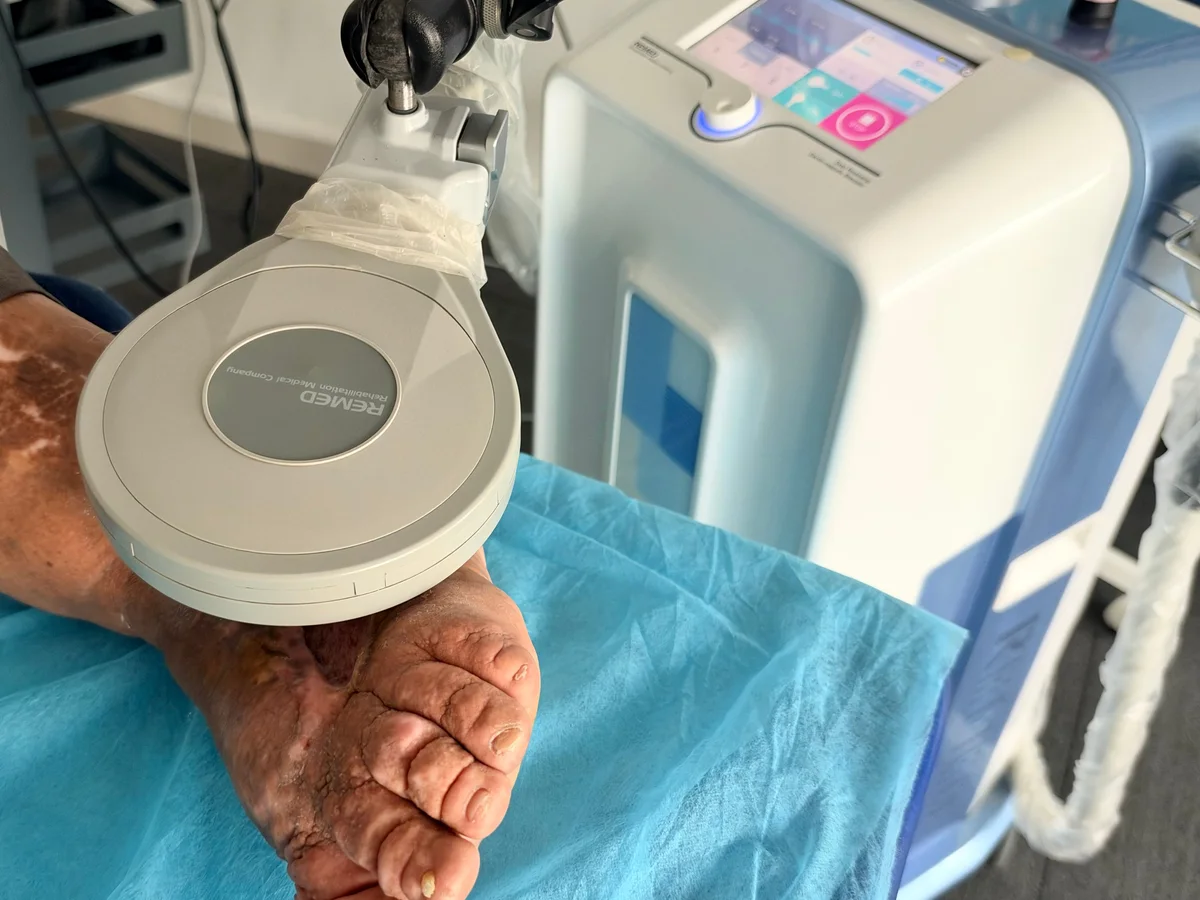
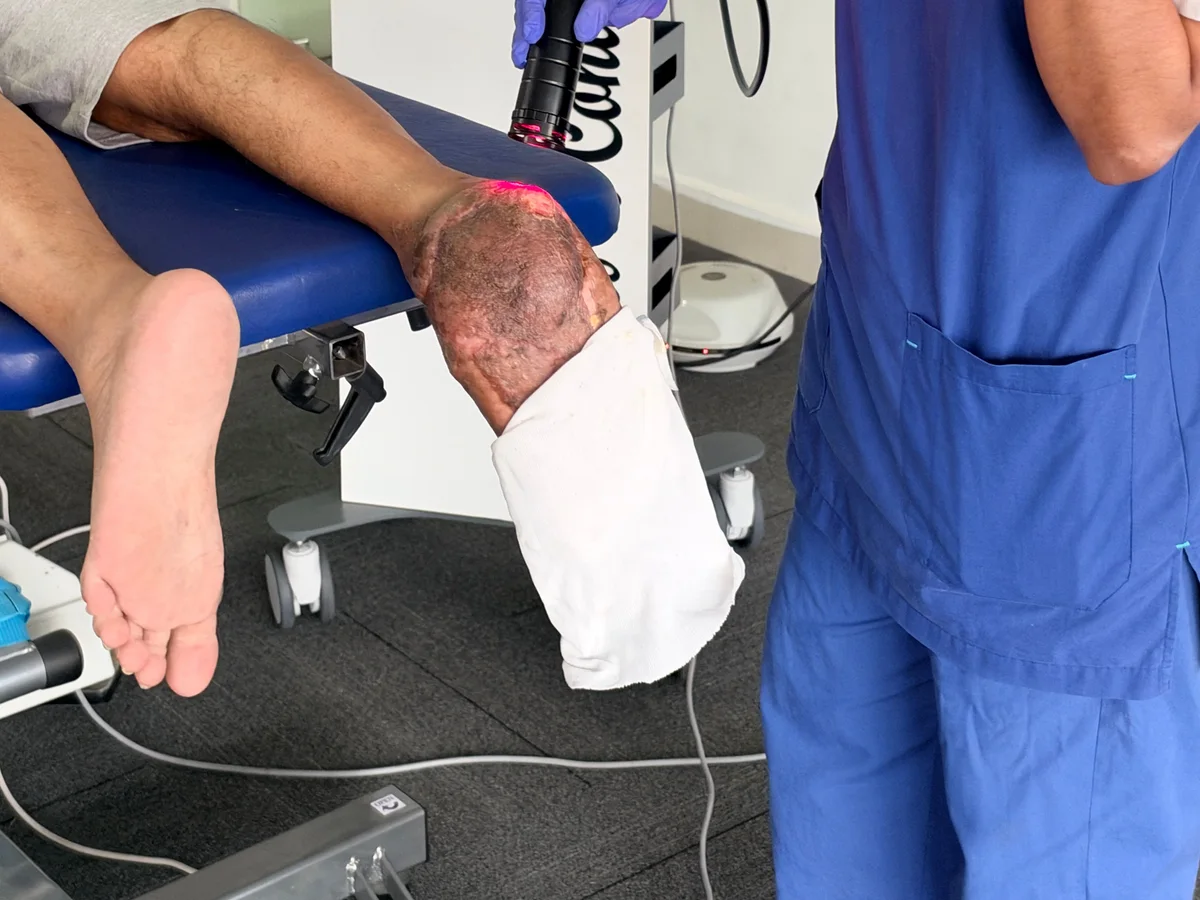
A clinician applies a laser handpiece around the affected foot and heel in this clinic-owned recording. It illustrates one part of an individual programme alongside wound care, pressure protection and rehabilitation.
A gloved clinician moves the laser handpiece around the foot and heel while the person rests on a treatment plinth. The recording shows application in the clinic, not a self-treatment technique or a comparison of healing outcomes. Class IV laser is selected after assessment, with device precautions and appropriate eye protection, alongside the medical wound-care plan.
DakshinRehab rehabilitation record · 24 seconds
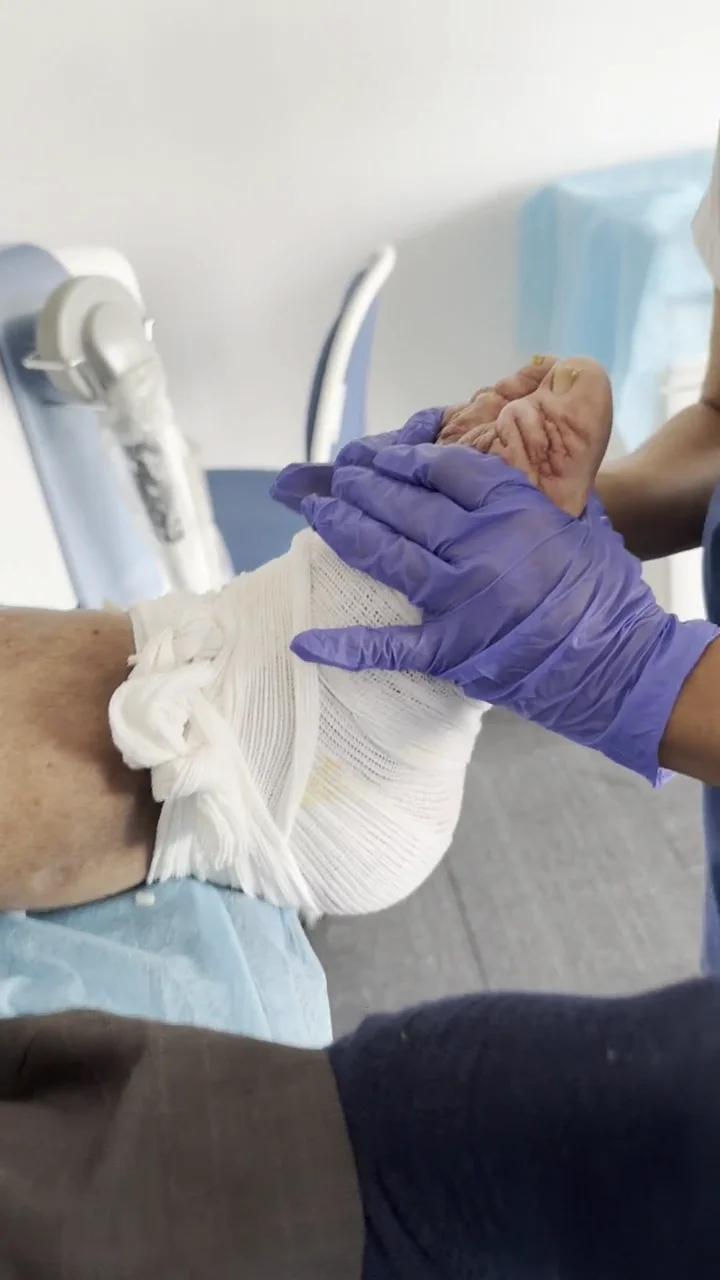
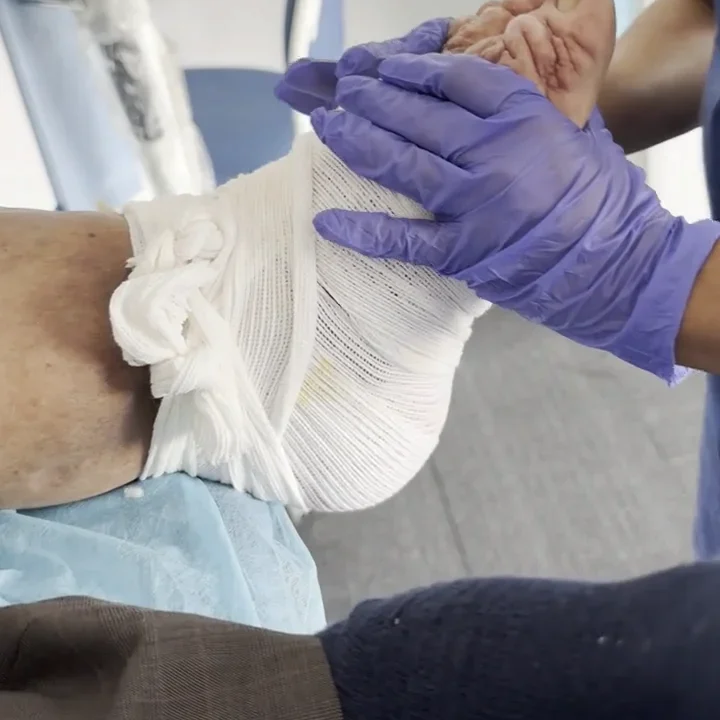
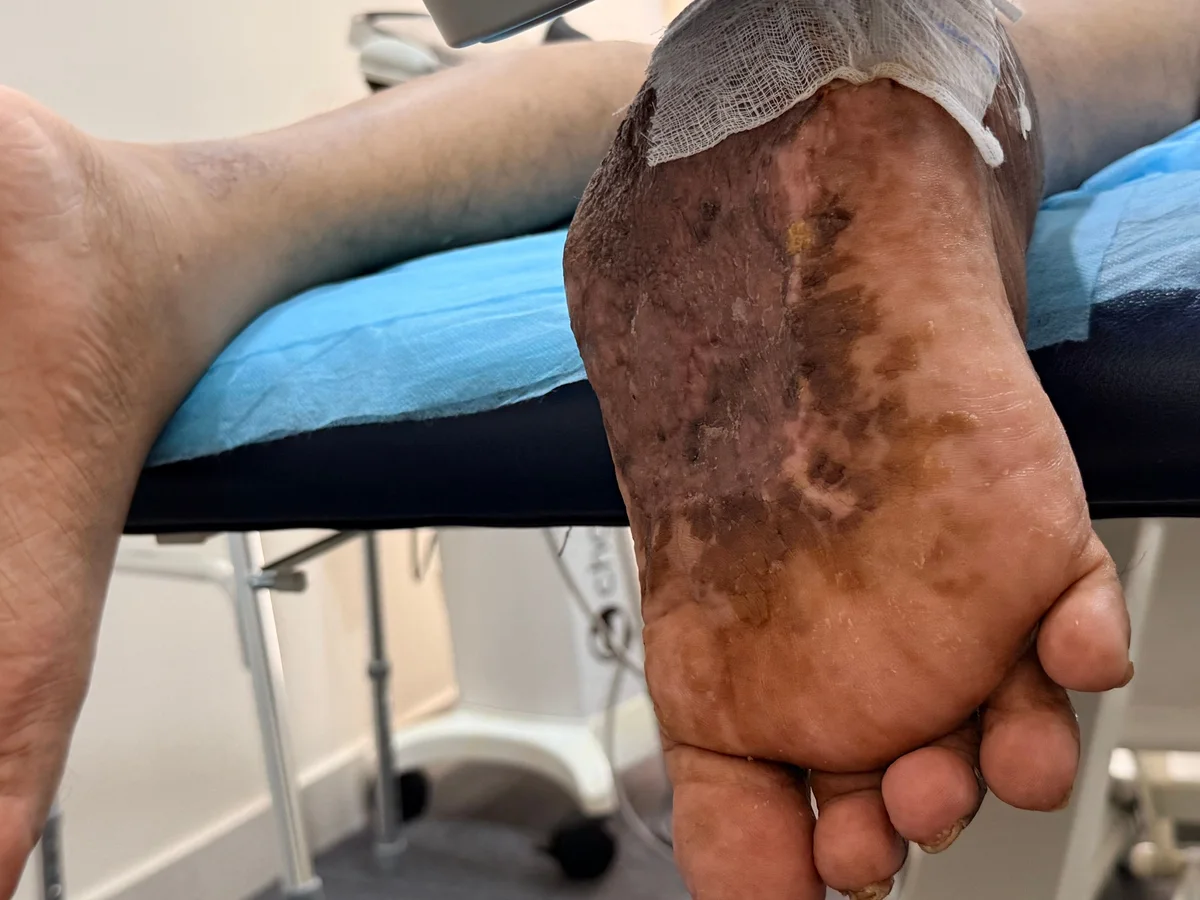
A clinician supports the dressed foot and assesses movement. This shows the rehabilitation side of wound management: protecting the area while considering movement, comfort and daily function within the person’s restrictions.
The clinician supports the foot with both gloved hands and assesses movement while the heel and ankle remain dressed. The recording is an example of clinician-led assessment, not instructions to reproduce at home. Permitted movement, loading and manual techniques depend on the wound, dressing, surgical advice and individual precautions; vulnerable wound tissue is protected.
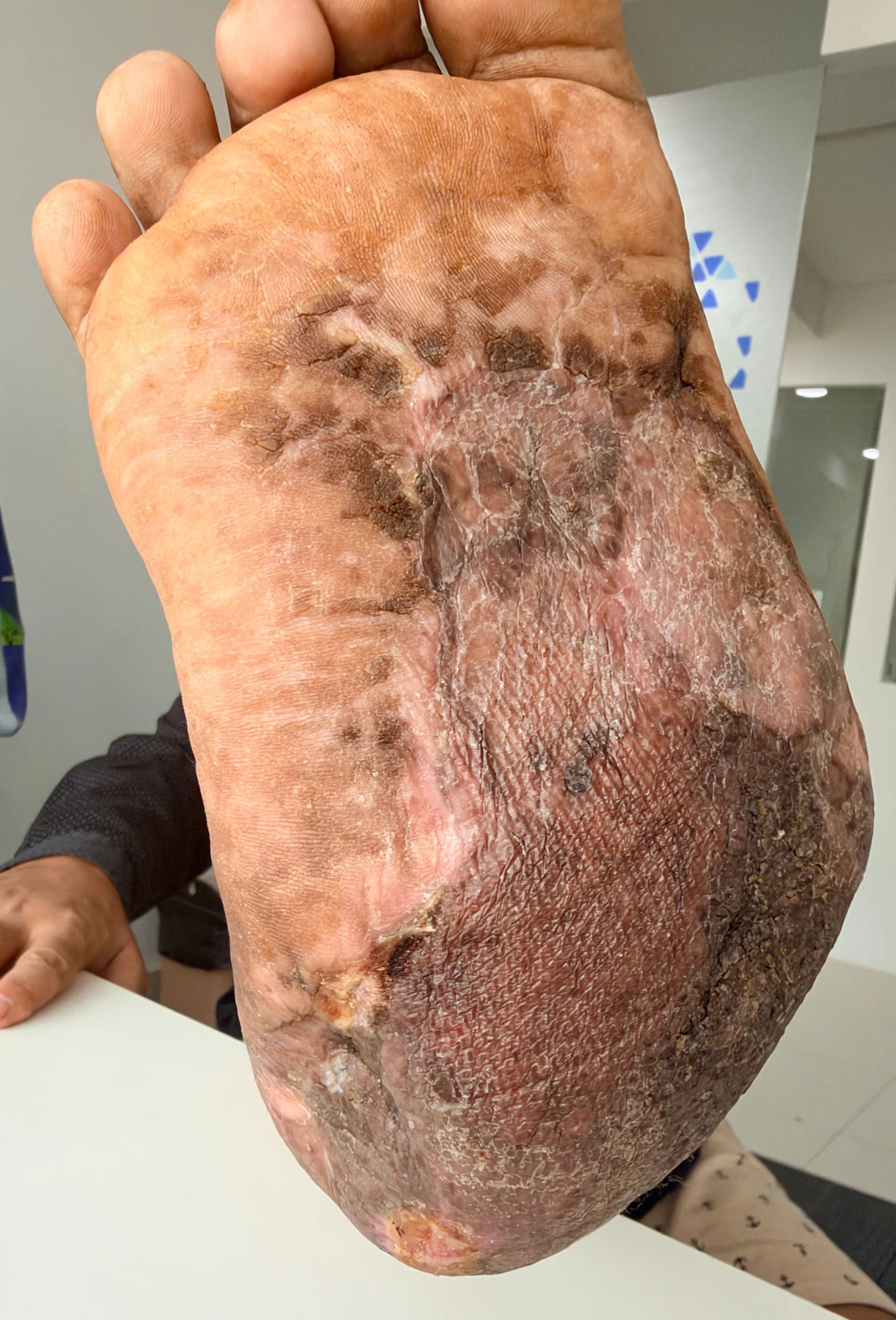
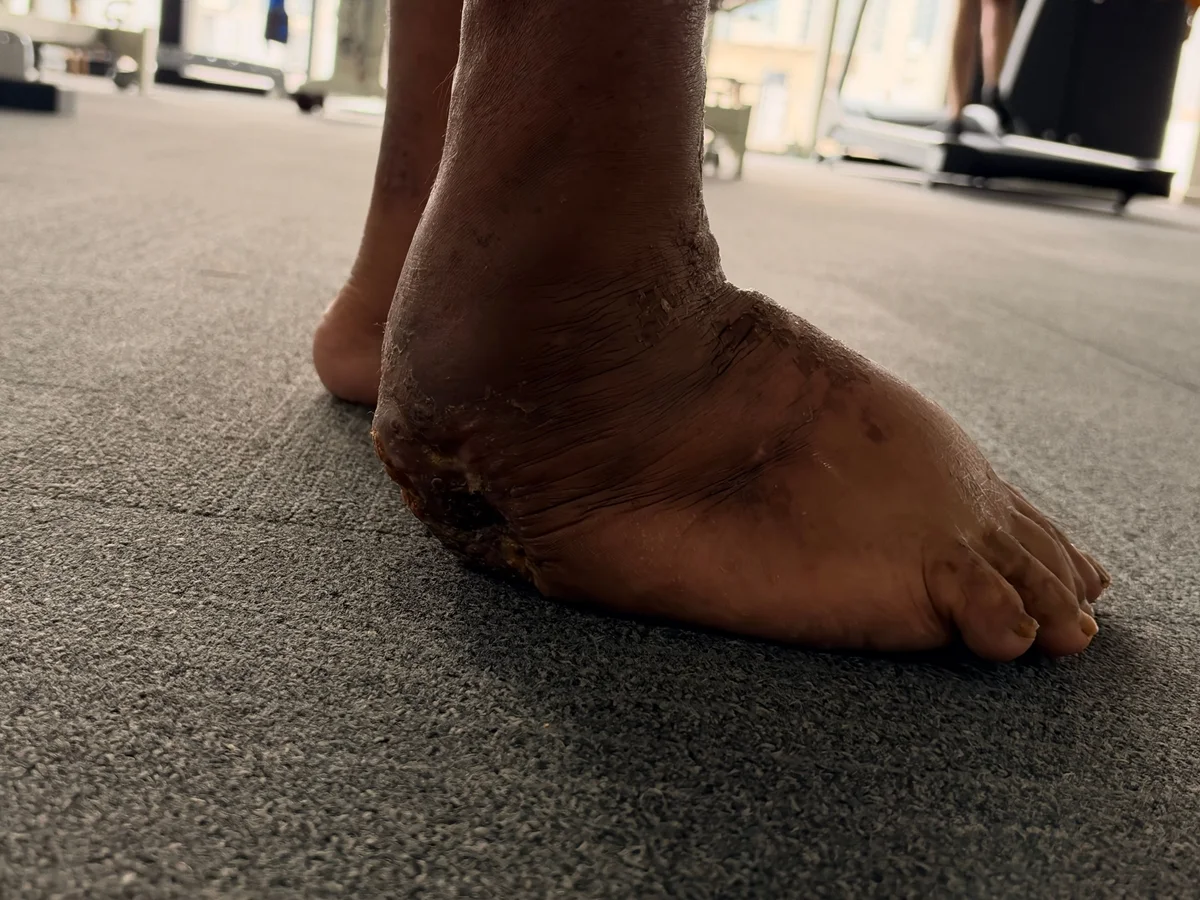
The treating team observed positive wound-healing progress in a post-traumatic foot wound during a programme that included Class IV laser and Salus Talent Pro rPMS. The images below were supplied by the clinic as initial and follow-up records.
This is one clinical observation. The separate contribution of each treatment is unknown. Different angles and lighting limit visual comparison; no healing percentage, closure claim or treatment timeline is inferred from the photographs.
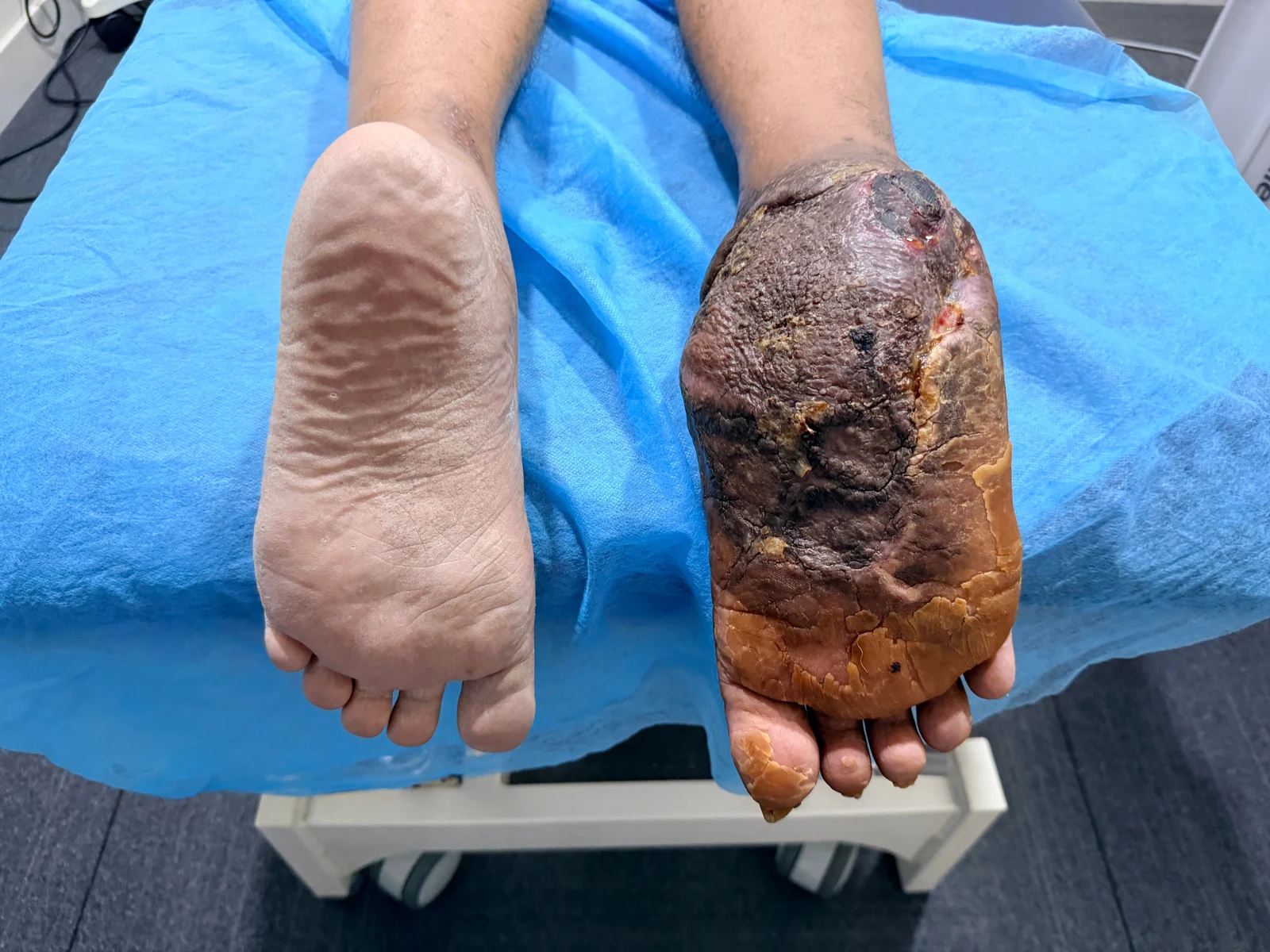
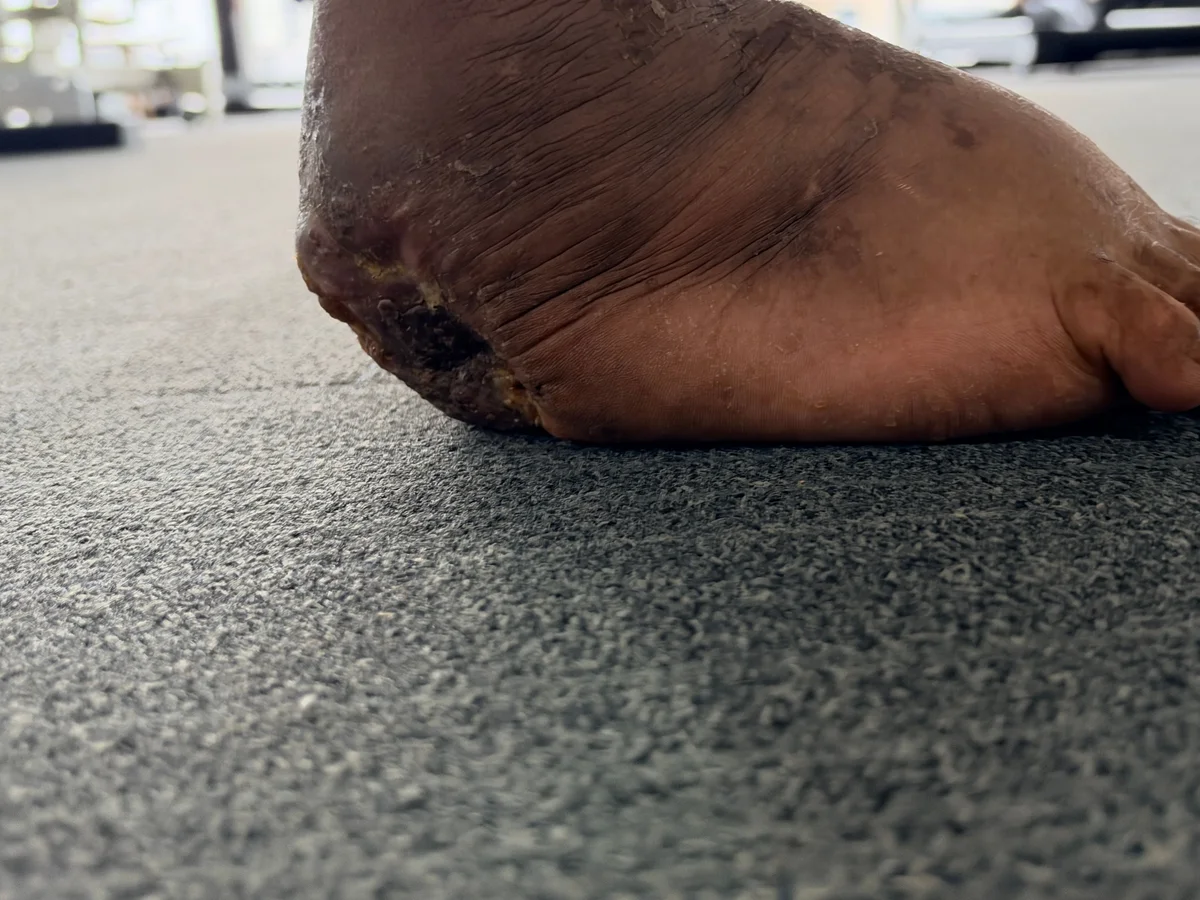
Clinic-supplied photograph labelled before treatment, documenting the foot and heel at that stage.
Clinic-supplied photograph labelled after treatment, shown as part of the individual clinical record.
Research reports encouraging results for high-intensity laser in selected refractory wounds. Evidence varies by wound type and device; the exact Class IV laser plus Salus Talent Pro rPMS combination is not established by that trial. rPMS differs from low-intensity PEMF. Clinical suitability and regular review matter, and no modality guarantees healing.
For diabetic foot ulcers, follow the foot team’s plan: IWGDF advises against physical therapies for wound healing in that population. This does not describe every traumatic wound.
High-intensity laser trialDiabetic-foot guidancePressure-ulcer guidance
The clinic media section shows selected treatment and wound records to explain clinician-led care. Your own assessment and treating team’s advice guide the plan.
Medical assessment establishes the wound’s cause, circulation and infection needs and directs dressings or surgery when needed. Rehabilitation supports pressure protection and permitted movement alongside that care. A new diabetic foot wound, a newly hot or swollen foot, or worsening wound symptoms needs prompt medical review. Uncontrolled bleeding, black or dying tissue, or fever with serious illness needs emergency care; do not wait for a rehabilitation appointment.
When to seek urgent medical careFrom assessment to practical support at home, your plan follows your clinical needs. Clinic photographs illustrate care settings, not a fixed treatment sequence or permission to bear weight.
A shared starting point.
Goals matched to your situation.
Practical protection for everyday tasks.
An informed, individual plan.
Progress guided by your response.
A clear next step beyond the clinic.
Do not wait for a rehabilitation appointment when these signs appear. Rehabilitation supports your wound-care plan; it does not replace emergency, infection, vascular or surgical care.
Emergency: bleeding that will not stop, or a large or deep traumatic wound.
Emergency: black or dying tissue, or a wound with fever or serious illness.
Prompt medical assessment: a new diabetic foot wound, even if it is painless.
Prompt specialist assessment: a newly hot, swollen or discoloured foot.
Prompt medical review: worsening redness, swelling, pain or discharge.
Before compression or activity changes: follow your vascular or surgical team’s assessment and instructions.
Physiotherapy and orthotic support are coordinated with the appropriate medical team. Specialist consultations depend on clinical need and availability; confirm arrangements before your visit.
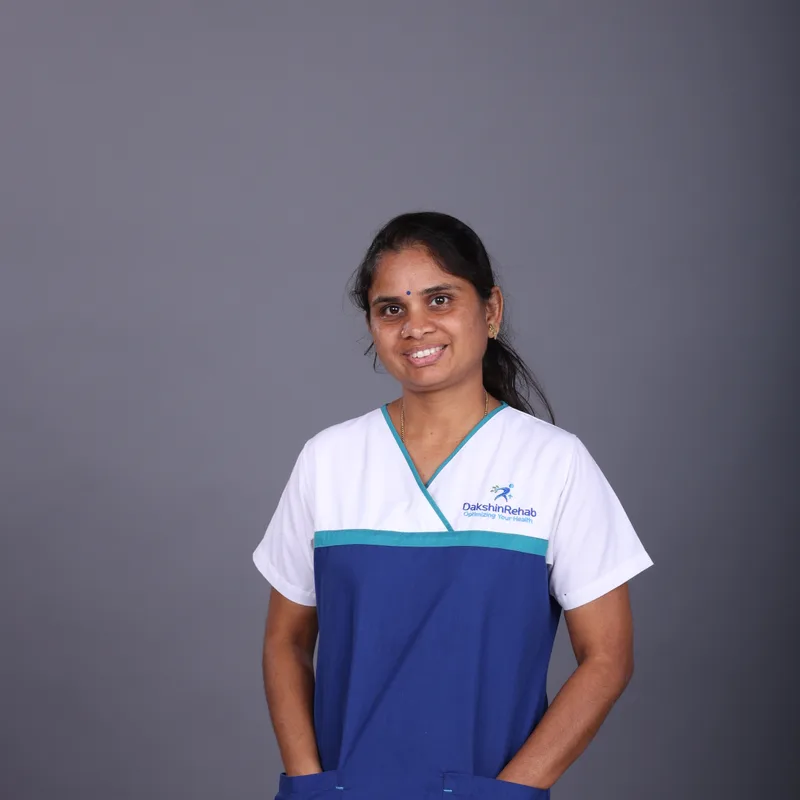
BPT, MPT, IAP Registered
Director, Human Movement Specialist, Physiotherapist
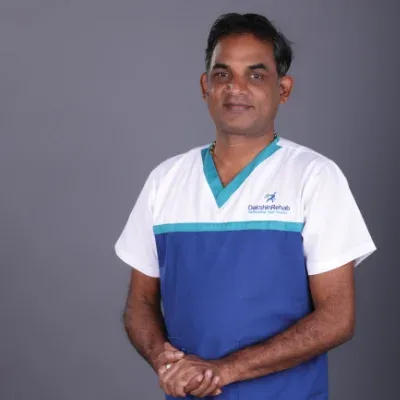
CPO
Consultant Rehabilitation Specialist, CPO | Founder, DakshinRehab
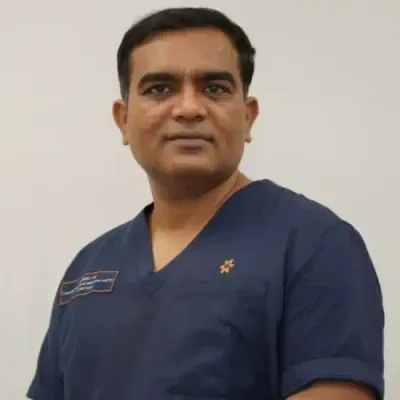
MS (General Surgery), DNB (Vascular Surgery)
Sr. Consultant Vascular & Endovascular Surgeon | Diabetic Foot & Wound Care
General rehabilitation reading to support your discussion with the treating team.
Practical answers before your assessment.
Personalised rehabilitation in Moosapet
Discuss your wound-care instructions, pressure protection and everyday movement with our team. Book a rehabilitation assessment for non-emergency concerns.
Book a rehabilitation assessment