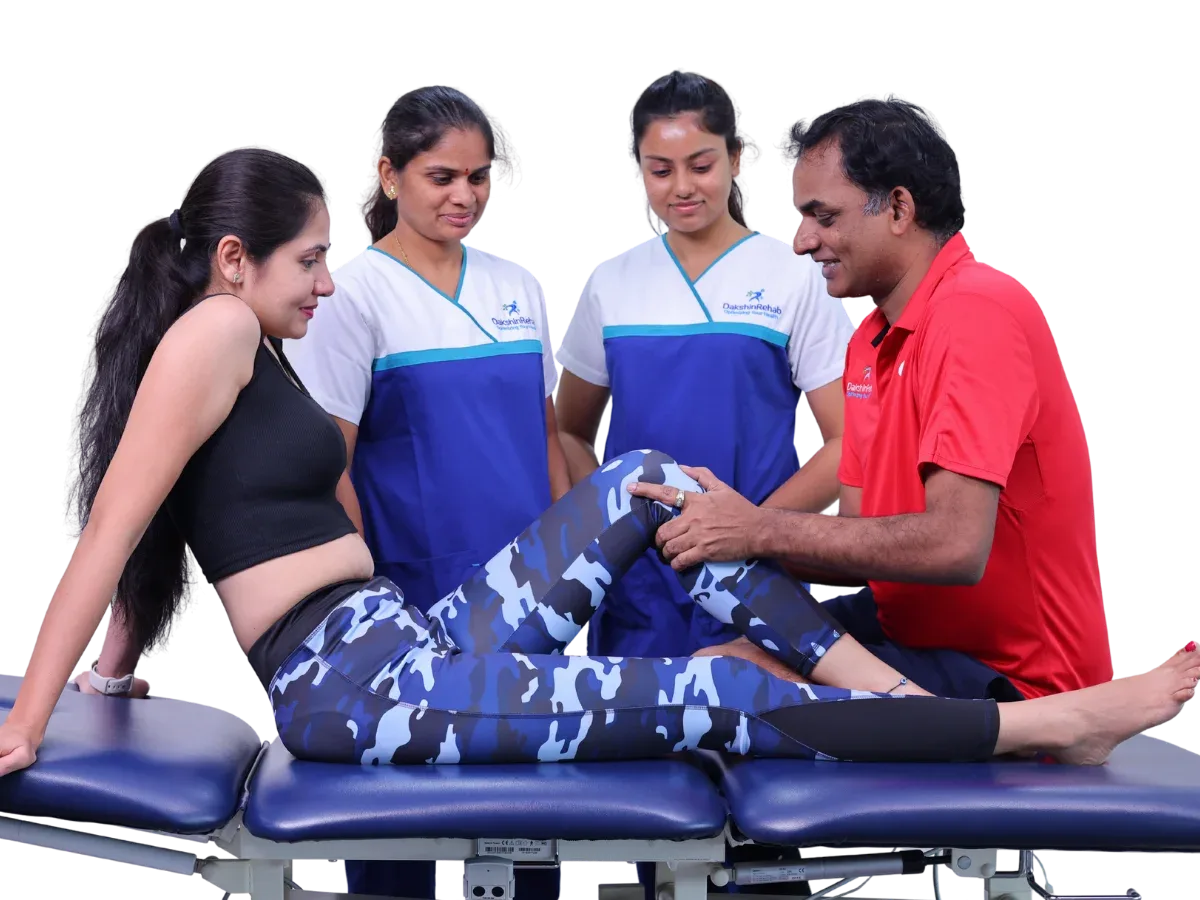
Your surgeon repaired the structure. Now who repairs the movement? This is the single most important question every post-surgical patient must answer — and the answer determines whether your surgery produces a good outcome or a great one. At DakshinRehab in Moosapet, Hyderabad, our post-surgical rehabilitation programmes follow strict biological healing timelines, use objective milestone testing, and deploy advanced technology — EMG biofeedback, Redcord Neurac, FES, 3D movement analysis and limb symmetry testing — to ensure that your body recovers not just the anatomy the surgeon restored, but the function, strength and confidence that surgery alone cannot return.
Why surgery fixes anatomy but cannot fix movement
A surgeon can reconstruct a torn ACL graft, replace a degenerative knee joint, decompress a herniated disc, or repair a rotator cuff tendon. But surgery cannot restore the neuromuscular control, proprioception (joint position sense), strength and movement patterns that were lost before and during the surgical process. Without proper rehabilitation, post-surgical patients develop compensatory movement patterns — limping, guarding, muscle inhibition — that become permanent habits within weeks. These compensations create secondary problems: the opposite knee starts hurting, the lower back develops pain, the repaired shoulder never regains full function. Rehabilitation is not optional aftercare. It is half of the treatment, and the half that determines long-term outcome.
What are the four barriers to post-surgical recovery
Arthrogenic muscle inhibition (AMI) is the first and most underestimated. After joint surgery, the brain literally shuts down muscles surrounding the surgical site as a protective mechanism — the quadriceps after knee surgery and the rotator cuff after shoulder surgery are classic examples. This inhibition persists even after pain resolves, and without specific intervention with NMES (neuromuscular electrical stimulation) and EMG biofeedback, the muscle may never fully reactivate. Tissue adhesions form during healing as scar tissue binds tissue layers together, restricting gliding surfaces and limiting range of motion. Compensatory gait patterns — limping after lower-limb surgery — create abnormal stress on the spine, opposite hip and opposite knee, becoming permanent motor patterns within 6 to 8 weeks if not actively corrected. Immobilisation stiffness from protective bracing causes rapid loss of flexibility that becomes permanent if not addressed inside the biological healing window.
How we assess post-surgical patients properly at DakshinRehab Moosapet
A first visit runs 60 to 90 minutes — much longer than a follow-up surgical review. We obtain the operative report, MRI, and surgeon's protected-loading restrictions. We measure baseline joint range of motion with digital goniometry, strength with hand-held dynamometry, swelling with circumferential measurements, and pain with validated scales. We run targeted neurological screening to detect any nerve involvement. For lower-limb surgery, we capture baseline gait with 3D movement analysis. For shoulder surgery, we score scapular dyskinesis. We score validated outcome measures appropriate to the surgery — Lysholm and IKDC for knee, DASH and Constant for shoulder, Oswestry for spine. Every metric is tracked over time so progress is objective, not subjective.
How our technology-driven post-surgical protocol works in the early phase (Weeks 0–4)
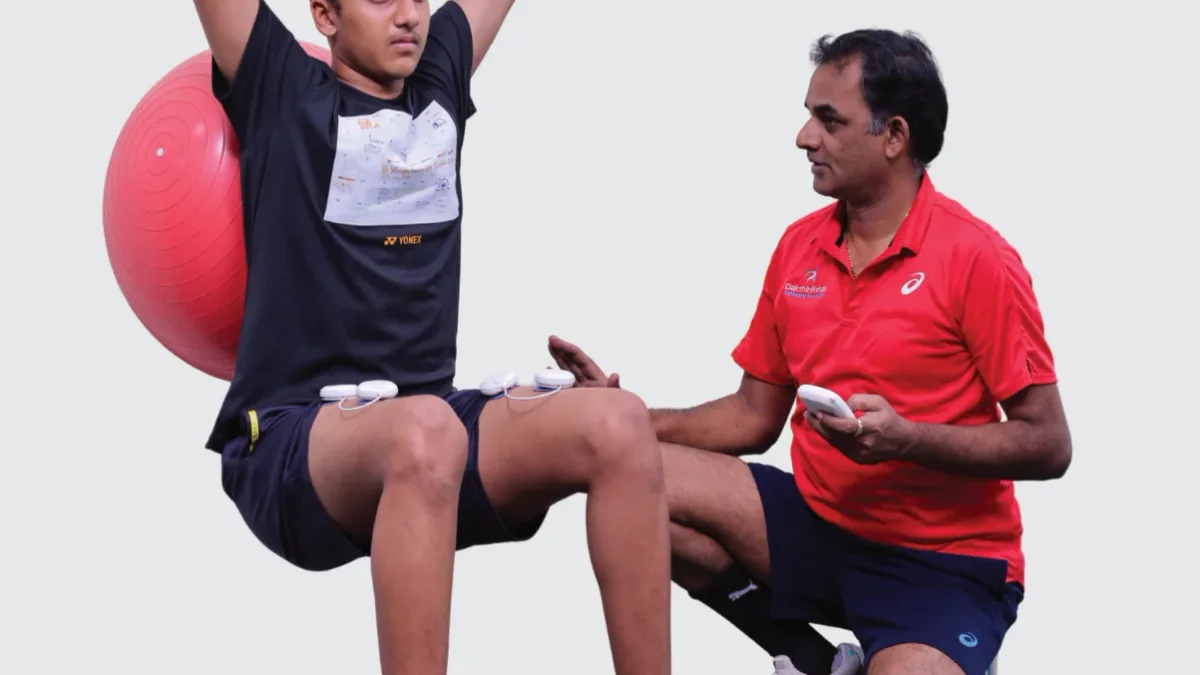
Pain and swelling control is the priority alongside early, protected range-of-motion exercises and aggressive prevention of arthrogenic muscle inhibition. We use Chattanooga Wireless Pro FES (functional electrical stimulation) from day one — electrical stimulation activates the inhibited muscle while the patient attempts voluntary contraction, retraining the brain-muscle connection before disuse atrophy sets in. EMG biofeedback provides real-time visual display of muscle activation, letting patients see and learn correct recruitment patterns. Cryotherapy and lymphatic drainage manage swelling. Manual therapy and scar mobilisation prevent adhesions. Patients leave each early-phase session with a precise home programme to perform 3 to 5 times daily.
How the intermediate phase rebuilds strength and control (Weeks 4–12)
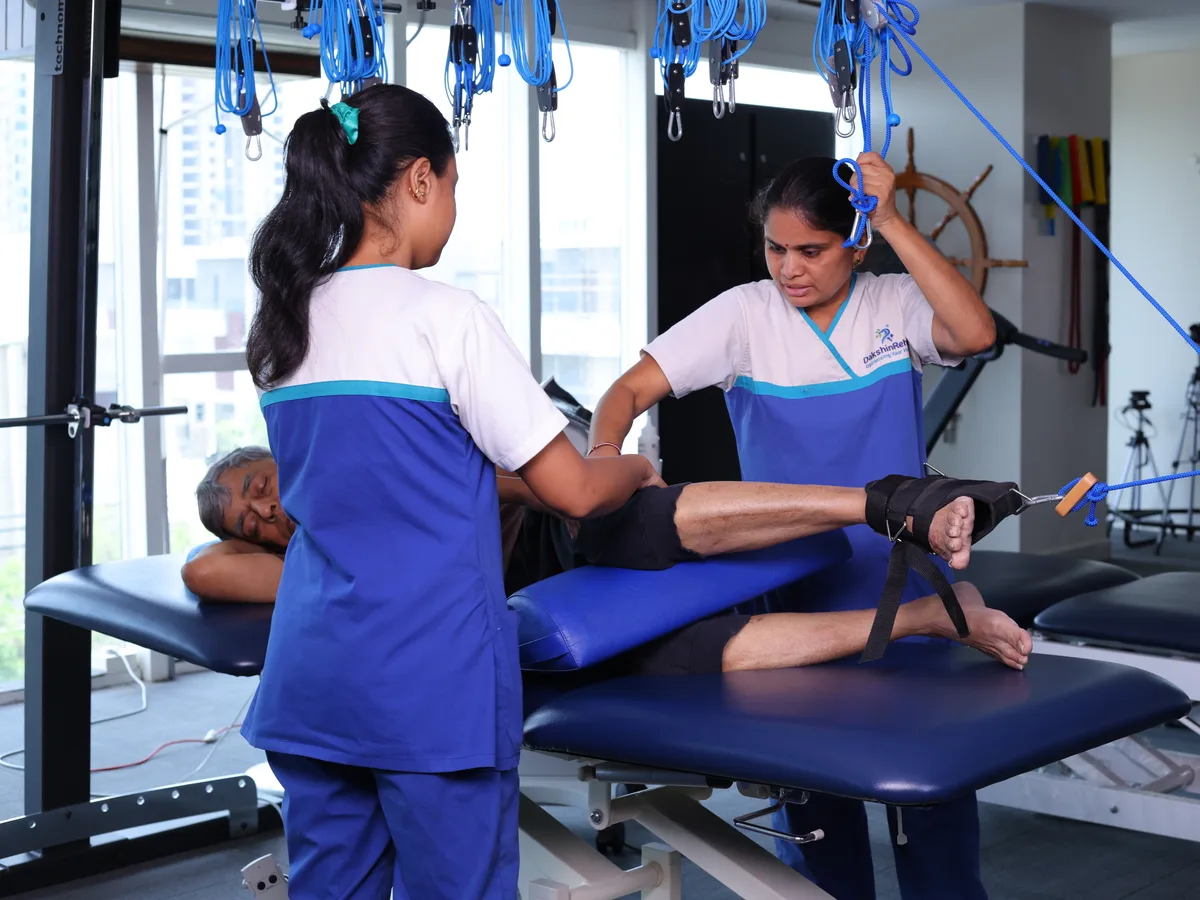
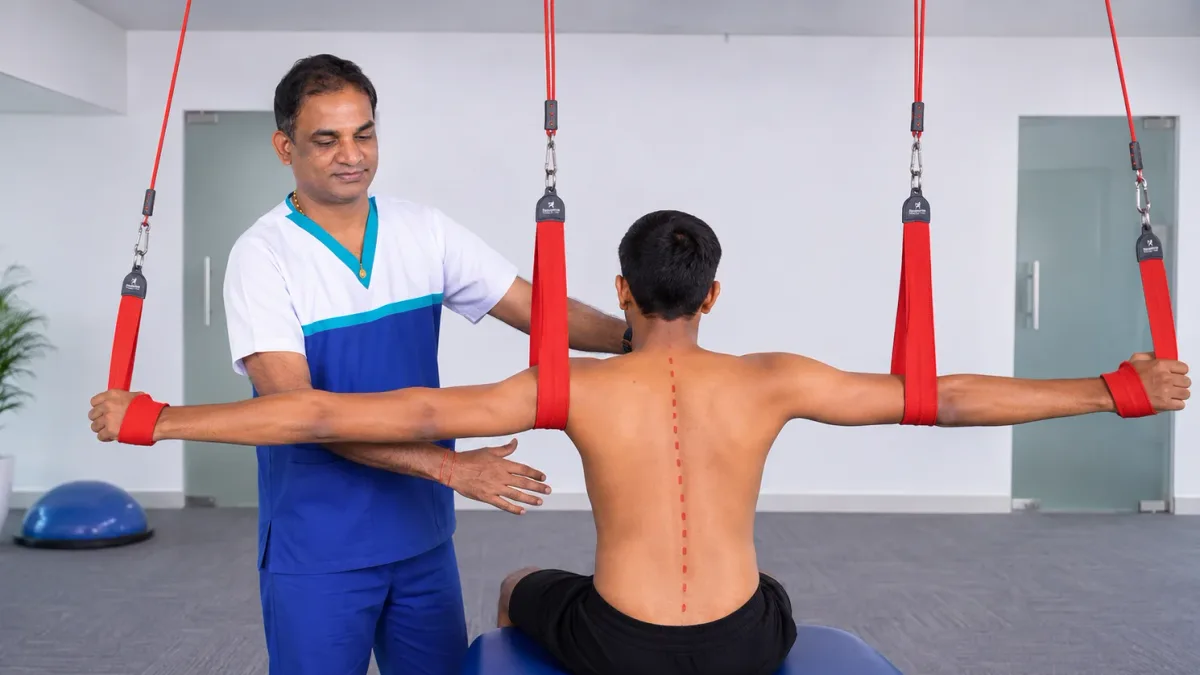
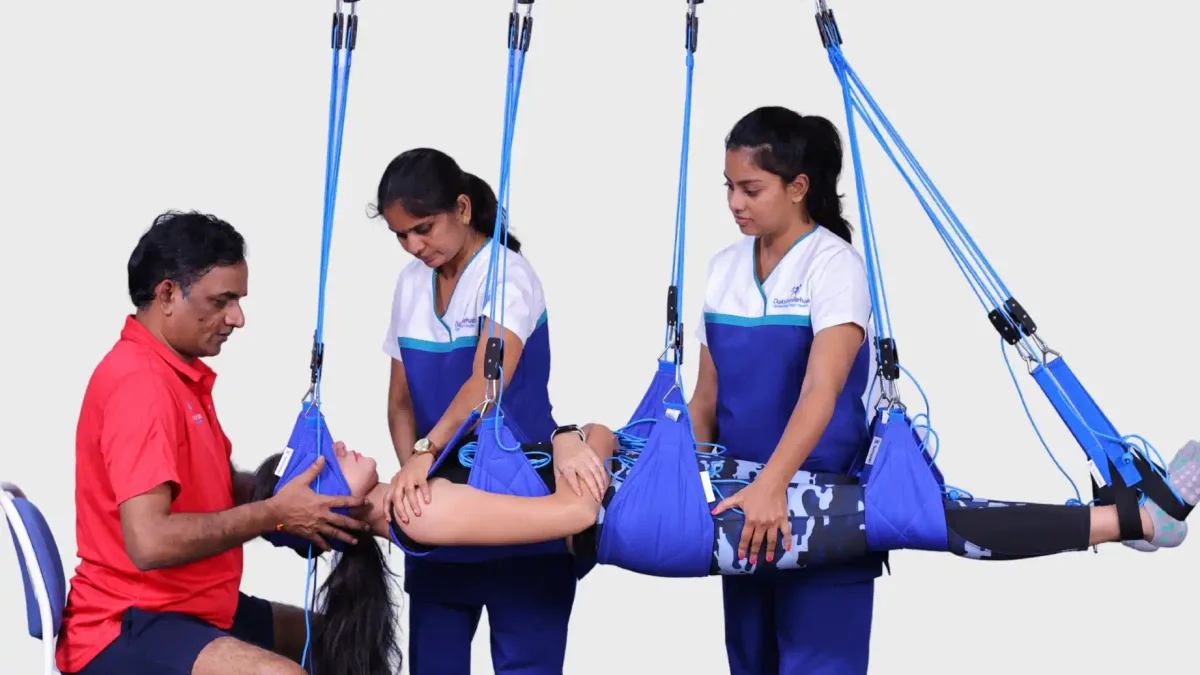
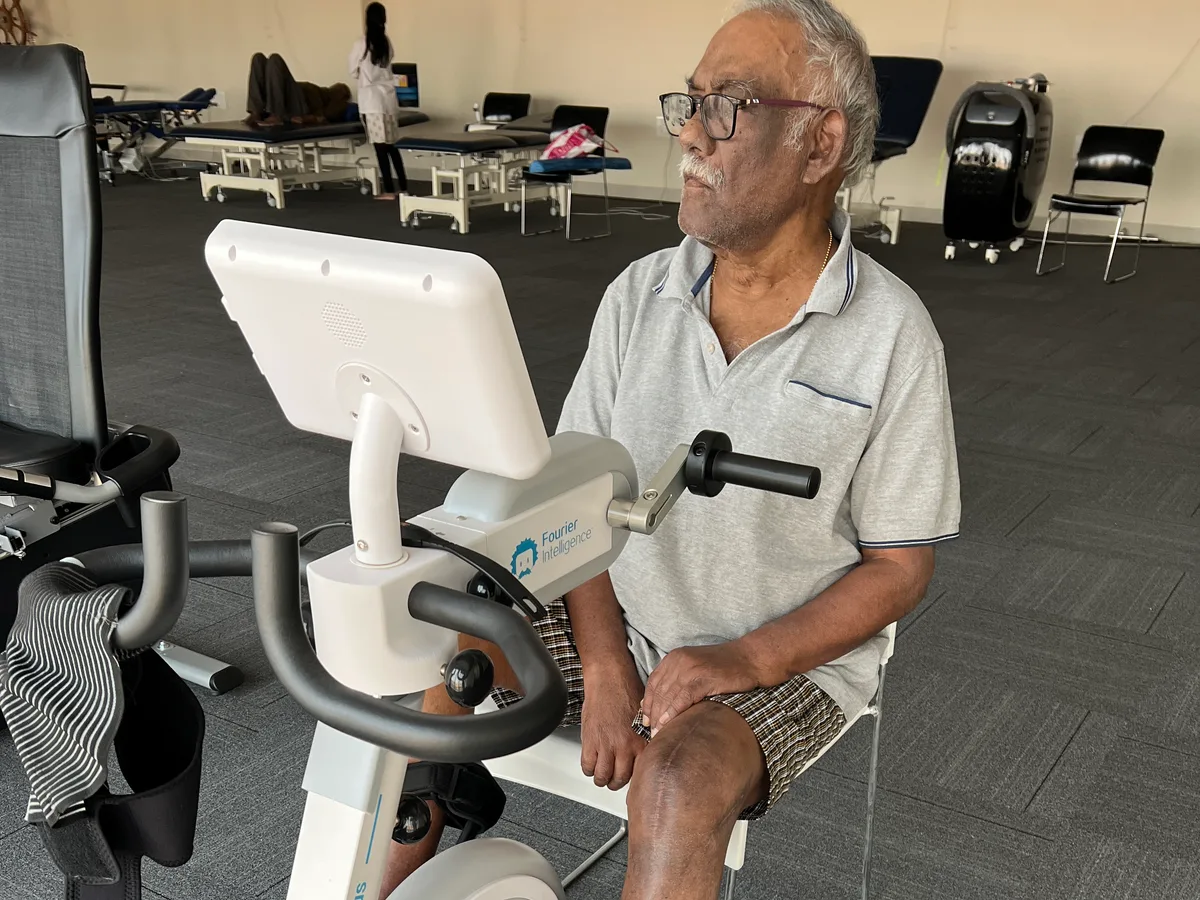
As tissues heal and range of motion improves, the focus shifts to progressive strengthening and neuromuscular retraining. Redcord Neurac suspension therapy is invaluable here — the gravity-reduced environment lets patients perform functional movement patterns at a challenge level matching their current capacity, without overloading healing tissues. We progress from open-chain isolation exercises to complex closed-chain functional movements as tissue healing allows. For knee patients, we add stationary cycling, then mini-squats, then progressive single-leg work. For shoulder patients, we layer scapular control over progressive rotator cuff loading. InBody composition analysis tracks lean muscle mass recovery in the operated limb compared to the non-operated side, giving objective evidence of strength restoration that subjective 'feels stronger' reports cannot.
Why return-to-activity must be testing-based, not calendar-based
The most important principle in post-surgical rehabilitation is that readiness for return to sport, work or full activity must be determined by objective functional testing, not by counting weeks. DakshinRehab's MAT strength testing system measures limb symmetry index — the strength ratio between the operated and non-operated limb. For ACL reconstruction patients, published research shows that return-to-sport with limb symmetry below 90 percent dramatically increases re-injury risk. We also use hop testing (single-leg hop for distance, timed hop, crossover hop) and agility assessments to evaluate real-world functional readiness. This data-driven approach protects patients from returning too early (risking re-injury) or too late (losing fitness, losing sport season, losing confidence). Calendar-based clearance is a relic of an earlier era and no longer represents best practice.
What surgery-specific rehabilitation actually looks like at DakshinRehab Moosapet
For ACL reconstruction rehab, we follow a 9 to 12 month protocol — early quad activation with NMES, progressive loading through biological graft healing phases (ligamentisation takes 6 to 9 months), criterion-based return-to-sport clearance. For total knee replacement, the focus is rapid range-of-motion recovery (target 0 to 120 degrees flexion), quadriceps strength restoration and gait normalisation — most patients achieve functional independence within 6 to 8 weeks. For rotator cuff repair, we follow the surgeon's tissue protection timeline (typically 6 weeks of limited active motion) before progressively loading the repair through Redcord-based scapular and rotator cuff retraining. For spine surgery (discectomy, laminectomy, fusion), our protocol focuses on deep-core stability retraining using Redcord Neurac, avoiding both excessive rest and premature loading. For hip replacement, gait retraining and gluteal reactivation prevent the limp that otherwise becomes permanent.
How we collaborate with your surgeon — continuity of care
DakshinRehab maintains collaborative relationships with orthopaedic and neurosurgeons across Hyderabad — KIMS, Yashoda, Apollo, Care, and several private practitioners. We follow the surgeon's specific post-operative protocol regarding weight-bearing restrictions, range-of-motion limits, and tissue-protection timelines. We provide regular structured progress reports with objective data — ROM measurements, strength values, functional test scores — so surgeons can make informed decisions about treatment progression and the timing of clearance milestones. For complex cases we co-attend follow-up reviews. This surgeon-physio collaboration ensures continuity of care from operating theatre to full recovery and avoids the common gap where post-op patients fall between specialties.
Evidence and expected outcomes from the published literature
Post-surgical rehabilitation evidence is mature. For ACL reconstruction, structured criterion-based programmes reduce second ACL injury rates by 50 to 70 percent compared with calendar-based clearance (Grindem, Kvist, Wiggins systematic reviews). For total knee replacement, intensive early-phase rehabilitation with NMES improves quadriceps strength and 6-month function compared with standard care. For rotator cuff repair, Cochrane reviews show that adherence to staged loading protocols significantly reduces re-tear rates. For spine surgery, NICE and AAOS guidelines explicitly endorse structured physiotherapy for both pre-operative optimisation (prehab) and post-operative recovery. DakshinRehab tracks every patient against these validated benchmarks — Lysholm, KOOS, DASH, Oswestry, hop tests, dynamometric strength — so progress is measurable, not assumed.
When post-surgical pain or symptoms need urgent medical attention
While most post-surgical recovery proceeds smoothly, certain symptoms require immediate medical (not physiotherapy) evaluation. Sudden severe swelling with calf pain may indicate deep vein thrombosis. Fever above 38°C with redness or discharge from the wound suggests infection. Sudden severe pain that is different from the expected post-surgical course — particularly if accompanied by mechanical locking, instability or new neurological symptoms — may indicate hardware failure, repair failure or nerve injury. Loss of bowel or bladder control after spine surgery is a surgical emergency. DakshinRehab screens for all these red flags at every session and routes patients straight back to their surgeon when indicated.
What a typical DakshinRehab post-surgical timeline looks like
ACL reconstruction runs 9 to 12 months total — Phase 1 (Weeks 0–4) protective and AMI control, Phase 2 (Weeks 4–12) progressive loading, Phase 3 (Months 3–6) sport-specific drills, Phase 4 (Months 6–9) return to sport with criterion-based testing. Total knee replacement runs 6 to 12 weeks for functional independence with maintenance work continuing for 3 to 6 months. Rotator cuff repair runs 4 to 6 months. Lumbar discectomy runs 6 to 12 weeks for return to most activities. Throughout, sessions are 45 to 60 minutes one-on-one with a qualified physiotherapist. Insurance pre-authorisation and TPA documentation are handled by our front-desk team for patients across Hyderabad and Gulf patients travelling for advanced post-surgical care.
Conclusion — your surgical outcome is only as good as your rehabilitation at DakshinRehab Moosapet
The best surgeon in the world cannot guarantee functional recovery without targeted, progressive, technology-assisted rehabilitation that respects biological healing timelines and uses objective milestone testing. At DakshinRehab in Moosapet, Hyderabad, we bring advanced modalities — EMG biofeedback, Redcord Neurac, FES, InBody composition analysis, 3D movement analysis and dynamometric strength testing — to every post-surgical patient, paired with structured collaboration with your surgical team. We serve patients across Moosapet, Kukatpally, KPHB, Miyapur, Gachibowli, Hitec City, Kondapur and Gulf patients (UAE, Saudi Arabia, Qatar, Kuwait, Oman) travelling for advanced post-operative care. Book your post-surgical assessment, WhatsApp us on +91 80192 99888, or call +91 80192 99888. You invested in the surgery — now invest in the recovery.