
Lumbar Disc Herniation

Related Condition
May help selected L4-L5 and L5-S1 disc herniation patterns when leg pain, numbness, or tingling suggests nerve-root irritation and there is no progressive neurological deficit.
Learn more

At DakshinRehab in Moosapet, Hyderabad, Dr. Swapnagandhi and our spine team use the Chattanooga DTS spinal decompression system for selected disc-related back and neck pain — paired with the rehabilitation that makes the relief last. No surgery, no injections. We see patients from across Hyderabad and the Gulf.
Every protocol begins with MRI review and neurological screening. We confirm decompression is right for your specific diagnosis before any treatment.
A comprehensive consultation with Dr. Swapnagandhi and the spine team — neurological screen, treatment plan, and clear next steps.
Send your MRI report directly to our spine team. We review and respond within working hours with what we recommend next.
Chattanooga DTS spinal decompression is a non-surgical treatment approach that gently unloads selected spinal segments in controlled cycles. At DakshinRehab Moosapet, it is used only after clinical screening and — where available — MRI review for selected disc bulge, sciatica, lumbar and cervical radiculopathy, chronic low back pain and neck pain cases.
The system is one part of a broader rehabilitation plan, never a stand-alone treatment. Decompression sessions open a window of reduced pain and lower muscle guarding; we use that window to teach the spine how to handle load again — through manual therapy, core retraining, posture work and graded return to activity.
21+ Years
Spine Rehab Expertise in Hyderabad
MRI-Guided
Assessment Before Every Protocol

Reviewed by Dr. Swapnagandhi
Every spine decompression protocol is screened and approved by our clinical lead — no machine treatment without the assessment that earns it.
Unlike generic traction, Chattanooga DTS uses controlled cyclic traction and rest cycles. The clinician selects force, angle and segment around your diagnosis, symptoms and neurological findings — never one-size-fits-all. The goal: reduce mechanical stress around irritated discs and nerve roots so pain settles enough for the rehabilitation work that drives long-term recovery.
Cyclic, computer-guided traction. Comfort-led force progression. Always paired with physiotherapy.
Cyclic traction and rest delivered through computerised control. Force, angle and the targeted segment are individualised — never the same protocol applied to every back.
Force is introduced gradually and adjusted to your tolerance. Sharp pain, radiating pain or muscle guarding are signals to pause — not push through.
In selected disc-related cases, decompression may reduce mechanical stress around irritated discs and nerve roots — easing leg or arm pain from sciatica or radiculopathy.
Sessions are paired with manual therapy, core retraining and posture work. The technology reduces the barrier to movement; physiotherapy restores it. Decompression alone is never enough.
May help selected L4-L5 and L5-S1 disc herniation patterns when leg pain, numbness, or tingling suggests nerve-root irritation and there is no progressive neurological deficit.
Learn more

For sciatica linked to disc-related nerve-root irritation, decompression may reduce mechanical stress around the nerve and make nerve glides, walking, and core work easier to progress.
Learn more

Selected neck disc problems with arm pain, tingling, or numbness may benefit from carefully screened cervical decompression. Myelopathy signs or progressive weakness need medical review.
Learn more

For selected degenerative disc pain, decompression may reduce load sensitivity and improve movement tolerance. It is combined with strengthening and activity planning rather than used alone.
Learn more

Flexion-based decompression may support selected lumbar stenosis patients with walking-limited symptoms, alongside hip mobility and gait retraining. Severe central stenosis or myelopathy needs specialist review.
Learn more

When chronic back pain has discogenic features, decompression may calm symptoms enough to begin the strength, mobility, and behaviour changes needed for longer-term recovery.
Learn more
You lie comfortably on the Chattanooga DTS table. Most patients feel a controlled stretch — not sharp pain. A typical session is around 45-60 minutes including preparation, treatment and post-session review.

A plan that fits your diagnosis — not a generic protocol

Positioned, comfortable, in control
Therapeutic decompression delivered safely

Relief translated into movement, not just rest

Response tracked — protocol adjusted next visit if needed

A clear, flexible roadmap
Every patient progresses at their own pace. The phases below describe the principles, not the calendar — the exact session count and frequency depend on your diagnosis, symptom severity, response to treatment and rehabilitation goals.
The first priority is to calm nerve sensitivity, improve sleep and sitting tolerance, and confirm there is no progressive neurological deficit. Decompression force stays gentle. We establish safe positions and movement limits before progressing.
Decompression parameters are dialled in based on response. We pair sessions with manual therapy, pain-free core activation and graded walking. The relief from a session becomes useful only when it translates into better daily movement.
Sessions taper. Focus shifts to trunk and hip strength, bending and lifting tolerance, workstation ergonomics, and a return to sport or gym activity where relevant. Long-term recovery depends on movement confidence and load management — not the machine alone.

We screen every patient before treatment. Spinal decompression is avoided or delayed when the spine needs urgent medical review or a safer alternative.
Bladder or bowel changes, saddle numbness, or rapidly worsening leg weakness
New or progressive numbness, weakness, or nerve symptoms
Recent trauma, suspected fracture, spinal infection, tumour, or unexplained night pain
Severe osteoporosis, pregnancy, or abdominal aortic aneurysm
Cervical myelopathy signs or severe central stenosis
Prior spine surgery, fusion hardware, blood thinners, or inflammatory spine disease need individual review

Human Movement Specialist · Ortho & Neuro Physiotherapist, DakshinRehab
“Decompression on its own is not the treatment. The Chattanooga DTS system opens a window — less pressure on the disc, less irritation around the nerve root, less muscle guarding. In that window, what you do matters more than what the machine did. Core control returns. Walking tolerance returns. Sitting tolerance returns. We use the relief to teach the spine how to handle load again — that is what protects you long after the sessions end.”
Dr. Swapnagandhi, Human Movement Specialist · Ortho & Neuro Physiotherapist, DakshinRehab
Reviewed by Dr. Swapnagandhi, Human Movement Specialist · Ortho & Neuro Physiotherapist
Watch DakshinRehab Moosapet patients describe how non-surgical spine decompression, laser therapy and Redcord (Neurac) helped them recover from disc and nerve-related back pain — without surgery.
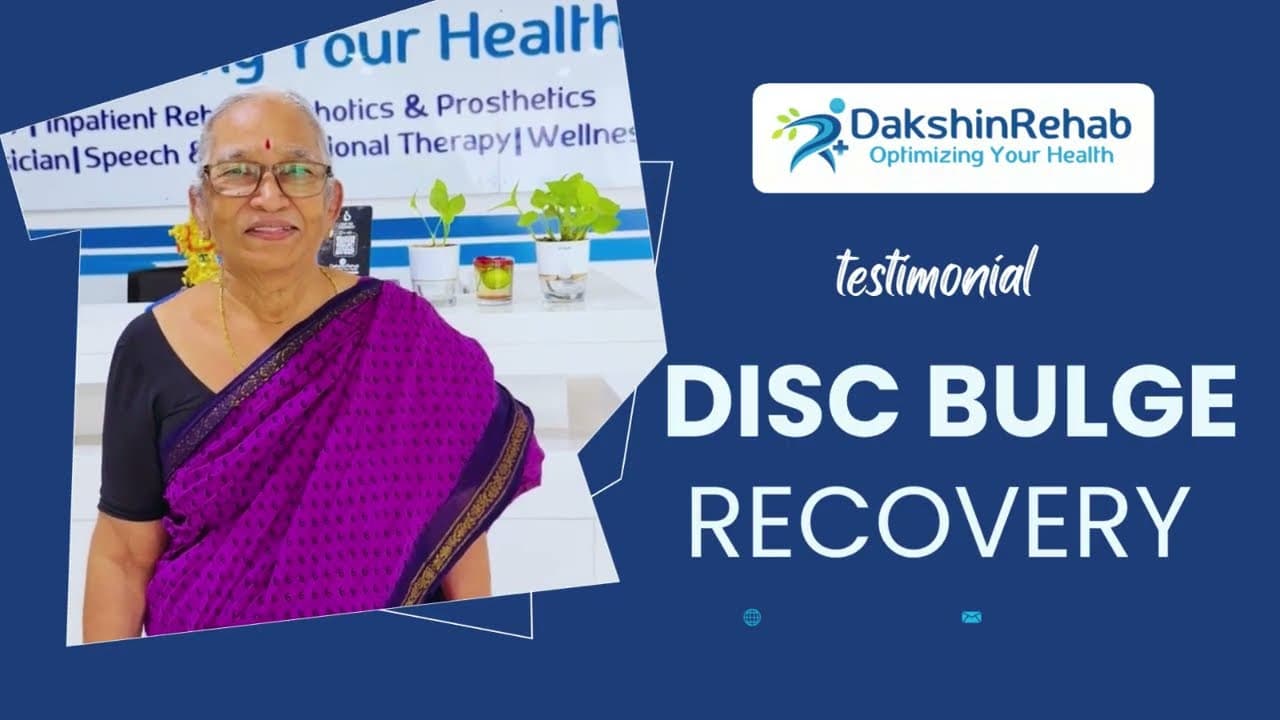
I was advised spine surgery for a severe L4-L5 disc bulge. The 21-day rehabilitation programme at DakshinRehab — combining non-surgical spine decompression, laser therapy, and Redcord — restored my mobility without an operation.
Vijaya Kumari
Lumbar Spondylosis & Disc Bulge
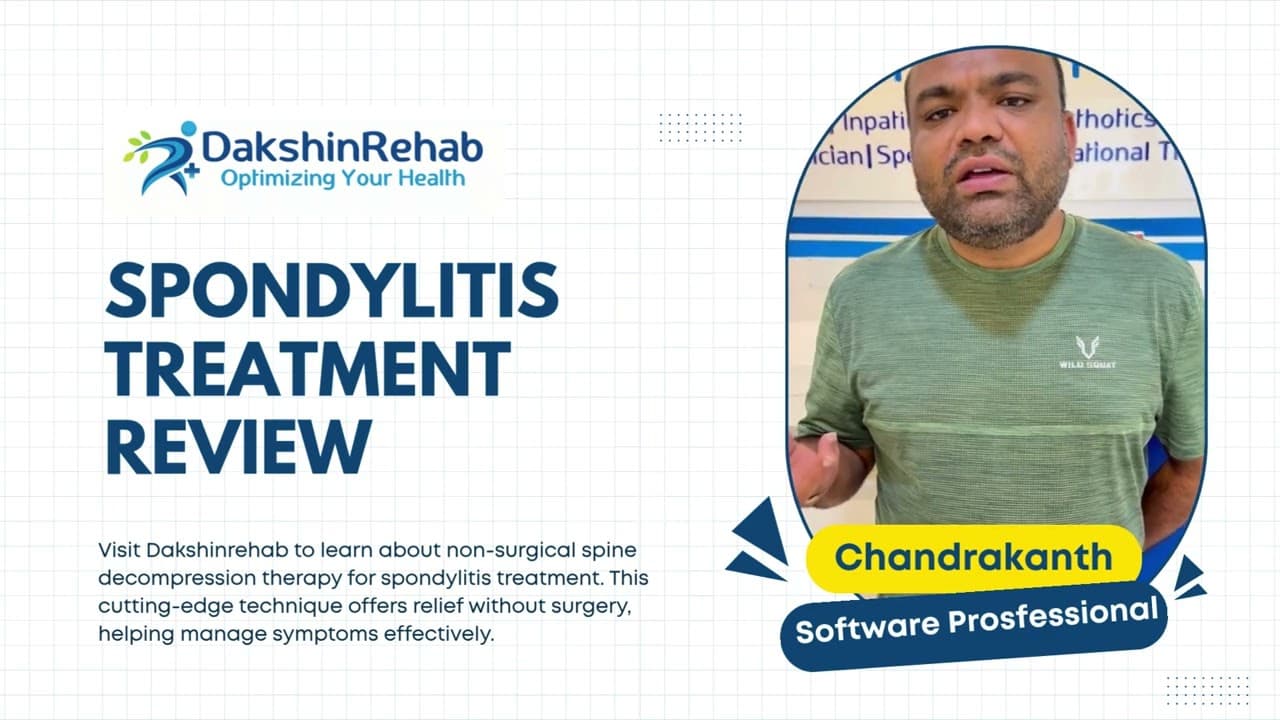
Spondylitis had left me with persistent back pain and stiffness. Non-surgical spine decompression, laser therapy, and Redcord (Neurac) therapy at DakshinRehab delivered significant pain relief and restored my mobility without any invasive procedures.
Chandrakanth
Spondylitis Recovery
From whether it can help your specific disc problem to what a session actually feels like — direct answers from the spine team at DakshinRehab Moosapet, Hyderabad.
Still have questions?
Our expert physiotherapists and rehabilitation specialists at DakshinRehab bring decades of combined experience to your recovery.
Director, Human MOVEMENT specialist Ortho Neuro Physiotherapist | Stroke & Spine Rehab Specialist

Consultant clinical rehabilitation services
Founder & Chief Prosthetist | Amputee Rehabilitation Expert

MS, MCh (Vascular Surgery)
Consultant Vascular Surgeon | Diabetic Foot & Wound Care
Learn more about this condition and treatment options from our expert team.
 Spine Care
March 20, 2024
How DakshinRehab Moosapet combines spinal decompression, 3-Tesla EMTT and Redcord Neurac for sciatica, disc bulge, radiculopathy and stenosis without surgery.
Read More Pain Management
March 5, 2024
Why 85% of chronic back pain cases never need surgery — and how DakshinRehab Moosapet uses spinal decompression, Redcord Neurac, EMG biofeedback and ergonomic rehabilitation to end the cycle of recurring pain for IT professionals, mothers and seniors across Hyderabad.
Read More Pain Management
November 15, 2024
Posture correction exercises guide: fix forward head posture, improve alignment, prevent pain. Step-by-step routines from experts.
Read More
This week only · Free assessment · ₹500 off
Join 20,000+ patients who went from painful to pain free. book this week and save ₹500 on your first session.
Book Appointment