The shoulder is the most mobile joint in the human body — and that extraordinary mobility comes at a cost. When shoulder pain strikes, it does not just affect your arm; it disrupts sleep, makes dressing painful, and turns simple tasks like reaching a shelf or fastening a seatbelt into daily struggles. At DakshinRehab in Moosapet, Hyderabad, we specialise in restoring shoulder function through a precise, non-surgical approach. The overwhelming majority of our shoulder pain patients regain full overhead range without surgery — because we restore mobility first, then build the stability to protect it. This guide explains the four most common causes of shoulder pain, why the scapula (not the shoulder itself) is usually the real problem, and how shockwave therapy, Redcord Neurac and EMG biofeedback combine to resolve it.
What are the four most common causes of shoulder pain we see
Frozen shoulder (adhesive capsulitis) is the most frequent condition we treat — the joint capsule thickens and tightens, progressively restricting movement in all directions. It typically develops in stages — a painful 'freezing' phase, a stiff 'frozen' phase, and a gradual 'thawing' phase — and can take 12 to 18 months to resolve without intervention. With targeted TECAR and manual capsular mobilisation, we compress this timeline significantly. See our dedicated frozen shoulder page for the full protocol. Rotator cuff tears and tendinopathy cause overhead weakness, night pain and difficulty reaching behind the back. Many partial tears respond excellently to structured rehabilitation without surgery — see rotator cuff tear. Shoulder impingement syndrome pinches the rotator cuff in a painful arc between 60° and 120° of elevation, usually driven by poor scapular mechanics. Post-surgical stiffness after rotator cuff repair, labral repair or fracture fixation can limit recovery if rehabilitation is not initiated properly.
Why shoulder treatments fail — the scapular connection
Most shoulder treatments fail because they focus only on the glenohumeral (ball-and-socket) joint while ignoring the scapula (shoulder blade). The scapula must rotate, tilt and protract in precise coordination with the arm during every overhead movement — a choreography called the scapulohumeral rhythm. When the muscles controlling scapular movement — serratus anterior, lower trapezius, rhomboids — are weak or inhibited, the shoulder blade does not position correctly, narrowing the subacromial space and creating impingement. The tendons get pinched every time you reach overhead. No amount of rotator cuff strengthening will fix this because the problem is not in the rotator cuff — it is in the platform the cuff is attached to. At DakshinRehab, every shoulder assessment includes detailed scapular rhythm analysis. We often find that patients told they need impingement surgery actually need scapular retraining — a fundamentally different, far less invasive solution.
How we assess shoulder pain properly at DakshinRehab Moosapet
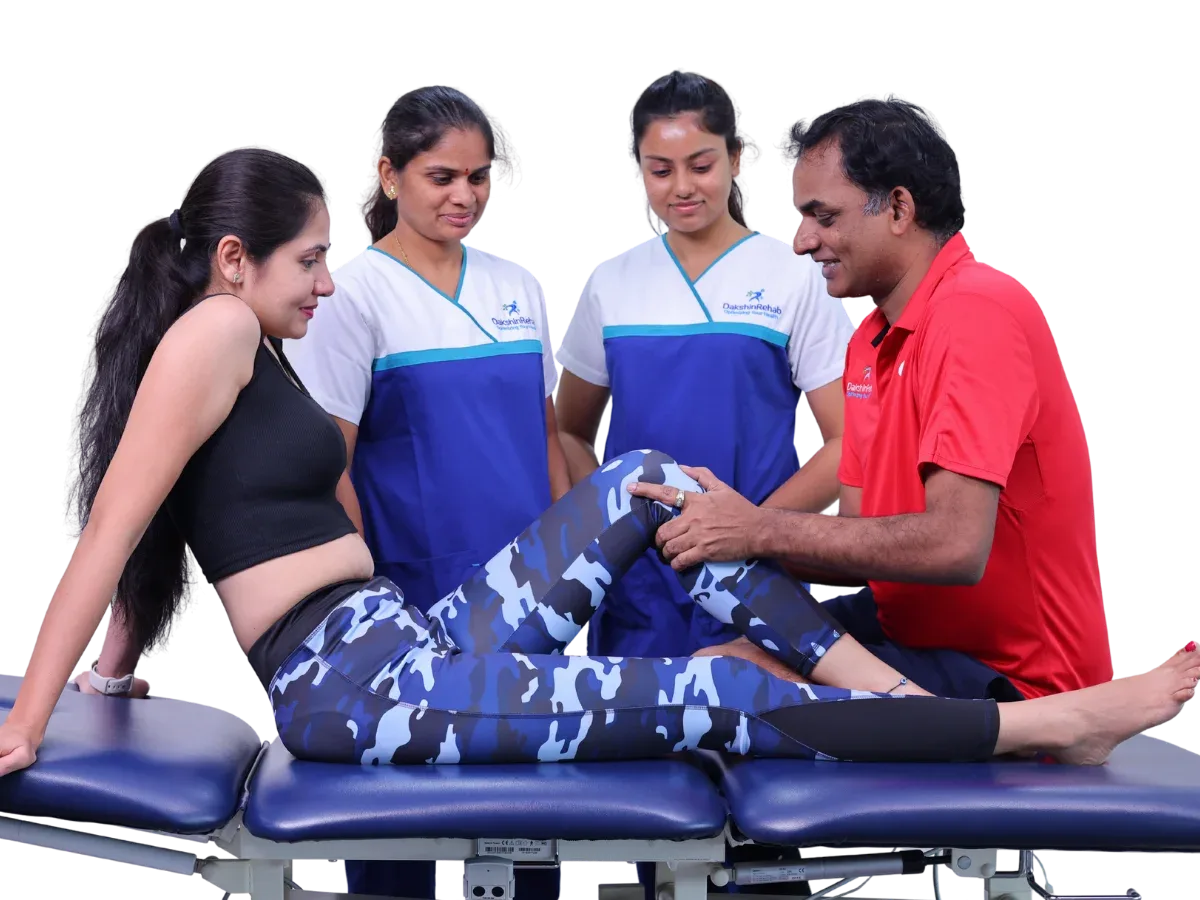
A first visit runs 60 to 90 minutes. We take a detailed pain history (onset, location, night pain, sleep-side preference, aggravating movements, sport or occupational demands). We run a full clinical examination — active and passive range of motion, precise scapulohumeral rhythm observation from behind, rotator cuff isolation testing (empty can, external rotation, lift-off), impingement tests (Neer, Hawkins-Kennedy), instability tests and cervical screening because neck pathology frequently refers to the shoulder. We measure strength objectively with a hand-held dynamometer and track scapular position with 3D posture analysis. Where imaging is needed but missing, we coordinate same-week MRI or dynamic ultrasound through our partner radiology centres. The goal is a precise structural and functional diagnosis — not a generic 'shoulder pain' label.
How our technology-driven shoulder treatment protocol works
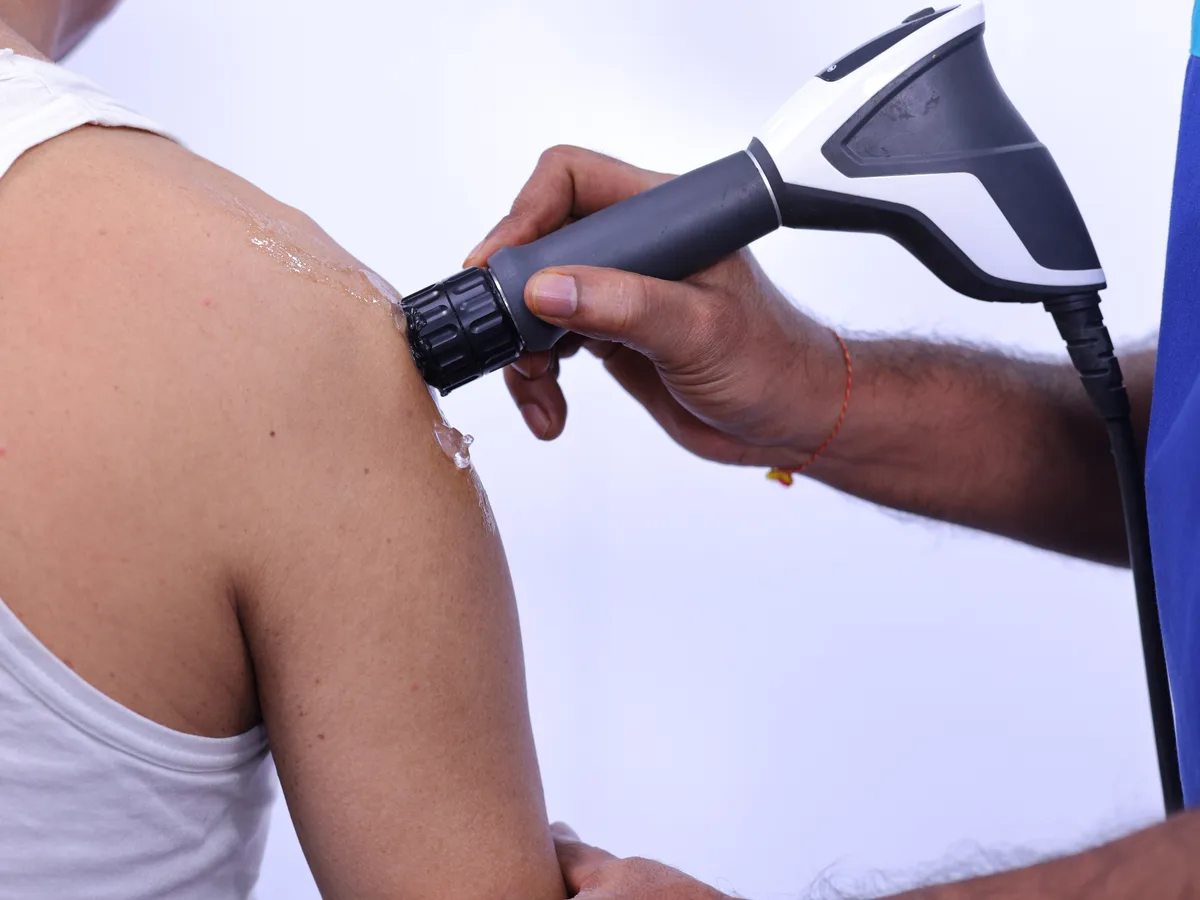
For frozen shoulder and post-surgical stiffness, TECAR radiofrequency therapy is our primary tool for capsular mobilisation. The radiofrequency system generates deep endogenous heat within the joint capsule and surrounding tissues, increasing extensibility, reducing fibrosis and allowing greater range during the manual therapy that follows in the same session. Most patients feel measurable range-of-motion improvement within 2 to 3 sessions. For calcific tendonitis and chronic rotator cuff tendinopathy, Chattanooga RPW2 shockwave therapy is the treatment of choice. The FDA-cleared acoustic pulses break down calcific deposits while stimulating neovascularisation — new blood vessels that promote tendon healing from the inside out. Shockwave is particularly effective for calcific deposits that have not responded to conventional therapy or cortisone injections.
Why Redcord Neurac is the centrepiece of lasting shoulder recovery
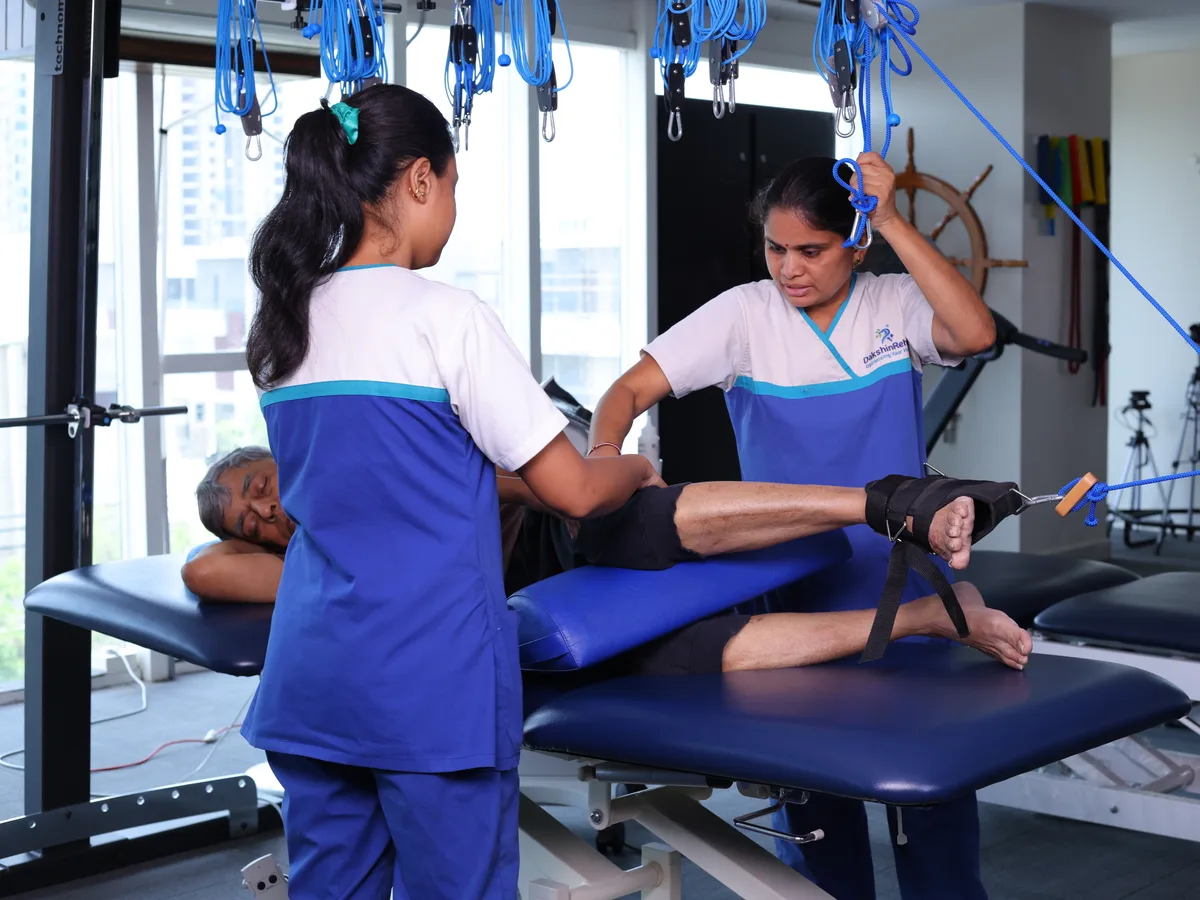
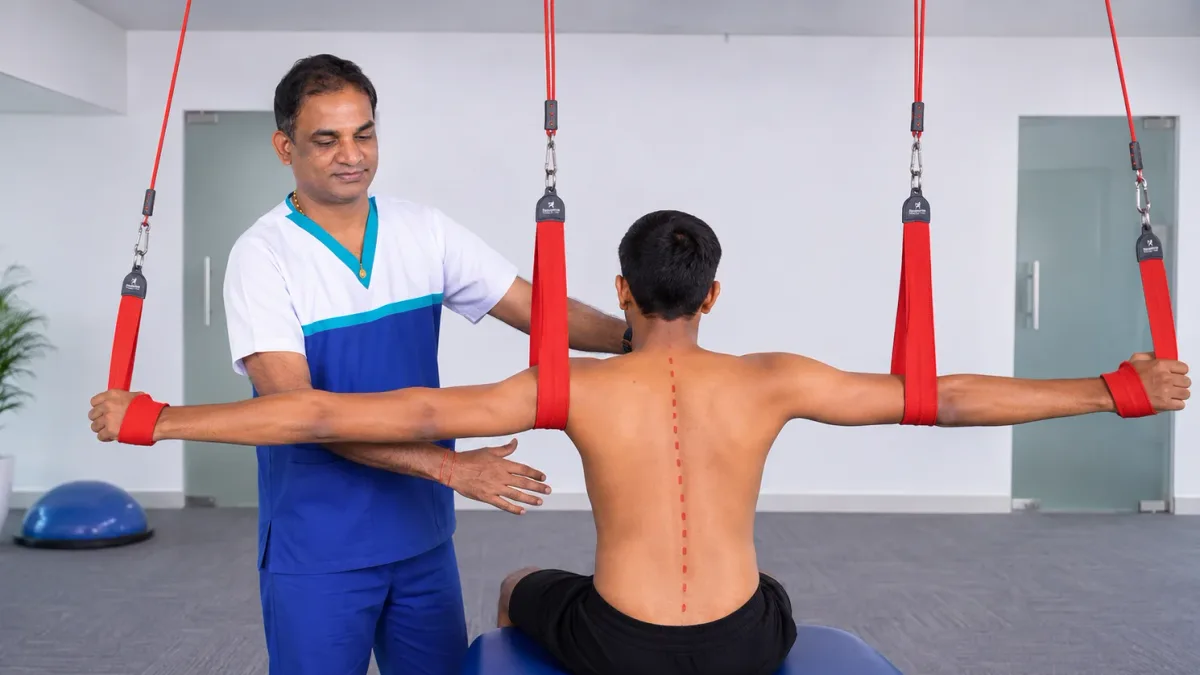
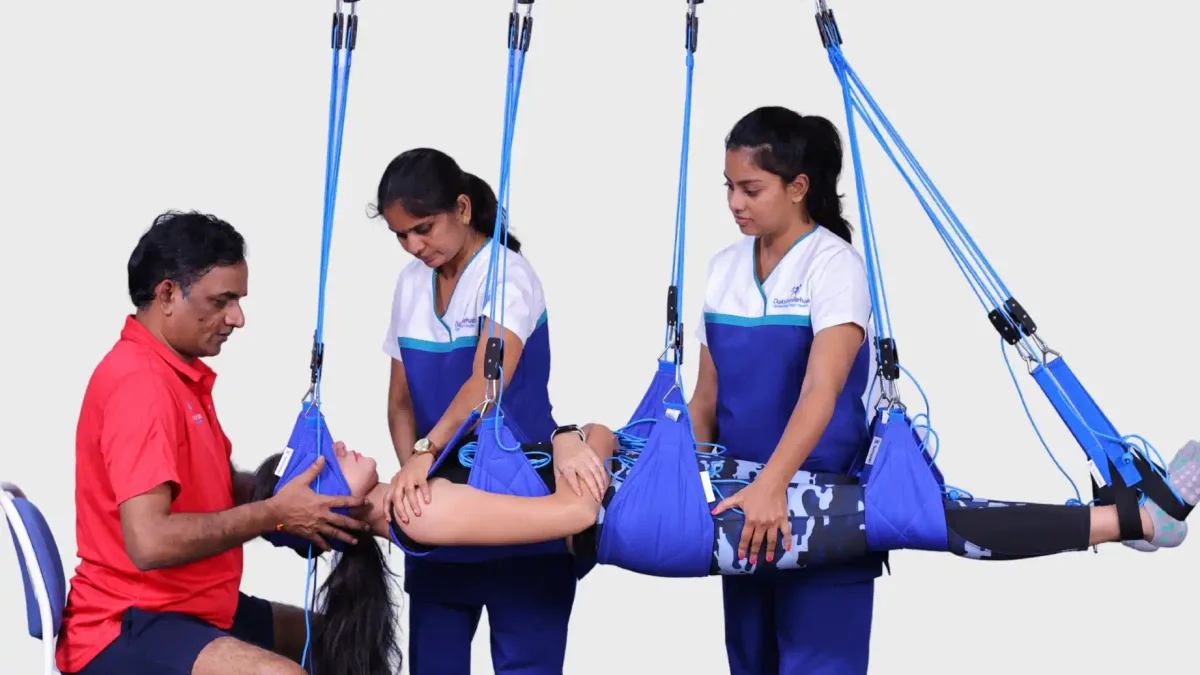
Once pain and stiffness are addressed, Redcord Neurac suspension therapy becomes the centrepiece of shoulder rehabilitation. The suspension system lets us train scapular stabilisers in a gravity-reduced, pain-free environment. We can isolate specific movement patterns — scapular protraction, upward rotation, posterior tilt — that are impossible to train effectively with conventional exercises when the patient is guarding against pain. Redcord also enables closed-chain shoulder exercises (pushing and pulling against the slings) that research shows activate the rotator cuff more effectively than open-chain exercises like dumbbell raises. Stimula vibration at 40 to 50 Hz amplifies deep stabiliser recruitment in ways voluntary effort alone cannot match.
How EMG biofeedback turns a weak shoulder into a coordinated one
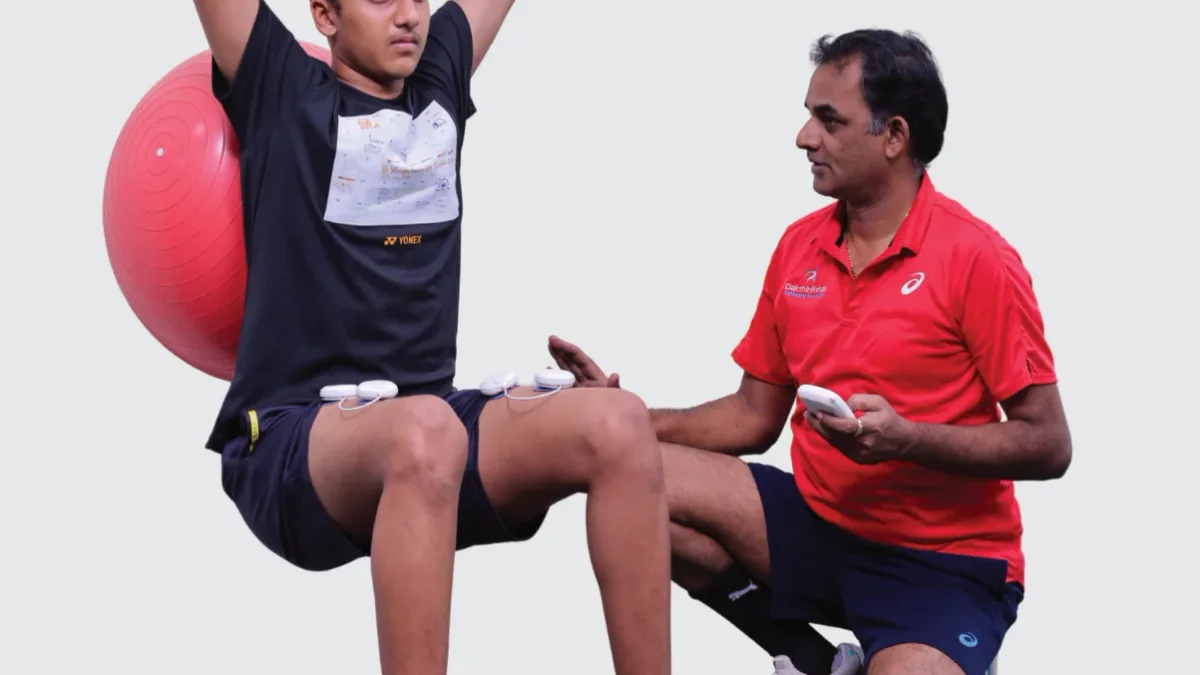
For patients who have structural healing but still cannot generate appropriate muscle activation — a common post-surgical problem and a frequent finding in chronic impingement — we add EMG biofeedback. Surface electrodes over the specific target muscle (serratus anterior, lower trapezius, infraspinatus) give the patient a real-time visual cue every time the right muscle fires. This is particularly powerful for patients who intellectually understand the exercise but cannot feel the correct muscle contracting — because feedback is the fastest route to motor learning. Research on EMG-biofeedback-assisted scapular retraining shows superior outcomes compared to conventional exercise alone.
What frozen shoulder recovery actually looks like at DakshinRehab
Frozen shoulder is the condition most misunderstood by patients and often by clinicians. The classical 'three phases' description is true but incomplete — the real determinant of recovery speed is which phase the patient is in at presentation and whether the capsular tightness is being actively mobilised. At DakshinRehab, our frozen shoulder protocol combines TECAR for capsule extensibility, precise graded manual mobilisation under the therapist's hands, Redcord-assisted graded loading to maintain gains, and home mobility protocols carried out twice daily. Early-phase (freezing) patients often respond within 6 to 8 weeks. Late-phase (frozen) patients may take 10 to 14 weeks. Results are dramatically better than the 12 to 18 month natural history of untreated adhesive capsulitis.
What a typical shoulder recovery timeline looks like
Shoulder impingement with scapular dysfunction typically shows significant improvement within 4 to 6 weeks of targeted rehabilitation, with full recovery by 8 to 10 weeks. Rotator cuff tendinopathy (without complete tear) responds within 6 to 10 weeks when combining shockwave with progressive strengthening. Frozen shoulder takes 6 to 14 weeks depending on phase at presentation. Post-surgical rehabilitation follows the surgeon's biological healing protocol — typically 12 to 16 weeks for rotator cuff repair, 16 to 24 weeks for labral repair or instability surgery. Throughout treatment, DakshinRehab tracks range of motion with digital goniometry, strength with a hand-held dynamometer and function with validated outcome measures (DASH, QuickDASH) — so progress is measurable, not assumed.
When does shoulder pain actually need surgery
We believe in physiotherapy first, but are equally clear about when surgery is the right path. Complete, full-thickness rotator cuff tears in active patients under 60 typically benefit from surgical repair followed by structured post-operative rehabilitation. Labral tears causing mechanical symptoms (catching, locking) may require arthroscopic repair. Recurrent shoulder dislocations, especially in young athletes from Hyderabad's cricket and badminton circuit, often need surgical stabilisation to prevent ongoing instability. Acute traumatic tears in young patients are best repaired early. In these cases, DakshinRehab's role shifts to comprehensive pre- and post-surgical rehabilitation — and the quality of that rehabilitation determines the quality of the surgical outcome.
How post-surgical shoulder rehabilitation should actually work
If you have had or are about to have rotator cuff repair, labral repair or shoulder arthroplasty, the rehabilitation plan determines your long-term outcome far more than the surgical skill alone. DakshinRehab's post-surgical shoulder protocol is phased precisely along biological healing timelines — Week 0 to 6 is protective (sling, passive range, scar management), Week 6 to 12 is active range and early strengthening, Week 12 to 16 is progressive resistance and closed-chain work, Week 16 to 24 is return-to-sport or return-to-work testing. EMG biofeedback overcomes the common post-surgical problem of rotator cuff shutdown. Redcord Neurac protects the repair while reactivating scapular stabilisers. Nothing is skipped, nothing is rushed.
Evidence and expected outcomes from the published literature
The shoulder physiotherapy evidence base is mature. Multiple RCTs and systematic reviews show exercise therapy equals or exceeds surgical repair for many rotator cuff tendinopathies — including the landmark Kukkonen, Ketola and Finnish Shoulder Trials. Scapular-focused rehabilitation outperforms isolated rotator cuff strengthening in impingement syndrome. TECAR and shockwave each have dedicated RCTs supporting their use in frozen shoulder and calcific tendonitis respectively. Norwegian Redcord Neurac trials show superior scapular control restoration compared with conventional exercise. DakshinRehab tracks every patient against these validated benchmarks using DASH, QuickDASH, numeric pain scores and dynamometric strength — so progress is measurable.
When to worry — shoulder pain red flags
Most shoulder pain is mechanical and benign, but certain symptoms demand urgent medical evaluation. Sudden, traumatic inability to lift the arm after a fall may indicate a complete rotator cuff rupture or fracture. Severe night pain with fever, redness or swelling may indicate septic arthritis — a medical emergency. Progressive neurological symptoms (hand weakness, wasting, tingling) may be cervical in origin. Unexplained weight loss with shoulder pain needs specialist workup to rule out referred pathology. Severe pain radiating to the arm with chest tightness may be cardiac — call emergency services immediately, not a physiotherapist. DakshinRehab screens for all these red flags at every assessment.
Conclusion — reach overhead again at DakshinRehab Moosapet
Shoulder pain does not have to mean giving up the activities you love. Whether you are dealing with the progressive restriction of frozen shoulder, the overhead weakness of rotator cuff tendinopathy, the painful arc of impingement or recovery from shoulder surgery, targeted physiotherapy using TECAR, shockwave therapy, Redcord Neurac, EMG biofeedback and precise scapular retraining can restore the mobility and stability your shoulder needs. At DakshinRehab in Moosapet, Hyderabad, we serve patients from Moosapet, Kukatpally, KPHB, Miyapur, Madhapur, Gachibowli, Hitec City and Gulf patients travelling for advanced musculoskeletal care. Book your shoulder assessment, WhatsApp us on +91 80192 99888, or call +91 80192 99888. Reaching overhead should not require courage.