Spinal Stenosis Treatment in Moosapet, HyderabadWithout Surgery
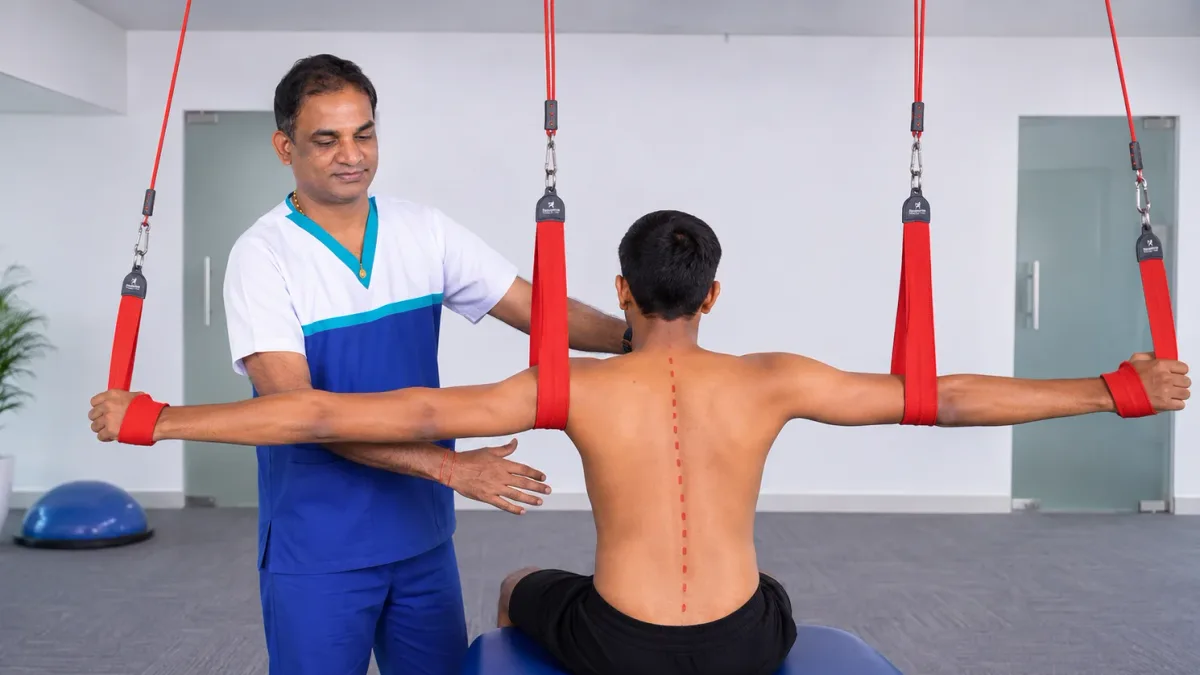
At DakshinRehab in Moosapet — a 5-minute walk from Moosapet Metro, serving Kukatpally, KPHB, Miyapur and Gachibowli — Dr. Swapnagandhi and our spine team treat lumbar and cervical spinal stenosis through individualised non-surgical rehabilitation. We use flexion-based spinal decompression, gait retraining, hip-spine mobility work, and progressive walking tolerance training. Treatment is paced for the older spine and tailored to the level and severity of stenosis on your MRI. We serve patients across Hyderabad and from the Gulf region.
Clinical Focus — Lumbar & Cervical Canal Stenosis
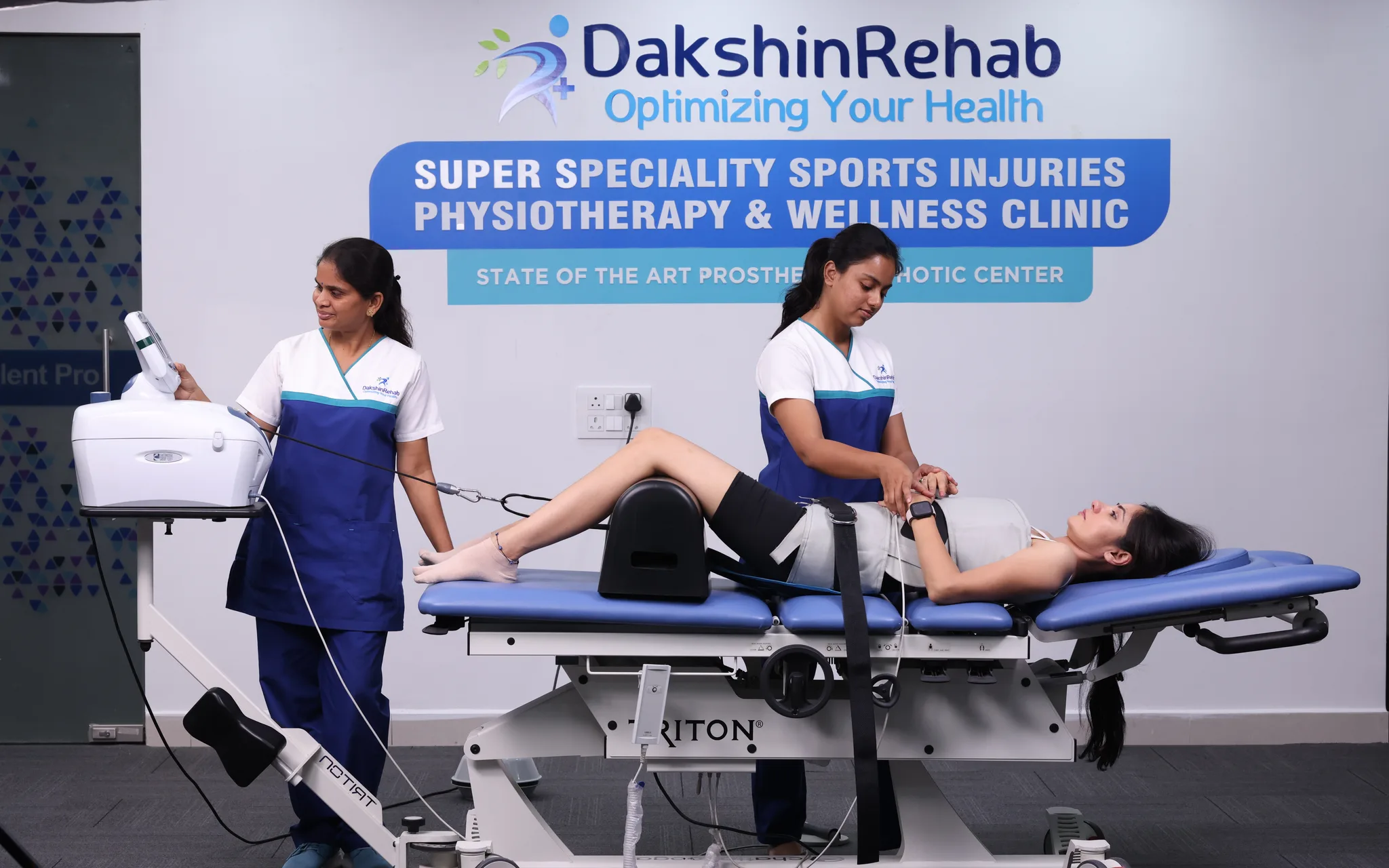
Technology — Flexion-based Spinal Decompression + Gait Training
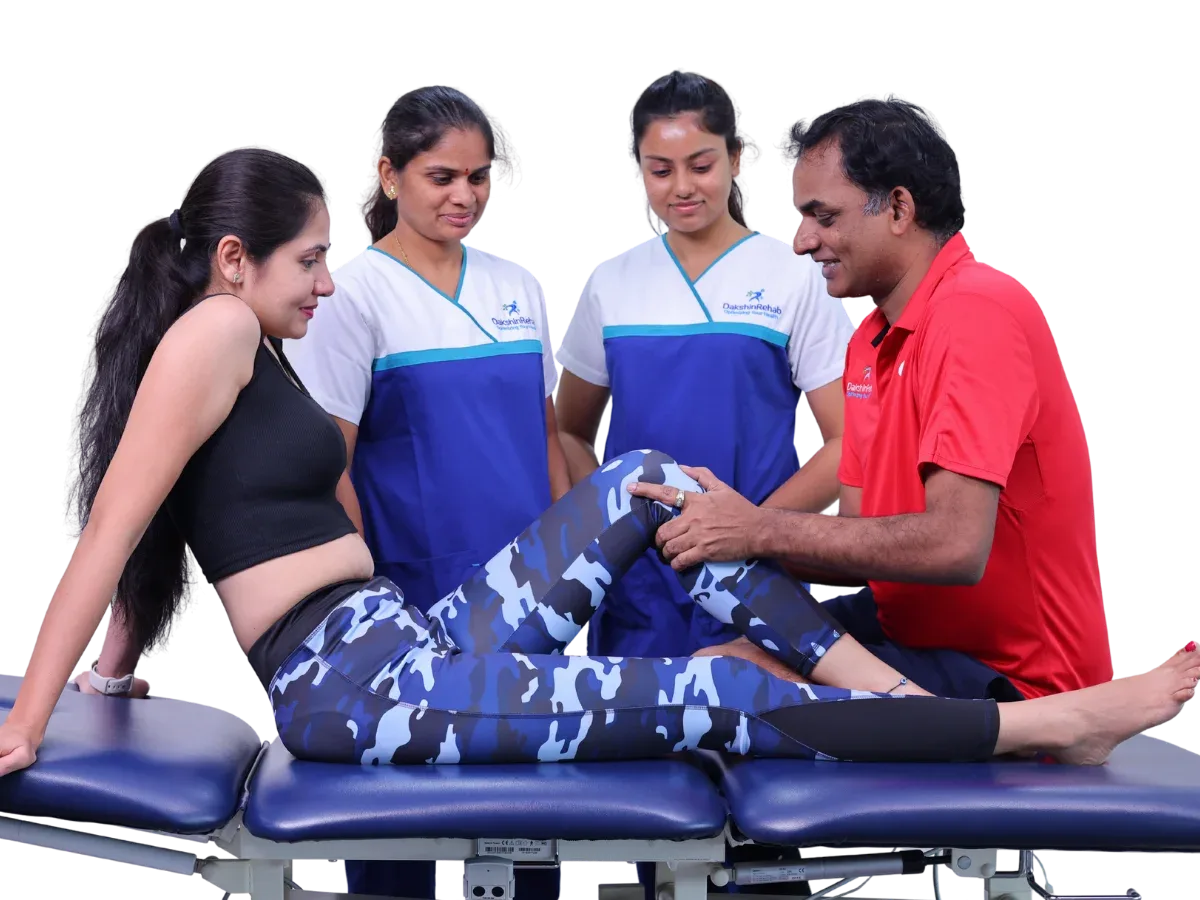
Team — Dr. Swapnagandhi & Spine-Specialised Physiotherapists
Approach — Walking-tolerance-led, age-appropriate, non-surgical care
NON-SURGICAL SPINAL STENOSIS CARE
Spinal Stenosis Treatmentin Moosapet, HyderabadWithout Surgery
At DakshinRehab in Moosapet — a 5-minute walk from Moosapet Metro, serving Kukatpally, KPHB, Miyapur and Gachibowli — Dr. Swapnagandhi and our spine team treat lumbar and cervical spinal stenosis through individualised non-surgical rehabilitation. We use flexion-based spinal decompression, gait retraining, hip-spine mobility work, and progressive walking tolerance training. Treatment is paced for the older spine and tailored to the level and severity of stenosis on your MRI. We serve patients across Hyderabad and from the Gulf region.
Clinical Focus: Lumbar & Cervical Canal Stenosis
Technology: Flexion-based Spinal Decompression + Gait Training
Team: Dr. Swapnagandhi & Spine-Specialised Physiotherapists
Approach: Walking-tolerance-led, age-appropriate, non-surgical care
Personalised, technology-driven rehabilitation in Moosapet, Hyderabad.
Non-Surgical Spinal Stenosis Care
Spinal Stenosis Treatment in Moosapet, Hyderabad — Without Surgery
Leg pain after walking? Stenosis rehab can extend your walking distance.
Clinical Focus: Lumbar & Cervical Canal Stenosis
Technology: Flexion-based Spinal Decompression + Gait Training
Team: Dr. Swapnagandhi & Spine-Specialised Physiotherapists
Approach: Walking-tolerance-led, age-appropriate, non-surgical care
Assessment-led care explained through 4 clinically relevant steps.
Understanding spinal stenosis
Why Do Your Legs Hurt Only When You Walk — and Feel Fine When You Sit?
This pattern — leg pain, cramping or heaviness that comes on after a predictable walking distance and eases when you sit, lean on a trolley, or rest — is the classic signature of neurogenic claudication.
Central Canal Narrowing
Central canal narrowing at the lumbar level produces the classic neurogenic claudication pattern: leg pain or weakness that worsens with walking and is relieved by sitting or leaning forward.
Foraminal Stenosis with Radiculopathy
Narrowing of the foramen where a nerve root exits the spine can produce one-sided leg pain even at rest, often misdiagnosed as a 'pinched nerve.' Targeted decompression and nerve mobilisation address the foramen-specific compression.
Central canal narrowing at the lumbar level produces the classic neurogenic claudication pattern: leg pain or weakness that worsens with walking and is relieved by sitting or leaning forward. Treatment focuses on flexion-based decompression, hip mobility and graded walking tolerance.
Lateral Recess / Foraminal
Foraminal Stenosis with Radiculopathy
Narrowing of the foramen where a nerve root exits the spine can produce one-sided leg pain even at rest, often misdiagnosed as a 'pinched nerve.' Targeted decompression and nerve mobilisation address the foramen-specific compression.
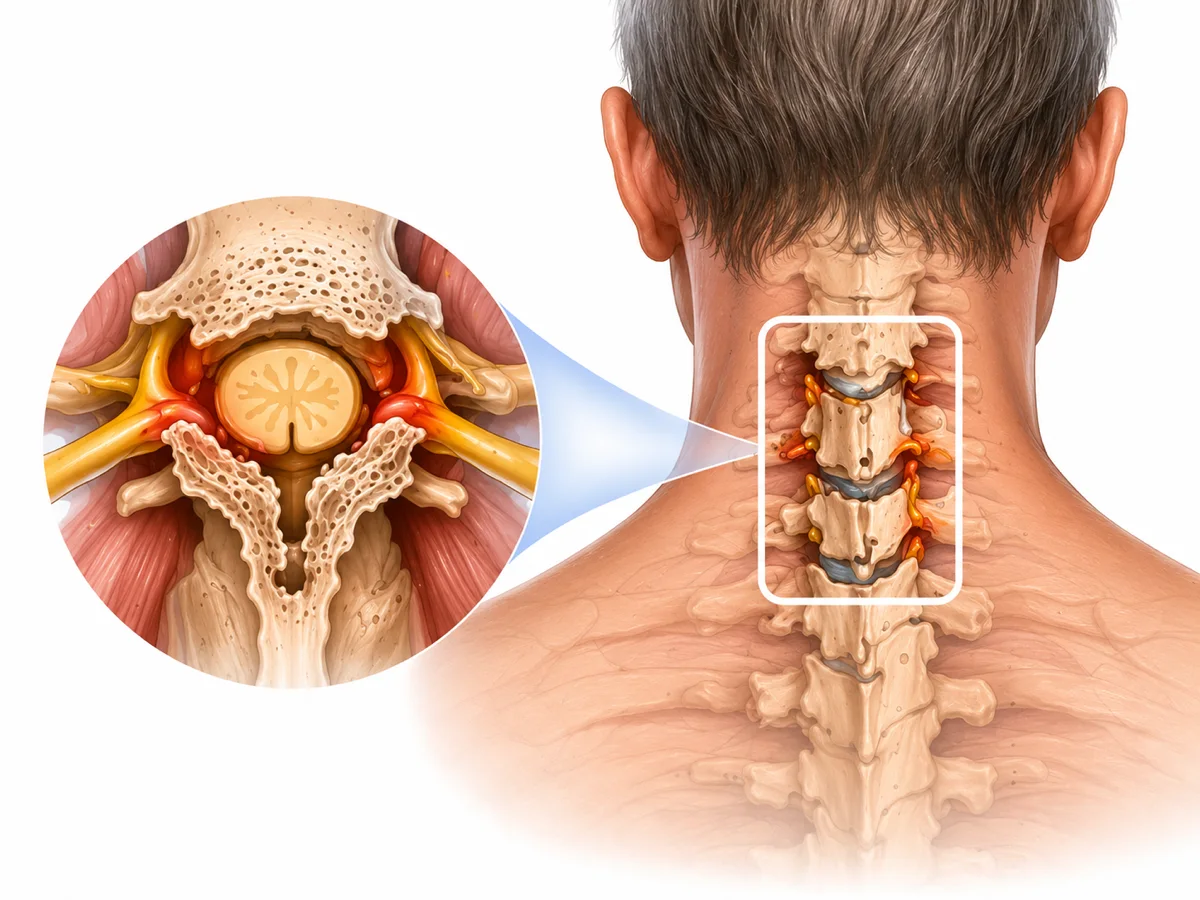
Cervical Canal
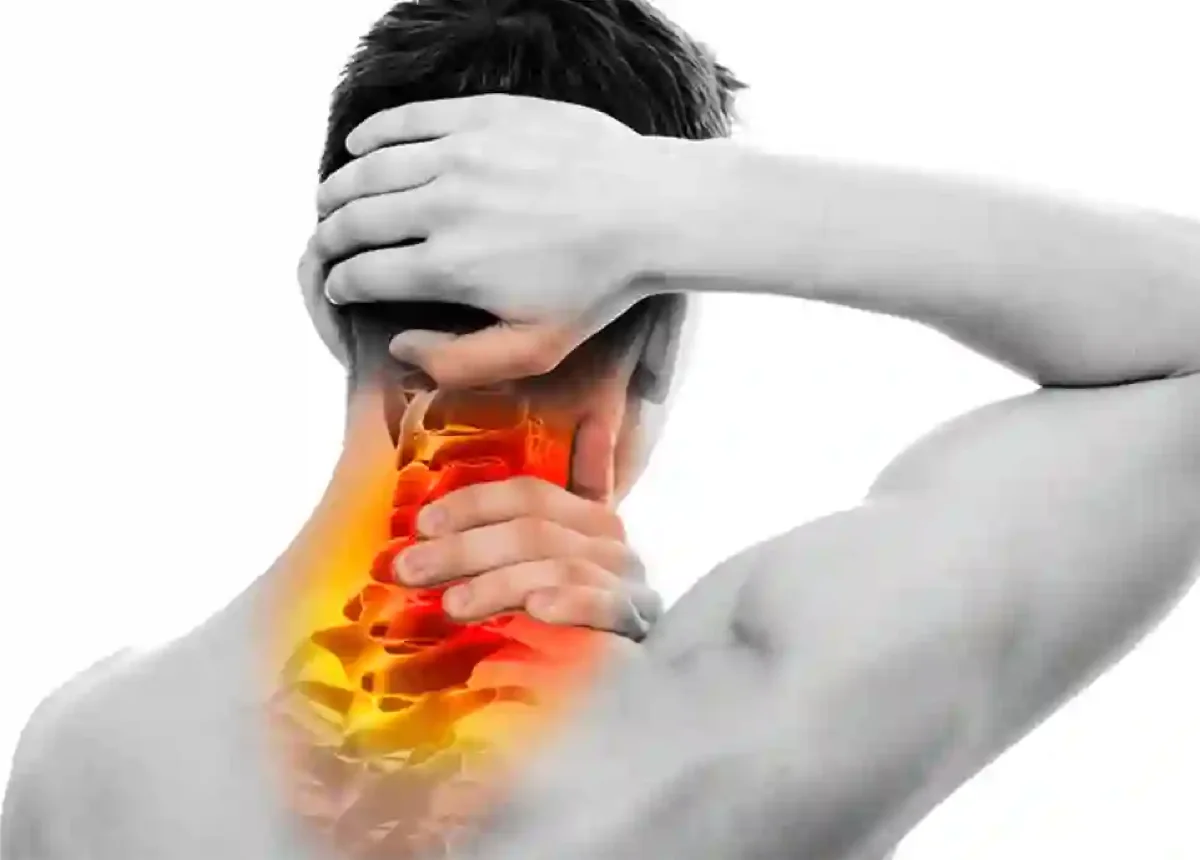
Cervical Canal Stenosis
Cervical stenosis is a different problem from lumbar — when the cervical canal narrows, it can compress the spinal cord itself, producing balance issues, hand clumsiness or fine motor loss. This pattern (myelopathy) warrants a closer surgical opinion alongside any rehabilitation. We screen carefully at every cervical assessment.
Spinal Stenosis Symptoms
How Spinal Stenosis Feels — the Walking Pattern
Spinal stenosis narrows the space around the nerves, so symptoms typically build up as you walk or stand and ease when you sit. These are the patterns DakshinRehab Moosapet patients describe most often — the classic clues that point to stenosis rather than a simple disc problem.
Leg pain or heaviness when you walk
Aching, cramping, heaviness or tingling in one or both legs that builds up the longer you walk or stand — often called neurogenic claudication. It usually eases when you stop and sit.
Relief when you sit or lean forward
Bending forward — over a trolley, a walking stick or a kitchen counter — opens the spinal canal and settles the leg symptoms. This flexion relief is a strong clue that the problem is stenosis.
Numbness or tingling in the legs
Pins and needles or numbness spreading into the buttocks, thighs or feet, usually brought on by being upright and relieved by sitting.
Your walking distance is shrinking
Being able to walk less and less before the legs force you to stop and rest — a gradual drop in walking tolerance that quietly limits daily life.
Leg weakness or unsteadiness
Legs that feel weak, tired or unreliable after walking, sometimes with a sense of poor balance. This warrants prompt assessment rather than simply walking less.
Standing still is harder than walking with support
Standing in a queue can be more uncomfortable than pushing a loaded trolley, and cycling may be far easier than walking — because both change the spine posture that eases the nerves.
Using specific manual therapy techniques, we gently gap the posterior aspect of the vertebrae open, creating immediate microscopic space for the starved nerves to breathe.
We rigorously train your core to maintain a "posterior pelvic tilt" while walking—a posture that naturally keeps the spinal canal open, allowing you to walk vastly further.
Many people with stenosis quietly shrink their world — walking less, standing less, going out less. These are the signs it is worth a walking-tolerance assessment at DakshinRehab Moosapet before activity drops further.
Your walking distance is dropping
If you can walk less than you could a few months ago before the legs force you to stop, targeted rehab can often help extend how far and how comfortably you walk.
You are avoiding activities to dodge the pain
Skipping the market, temple, walks or social outings to avoid leg symptoms is a sign to seek help — becoming sedentary tends to make stenosis harder to manage over time.
An MRI shows stenosis and surgery has been suggested
If a scan looks severe and surgery has been raised, an assessment clarifies whether a non-surgical, flexion-based programme is a reasonable first step for you.
Numbness, tingling or weakness in the legs
Persistent leg numbness, tingling or weakness brought on by walking should be assessed promptly rather than managed by simply walking less.
Balance feels less reliable
More unsteadiness or near-falls after being on your feet means balance and strength work should start before confidence and independence decline.
Rest and medication are not enough
If rest and pain relief only help briefly and the leg symptoms keep returning when you walk, the underlying mechanics need a structured rehabilitation plan.
Common Spinal Stenosis Questions — Answered in Plain Language
Direct, clinician-reviewed answers to the questions our spinal stenosis patients actually ask out loud.
Why do my legs hurt when I walk but feel fine when I sit?
That pattern is the classic signature of neurogenic claudication from spinal stenosis. Standing and walking close down the already narrow space around the nerves in your spine; sitting or leaning forward (flexion) opens it back up. It's very different from a vascular leg problem and responds to different treatment — flexion-based decompression, hip mobility work and progressive walking tolerance training.
What is neurogenic claudication?
Neurogenic claudication is leg pain, weakness or heaviness that comes on with walking and is relieved by sitting or leaning forward. It is caused by narrowing of the spinal canal or neural foramina (spinal stenosis), which reduces space around the nerve roots. It is distinct from vascular claudication, which is caused by blood-flow problems.
Can spinal stenosis be treated without surgery?
Yes — many patients with symptomatic spinal stenosis can extend their walking tolerance significantly with structured non-surgical care, without needing surgery. At DakshinRehab we use flexion-based spinal decompression, hip mobility work, gait retraining and progressive walking tolerance training. Surgery is generally reserved for progressive neurological deficit or severe disabling symptoms unresponsive to conservative care.
How can I increase my walking distance with stenosis?
Walking tolerance is built gradually: start at a distance well within your symptom threshold, use flexion-friendly aids (a walker or trolley) early on if needed, and progress in small steps. We pair this with hip mobility work, targeted decompression, and posture coaching. Most patients are surprised how much progress is possible when increases are paced rather than forced.
SPINAL DECOMPRESSION TECHNOLOGY
Advanced Tech for Nerve Decompression
Spinal stenosis is a mechanical space issue. The bone spurs will never go away without surgery, but you DO NOT always need surgery. DakshinRehab utilizes specific biomechanical techniques that teach your body how to dynamically open the spinal canal when you walk, drastically reducing nerve compression.
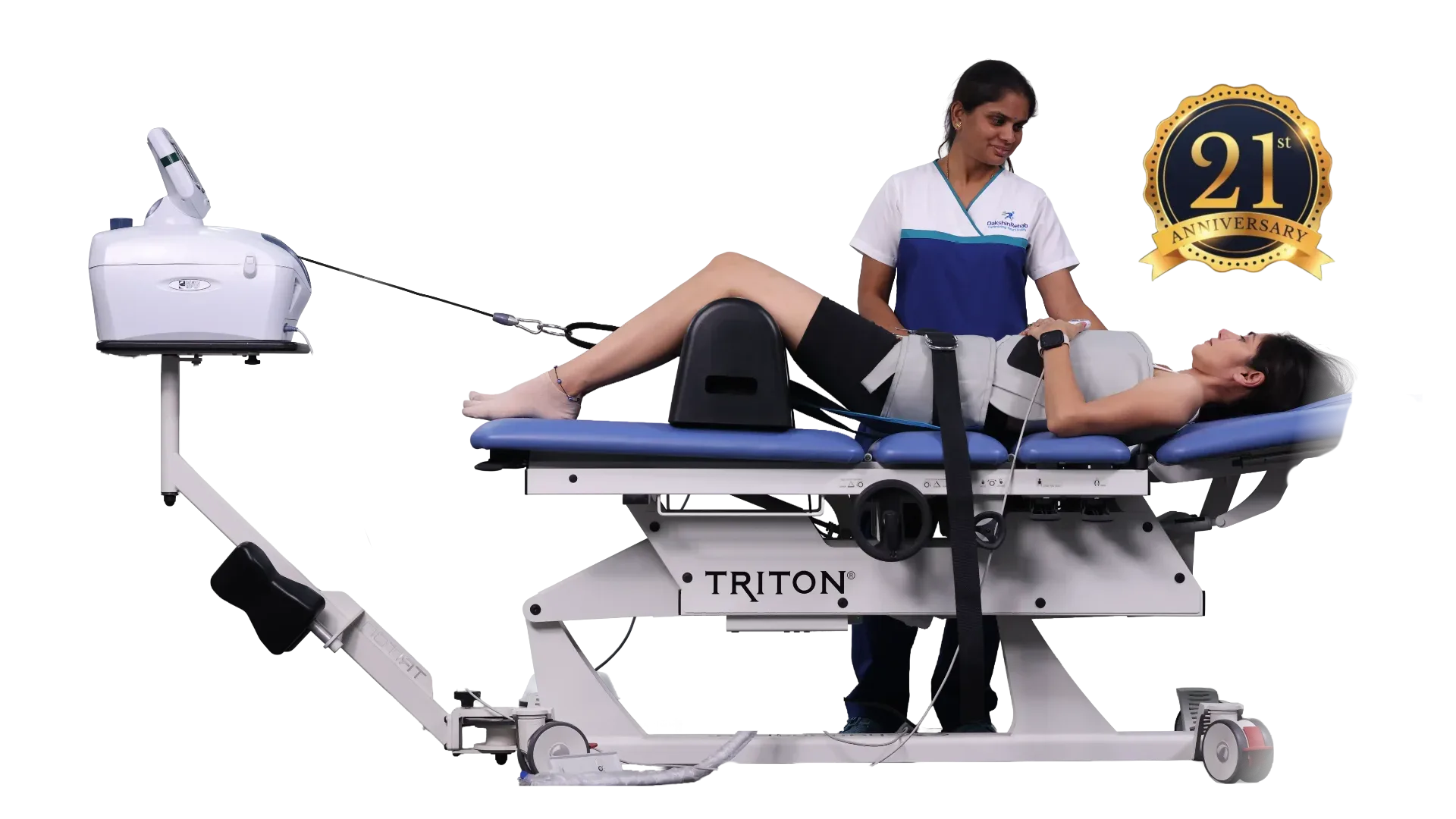
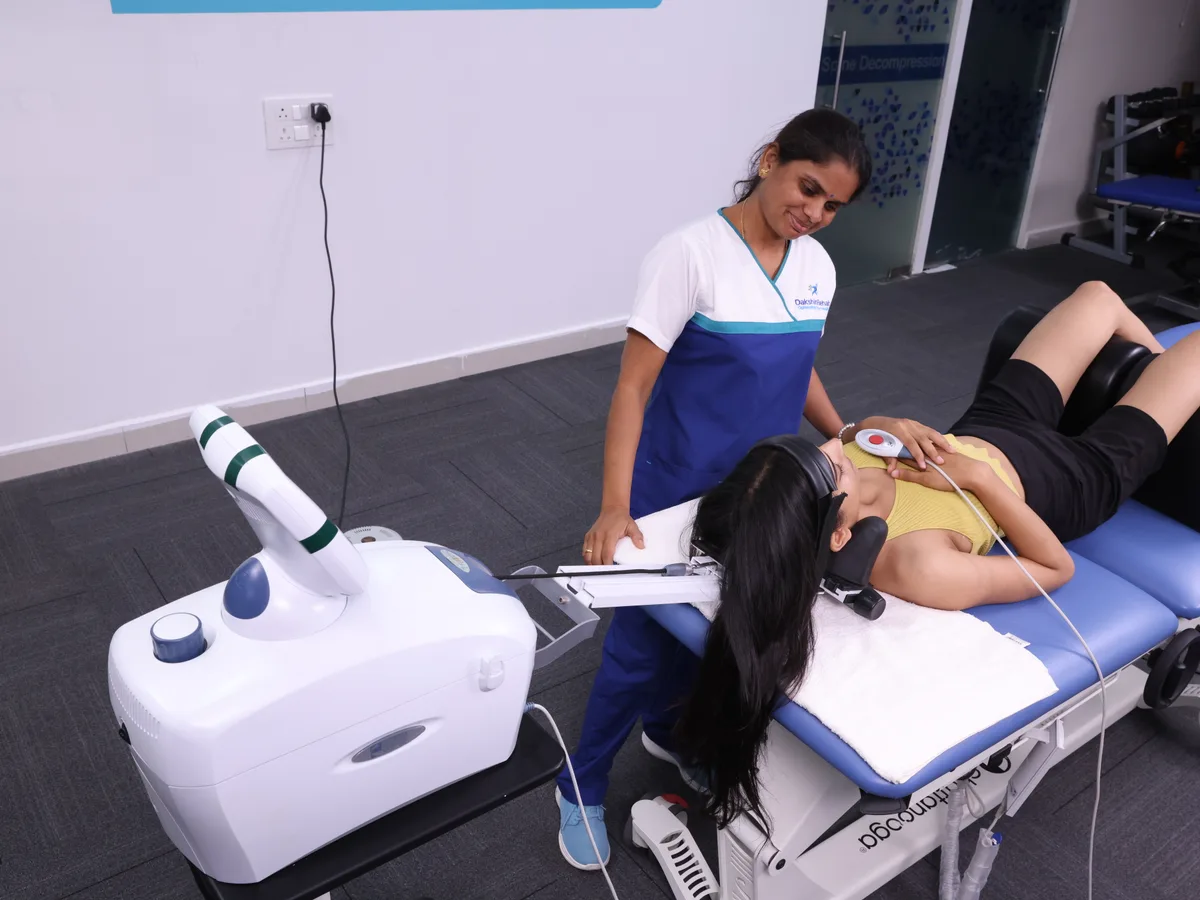
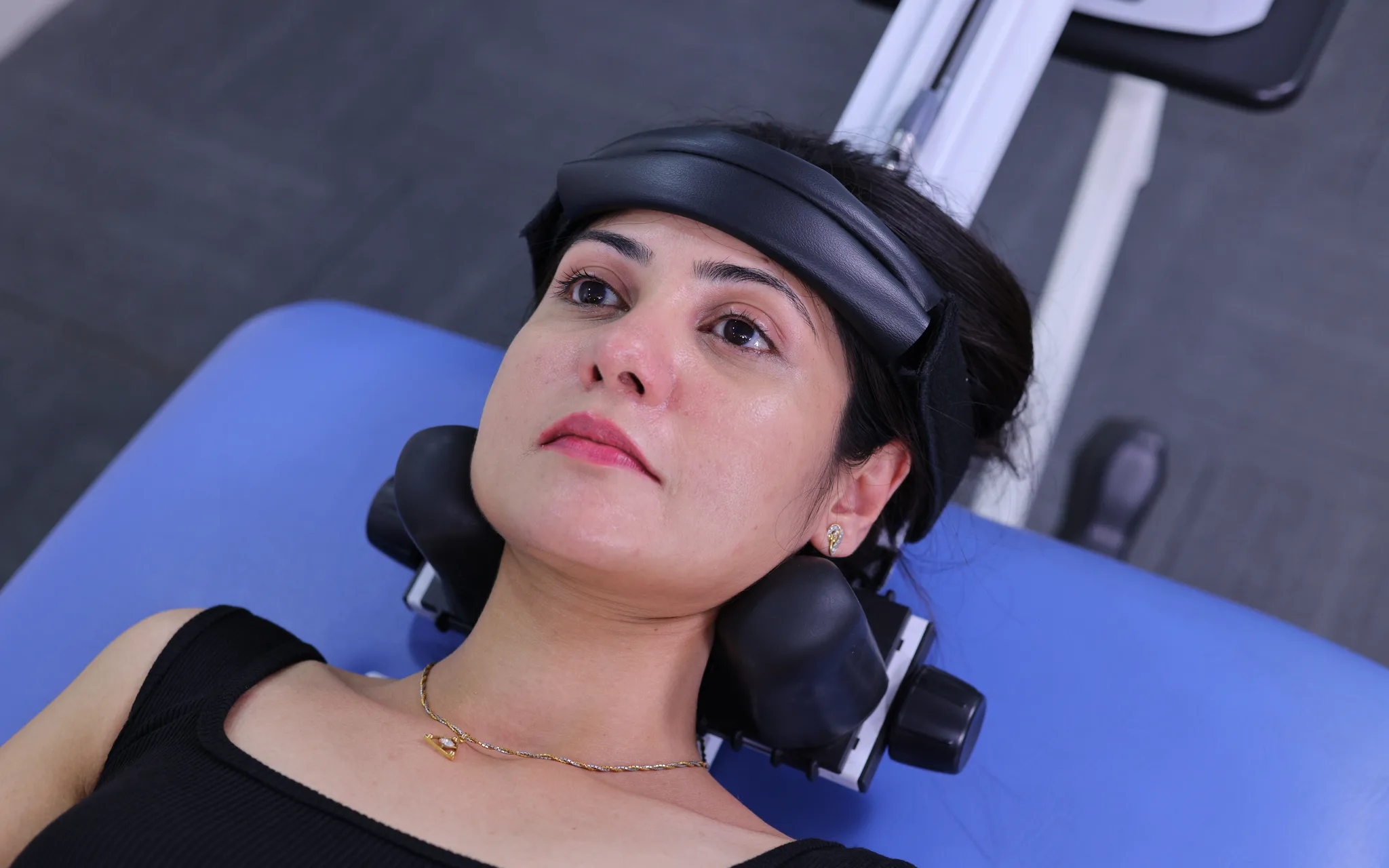
Flexion-Bias Lumbar Traction
Advanced mechanical pulling applied specifically with the knees bent toward the chest, strongly decompressing the narrowed nerve tunnels.
TECAR Therapy
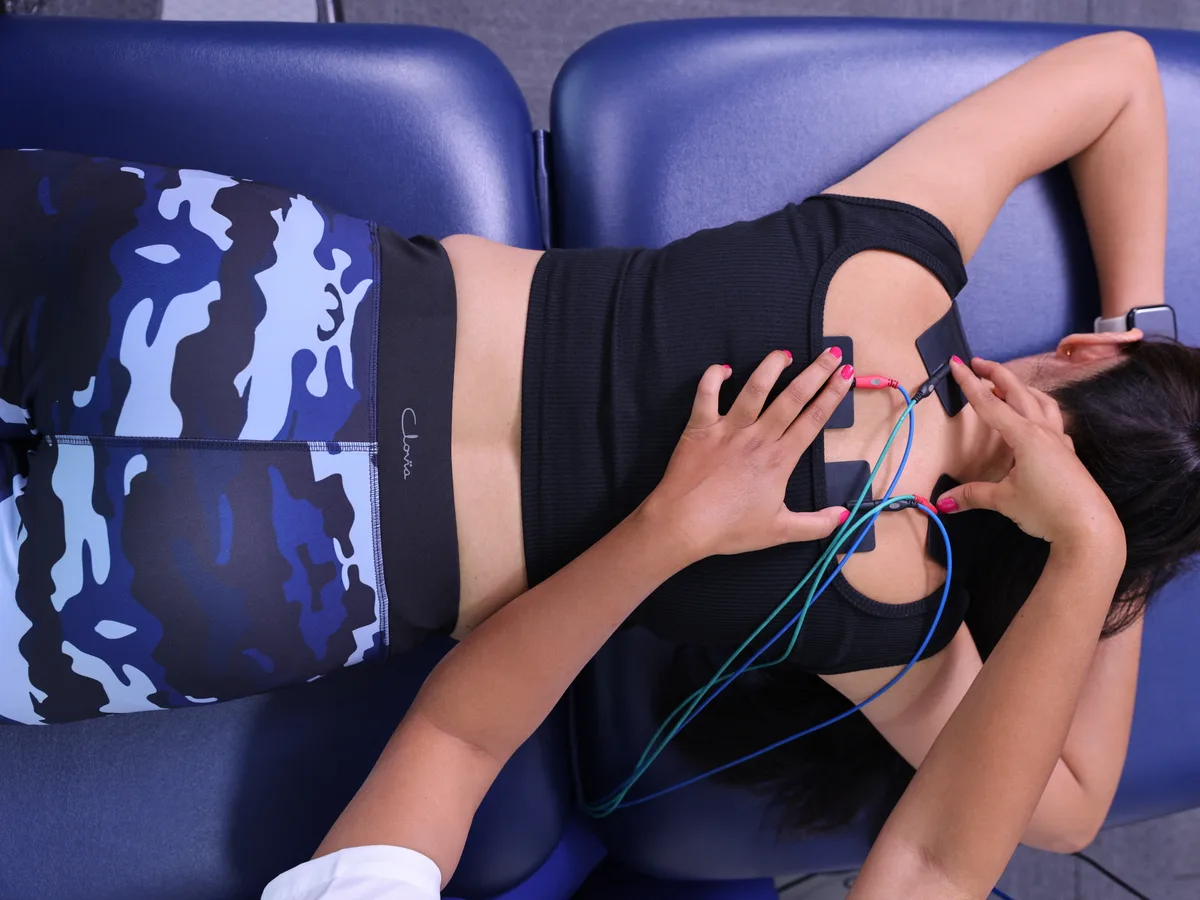
Deep Radiofrequency to aggressively relax the massively tight lower back muscles that develop from years of guarding the painful spine.
DakshinRehab clinical pathway
Postural Biofeedback
Using localized sensors to ensure you are firing the correct core muscles to permanently hold your pelvis in the pain-free, nerve-opening tilt.
Stationary Cycling Protocols
Stenosis patients can often cycle for an hour with zero pain despite not being able to walk for 5 minutes. We use this to maintain high cardiovascular health safely.
Clinical comparison
Posture Modification vs. Surrender
Many stenosis patients accept that they will end up in a wheelchair because their MRI looks severe. But the spinal canal naturally changes size depending on your posture — arching your back narrows it, rounding your lower back opens it. We use intensive neuromuscular retraining to teach your core to hold the spine in a flexion-friendly position while you walk, which in our clinical experience meaningfully extends walking distance for most patients.
Insight 1
Lower Extremity Nerve Gliding
Specific "flossing" movements applied to the legs to pull the trapped sciatic nerve back and forth through the narrowed spinal tunnel, reducing scar tissue grip.
Insight 2
Local & Accessible
Located in Moosapet, Hyderabad — serving senior patients from Kukatpally, KPHB, Miyapur, and Gachibowli without navigating any stairs.
“We can't dissolve the bone spurs, but we can teach your pelvis to tilt in a way that physically moves the bone spurs away from the nerve root. That is the secret to avoiding surgery.”
Injections vs Surgery vs Physiotherapy - Choosing the Right Path for Spine Pain
Spine pain can come from disc irritation, nerve compression, stenosis, posture-related overload, or movement sensitivity. Injections and surgery have specific indications, especially when symptoms and imaging match. For most patients, a root-cause physiotherapy assessment helps decide whether decompression, graded movement, strengthening, or medical referral is the safest next step.
“Spine treatment should not be chosen from an MRI alone. It should be chosen from the full picture - symptoms, movement, strength, nerve signs, and daily function.”
Your Spinal Stenosis Recovery Journey at DakshinRehab
A walking-tolerance-led, non-surgical programme from your first spine assessment in Moosapet to longer, more confident walks — paced for the older spine.
PHASE 1
Spine & Walking Assessment(Day 1 (60-90 min))
Neurological testing of both legs to map which nerve roots are being compressed
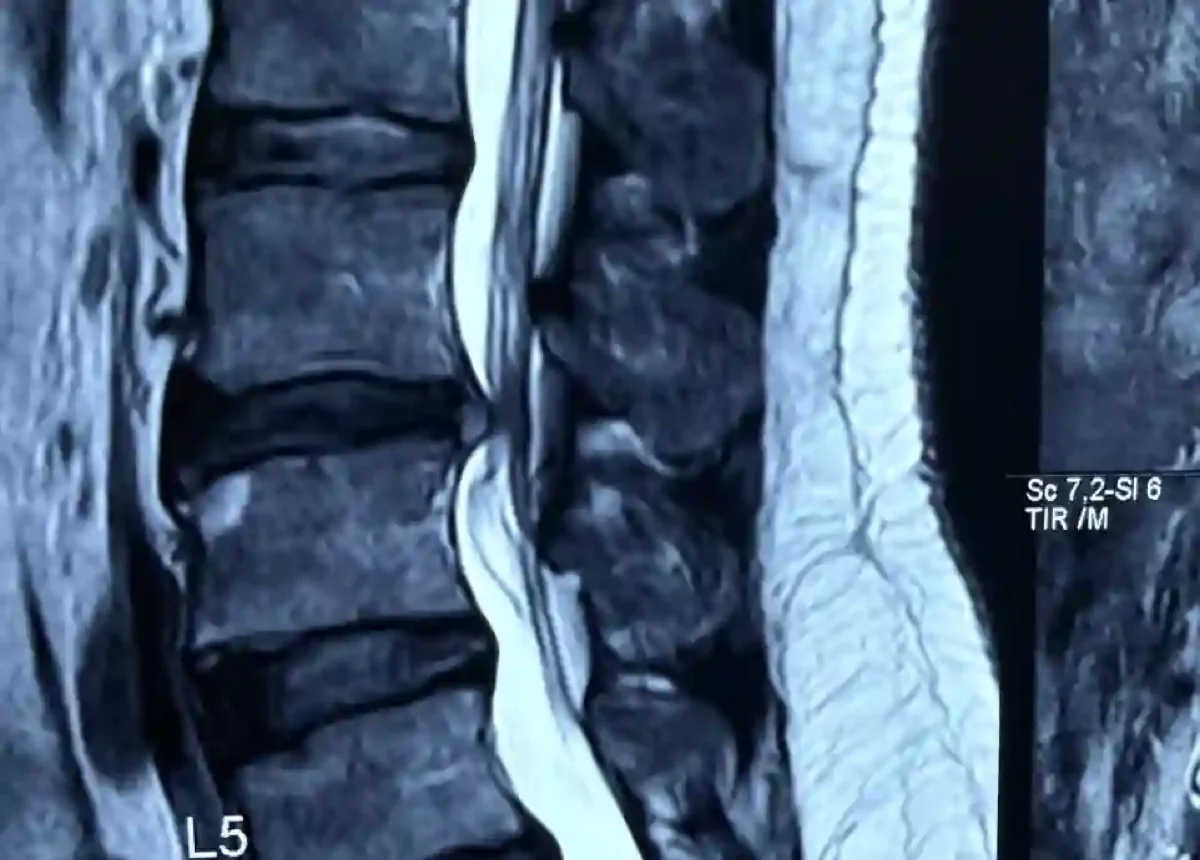
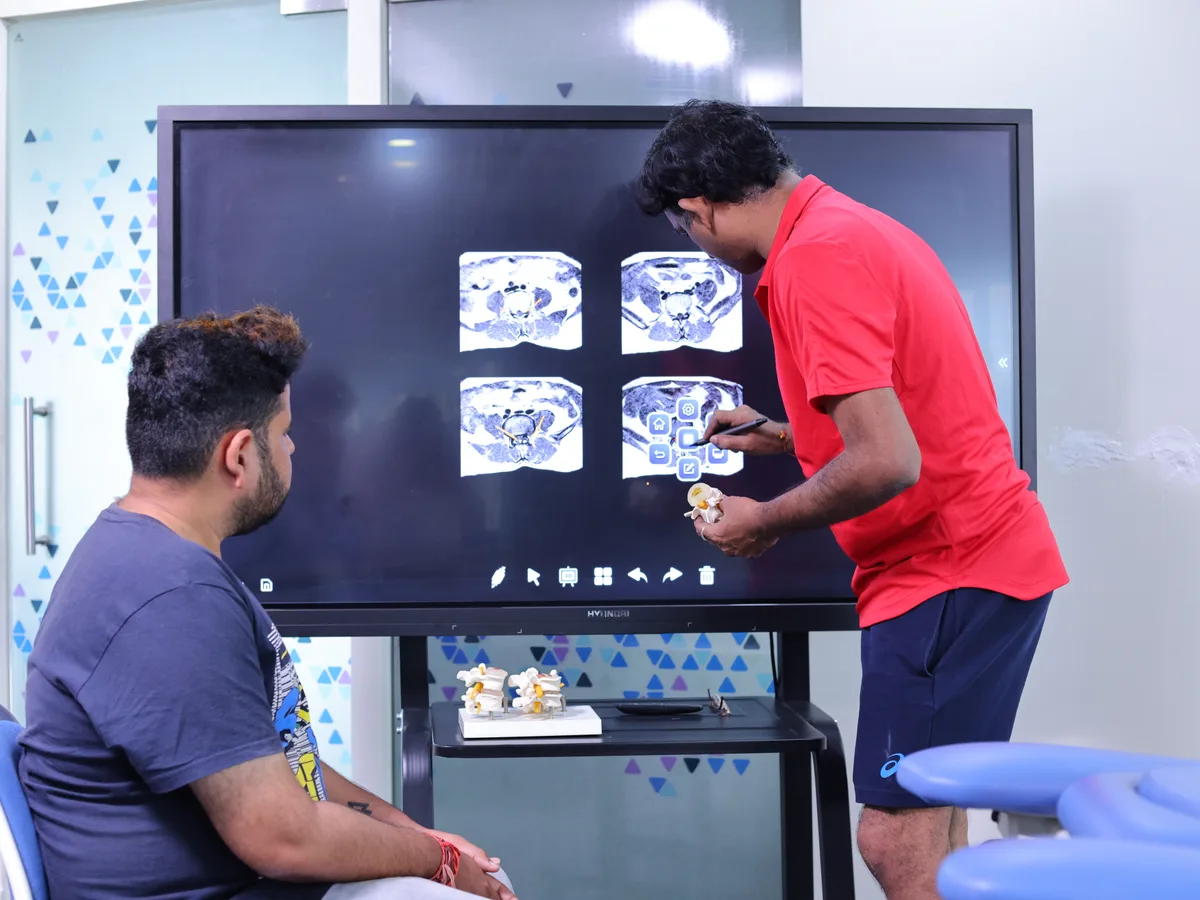
Review of your MRI alongside what your symptoms actually say
Baseline walking-tolerance measure — how far before the legs force you to stop
Posture, hip mobility and balance screening
A clear explanation of your stenosis and a written, age-appropriate rehab plan.
Independent home routine (15 min daily) — mobility, core and cycling or walking
Clear guidance on warning signs that need urgent medical review
Follow-up visits at 3 and 6 months to keep your walking gains on track
WhatsApp access for quick triage — including for our Gulf-based patients
You manage your stenosis with confidence — staying mobile, independent and out of the operating theatre wherever possible.
When to Get Immediate Help
Identify Dangerous Nerve Damage
While the leg heaviness of stenosis is miserable, it is usually just an "electrical signal block" that recovers when you sit. However, if the bone spur completely severs the nerve's blood supply, the nerve will die permanently. Watch for these surgical red flags.
Cauda Equina Syndrome — Total loss of bowel or bladder control. If you cannot stop yourself from urinating or cannot initiate urination at all, go to the Emergency Room IMMEDIATELY.
Saddle Anesthesia — Complete, profound numbness in the genital, groin, or inner thigh areas (where you would sit on a bicycle seat).
Foot Drop — You suddenly cannot lift your toes off the ground while walking, causing you to constantly trip over your own feet. The nerve controlling your shin has been completely shut down.
Profound Leg Weakness — Your knees suddenly buckle and give way when trying to stand from a chair, completely unable to bear your body weight.
Numbness That Never Leaves — Normal stenosis numbness disappears when you sit down. If the numbness remains severe and constant 24 hours a day, the nerve is suffering permanent damage.
Loss of Knee or Ankle Reflexes — A clinical sign our physios check for, indicating severe upper-level nerve conduction block.
Condition-relevant recovery stories from patients with different ages, jobs, family support and treatment goals — selected for this page while verified Google review imports are prepared.
Standing tolerance improved enough for site rounds
I could walk only a few minutes before heaviness spread into both legs. The plan focused on flexion-biased exercise, hip mobility, walking intervals and safe conditioning instead of forcing painful extension. I still respect my limits, but I can complete garage rounds and evening shopping without hunting for a chair every few minutes.
Cab fleet supervisorMalePractical, work-first
AR
Abdul Raheem Qureshi
Moosapet · 57 years
Driving the daily commute again after 8 weeks of sciatica
Sharp pain ran from my lower back into my right calf, and I kept stopping during my Miyapur to Madhapur commute. My programme combined MRI review, decompression sessions, nerve-glide work and graded core training. By week eight, I could drive both ways and sit through client calls without the leg pain taking over.
IT project managerMaleCautious, report-led
SC
Sandeep Challa
Miyapur · 42 years
Morning stiffness no longer decides my whole day
I was frightened by the word degenerative on my scan and had stopped walking outside. The team explained what the MRI meant, then started gentle decompression, heat-based pain control and balance-safe strengthening. I now walk to the temple, cook without repeated chair breaks and know exactly which exercises settle a flare.
Clear, clinician-reviewed answers to the questions our spinal stenosis patients in Hyderabad and the Gulf region most often ask.
Why do my legs hurt when I walk but feel fine when I sit?
That pattern — leg pain, cramping or heaviness that comes on after a predictable walking distance and eases when you sit or lean forward — is the classic signature of neurogenic claudication, caused by spinal stenosis. Standing and walking close down the already narrow space around the nerves; flexion (sitting, leaning over a trolley) opens it back up. It's very different from a vascular leg problem and responds to different treatment.
What is neurogenic claudication?
Can spinal stenosis be treated without surgery?
Will spinal decompression work for stenosis?
How can I increase my walking distance with stenosis?
Is cervical stenosis different from lumbar stenosis?
When does spinal stenosis need surgery?
What is the best exercise for spinal stenosis?
How is spinal stenosis different from disc herniation?
How long does spinal stenosis rehabilitation take?
How much does spinal stenosis treatment cost at DakshinRehab?
Do you treat older international patients with spinal stenosis?