Knee pain is the single most common reason patients walk into DakshinRehab in Moosapet, Hyderabad. It may be the grinding ache of osteoarthritis, the sudden give-way after an ACL tear, or the nagging anterior pain that plagues runners, cricketers and desk workers alike. It steals your stairs, your evening walk, your confidence on uneven ground. Yet there is something most patients do not hear from their orthopaedic consultation: the knee is almost never the real problem. At DakshinRehab we have a clinical saying — the knee is the slave of the hip and ankle. Fix the commanders, and the slave is freed. This biomechanical approach — supported by 3D gait analysis, Redcord Neurac, shockwave therapy and EMG biofeedback — is why the overwhelming majority of our knee pain patients avoid surgery.
Why most knee pain treatments fail — the hip-ankle connection
If your knee hurts and you only treat the knee, you are treating the victim, not the criminal. The knee joint sits between two powerful influencers — the hip above and the ankle below. Weak hip abductors (gluteus medius) let the knee collapse inward during walking, running and stair climbing, creating shearing forces across the meniscus and patella that no brace can cancel out. A stiff ankle that lacks adequate dorsiflexion (the ability of the shin to roll forward over the foot) forces the knee to over-flex or rotate, generating abnormal wear patterns. Research on patellofemoral pain, ACL injury risk and knee osteoarthritis progression has converged on the same finding — proximal and distal control, not local knee strength, predicts outcomes. That is why every knee assessment at our Moosapet clinic includes a full hip-ankle evaluation, not just a knee X-ray.
What are the four root causes of knee pain we see most often
The most prevalent condition is knee osteoarthritis, where cartilage gradually wears away, causing bone-on-bone friction, stiffness and swelling. Many patients believe this inevitably leads to knee replacement. It does not. Our joint-unloading protocol — combining Redcord Neurac suspension therapy with targeted hip and ankle strengthening — reduces the mechanical stress on the knee and allows the surrounding structures to compensate for cartilage loss. The second most common cause is ACL and meniscus injuries, typically from sports or sudden pivoting. Dynamic stability training can restore functional knee control without surgery in many partial tear cases, and is essential even when surgery is required. Third is patellofemoral pain syndrome — 'runner's knee' — where the kneecap does not track properly in its groove during bending. This is almost always caused by hip weakness, tight IT band or poor foot mechanics. Fourth is post-surgical stiffness after total knee replacement or ACL reconstruction, where scar tissue and protective muscle guarding limit range of motion and strength recovery.
How we diagnose what is actually driving your knee pain
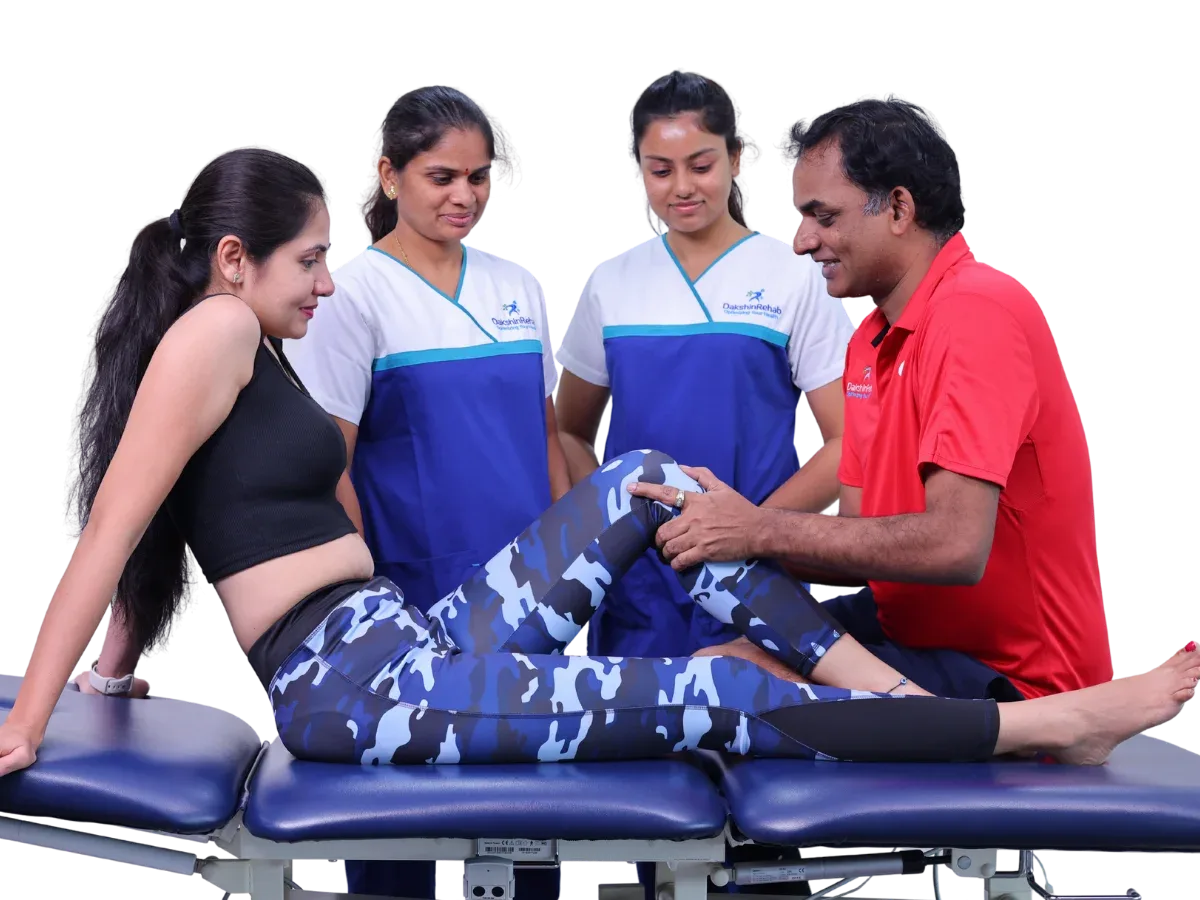
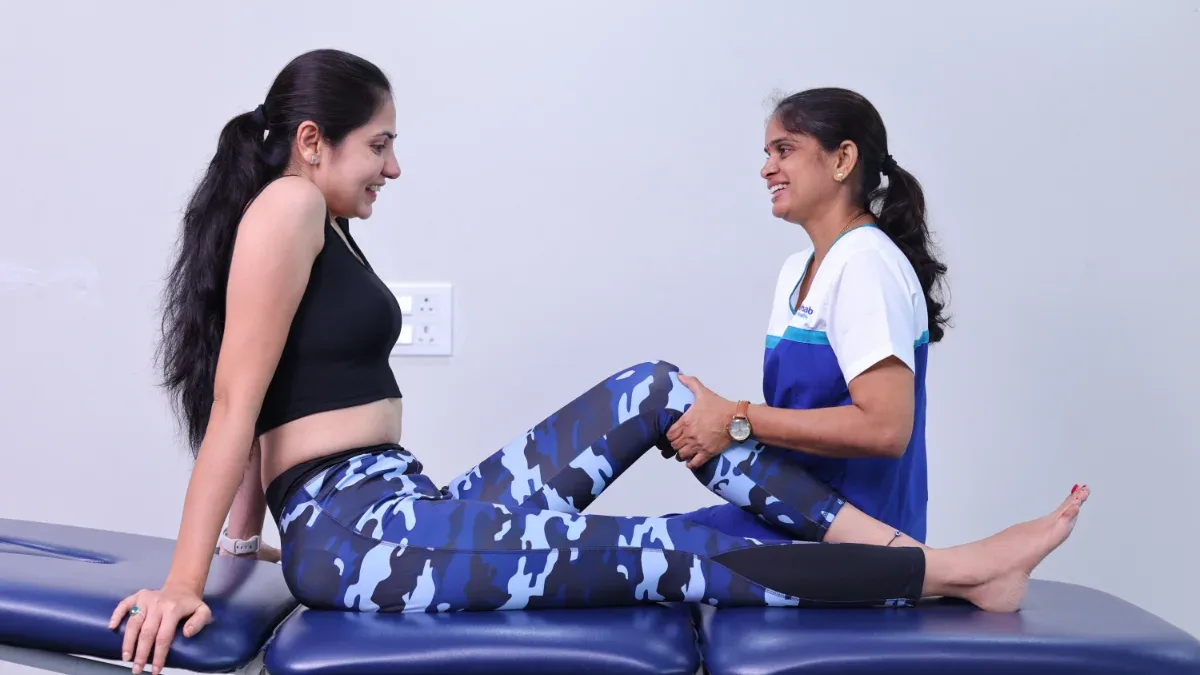
A first visit at DakshinRehab Moosapet is nothing like a 10-minute orthopaedic review. We run a structured 60–90 minute assessment that combines medical history, hands-on clinical testing, objective strength measurement and instrumented gait analysis. Our 3D gait analysis system reveals the biomechanical faults that a visual assessment alone cannot detect — we can see exactly how much the knee is compensating for hip weakness or ankle stiffness during real-time walking and running. We measure limb symmetry index (operated leg vs. non-operated leg, or painful leg vs. non-painful leg) with force-plate and strength-dynamometer data, so progress is objective, not a patient's subjective 'feels better' report. Where imaging is needed — weight-bearing X-rays for arthritis staging, MRI for suspected meniscal or ligament injuries — we coordinate with our partner radiology centres in Kukatpally and KPHB for same-week scans.
How DakshinRehab's technology-driven knee treatment protocol works
Treatment at DakshinRehab is not generic exercise sheets. We deploy a targeted, multi-modal protocol based on the root cause. Chattanooga RPW2 shockwave therapy is our first-line treatment for chronic tendon conditions around the knee — patellar tendinopathy, iliotibial band syndrome and calcific deposits. This FDA-cleared system delivers high-energy acoustic pulses that break down scar tissue and calcifications while stimulating neovascularisation — the formation of new blood vessels that restart a stalled healing cascade. For osteoarthritis and post-surgical stiffness, TECAR therapy uses radiofrequency energy to generate deep endogenous heat within the joint capsule, increasing blood flow, reducing inflammation and accelerating tissue repair. For swelling and post-operative pain, cryotherapy and lymphatic drainage round out the early-phase toolkit. Every modality is backed by published evidence; nothing in the protocol is there because 'we have always done it that way'.
How Redcord Neurac retrains the movement patterns that protect your knee
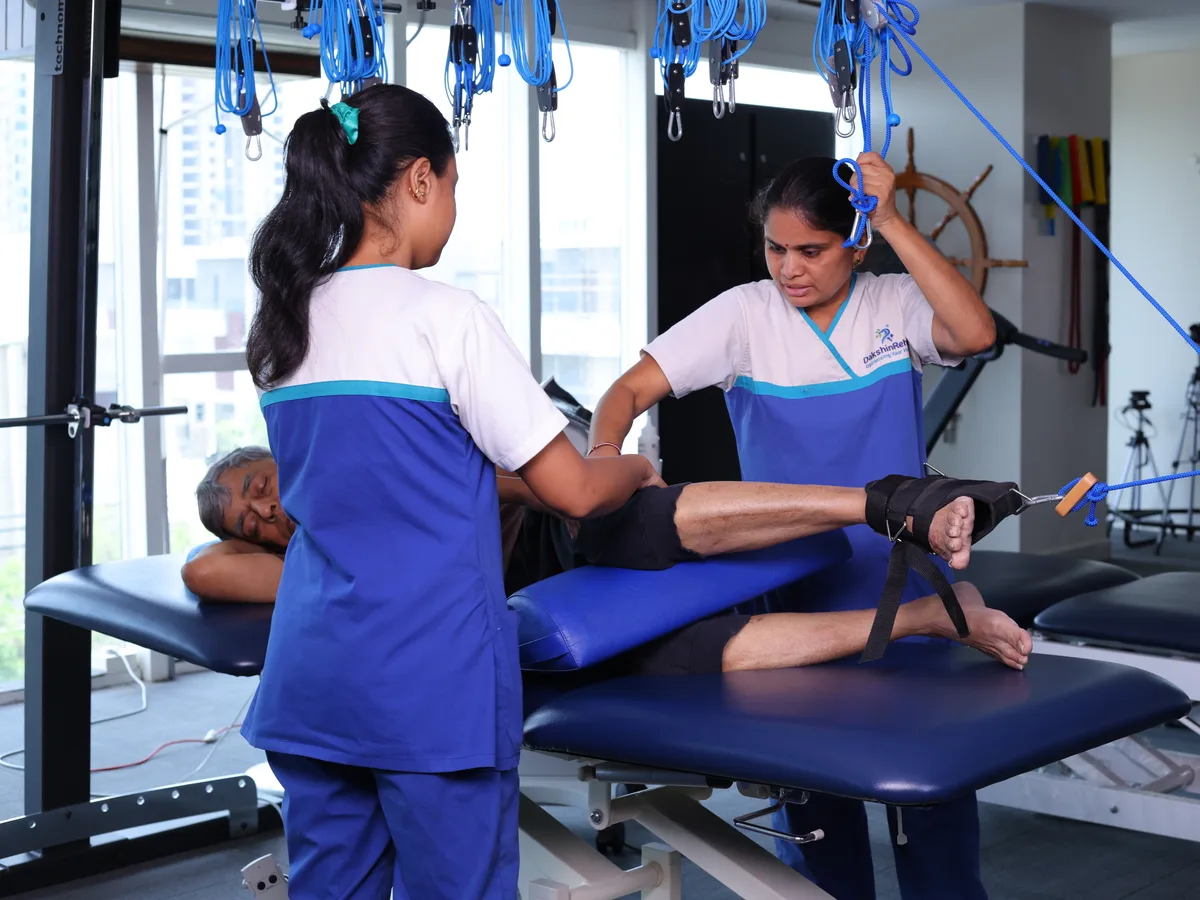
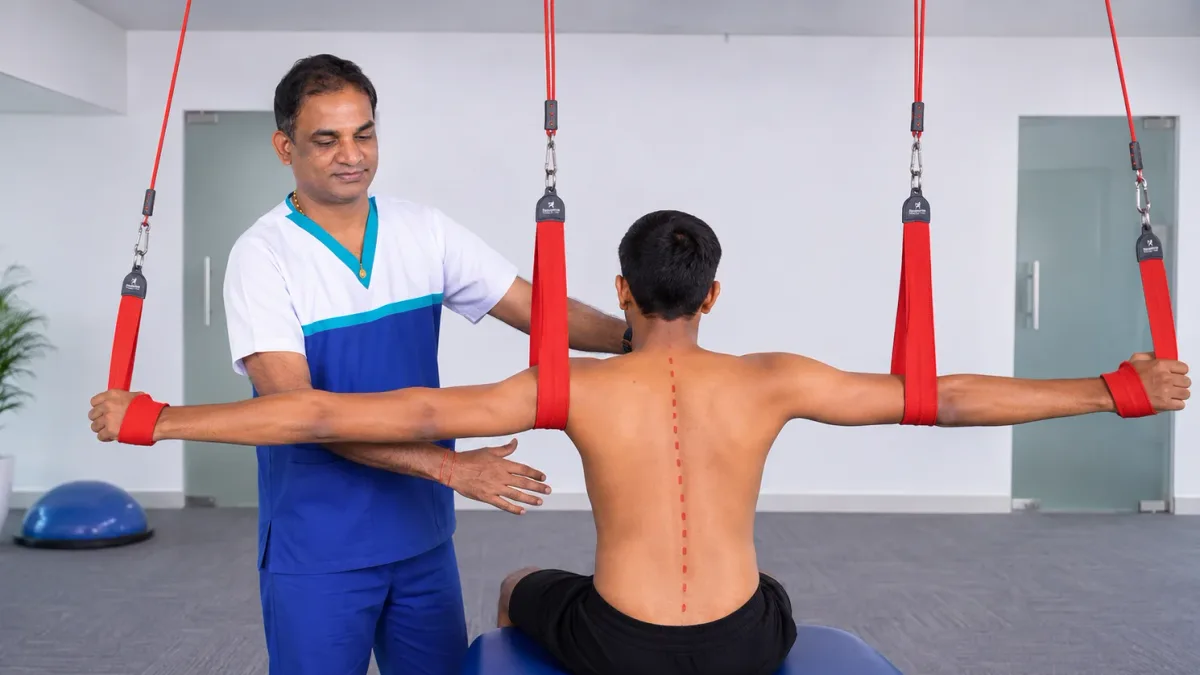
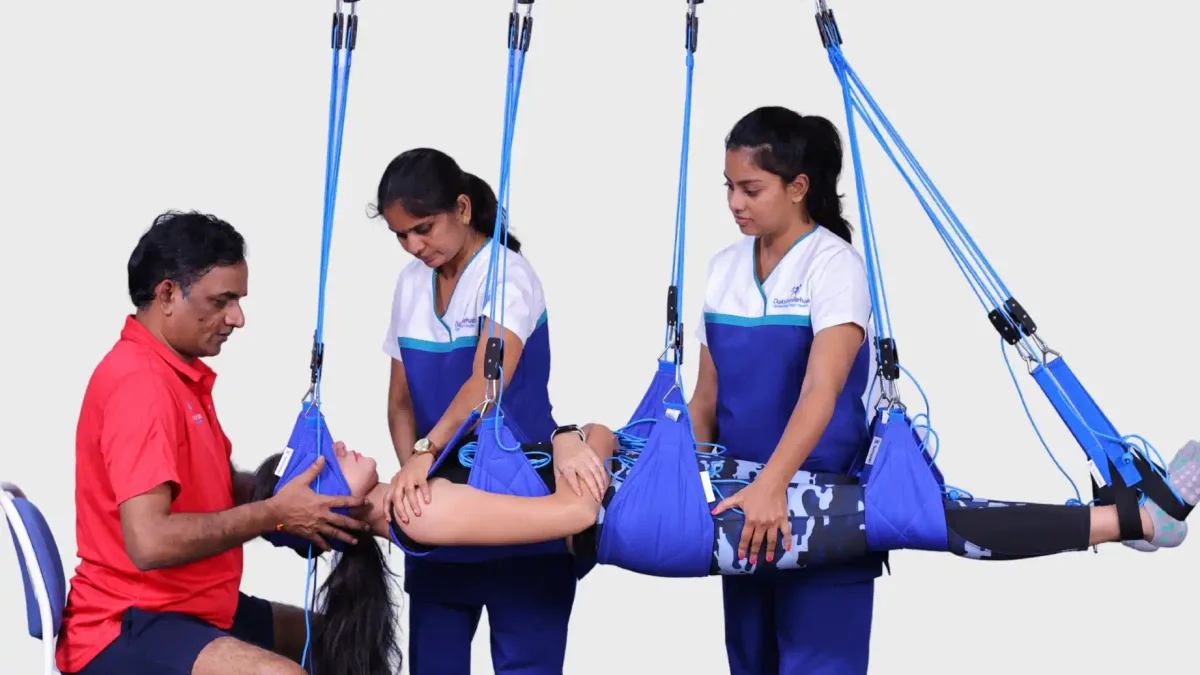
Once pain is managed, the critical phase begins — restoring the neuromuscular control that prevents recurrence. Redcord Neurac suspension therapy is our cornerstone for this phase. Using the Norwegian Redcord suspension platform, we can isolate and retrain specific muscle chains — hip abductors, deep quadriceps, calf complex — in a gravity-reduced, pain-free environment. This is particularly valuable for osteoarthritic patients who cannot tolerate high-load gym exercises, and for post-ACL patients who need to rebuild proprioception without stressing a healing graft. The Neurac weak-link test identifies exactly which 'dormant' muscle allowed the knee problem to develop, then Stimula vibration at 40–50 Hz recruits that muscle in functional positions the gym floor cannot reproduce. Most patients feel a specific muscle activate for the first time in years within their first session.
What runner's knee and overuse injuries actually need
Patellofemoral pain is one of the most frustrating conditions for active patients because it often persists despite rest, ice and knee sleeves. The reason is simple — rest does not fix hip weakness or ankle stiffness. At DakshinRehab, our running rehabilitation programme uses 3D gait analysis to identify the specific mechanical fault driving your patellar tracking issue. We then build a progressive strengthening programme targeting hip external rotators, gluteus medius and single-leg stability, layered onto sport-specific drills over 6–8 weeks. Cricketers, badminton players, runners from Hitec City and weekend footballers from Gachibowli return to full training not by 'resting more' but by fixing the chain that was overloading the knee in the first place. Custom orthotics may be prescribed where foot mechanics are part of the problem.
How post-surgical knee rehabilitation should actually work
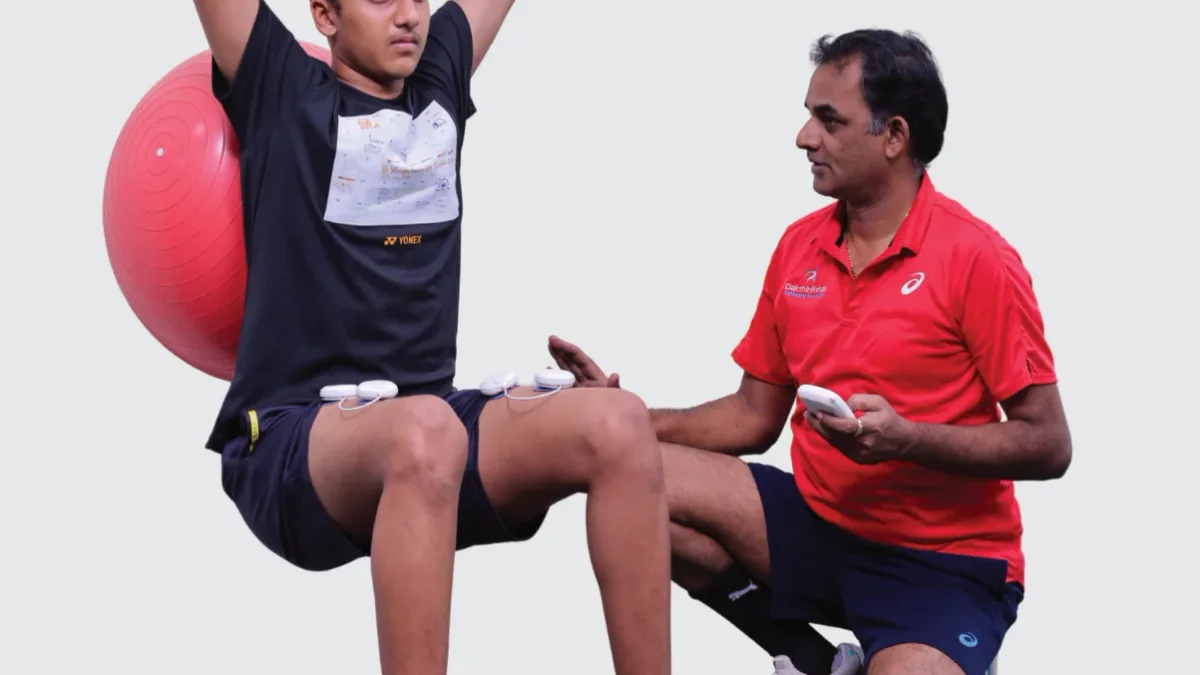
If you have already had knee surgery, the quality of your rehabilitation determines the quality of your outcome. Many post-TKR and post-ACL patients struggle with persistent stiffness, quadriceps weakness and an abnormal gait pattern months after surgery — often because their rehabilitation was too gentle, too brief or not technology-assisted. At DakshinRehab, post-surgical knee rehabilitation follows biological healing timelines combined with progressive, objective milestone testing. We use EMG biofeedback to overcome arthrogenic muscle inhibition — the phenomenon where the brain 'shuts down' the quadriceps after knee surgery, preventing normal activation even when pain has resolved. EMG gives the patient a real-time visual cue every time the right muscle fires, re-establishing the neural pathway the surgery temporarily disrupted. Our strength testing measures limb symmetry index so return-to-sport and return-to-work decisions are data-driven, not calendar-driven.
Evidence and expected outcomes from the published literature
The knee-physiotherapy evidence base is mature and consistent. Systematic reviews in JAMA, BMJ and the Cochrane Database show that for knee osteoarthritis, structured exercise therapy produces pain reduction and functional improvement comparable to — and sometimes exceeding — arthroscopic intervention, with none of the surgical risk. For patellofemoral pain, hip-focused rehabilitation outperforms knee-only rehabilitation in head-to-head trials. For post-ACL reconstruction, criterion-based return-to-sport protocols with limb symmetry testing reduce re-injury rates compared with time-based clearance. For TKR, high-intensity progressive rehabilitation produces better 12-month functional scores than low-intensity or home-only programmes. Shockwave and Redcord Neurac are each backed by their own bodies of evidence for specific indications. At DakshinRehab, we track every patient using validated tools — Lysholm, KOOS, WOMAC, single-leg hop test, force-plate symmetry — so your progress is measurable, not anecdotal.
When to worry — red flags for knee pain
While most knee pain responds well to physiotherapy, certain symptoms require prompt medical evaluation. A locked knee that cannot fully straighten or bend may indicate a displaced meniscal tear requiring arthroscopic intervention. Sudden, significant swelling within hours of injury (haemarthrosis) may indicate ligament rupture, fracture or bleeding into the joint. Knee instability with repeated giving-way despite rehabilitation may require surgical stabilisation. Progressive deformity (increasing bow-leg or knock-knee) should be evaluated for advanced arthritis staging. Unexplained night pain, fever, or knee pain in a child under 15 always needs medical workup. If you experience any of these, DakshinRehab Moosapet will refer you to our partner orthopaedic surgeons at established hospitals in Hyderabad for specialist review, and continue supportive therapy in parallel.
How we integrate knee care with the wider DakshinRehab pathway
Knee rehabilitation rarely works in isolation. For an overweight arthritic patient, we combine knee physiotherapy with metabolic lifestyle coaching and BMI-targeted conditioning. For a post-ACL athlete, we integrate knee rehab with return-to-sport testing, injury-prevention programming and scheduled MRI-informed milestones. For an older patient with knee and back pain, we coordinate care across our chronic low back pain and knee protocols because hip weakness drives both. For an IT professional with knee and neck pain from desk work, posture correction is integrated into the programme. Home exercise prescriptions are printed, WhatsApp-reinforced and reviewed at every visit. Nothing is done in isolation, and nothing is left to guesswork.
What knee patients should expect at DakshinRehab Moosapet
A standard outpatient programme runs 2–3 sessions per week for 6–12 weeks depending on severity and goals. Sessions are 45–60 minutes and one-on-one with a qualified physiotherapist — not handed off to a trainee or rotated between three different therapists. You will be taught a precise home exercise programme that takes 15–20 minutes per day. You will not be given a blanket strengthening sheet; every exercise will target the specific weak link identified in your assessment. Insurance pre-authorisation and claim documentation are handled by our front-desk team for patients from Kukatpally, KPHB, Miyapur, Gachibowli, Hitec City and wider Hyderabad, as well as international patients from the Gulf who travel for advanced musculoskeletal care. Dedicated parking is available at our ARD Magnum address on Green Hills Road, Moosapet.
Conclusion — stop treating the symptom, fix the cause at DakshinRehab
Knee pain is a signal, not a sentence. Whether you are dealing with the slow grind of osteoarthritis, the frustration of runner's knee, or recovery from ACL or TKR surgery, the path to lasting relief runs through precise biomechanical diagnosis, technology-assisted treatment and criterion-based rehabilitation. At DakshinRehab in Moosapet, Hyderabad, we combine shockwave therapy, Redcord Neurac, TECAR, EMG biofeedback and 3D gait analysis to deliver outcomes that generic physiotherapy and painkiller cycles simply cannot match. We serve patients from Moosapet, Kukatpally, KPHB, Miyapur, Madhapur, Gachibowli, Hitec City and across Hyderabad, and international patients from UAE, Saudi Arabia, Qatar and beyond. Book your knee assessment, WhatsApp us on +91 80192 99888, or call +91 80192 99888. Your knee deserves better than painkillers and a brace.