Herniated Disc Treatment in Moosapet, HyderabadWithout Surgery
At DakshinRehab in Moosapet — a 5-minute walk from Moosapet Metro, serving Kukatpally, KPHB, Miyapur and Gachibowli — Dr. Swapnagandhi and our spine team treat MRI-confirmed disc bulge and herniation through individualised non-surgical rehabilitation. We combine FDA-cleared spinal decompression, 3-Tesla EMTT, TECAR therapy and progressive core stabilisation. Treatment is targeted to your specific disc level (L4-L5, L5-S1, C5-C6, C6-C7 etc.) — protocols are confirmed only after MRI review and clinical assessment. We serve patients across Hyderabad and from the Gulf region.
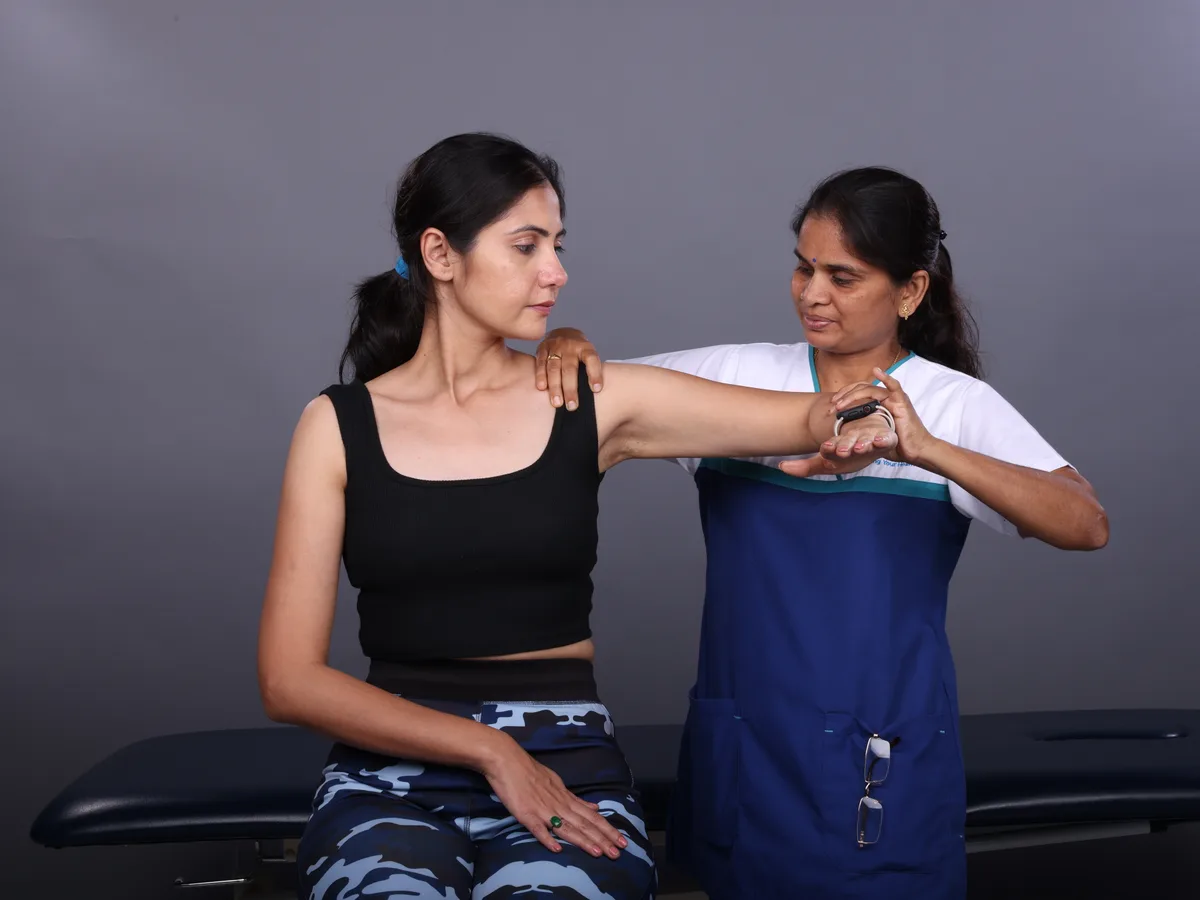
Team — Dr. Swapnagandhi & Spine-Specialised Physiotherapists
Approach — Disc-level-specific, MRI-guided, non-surgical care
NON-SURGICAL HERNIATED DISC CARE
Herniated Disc Treatmentin Moosapet, HyderabadWithout Surgery
At DakshinRehab in Moosapet — a 5-minute walk from Moosapet Metro, serving Kukatpally, KPHB, Miyapur and Gachibowli — Dr. Swapnagandhi and our spine team treat MRI-confirmed disc bulge and herniation through individualised non-surgical rehabilitation. We combine FDA-cleared spinal decompression, 3-Tesla EMTT, TECAR therapy and progressive core stabilisation. Treatment is targeted to your specific disc level (L4-L5, L5-S1, C5-C6, C6-C7 etc.) — protocols are confirmed only after MRI review and clinical assessment. We serve patients across Hyderabad and from the Gulf region.
Assessment-led care explained through 4 clinically relevant steps.
Understanding your MRI
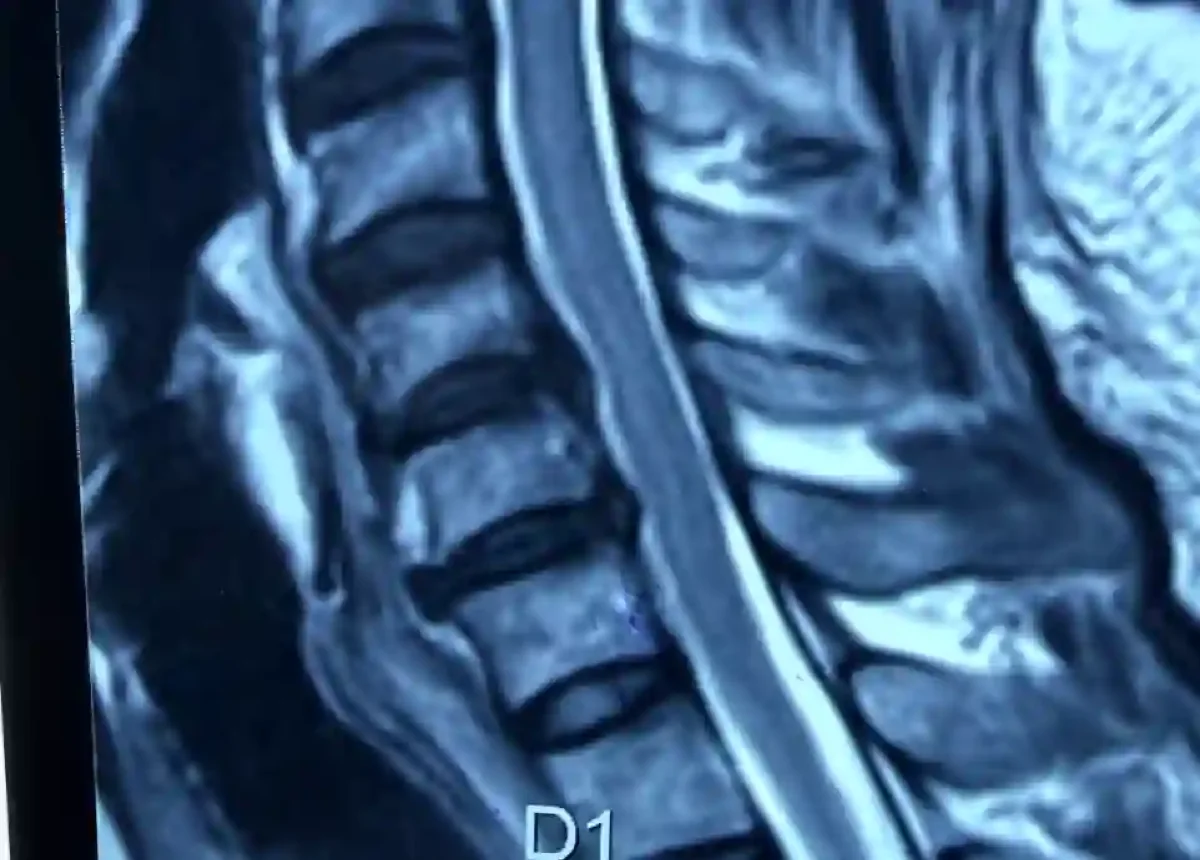
What Does Your MRI Actually Mean? Disc Bulge vs Protrusion vs Herniation
Most patients arrive at our Moosapet clinic with an MRI report and a sense of alarm — words like "herniation", "extrusion", "annular tear", "modic changes" sound serious.
Disc Bulge (Generalised Displacement)
A disc bulge is generalised, symmetric protrusion of the disc beyond the vertebral edge — often age-related and frequently asymptomatic.
Focal Protrusion or Herniation
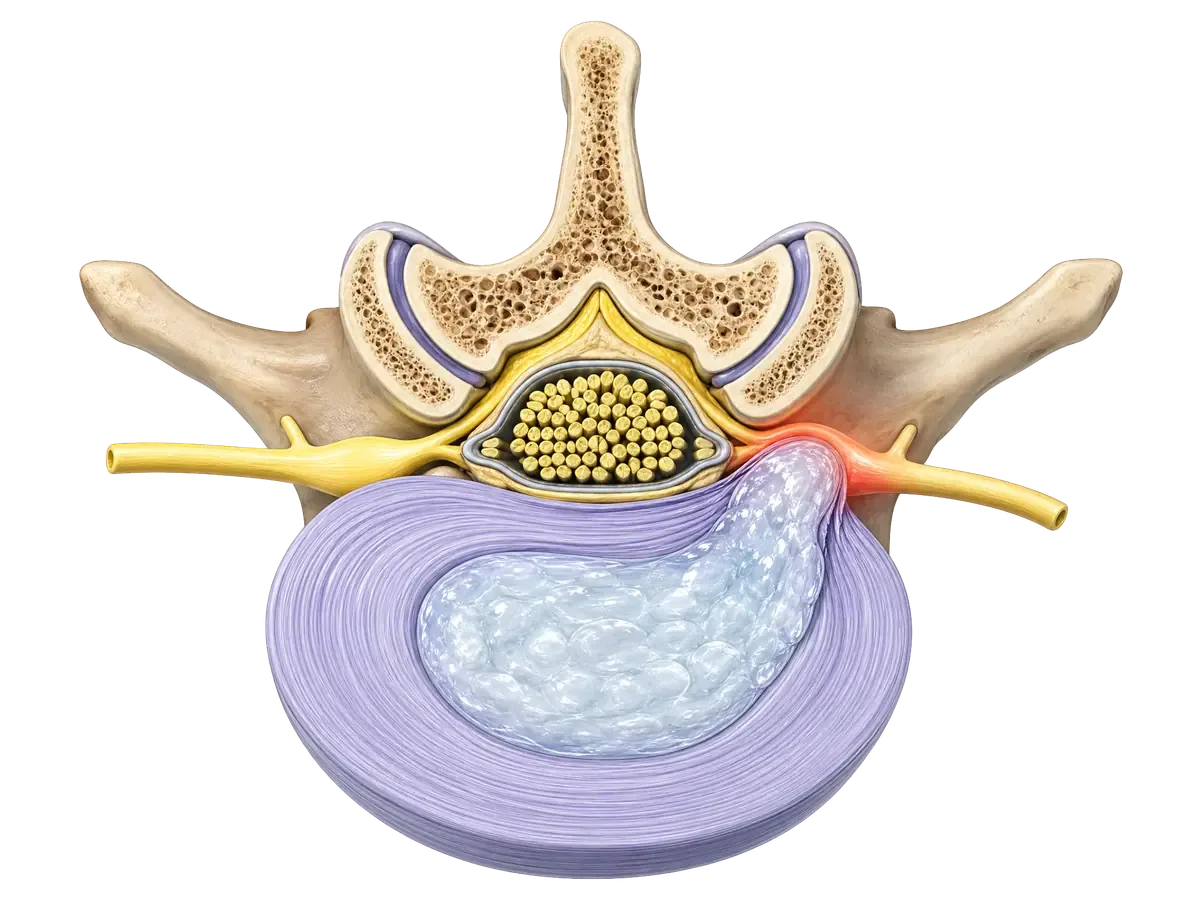
A focal protrusion or herniation displaces disc material in a specific direction — paracentral, foraminal or extraforaminal.
A disc bulge is generalised, symmetric protrusion of the disc beyond the vertebral edge — often age-related and frequently asymptomatic. Many adults have a bulge on MRI without pain. Treatment is needed only when the bulge correlates with clinical symptoms and nerve-root signs.
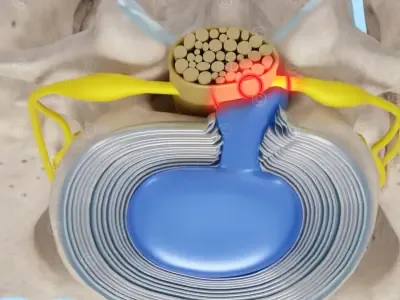
Lumbar Disc — Protrusion / Herniation
Focal Protrusion or Herniation
A focal protrusion or herniation displaces disc material in a specific direction — paracentral, foraminal or extraforaminal. This is the type most likely to compress a nerve root and produce the classic radiating leg pain pattern. Decompression and nerve mobilisation are tailored to the direction of the herniation.
Cervical Disc — C5-C6 / C6-C7
Cervical Disc Herniation
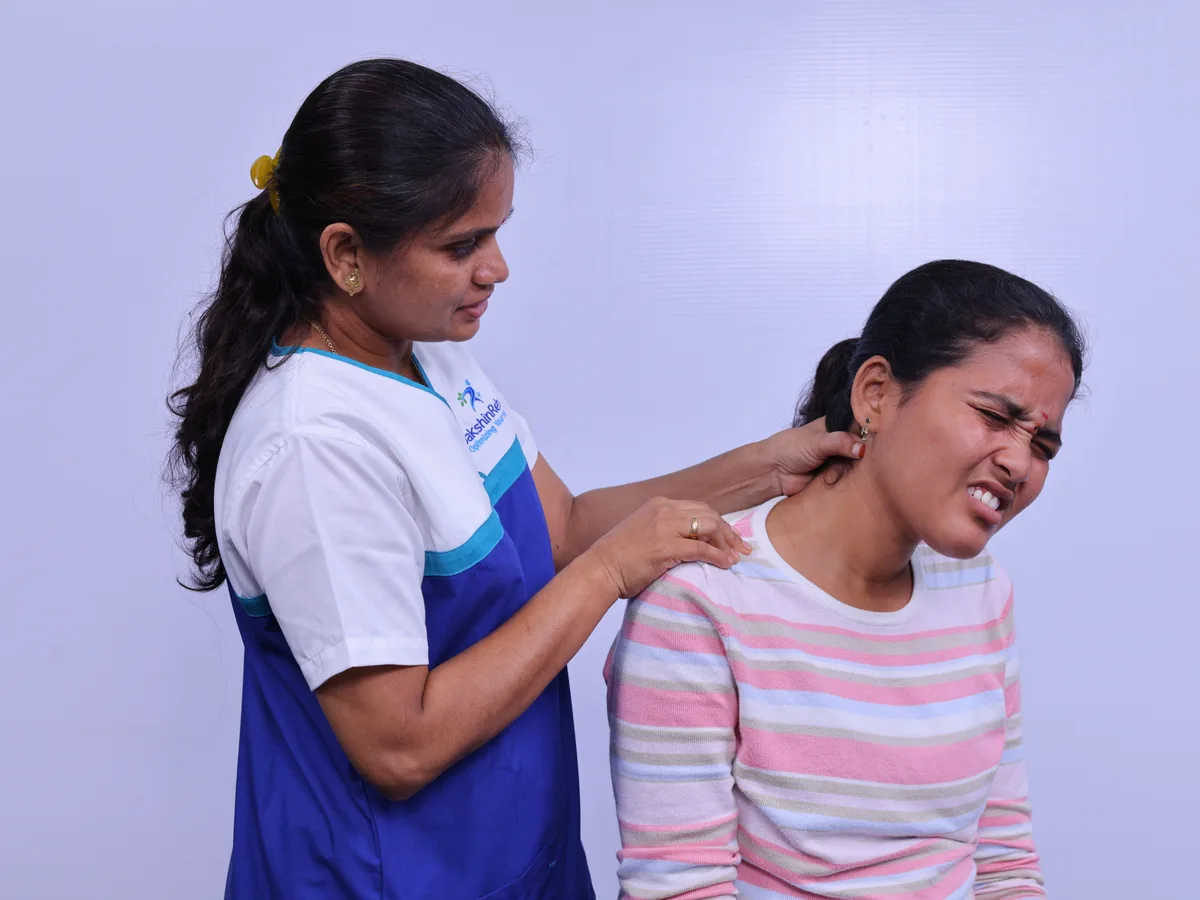
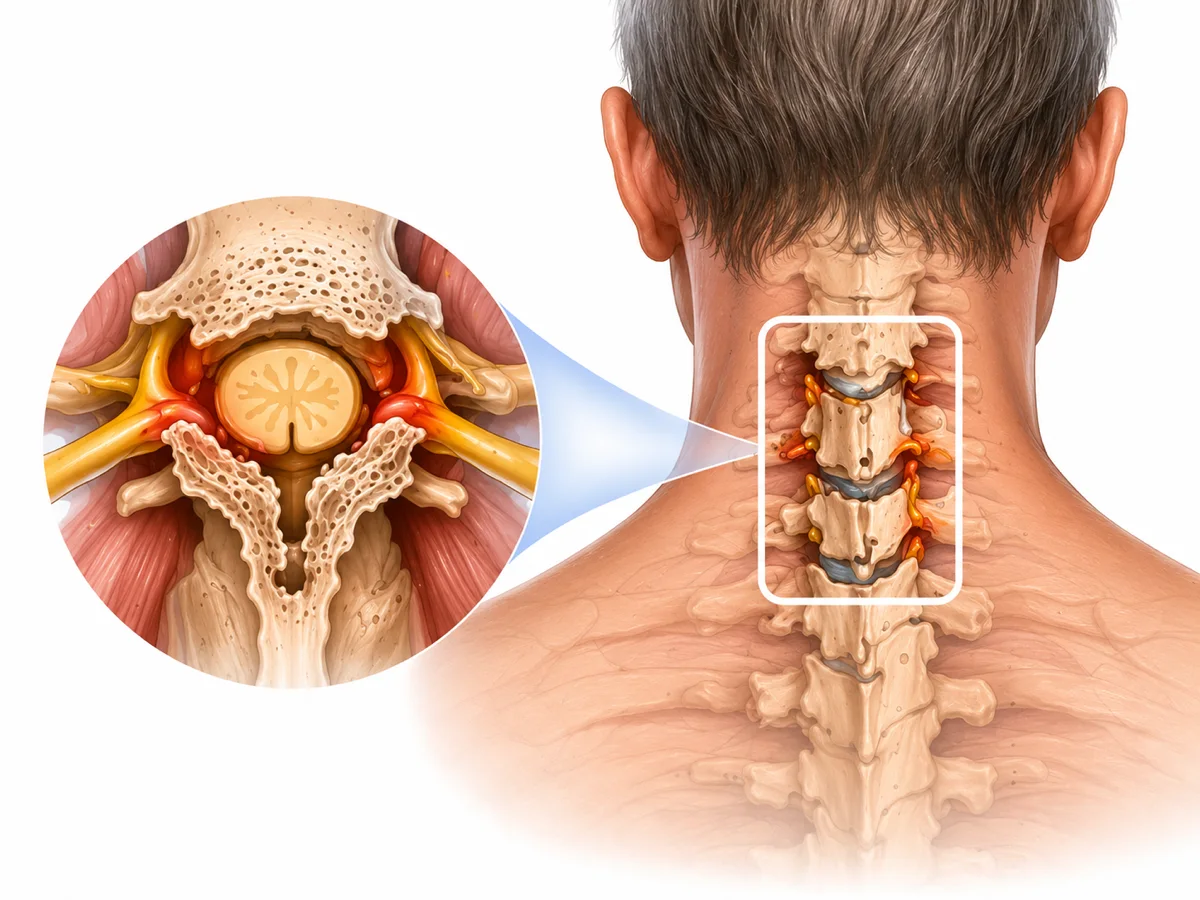
Cervical disc herniation, most commonly at C5-C6 or C6-C7, often causes neck pain with radiating arm pain, tingling or weakness. The Chattanooga DTS cervical module delivers precise, angle-specific decompression. Manual therapy and nerve mobilisation complete the early phase.
Disc Herniation Symptoms
How a Disc Bulge or Herniation Feels
A bulging or herniated disc irritates nearby nerve roots through pressure, inflammation and protective muscle guarding. These are the patterns DakshinRehab Moosapet patients describe most often at their first MRI-based assessment. Where symptoms travel depends on the disc level.
Radiating leg pain (lumbar disc)
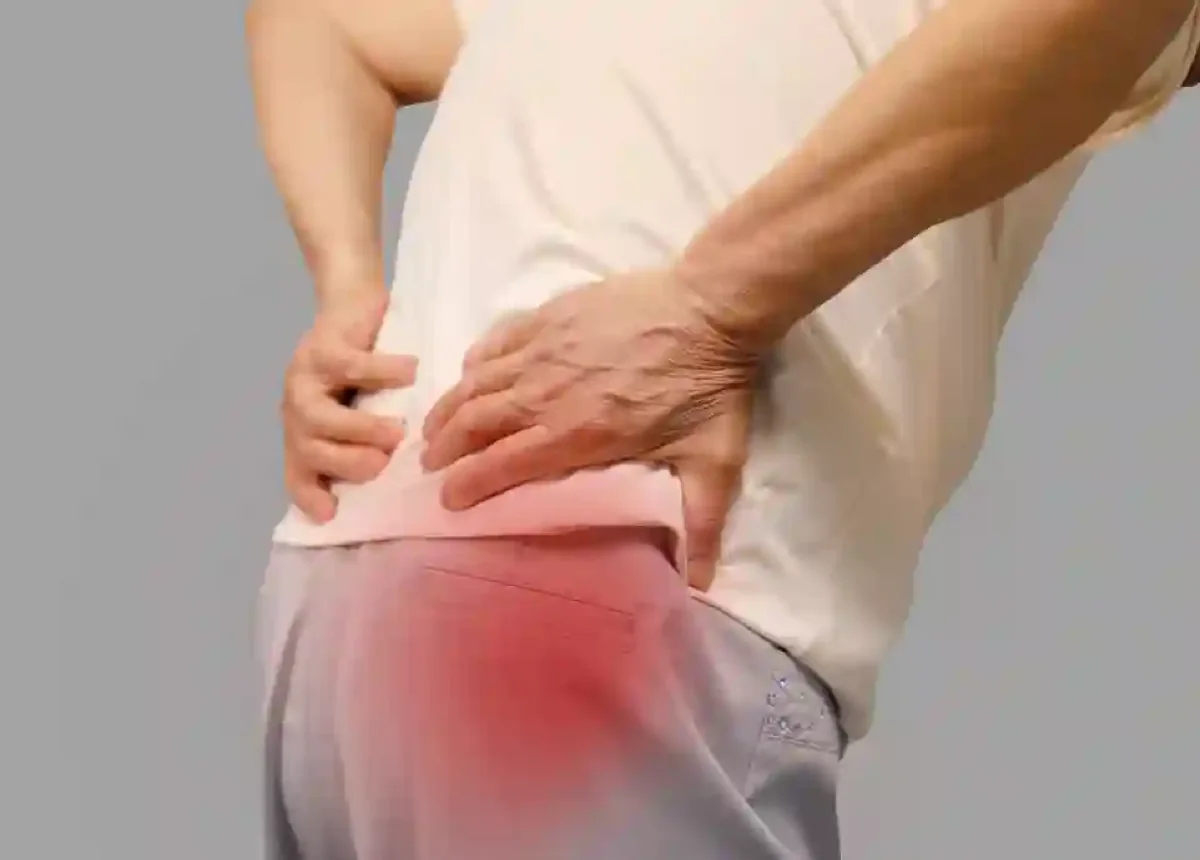
Pain travelling from the lower back or buttock down the leg — the classic L4-L5 or L5-S1 sciatic pattern. It often feels sharp, electric or deep rather than a simple ache.
Neck-to-arm pain (cervical disc)
A C5-C6 or C6-C7 disc can refer pain, tingling or weakness from the neck into the shoulder, arm or hand, sometimes with a heavy or clumsy feeling in the hand.
Numbness or pins and needles
Altered sensation following a specific nerve path in the leg or arm. Persistent (not just occasional) numbness means the nerve is under sustained pressure and should be assessed.
Muscle weakness
Difficulty pushing off the foot, lifting the toes, gripping, or a leg that feels like it may give way — a meaningful sign that warrants prompt assessment, not waiting.
Worse with sitting, bending or straining
Symptoms that spike when you sit for long, bend forward, or cough, sneeze and strain reflect raised pressure inside the disc — a hallmark of a flexion-sensitive disc.
Stiffness and protective guarding
The muscles around the spine tighten to protect the irritated segment, leaving the back or neck feeling locked, stiff and reluctant to move in certain directions.
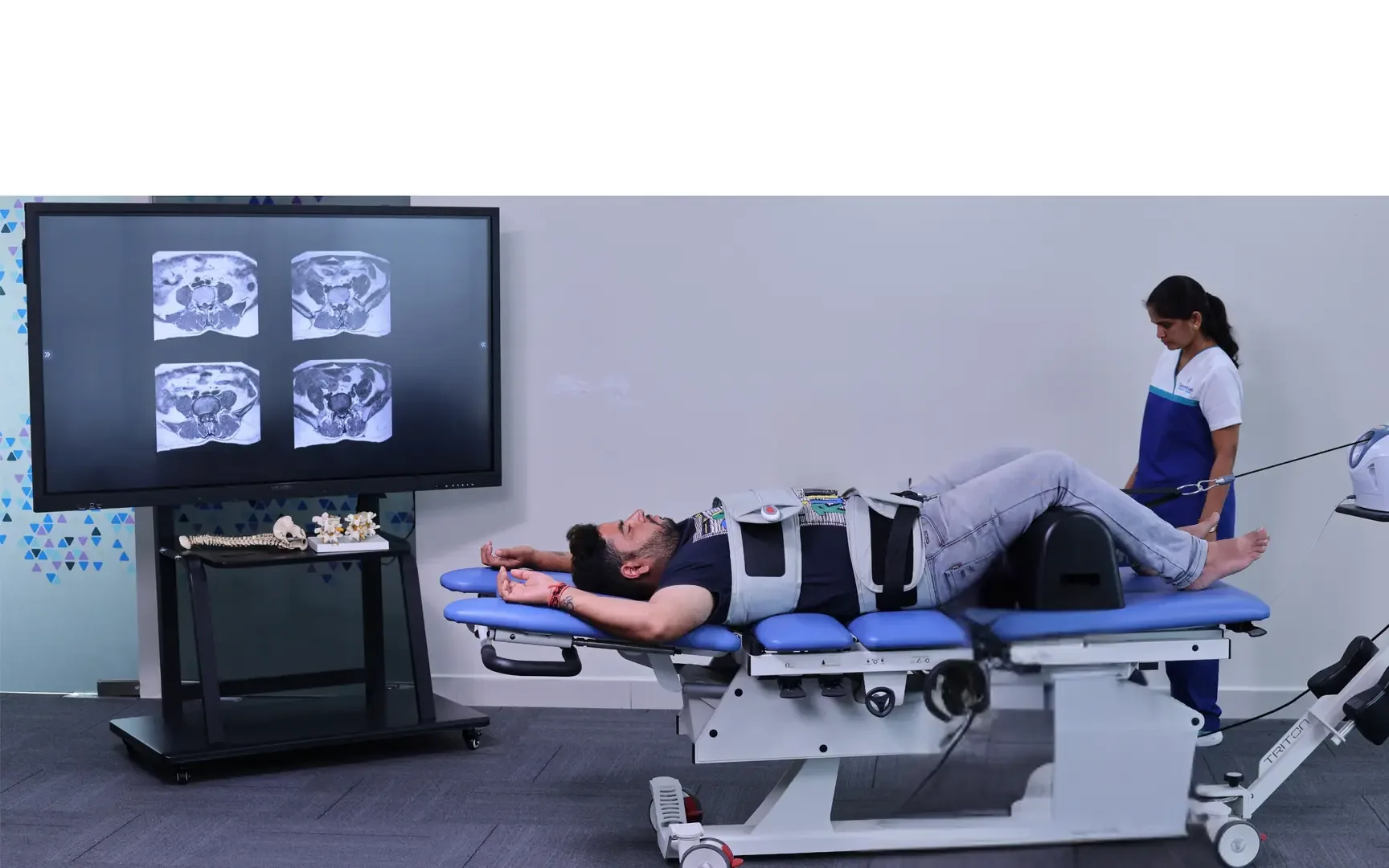
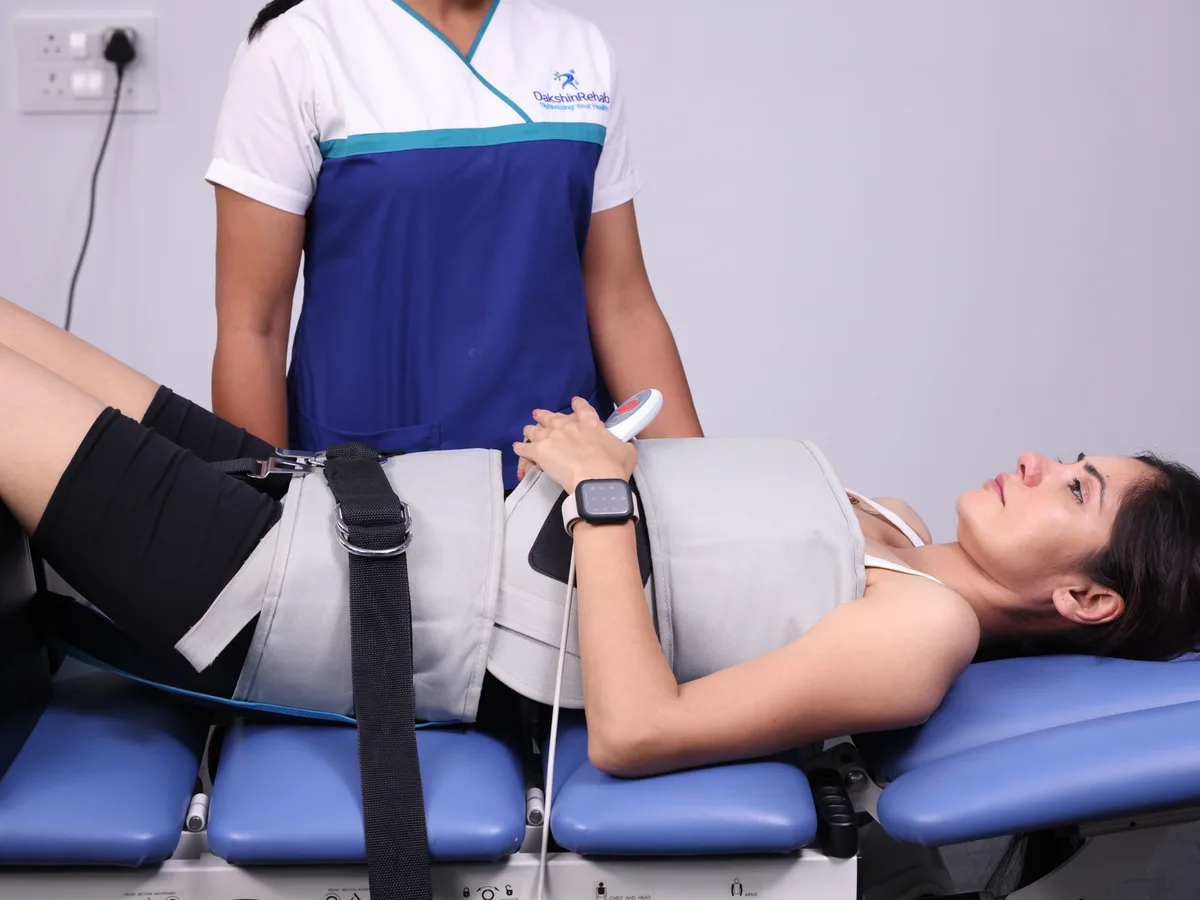
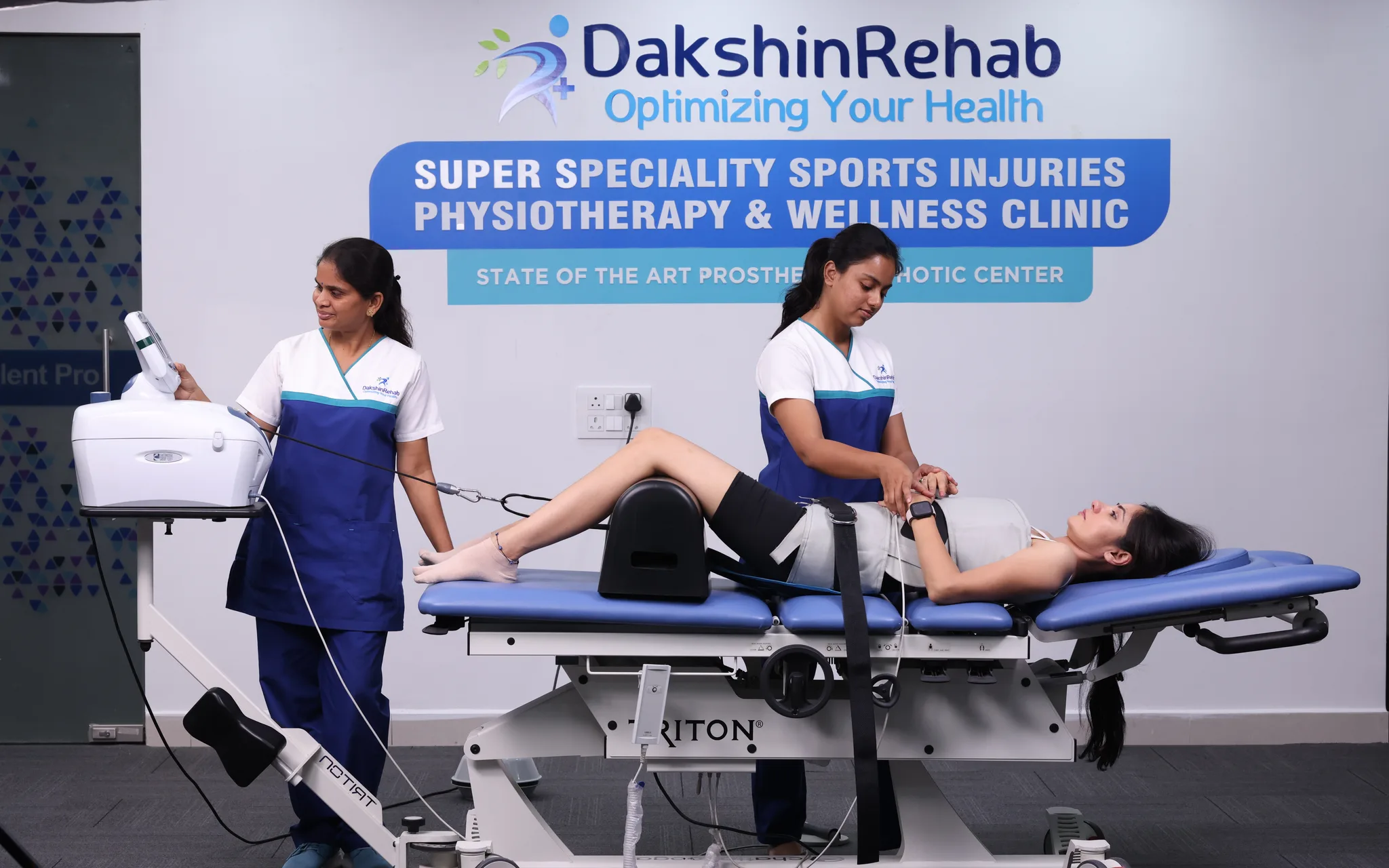
Using computer-controlled spinal decompression, we apply graded traction to the involved spinal level to reduce disc pressure and ease nerve irritation when clinically appropriate.
These signs mean your disc symptoms deserve a professional assessment within a week — even when they are not an emergency. Early, MRI-informed care at DakshinRehab Moosapet helps calm nerve irritation before it settles in and often shortens recovery.
Leg or arm pain lasting beyond 1–2 weeks
Most acute disc flare-ups begin to settle within a week or two. If radiating pain into the leg or arm has not eased, an assessment can identify what is keeping the nerve irritated.
Numbness or tingling that persists
Ongoing (not just occasional) numbness or pins and needles in the leg or arm means the nerve is under sustained pressure — this should be reviewed promptly.
You have an MRI but are unsure of your options
If a scan shows a bulge or herniation and surgery has been mentioned, an assessment clarifies whether a non-surgical, decompression-led plan is appropriate for your disc level.
Symptoms limit sitting, driving, work or sleep
When everyday activities are disrupted for more than a week, targeted physiotherapy usually helps more than continuing to push through or rest alone.
The problem keeps coming back
Recurring disc episodes suggest the underlying loading, core control and movement patterns have not been addressed — earlier intervention is more effective than waiting for the next flare.
Rest and medication are not helping
If a week or two of rest, heat and over-the-counter pain relief have not reduced the pain, the underlying disc and nerve irritation likely needs a structured rehab plan.
Common Herniated Disc Questions — Answered in Plain Language
Direct, clinician-reviewed answers to the questions our MRI-confirmed disc patients actually ask out loud.
What does L4-L5 disc bulge mean on my MRI?
L4-L5 is the disc between the fourth and fifth lumbar vertebrae — one of the most commonly affected spinal levels. A bulge means the disc has expanded generally beyond its normal edge; a herniation means a focal portion has displaced further. At DakshinRehab, treatment angle, force and supporting modalities are tailored specifically to this level rather than applied generically across the lumbar spine.
Can a herniated disc heal on its own?
Yes — many disc herniations show partial or complete resorption on follow-up imaging over 6-12 months. Physiotherapy supports this natural healing while managing pain, preventing secondary deconditioning, and addressing why the disc failed in the first place. At DakshinRehab in Moosapet we work alongside the body's own healing process rather than rushing to surgical correction.
When does a herniated disc need surgery?
Surgery is generally indicated when there is progressive neurological deficit, persistent severe pain unresponsive to a structured course of conservative care, cauda equina syndrome, or significant functional limitation. Most herniations do not meet these criteria. The decision is made jointly with the patient, the referring doctor and the rehabilitation team.
Will spinal decompression work for my herniated disc?
Spinal decompression works well for many disc bulges and herniations when the disc is the symptomatic driver and there are no contraindications such as fractures, fusion hardware, severe osteoporosis, pregnancy, tumours or abdominal aortic aneurysm. Suitability is confirmed by reviewing your MRI alongside the clinical examination at your initial assessment at DakshinRehab.
SPINAL DECOMPRESSION TECHNOLOGY
Advanced Spinal Decompression Tech
A herniated disc can irritate nearby nerve roots through pressure, inflammation and protective muscle guarding. DakshinRehab uses computerized spinal decompression with physiotherapy to reduce mechanical load, calm symptoms and support recovery when assessment confirms it is appropriate.
Chattanooga DTS Spinal Decompression
Computer-controlled traction that gently unloads selected spinal segments to reduce disc pressure and nerve-root irritation when indicated.
3 Tesla Super Inductive System
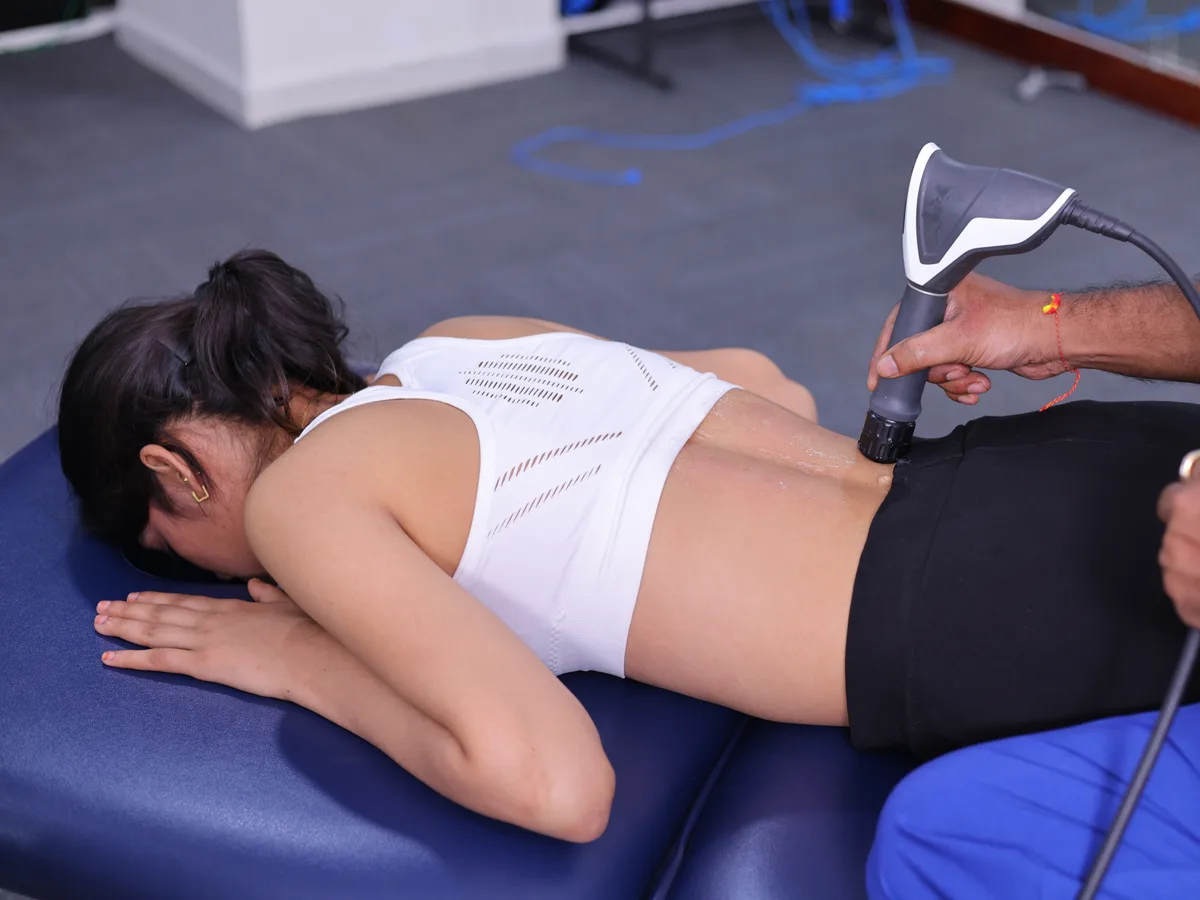
High-intensity electromagnetic therapy used to calm pain sensitivity and support nerve-related rehabilitation goals in selected cases.
DakshinRehab clinical pathway
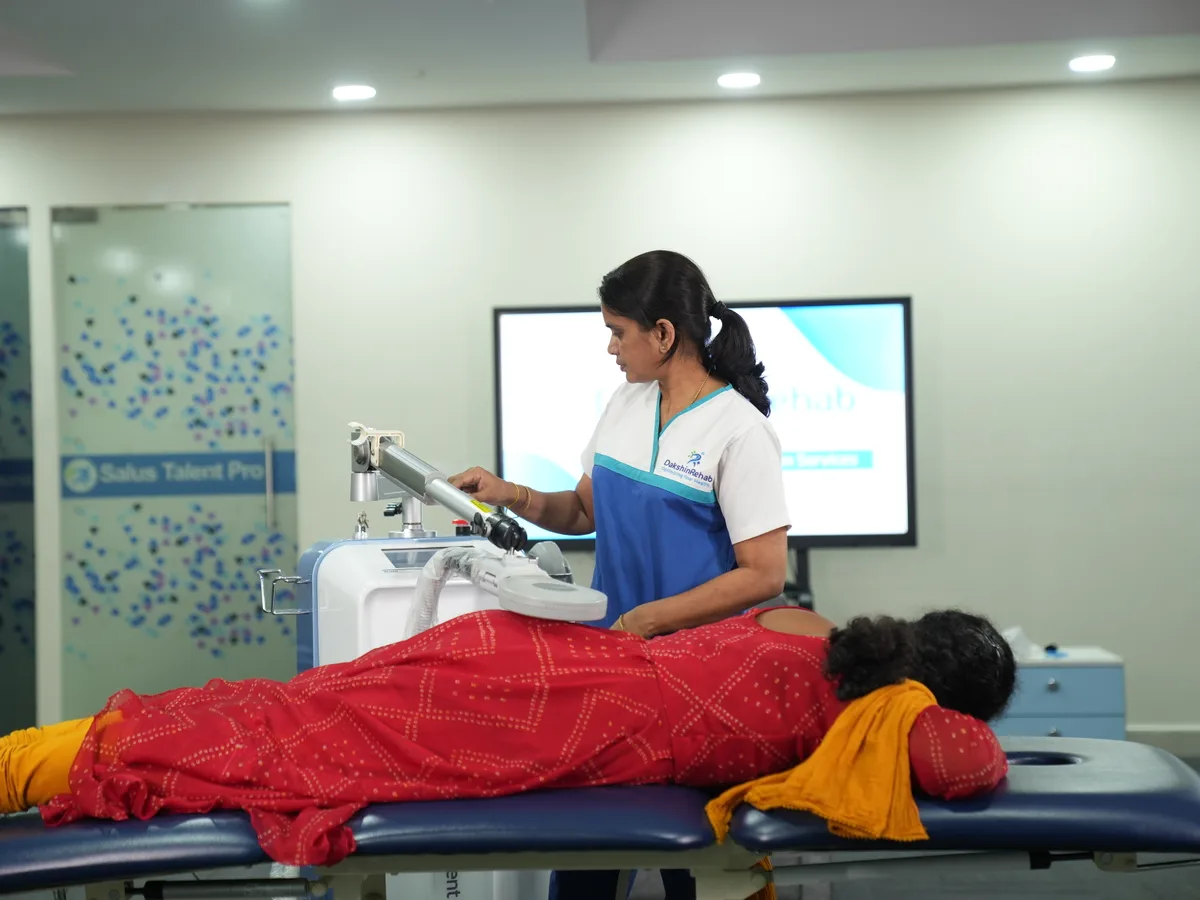
TECAR Therapy
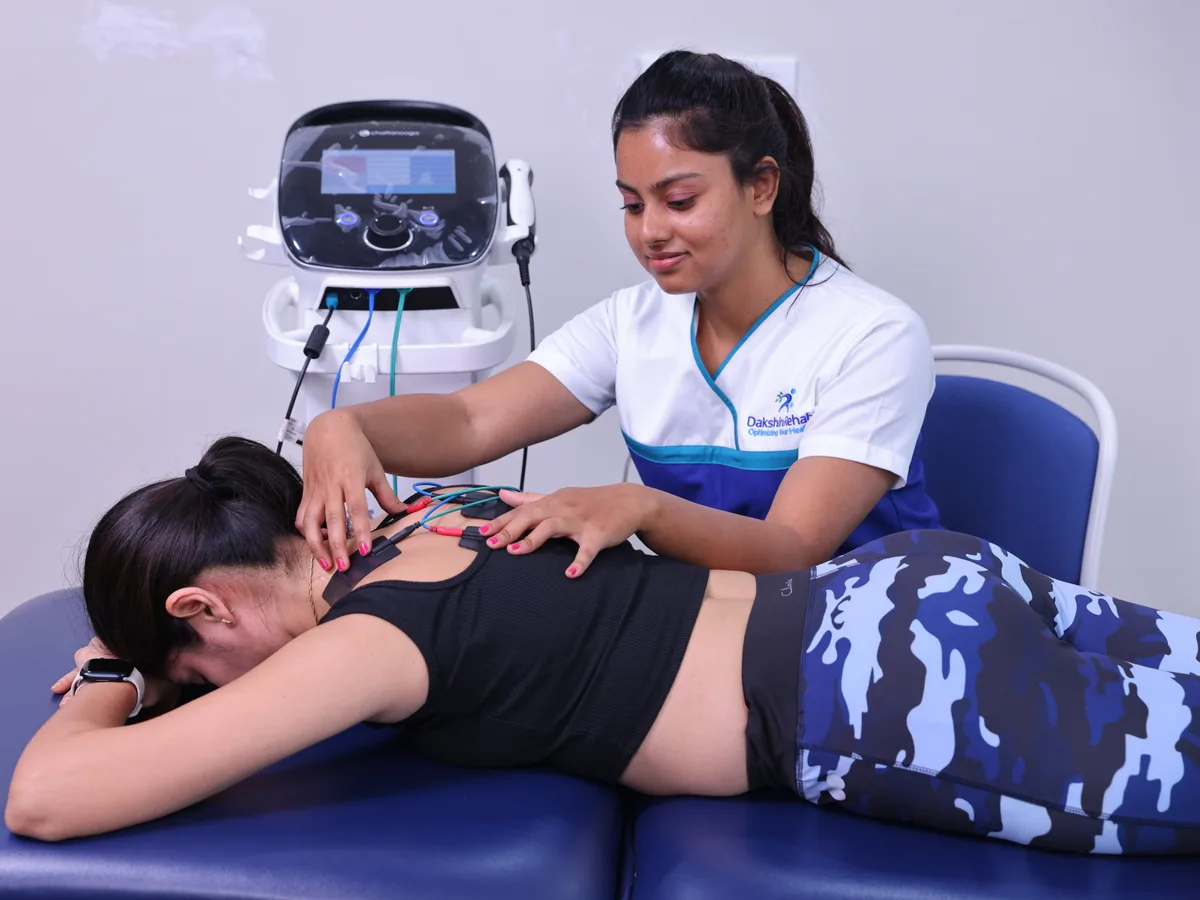
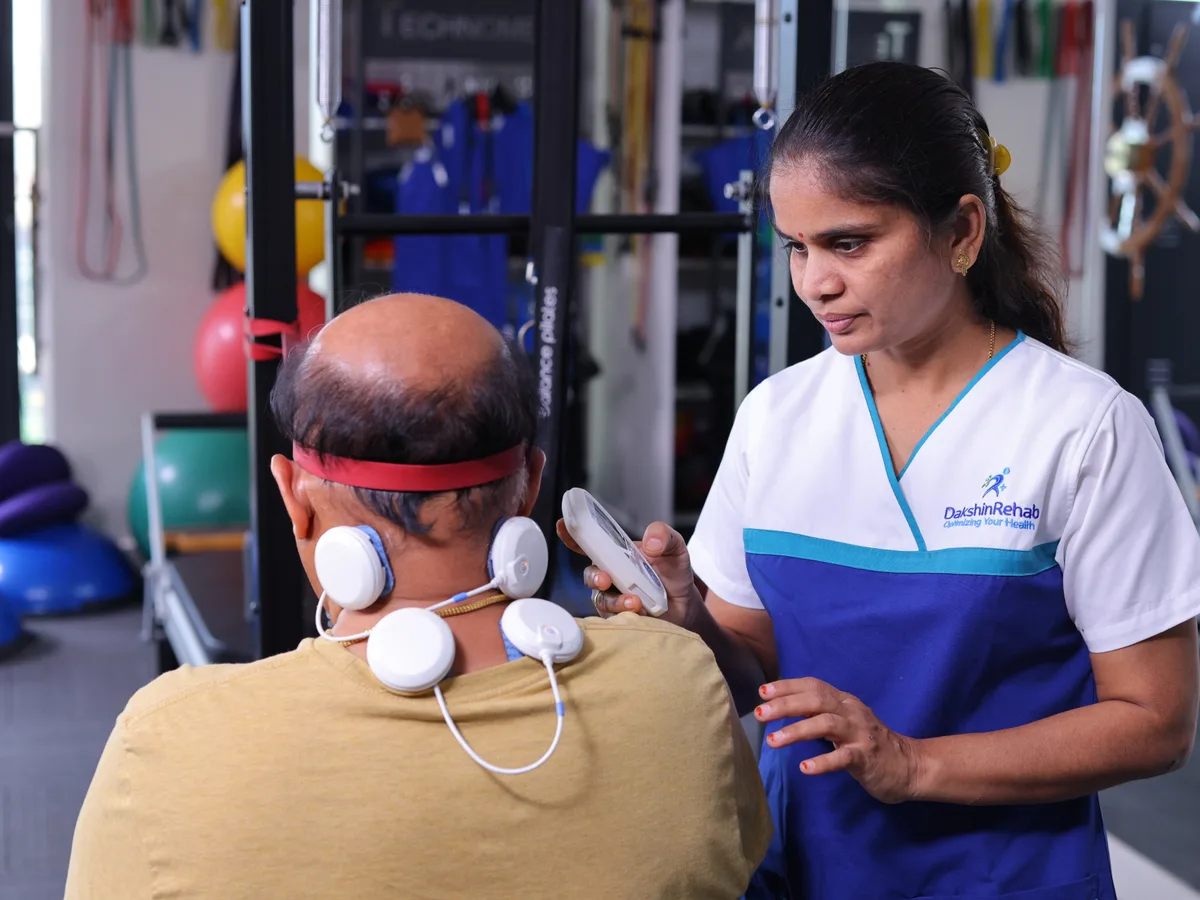
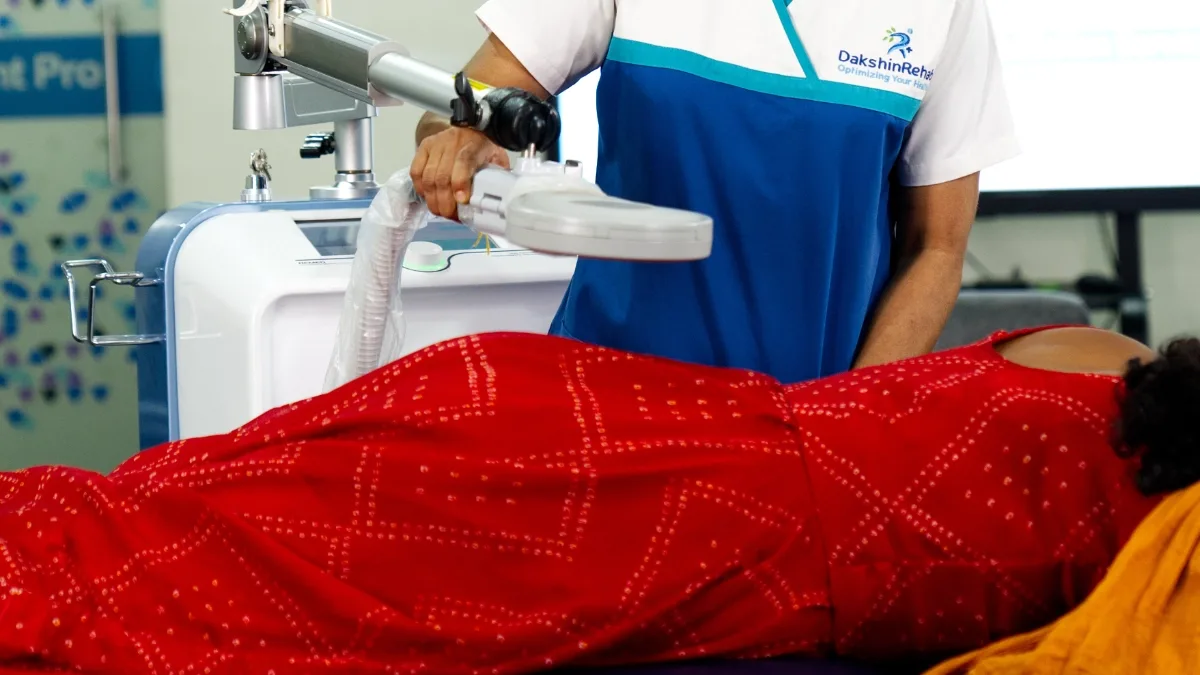
Deep tissue radiofrequency therapy used to improve circulation and reduce protective muscle guarding around the spine.
Redcord Neurac
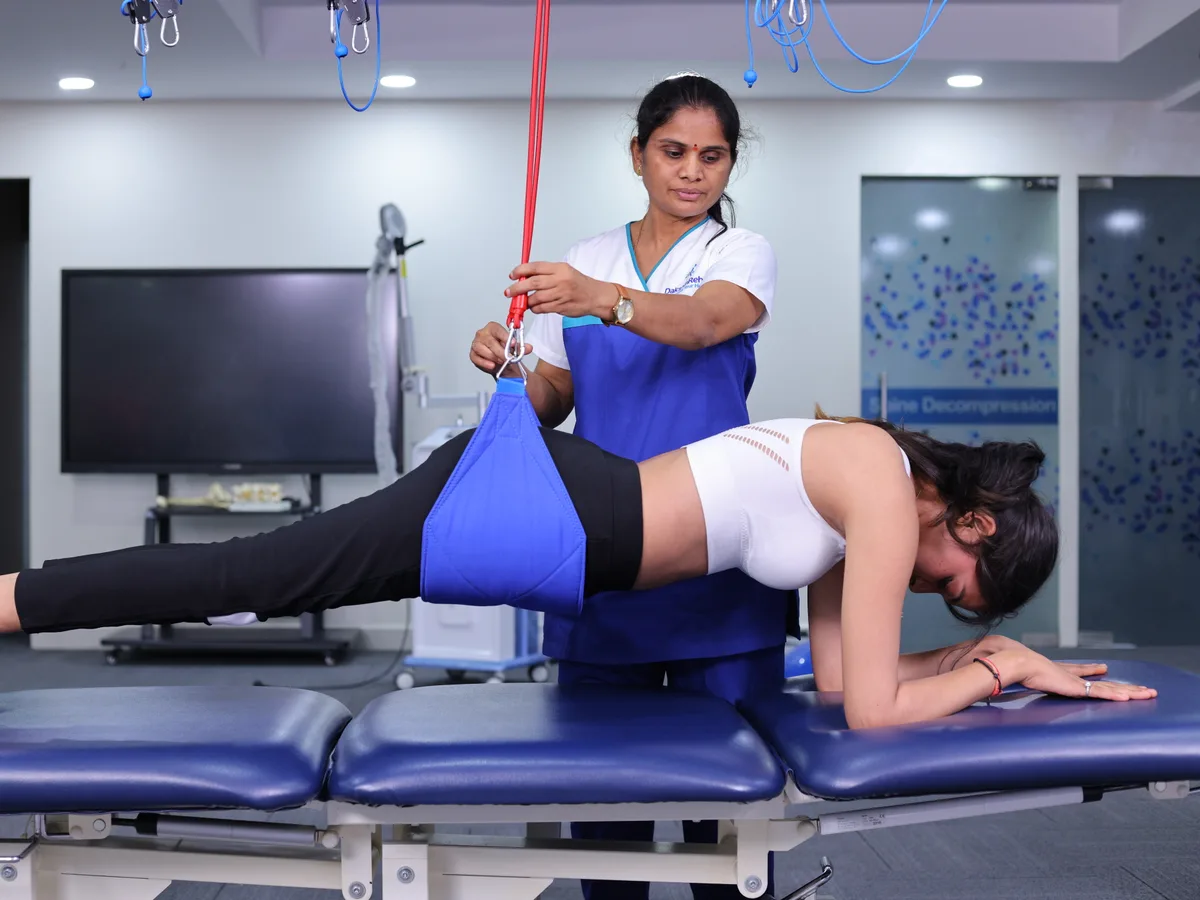
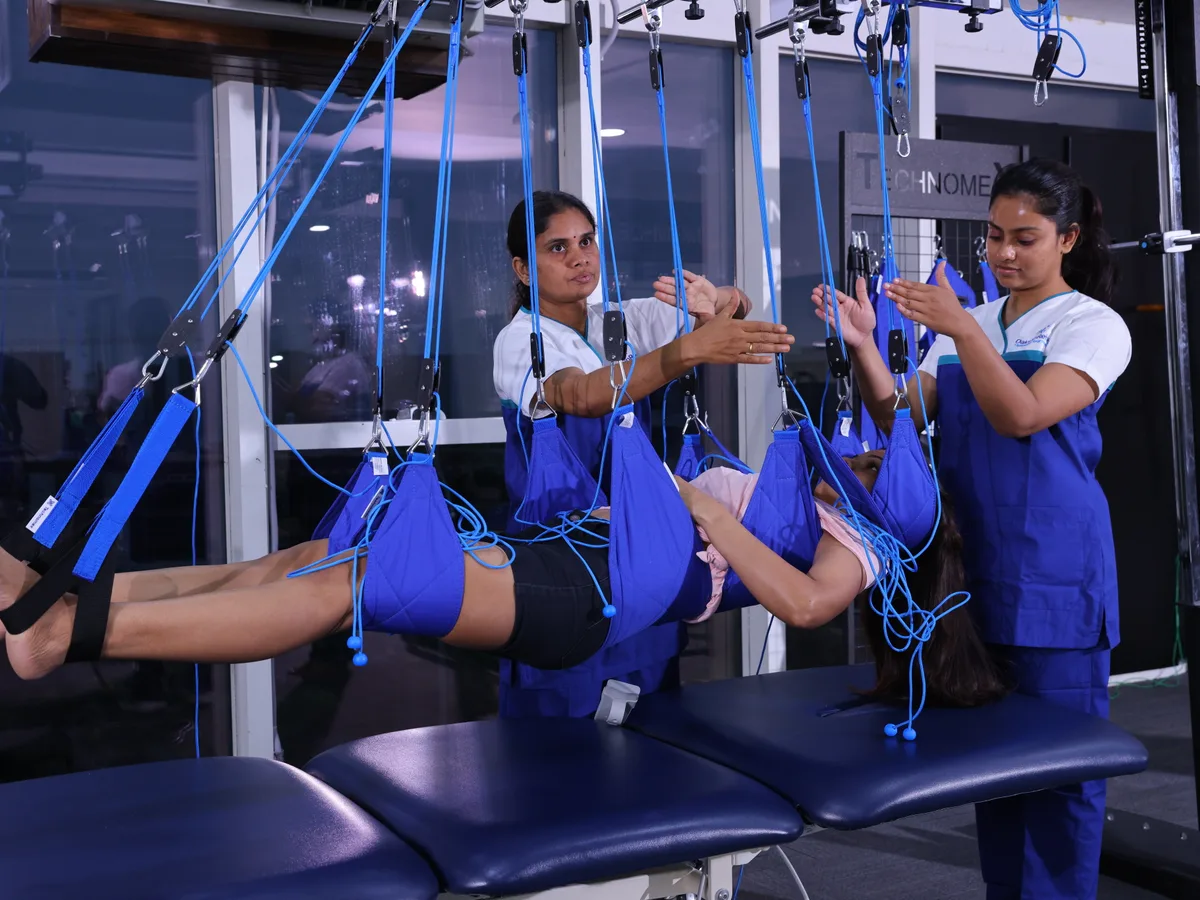
Pain-free suspension therapy that activates dormant, deep core stabilizers to protect the newly decompressed disc.
Clinical comparison
Physiotherapy vs. Painkillers
Pain medicines may calm symptoms for a short period, but MRI-confirmed disc pain often needs a plan that addresses loading, nerve irritation, muscle guarding and movement control. Our decompression-led rehab is selected after clinical assessment and MRI review, not used as a one-size-fits-all protocol.
Insight 1
McKenzie MDT Exercises
Directional movement strategies selected after assessment to reduce symptoms, improve movement confidence and encourage centralisation when appropriate.
Insight 2
Local & Accessible
Located in Moosapet, Hyderabad — serving Kukatpally, KPHB, Miyapur, and Gachibowli.
“To fix sciatica or a slipped disc, we must decompress the spine to create space. Where there is space, nerves can finally heal.”
Medically reviewedYMYL verifiedTreatment decision support
PRP vs Surgery vs Physiotherapy - Choosing the Right Path for Sciatica
Choosing between PRP injections, surgery, and physiotherapy can feel confusing. For most sciatica, the first decision is to identify whether the pain is truly coming from nerve compression, piriformis irritation, stenosis, or referred joint pain. At DakshinRehab Moosapet, we assess the root cause before recommending physiotherapy, medical referral, or any procedure.
“The best treatment choice becomes clearer when we know the root cause. Assessment removes guesswork and helps patients choose the safest next step.”
The clinical content on this page is written and independently reviewed by qualified physiotherapists at DakshinRehab, Moosapet, Hyderabad.
Patient Journey
Your Herniated Disc Recovery Journey at DakshinRehab
An MRI-guided, disc-level-specific path from your first spine assessment in Moosapet to a stable, confident back — decompression first, then the core strength to protect the result.
Computer-controlled Chattanooga DTS decompression targeted to your involved disc level
Graded traction that gently unloads the disc and eases nerve-root pressure
McKenzie-style directional exercises to draw leg pain back up towards the spine
Symptom tracking each session — centralising pain is our sign the disc is settling
Leg or arm pain retreats towards your back — the pattern we look for as the nerve calms.
PHASE 4
Deep Core Stabilisation(Week 6-9 (2-3 sessions/week))
Redcord Neurac suspension therapy to switch on deep core stabilisers without pain
Progressive trunk, hip and gluteal strengthening to share the load on your spine
Movement-control training so bending and reaching stop provoking symptoms
A home stability routine reviewed and progressed at every visit
Your deep core takes over the job of protecting the disc, replacing stiffness with real stability.
PHASE 5
Functional Loading & Return to Activity(Week 9-12 (1-2 sessions/week))
Safe lifting, carrying and floor-work technique rebuilt step by step
Longer sitting, driving and desk tolerance developed progressively
Graded return to walking distance, travel, gym or sport as symptoms allow
Confidence work — re-learning to trust your back with everyday movement
You return to work, family life and activity without organising your day around your back.
PHASE 6
Recurrence Prevention & Discharge(Month 4 onward (review visits as planned))
An independent core and mobility routine to maintain your recovery
A clear early-action plan for what to do at the first sign of a flare
Planned review visits to confirm strength and symptom control are holding
WhatsApp access to the spine team — including MRI review for any new imaging
You leave with a stronger, better-supported spine and a plan to keep the disc problem behind you.
When to Act Fast
Recognize Signs of Permanent Nerve Damage
A severely compressed nerve can sustain permanent damage if ignored for too long. If you experience any of these critical symptoms, visit an emergency facility or consult DakshinRehab in Moosapet immediately.
Loss of Bladder or Bowel Control — A sudden inability to control when you use the restroom is a medical emergency requiring immediate surgical consultation.
Saddle Anesthesia — Severe numbness in your groin, buttocks, or inner thighs (where a saddle would touch).
Foot Drop or Arm Weakness — An inability to lift the front of your foot when walking, or sudden inability to grip objects.
Progressive Leg Numbness — Numbness that started in your thigh but is rapidly spreading down to your calf and foot.
Severe Night Pain Unrelieved by Medicine — Deep, aching pain that completely prevents you from lying down or sleeping.
Unexplained Fever — Back pain accompanied by a fever could indicate a serious spinal infection.
Condition-relevant recovery stories from patients with different ages, jobs, family support and treatment goals — selected for this page while verified Google review imports are prepared.
Driving the daily commute again after 8 weeks of sciatica
Sharp pain ran from my lower back into my right calf, and I kept stopping during my Miyapur to Madhapur commute. My programme combined MRI review, decompression sessions, nerve-glide work and graded core training. By week eight, I could drive both ways and sit through client calls without the leg pain taking over.
IT project managerMaleCautious, report-led
SC
Sandeep Challa
Miyapur · 42 years
Morning stiffness no longer decides my whole day
I was frightened by the word degenerative on my scan and had stopped walking outside. The team explained what the MRI meant, then started gentle decompression, heat-based pain control and balance-safe strengthening. I now walk to the temple, cook without repeated chair breaks and know exactly which exercises settle a flare.
Retired school teacherFemaleFamily-supported
VN
Vasanthi Natarajan
Kukatpally · 68 years
Standing tolerance improved enough for site rounds
I could walk only a few minutes before heaviness spread into both legs. The plan focused on flexion-biased exercise, hip mobility, walking intervals and safe conditioning instead of forcing painful extension. I still respect my limits, but I can complete garage rounds and evening shopping without hunting for a chair every few minutes.
Watch DakshinRehab Moosapet patients describe how non-surgical spine decompression, laser therapy and Redcord (Neurac) helped them recover from disc and nerve-related back pain — without surgery.
01:30
“Avoided spine surgery at 72 — recovered in 21 days”
I was advised spine surgery for a severe L4-L5 disc bulge. The 21-day rehabilitation programme at DakshinRehab — combining non-surgical spine decompression, laser therapy, and Redcord — restored my mobility without an operation.
V
Vijaya Kumari
Lumbar Spondylosis & Disc Bulge
01:45
“Back pain and stiffness resolved — no surgery needed”
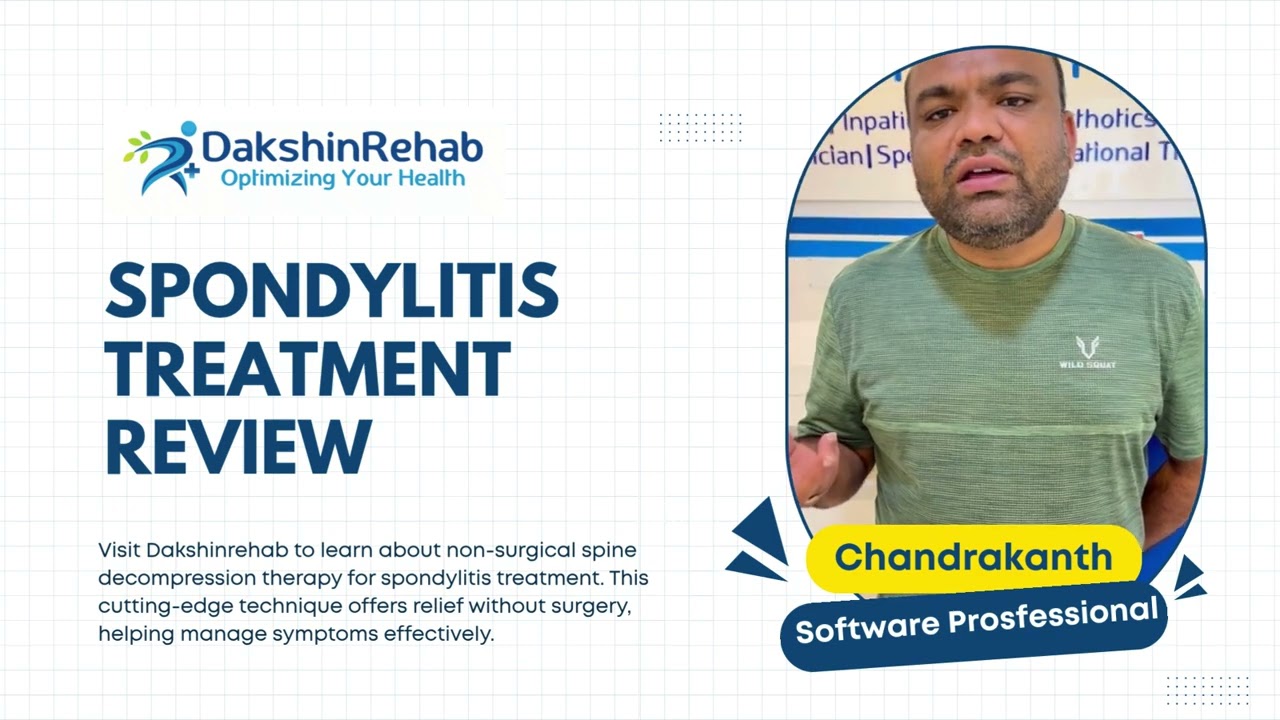
Spondylitis had left me with persistent back pain and stiffness. Non-surgical spine decompression, laser therapy, and Redcord (Neurac) therapy at DakshinRehab delivered significant pain relief and restored my mobility without any invasive procedures.
C
Chandrakanth
Spondylitis Recovery
Related Conditions
Related Conditions We Treat
A herniated disc exerts massive pressure on surrounding spinal structures. We assess the entire spine to ensure all secondary complications are treated.
MRI-Confirmed Disc Problems — Your Questions Answered
Clear, clinician-reviewed answers to the questions our MRI-confirmed disc patients in Hyderabad and the Gulf region most often ask.
What does L4-L5 disc bulge or herniation mean on my MRI?
L4-L5 refers to the disc between the fourth and fifth lumbar vertebrae — one of the most commonly affected levels. A bulge means the disc has expanded generally beyond its normal edge; a herniation means a focal portion has displaced further, often pressing on the nearby nerve root. At DakshinRehab in Moosapet we treat each level differently — the angle, force and supporting modalities used for L4-L5 are not the same as for L5-S1 or cervical levels.
Can a herniated disc heal on its own without surgery?
Is my disc bulge the cause of my pain, or just a finding?
What is the difference between a disc bulge, protrusion, extrusion and sequestration?
When does a herniated disc actually need surgery?
Will spinal decompression work for my disc bulge?
Can I exercise with a herniated disc?
How is herniated disc treatment different from generic back pain physiotherapy?
Does cervical disc herniation respond to non-surgical treatment?
How long does herniated disc rehabilitation typically take?
How much does herniated disc treatment cost at DakshinRehab?
Can I send my MRI for review before travelling from UAE or Gulf?