Sciatica is one of the most debilitating pain conditions we treat at DakshinRehab in Moosapet, Hyderabad. That shooting, electric-shock pain radiating from the lower back through the buttock and down the leg can make sitting, standing, walking and sleeping unbearable. The good news is that the vast majority of sciatica cases respond exceptionally well to targeted, non-surgical physiotherapy. At our clinic serving Kukatpally, KPHB, Miyapur, Gachibowli and the wider Hyderabad region, most sciatica patients avoid spine surgery entirely — because we treat the root cause, not just the symptom. This guide explains what sciatica actually is, its four most common causes, and how spinal decompression, 3-Tesla EMTT and Redcord Neurac combine to resolve it at DakshinRehab.
What sciatica actually is — and why it is a symptom, not a diagnosis
Sciatica describes pain that follows the path of the sciatic nerve, the longest and thickest nerve in the body, running from the lower spine through each leg to the foot. The pain occurs when something compresses or irritates this nerve at its origin in the lumbar spine or along its course through the buttock and thigh. Sciatica is never a diagnosis on its own — it is a signal that something upstream is pressing on the nerve. Identifying what is doing the pressing is the critical step most clinics skip. A painkiller can mask the signal, but it cannot retract a herniated disc or release a spasmed piriformis muscle. Every sciatica programme at DakshinRehab begins with a precise root-cause diagnosis.
What are the four most common causes of sciatica we see
Lumbar disc herniation is the most common cause — a disc in the lower spine bulges or ruptures, pressing directly on the sciatic nerve root. Pain is sharp and radiating, often worse with sitting, bending forward or coughing. See our dedicated disc bulge / herniated disc guide. Spinal stenosis — a narrowing of the spinal canal that compresses nerve roots — typically affects patients over 50 and worsens with standing or walking, easing when they sit or bend forward. Piriformis syndrome happens when the piriformis muscle deep in the buttock spasms or tightens, entrapping the sciatic nerve as it passes beneath. This is frequently misdiagnosed as disc-related sciatica and responds poorly to decompression alone. Facet joint or sacroiliac joint dysfunction produces radiating patterns that mimic nerve compression but arise from small spinal or pelvic joints rather than from nerve entrapment.
Why painkillers, muscle relaxants and steroid injections alone fail
Many patients arrive at DakshinRehab after months of painkillers, muscle relaxants or even steroid injections that provided temporary relief but never resolved the underlying problem. Pain medication changes how the brain perceives pain. It does nothing to retract a herniated disc, decompress a narrowed canal or release a spasmed piriformis. Epidural steroid injections can reduce inflammation around the nerve, which helps in the short term, but without addressing the mechanical cause the pain returns — often within weeks of the injection wearing off. Repeated injections have diminishing returns and carry cumulative risk. The DakshinRehab approach is fundamentally different — we identify the structural or mechanical cause with a thorough assessment, then apply targeted therapies that resolve it.
How we assess sciatica properly at DakshinRehab Moosapet
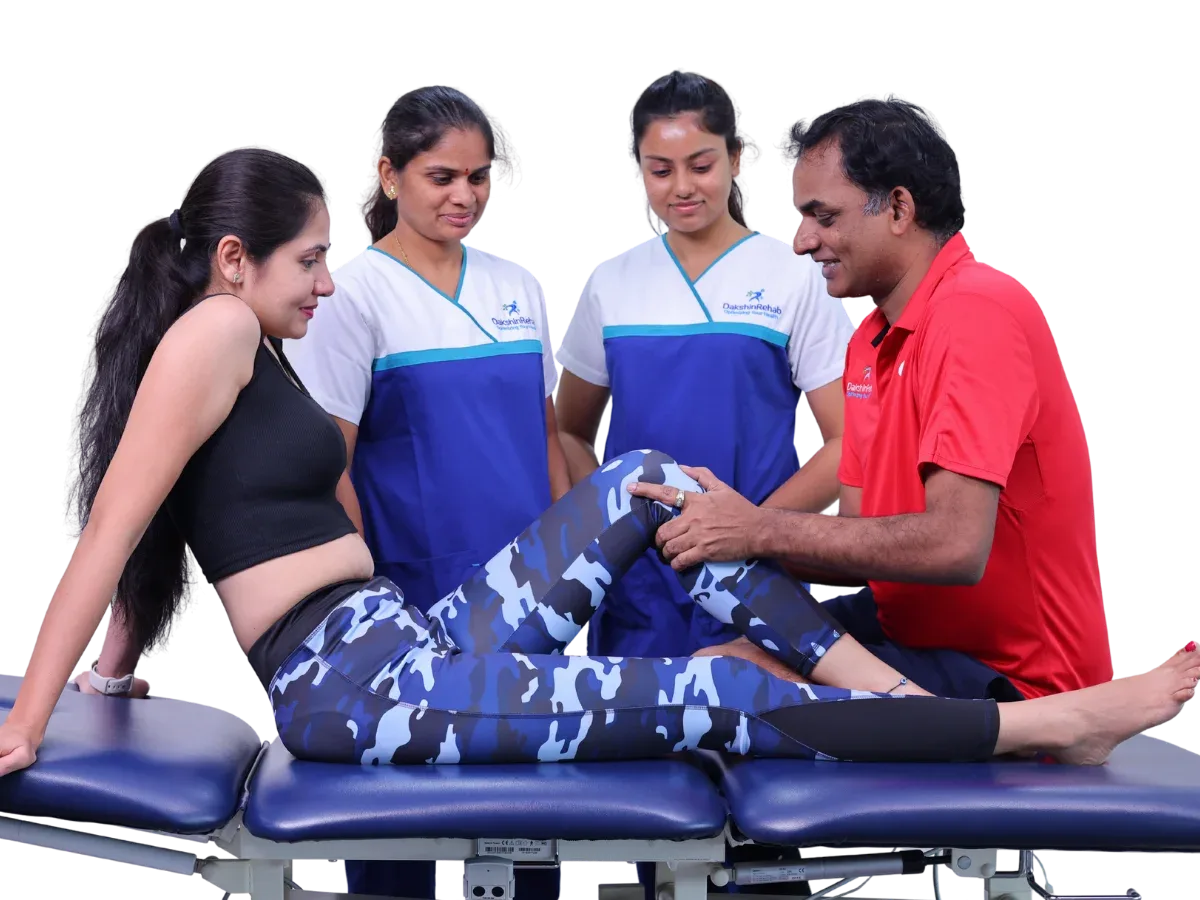
A first visit is a detailed 60–90 minute evaluation — pain history (location, radiation, quality, aggravating factors, red flags), neurological screening (dermatomal sensation, myotomal strength, reflexes), special orthopaedic tests (straight leg raise, slump, Faber, piriformis test), spine movement testing, posture analysis and gait observation. We run 3D movement analysis where indicated and score validated outcome measures — Oswestry Disability Index, Numeric Pain Rating Scale and specific sciatica-related fear-avoidance scores. Where imaging is needed but missing, we coordinate MRI through our partner radiology centres in Kukatpally and KPHB for same-week scans. The goal is a precise structural diagnosis matched to a specific treatment pathway — not a generic 'lumbar radiculopathy' label.
How spinal decompression works as our first-line tool for disc-related sciatica
For disc-herniation sciatica and nerve-root compression, Chattanooga DTS computer-controlled spinal decompression is the single highest-impact intervention in our toolkit. The FDA-cleared system applies precisely graded, oscillating axial traction at angles and forces matched to your specific disc level, generating negative intradiscal pressure — essentially a suction effect that retracts bulging disc material away from the compressed nerve. Unlike simple mechanical traction, DTS uses computer-controlled pressure waveforms that prevent muscle guarding and allow genuinely deep decompression of the targeted segment. Most patients feel measurable sciatic pain relief within 3 to 6 sessions; a typical course is 20 sessions over 4 to 6 weeks, paired with progressive core stabilisation so the gains are locked in.
How 3-Tesla EMTT accelerates nerve healing and inflammation control
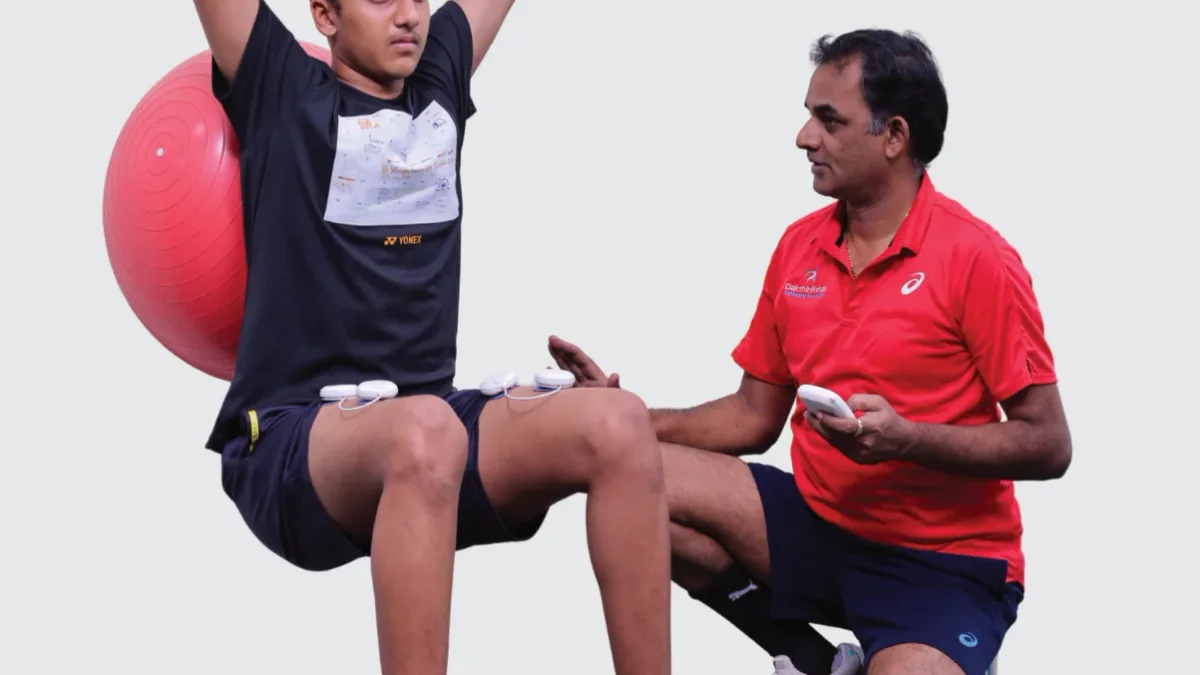
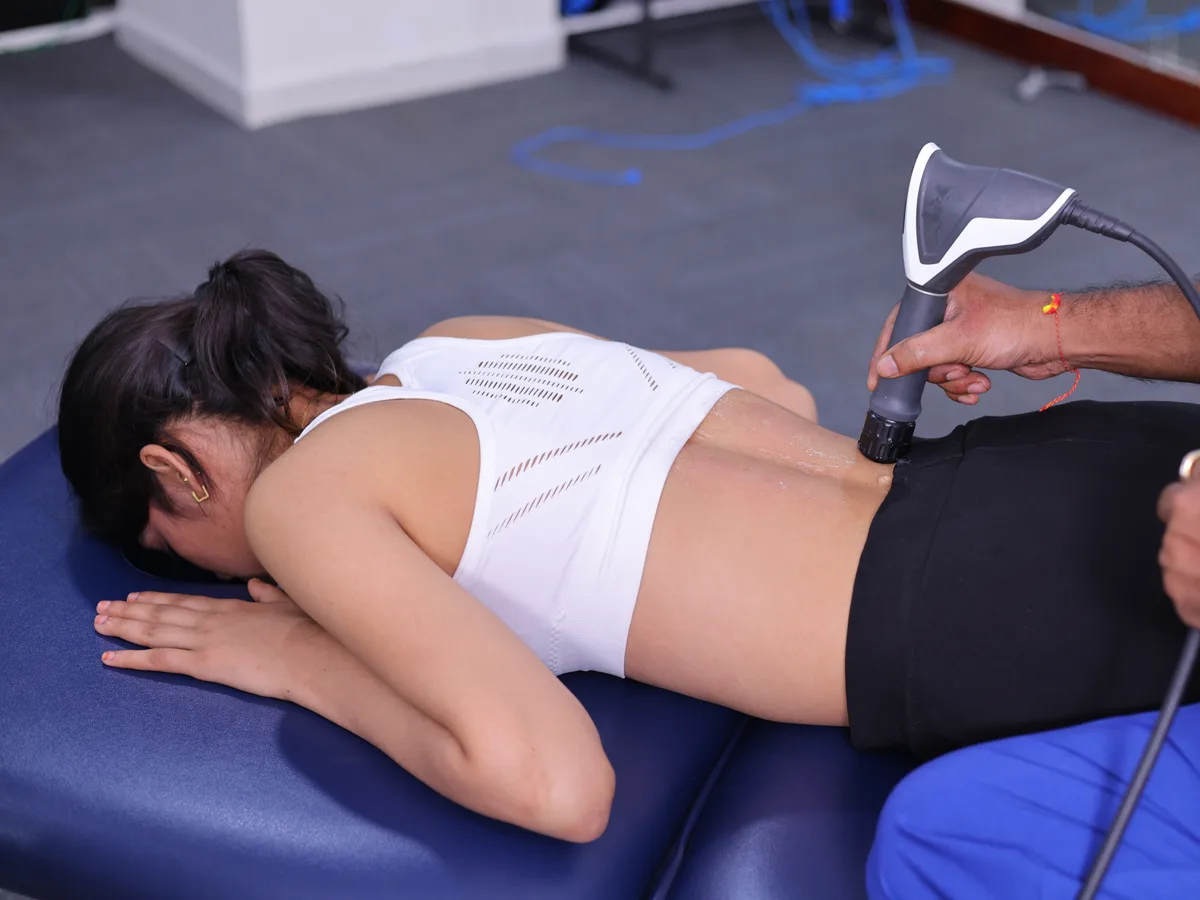
Once mechanical compression is reduced, we accelerate nerve healing with 3-Tesla EMTT (Electromagnetic Transduction Therapy). This technology delivers high-intensity electromagnetic pulses that penetrate up to 10 centimetres deep into tissue — far beyond what ultrasound or TENS can reach. The electromagnetic field stimulates the Gate Control pain mechanism, triggers endogenous opioid release for powerful non-pharmacological pain relief, and critically promotes Schwann cell activity around the compressed nerve root, supporting natural nerve regeneration. EMTT also reduces local inflammation that has typically been driving pain long after the initial disc event. Sessions are painless, take 15–20 minutes and are given concurrently with decompression and Neurac in the same clinical visit.
Why Redcord Neurac matters for long-term sciatica prevention
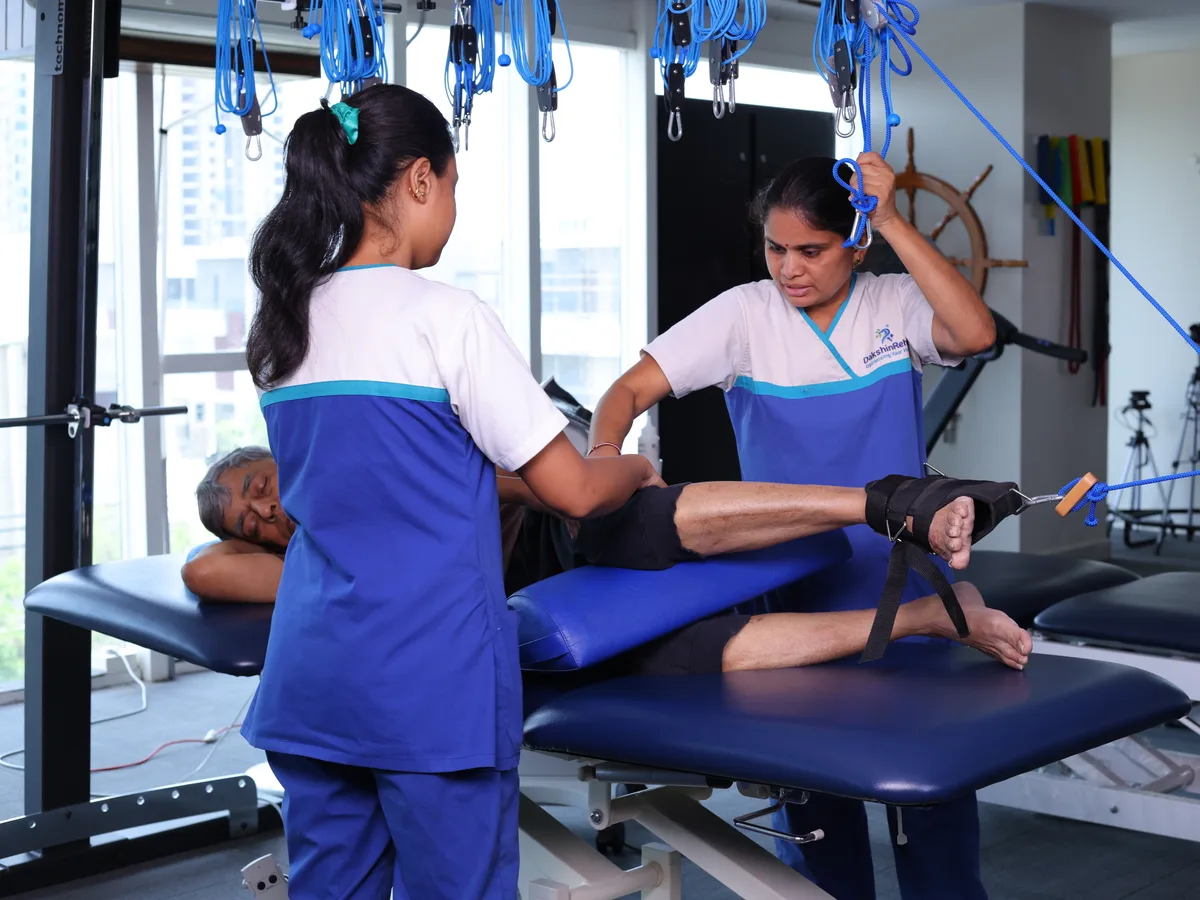
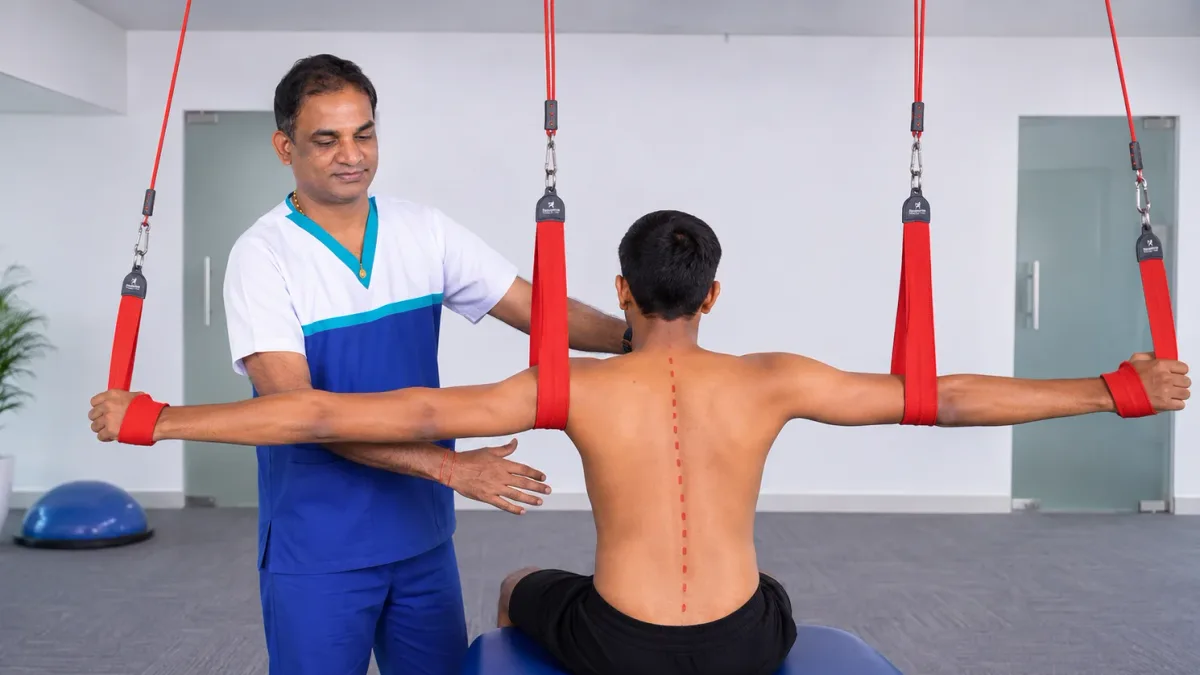
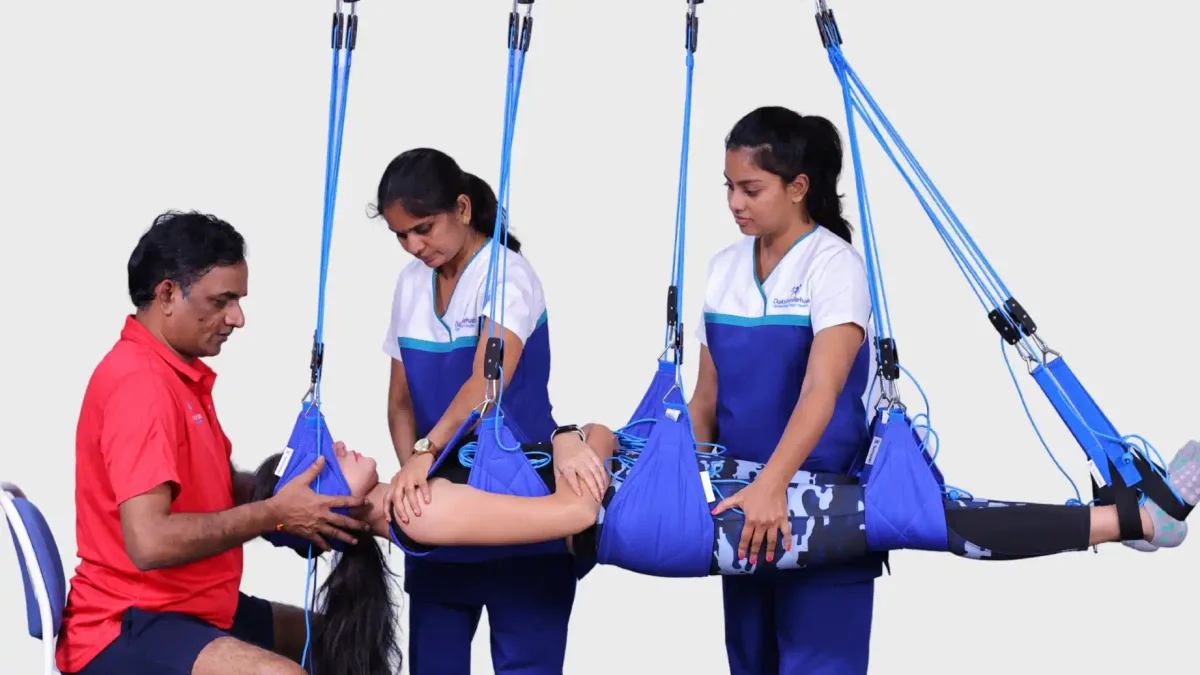
Relieving nerve compression is only half the solution. Without restoring the deep neuromuscular control that protects the spine, the same disc can herniate again or the piriformis can re-spasm. Redcord Neurac suspension therapy retrains the segmental deep stabilisers — multifidus, transversus abdominis, pelvic floor and diaphragm — in a pain-free, graded-unloading environment. These slow-twitch stabilisers do not automatically reactivate when pain resolves; they require specific closed-chain, instability-based re-education plus Stimula vibration to wake up. Patients routinely feel their deep core fire for the first time in years during their first Neurac session. Our Levitas Neurac explainer details the full mechanism.
What piriformis-syndrome sciatica needs that disc sciatica does not
Piriformis-driven sciatica responds poorly to decompression because the compression is not at the disc — it is at the buttock, where the sciatic nerve passes beneath (or through) the piriformis muscle. The treatment pathway for this subset is distinct — targeted manual therapy and trigger-point release of the piriformis and deep gluteal muscles, neural mobilisation of the sciatic nerve, hip-external-rotator strengthening to prevent re-spasm, and gluteus medius activation to offload the piriformis. Runners, cyclists and desk workers from Madhapur and Gachibowli who sit in prolonged hip flexion are the most common piriformis presentations we see. Differentiating piriformis from disc sciatica early saves weeks of wrong treatment — which is why the structured assessment matters.
What a typical sciatica recovery timeline looks like at DakshinRehab
Recovery timelines depend on the underlying cause. Piriformis syndrome typically resolves in 4 to 6 weeks with targeted release and hip stabilisation. Disc herniation with radiculopathy usually requires 8 to 12 weeks — decompression, nerve healing and core stability phases sequenced carefully. Spinal stenosis responds more slowly and sometimes needs ongoing maintenance therapy, though meaningful functional improvement is achievable. Throughout treatment, we track progress with digital goniometry, outcome scores and functional movement screening — so you and your family see measurable improvement, not just subjective pain reports.
When is sciatica actually a surgical problem — the red flags
We are strong advocates of non-surgical treatment, but equally clear about when surgery is the right choice. Cauda equina syndrome — sudden loss of bladder or bowel control combined with saddle-area numbness — is a medical emergency requiring immediate surgical decompression, not physiotherapy. Progressive motor weakness in the leg or foot (not just pain) that worsens despite 6 to 8 weeks of intensive physiotherapy warrants urgent surgical evaluation. Intractable pain unresponsive to a full conservative trial in the setting of documented large disc herniation may merit microdiscectomy. For every other sciatica presentation, published evidence — including the SPORT trial — strongly supports physiotherapy as first-line treatment, with most patients recovering as well as or better than those who had surgery at 2-year follow-up.
Evidence and expected outcomes
The sciatica literature is mature. The Spine Patient Outcomes Research Trial (SPORT) showed equivalent long-term outcomes between surgical and non-surgical management for lumbar disc herniation with sciatica, with surgical patients recovering faster in the short term but no better at 2 years. Systematic reviews of spinal decompression therapy document significant pain reduction in lumbar disc patients. Norwegian Redcord Neurac trials show superior outcomes at 3, 6 and 12 months compared with general exercise for chronic non-specific low back pain. EMTT has multiple European trials supporting its use in musculoskeletal and neuropathic pain. DakshinRehab tracks every patient using these validated benchmarks so your progress is measurable rather than assumed.
How DakshinRehab integrates sciatica care into the wider spine pathway
Sciatica rarely exists alone. We commonly co-manage it with chronic low back pain, disc bulge, spinal stenosis, degenerative disc disease and cervical spondylosis — all of which share root drivers in deep-core weakness and biomechanical overload. For IT professionals from Hitec City and Gachibowli, we include formal workstation ergonomic assessments and structured movement-break protocols. For pregnant and post-natal patients, we modify protocols to exclude contraindicated techniques and add pelvic-floor co-activation. For Gulf patients travelling for advanced spine care, we schedule intensive 2–3 week blocks with daily sessions so progress fits the travel window. Nothing about our approach is generic.
Conclusion — stop the shooting leg pain at DakshinRehab Moosapet
Sciatica is not a life sentence, and it is rarely a surgical problem. It is a mechanical signal that a precise combination of decompression, nerve healing, deep-core retraining and behaviour change can resolve for good. At DakshinRehab in Moosapet, Hyderabad, that combination — Chattanooga DTS spinal decompression, 3-Tesla EMTT, Redcord Neurac, manual therapy and ergonomic correction — is delivered one-on-one by qualified physiotherapists and tracked with validated outcome measures. We serve Moosapet, Kukatpally, KPHB, Miyapur, Madhapur, Gachibowli, Hitec City and the wider Hyderabad region, and Gulf patients travelling for advanced spine care. Book your sciatica assessment, WhatsApp us on +91 80192 99888, or call +91 80192 99888. Your leg pain has a mechanical cause. We find it. We fix it.