Primary Total Knee Replacement
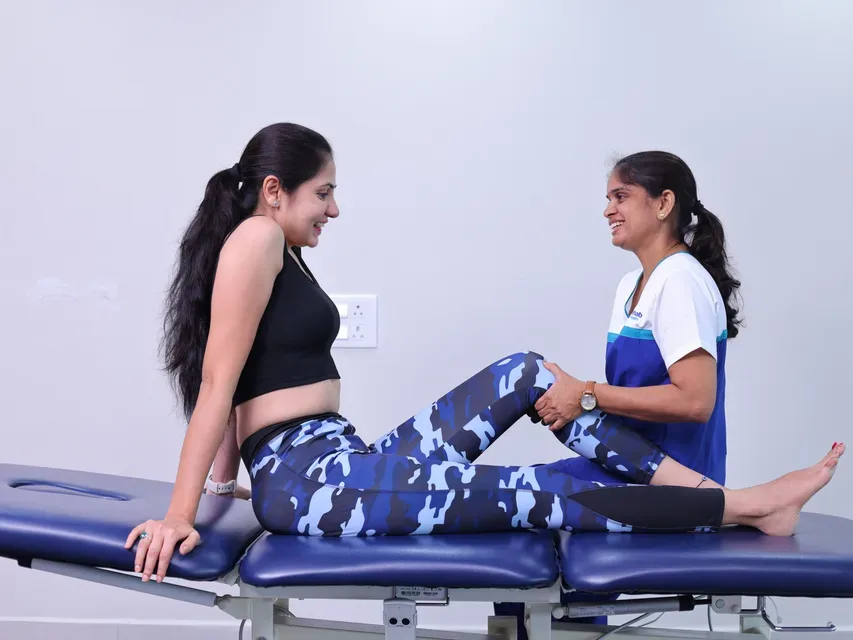
A first-time replacement for end-stage arthritis. The standard pathway: control swelling, restore motion and quadriceps strength, then rebuild confident walking and stairs.
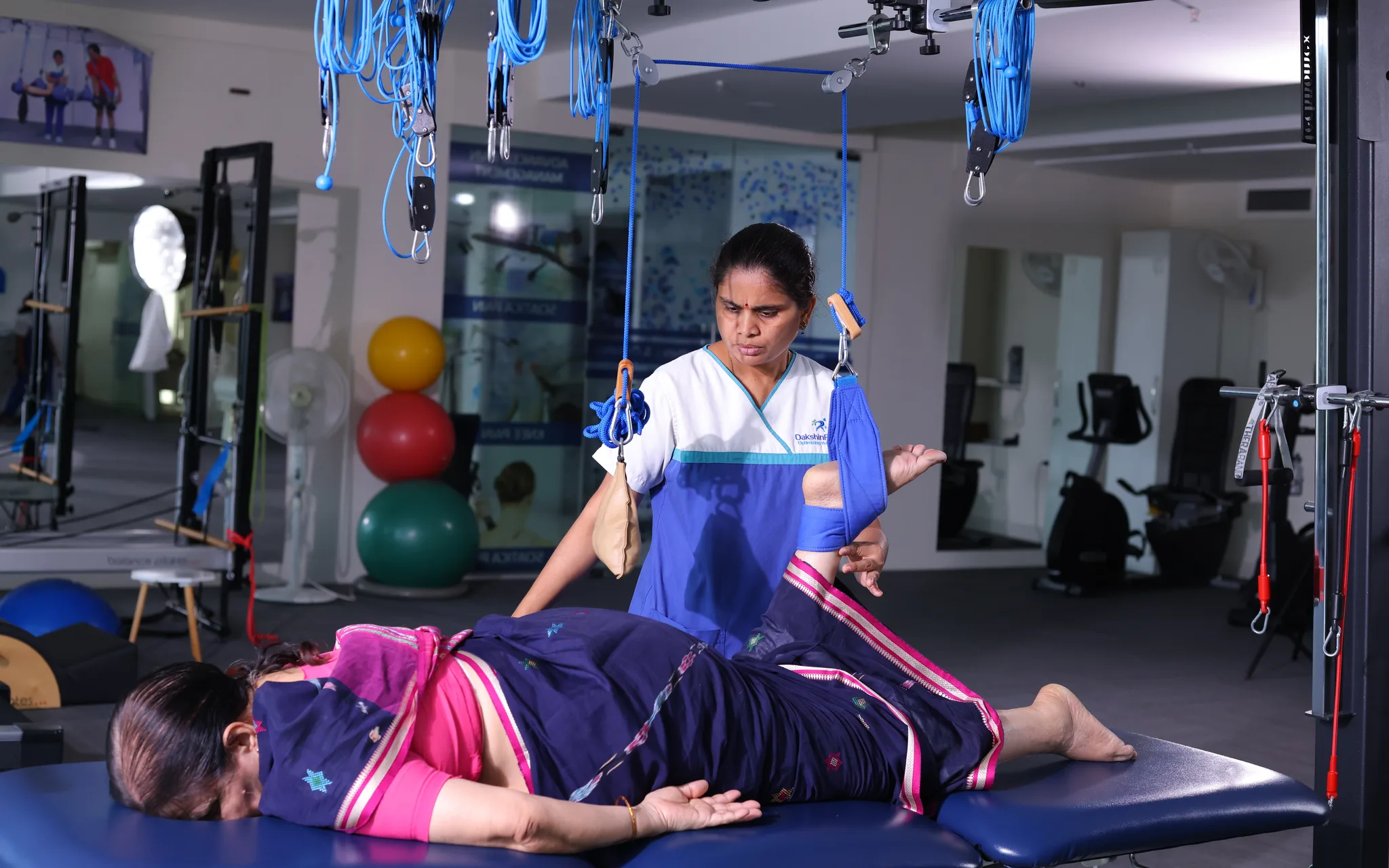
After total knee replacement (TKR), expert physiotherapy is critical for optimal recovery. At DakshinRehab in Moosapet, our specialized post-operative rehabilitation program guides you from pain management and swelling control through progressive strength building and return to full functional activities. Serving Kukatpally, KPHB, Gachibowli, and surrounding areas.
Personalised, technology-driven rehabilitation in Moosapet, Hyderabad.
After a total knee replacement, swelling, stiffness, and thigh-muscle weakness are expected — and structured physiotherapy is what turns a successful surgery into a fully functional knee. At DakshinRehab Moosapet, we coordinate with your surgeon and guide you from the first days after surgery through confident, independent movement.
Symptom 01
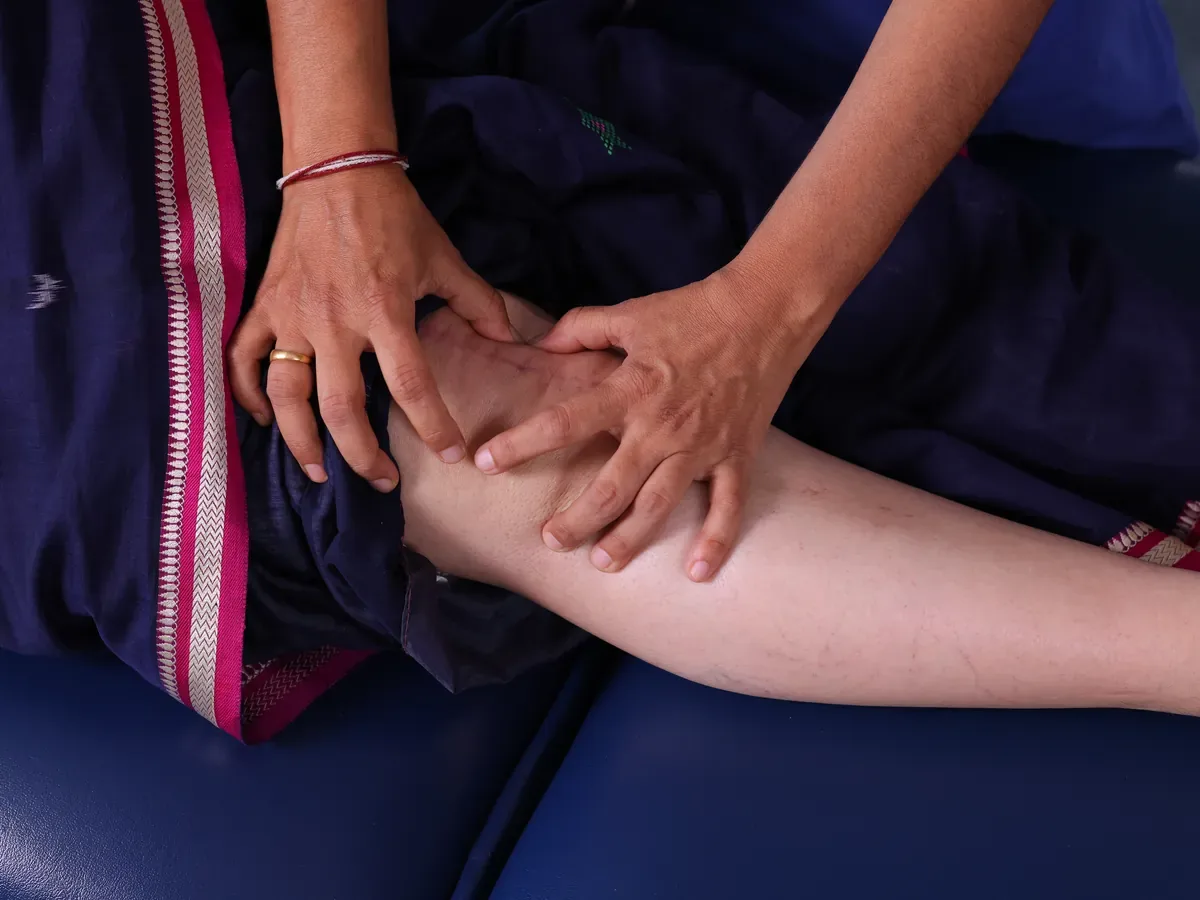
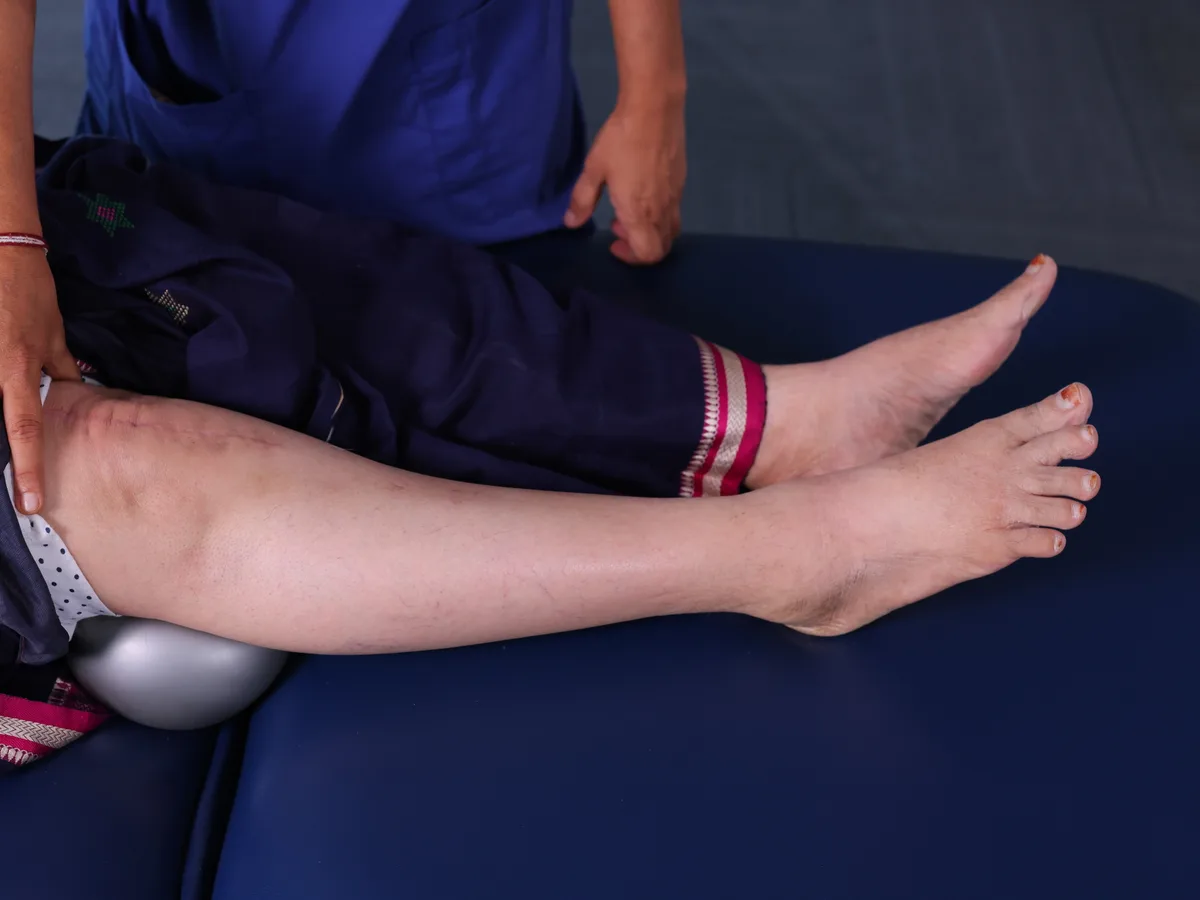
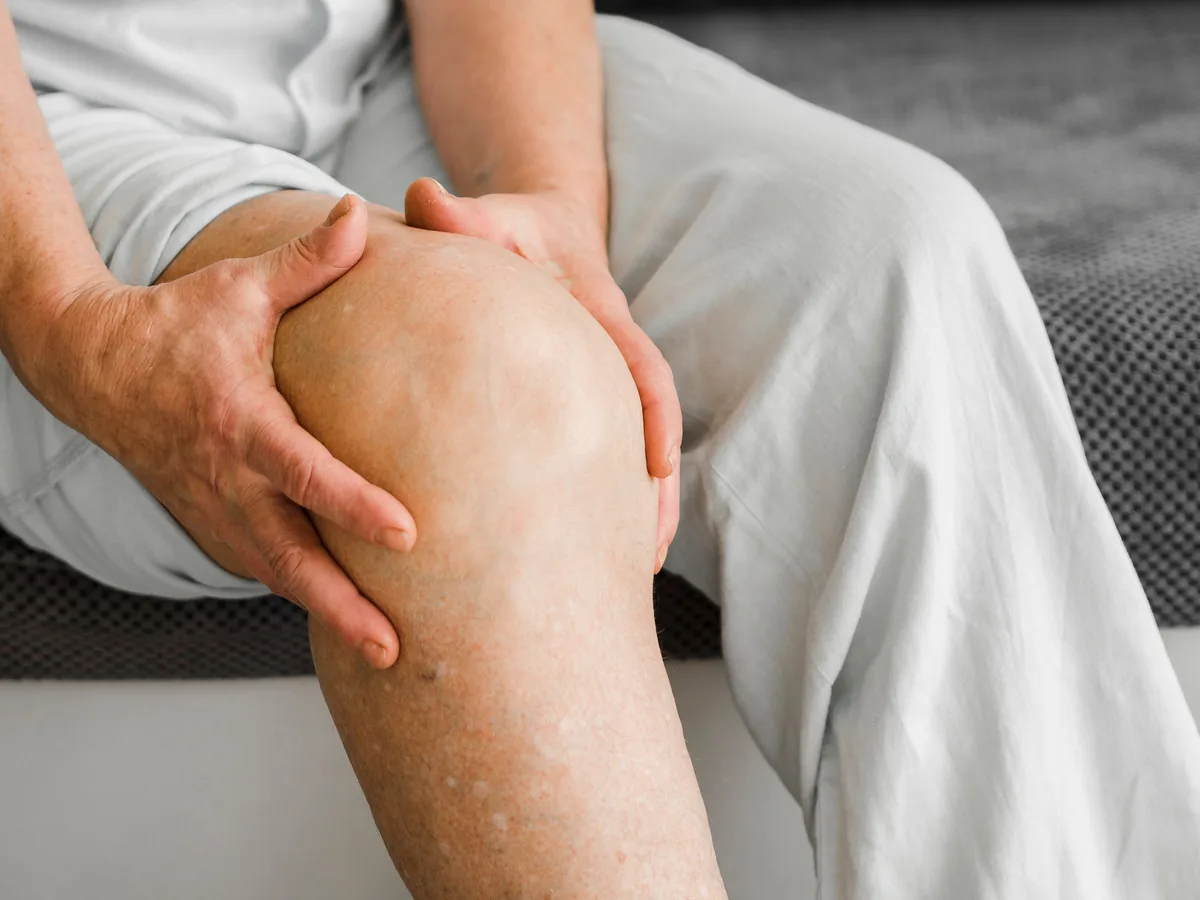
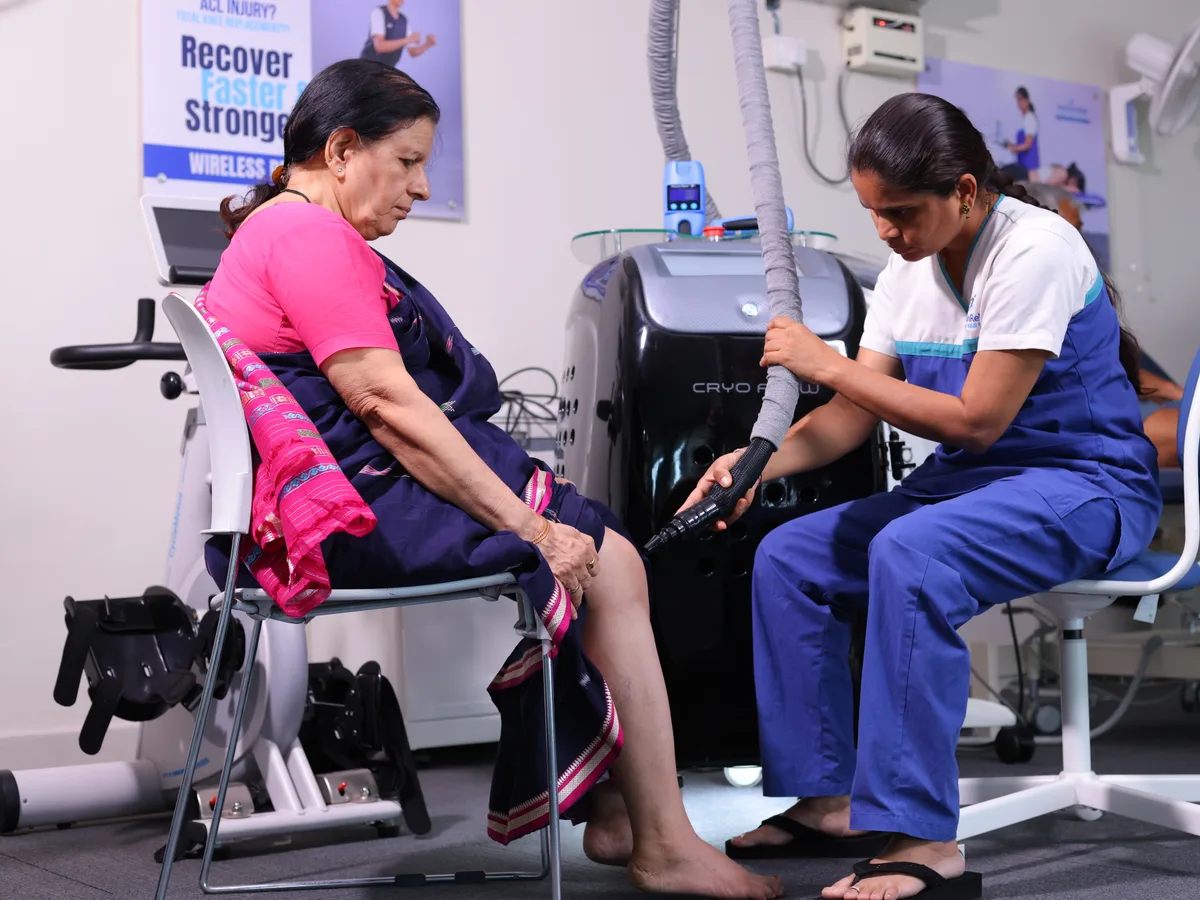
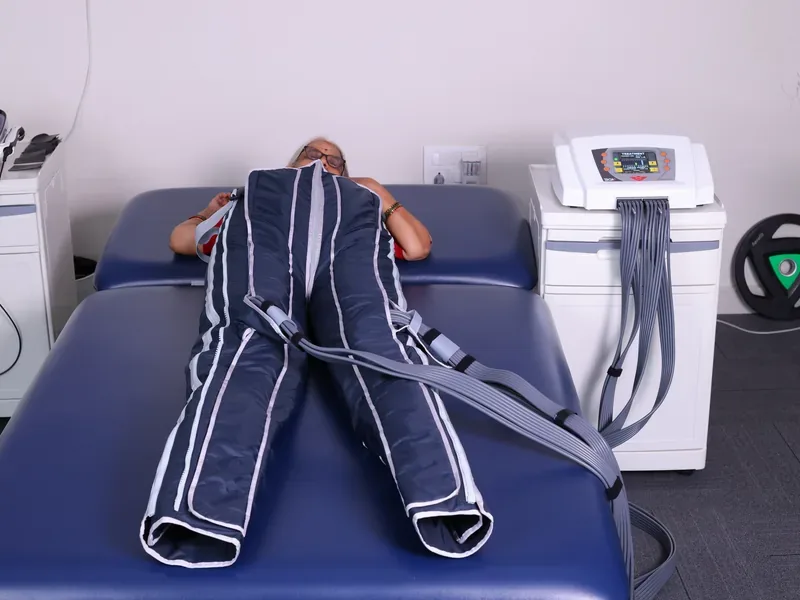
Swelling is your body’s natural response to surgery and is the main reason a new knee feels tight and hard to bend. Cryotherapy, compression, elevation, and gentle movement control it — swelling that suddenly worsens or feels hot needs surgeon review.
Your knee replacement recovery is individual. The surgery you had shapes your starting point, your risks, and your rehab priorities — so at DakshinRehab Moosapet we tailor the plan to your specific procedure, in coordination with your surgeon.
A first-time replacement for end-stage arthritis. The standard pathway: control swelling, restore motion and quadriceps strength, then rebuild confident walking and stairs.
A redo of a previous replacement. These knees are often stiffer and weaker, so loading is progressed more carefully and scar mobility gets extra attention.
Both knees replaced together. With no “good leg” to lean on, early rehab prioritises safe transfers, balance, and independence alongside strength.
Only one compartment of the knee replaced. Early recovery is often quicker, but restoring full strength, motion, and a symmetrical gait still matters.
Clinician-reviewed
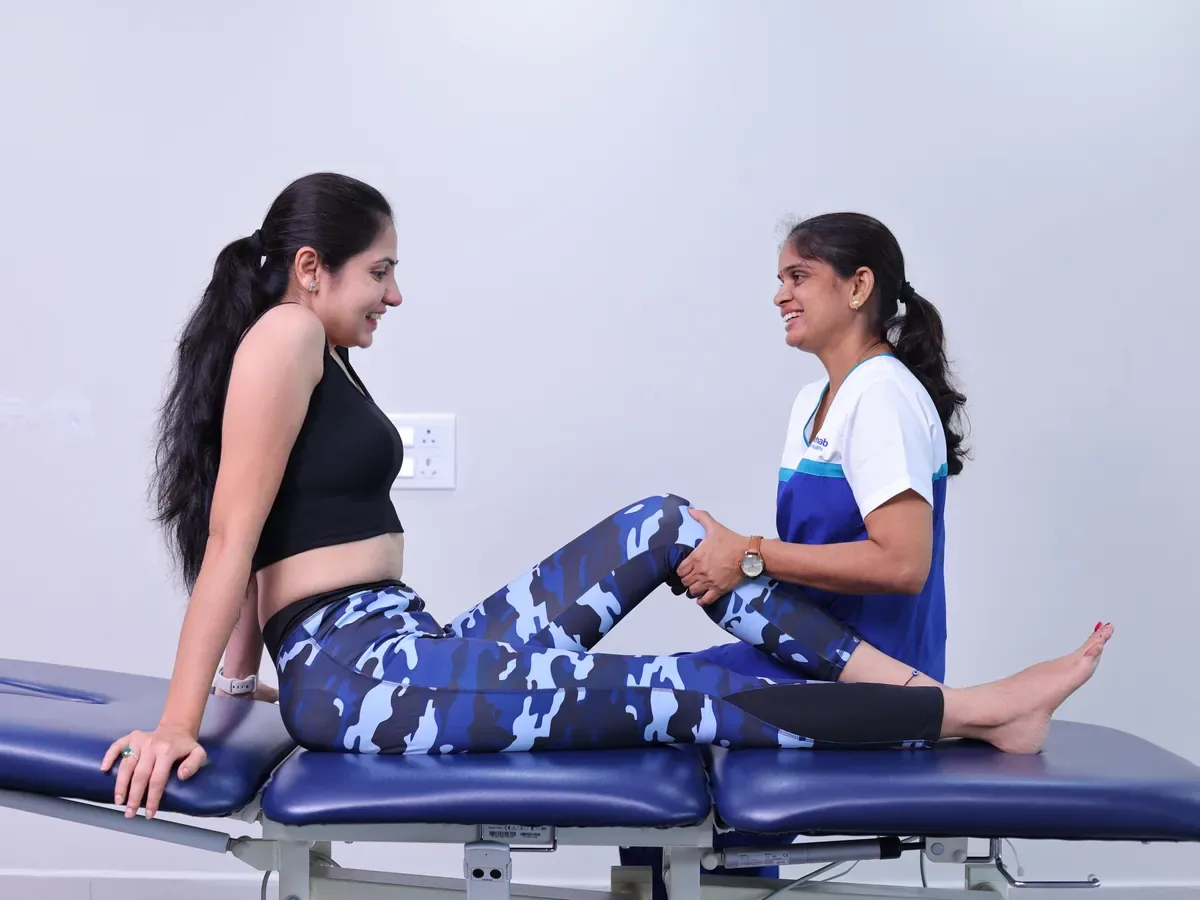
At DakshinRehab, post-operative knee replacement rehabilitation is planned and supervised by Dr. Swapnagandhi and the physiotherapy team, in coordination with your surgeon. Progress is tracked objectively against range-of-motion and Limb Symmetry Index (LSI) benchmarks, not guesswork.
A knee replacement resurfaces the worn joint, but it cannot switch your muscles back on. After surgery, inflammatory fluid floods the joint capsule and triggers a protective reflex called Arthrogenic Muscle Inhibition (AMI) — the nervous system actively shuts down the quadriceps, especially the inner VMO. Force a swollen, inhibited knee to bend or bear weight too early and you invite joint friction, poor patellar tracking, and scar-tissue adhesion (arthrofibrosis) that locks motion. That is why DakshinRehab Moosapet quenches swelling and restores muscle firing first, then rebuilds range, strength, and symmetry in the right order.
Direct, spoken-style answers to the questions patients most often ask about recovery after total knee replacement at DakshinRehab Moosapet, Hyderabad.
Most people walk comfortably and manage stairs by 8 to 12 weeks after knee replacement, with basic daily function returning around 3 months. Full strength and confidence can take 6 to 12 months. At DakshinRehab Moosapet, structured physiotherapy and objective progress tracking help you reach each milestone safely rather than guessing whether you are on track.
Most patients walk with support within a day or two of surgery and progress to independent walking over 2 to 6 weeks, as swelling settles and the quadriceps reactivates. A smooth, symmetrical walking pattern often takes longer and benefits from gait retraining. At DakshinRehab Moosapet, we use movement analysis to correct a limp early.
Yes. Surgery replaces the worn joint, but it cannot restore the movement, strength, and control lost to years of arthritis. Without structured physiotherapy, patients commonly plateau with stiffness, weakness, or a lasting limp. At DakshinRehab Moosapet, guided rehabilitation regains range of motion, reactivates the quadriceps, and retrains walking so a successful operation becomes a knee you can trust.
A common progression is about 90 degrees of bend by week 3, around 115 degrees by week 8, and 125 degrees or more by graduation near week 12. At DakshinRehab Moosapet we measure your range at every visit and advance it against these targets rather than a fixed calendar, so motion returns safely.
The obstacle after knee replacement is not effort — it is swelling and muscle inhibition that keep the quadriceps switched off. At DakshinRehab Moosapet we sequence technology to solve it in order — control the swelling, reactivate the muscle, restore motion, and rebuild strength. Each is matched to your assessment stage, not applied as a fixed package.
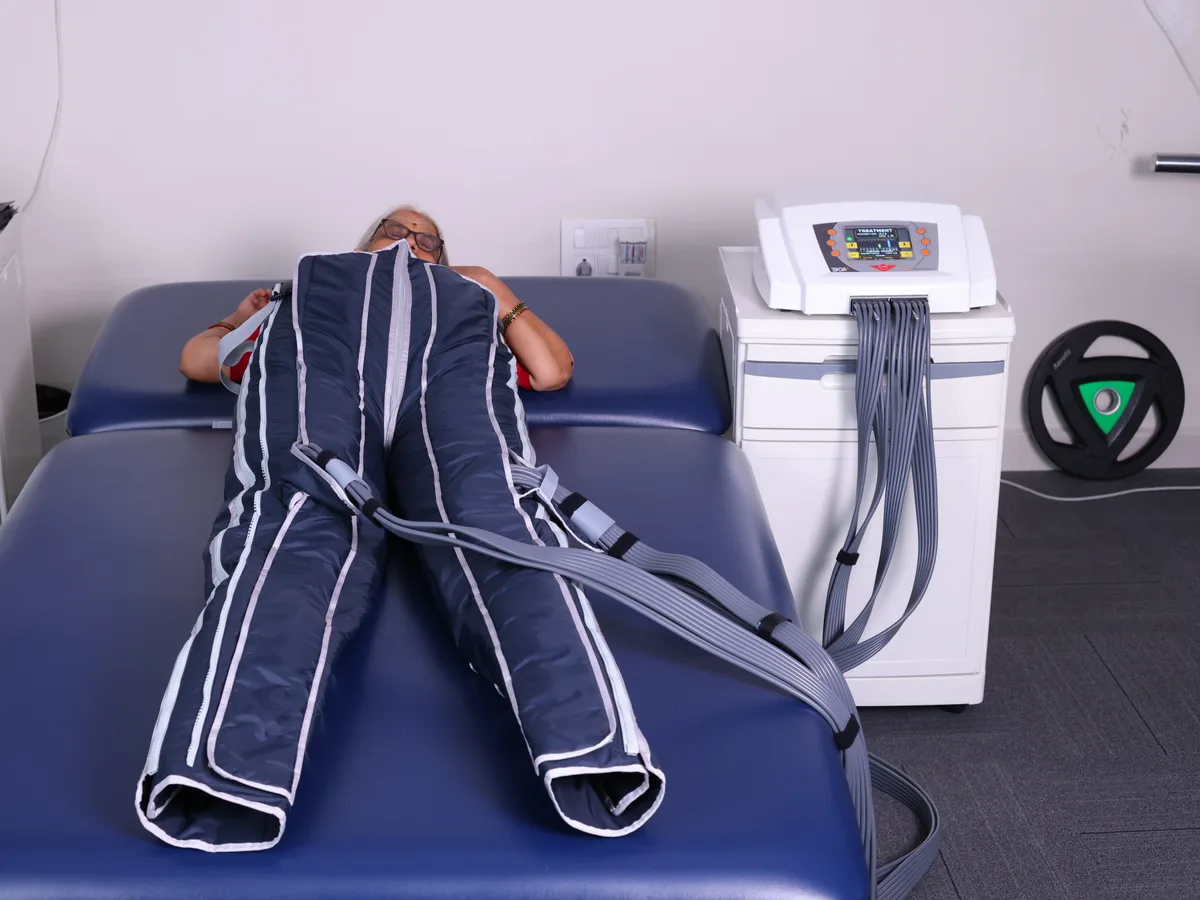
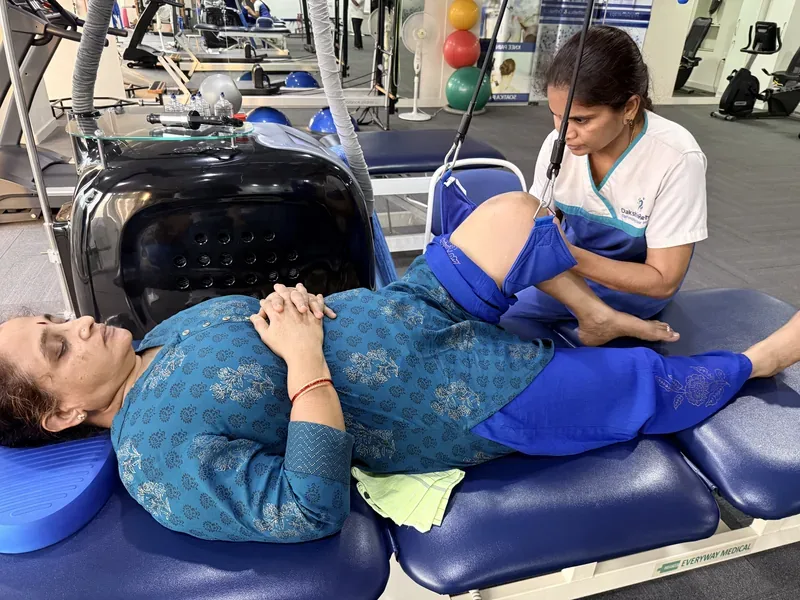
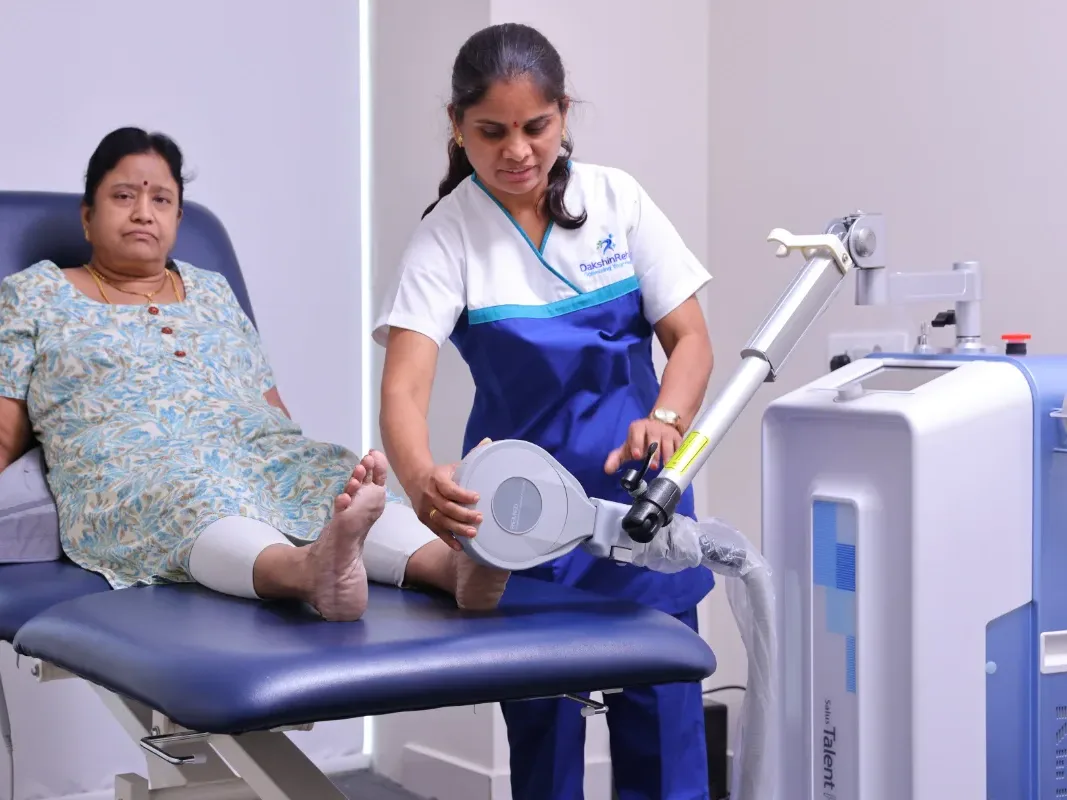
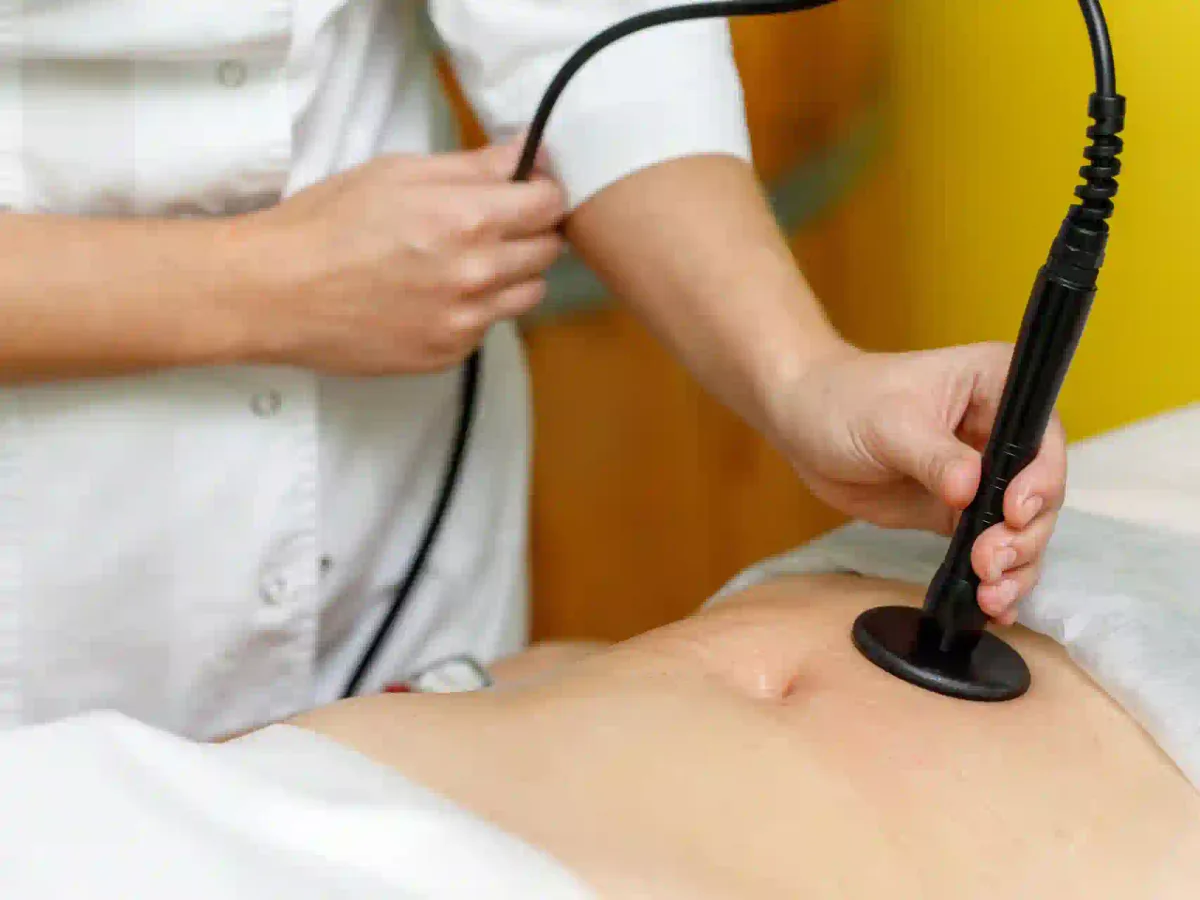
Cold-air cryotherapy with BOA-2 sequential pressotherapy flushes post-surgical swelling and fluid without painful force, opening the joint space so early movement and muscle activation become comfortable.
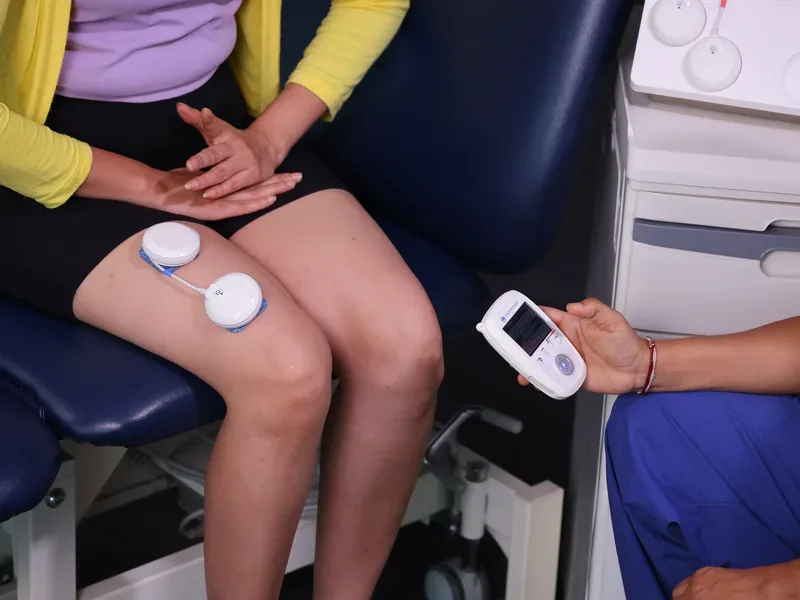
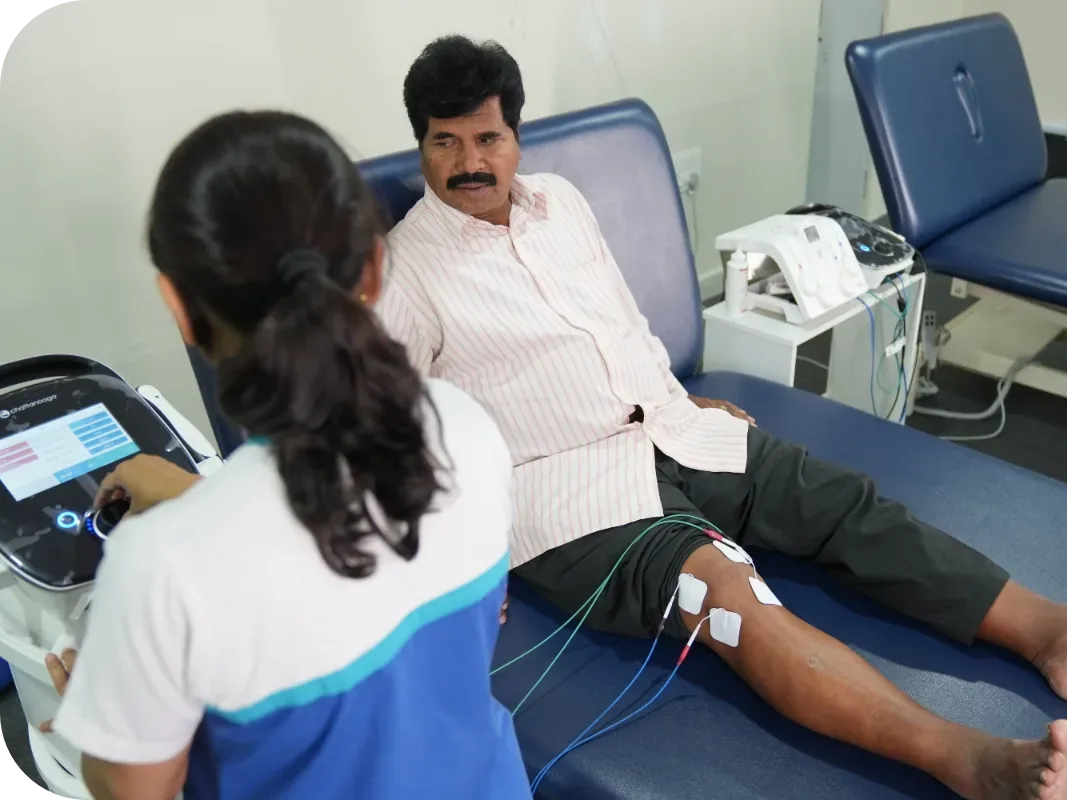
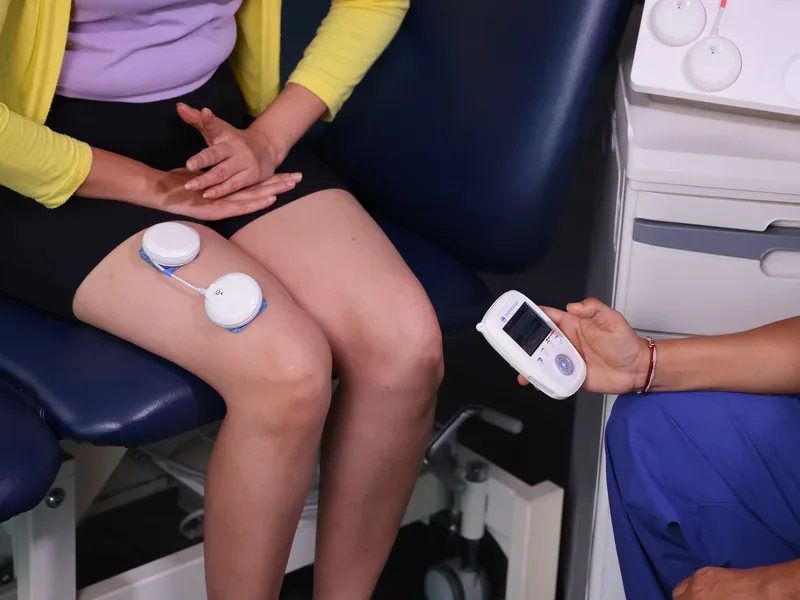
Wireless neuromuscular stimulation reactivates the quadriceps that shut down after surgery, restoring the firing needed for safe standing, walking, and stairs during active mobility work.
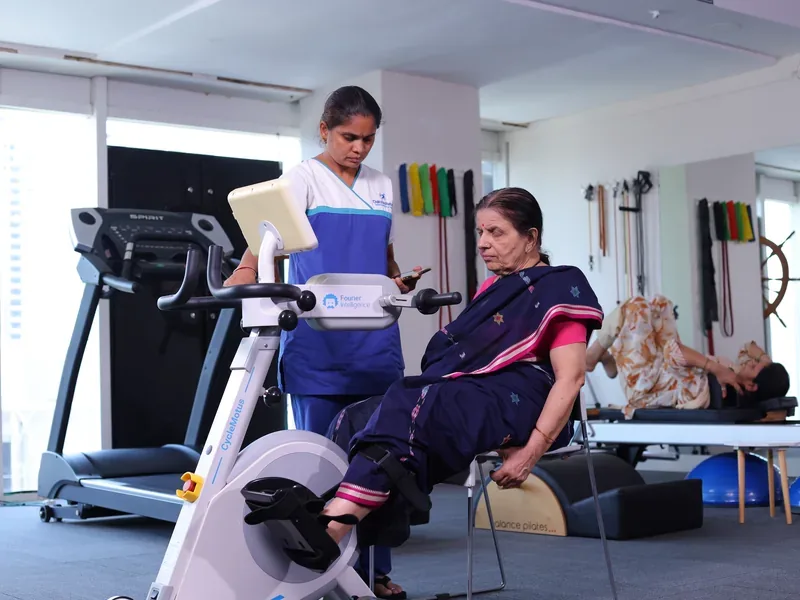
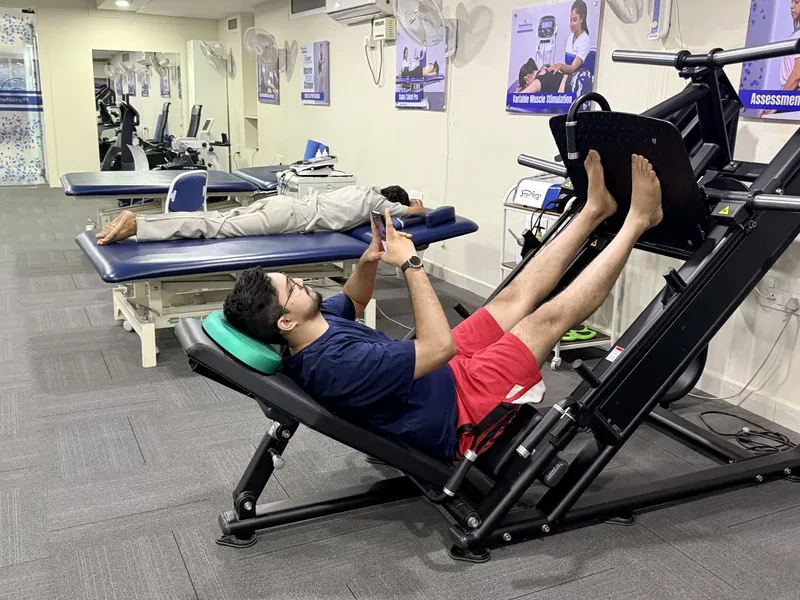
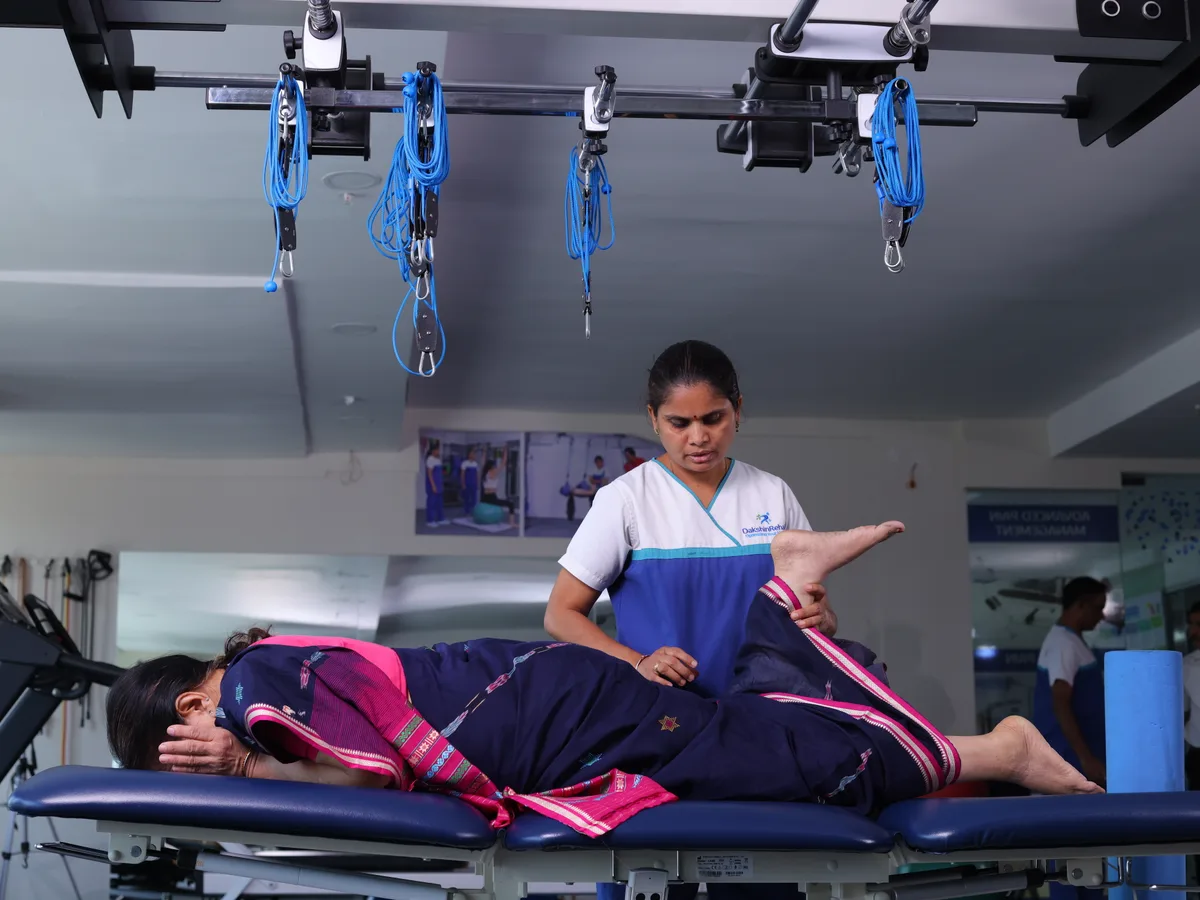
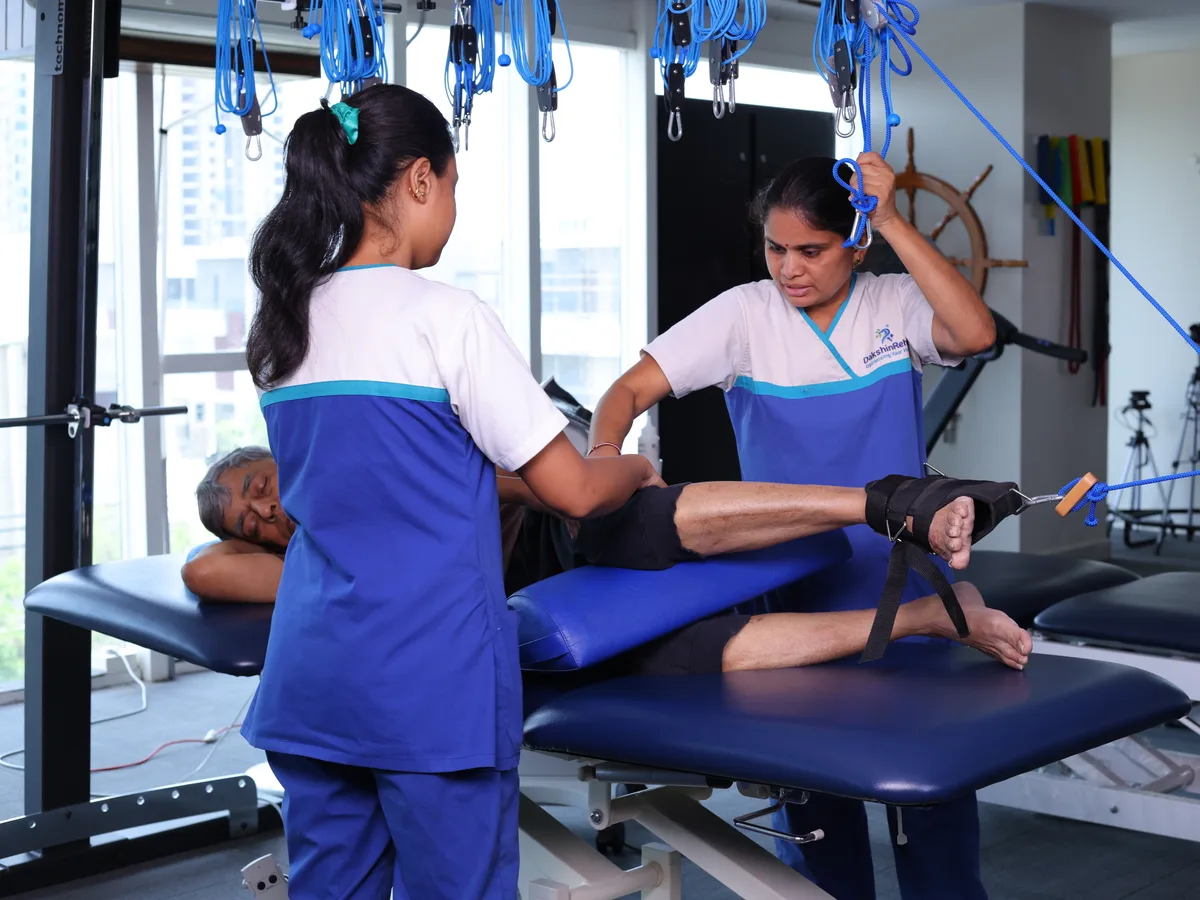
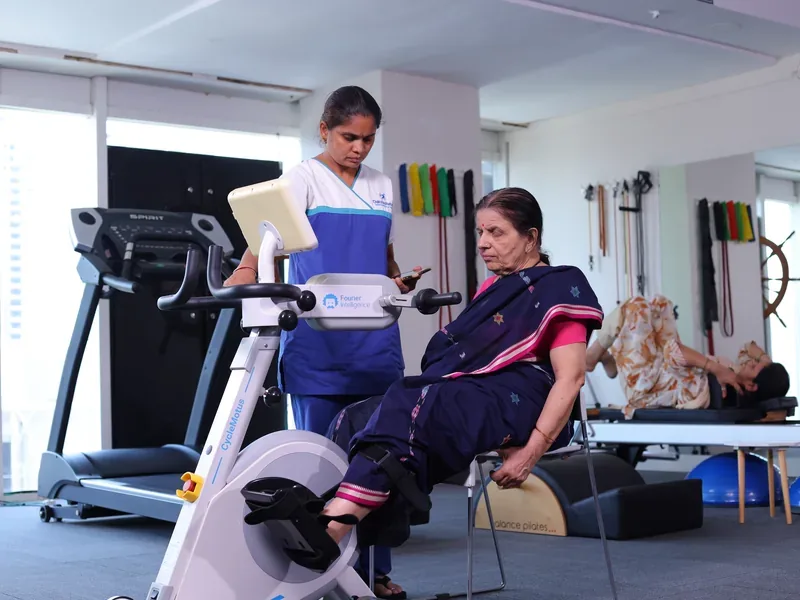
Robotic leg training moves the knee through passive, active-assisted, and AI-guided modes, restoring range and endurance safely while adapting to how much the leg can do each session.
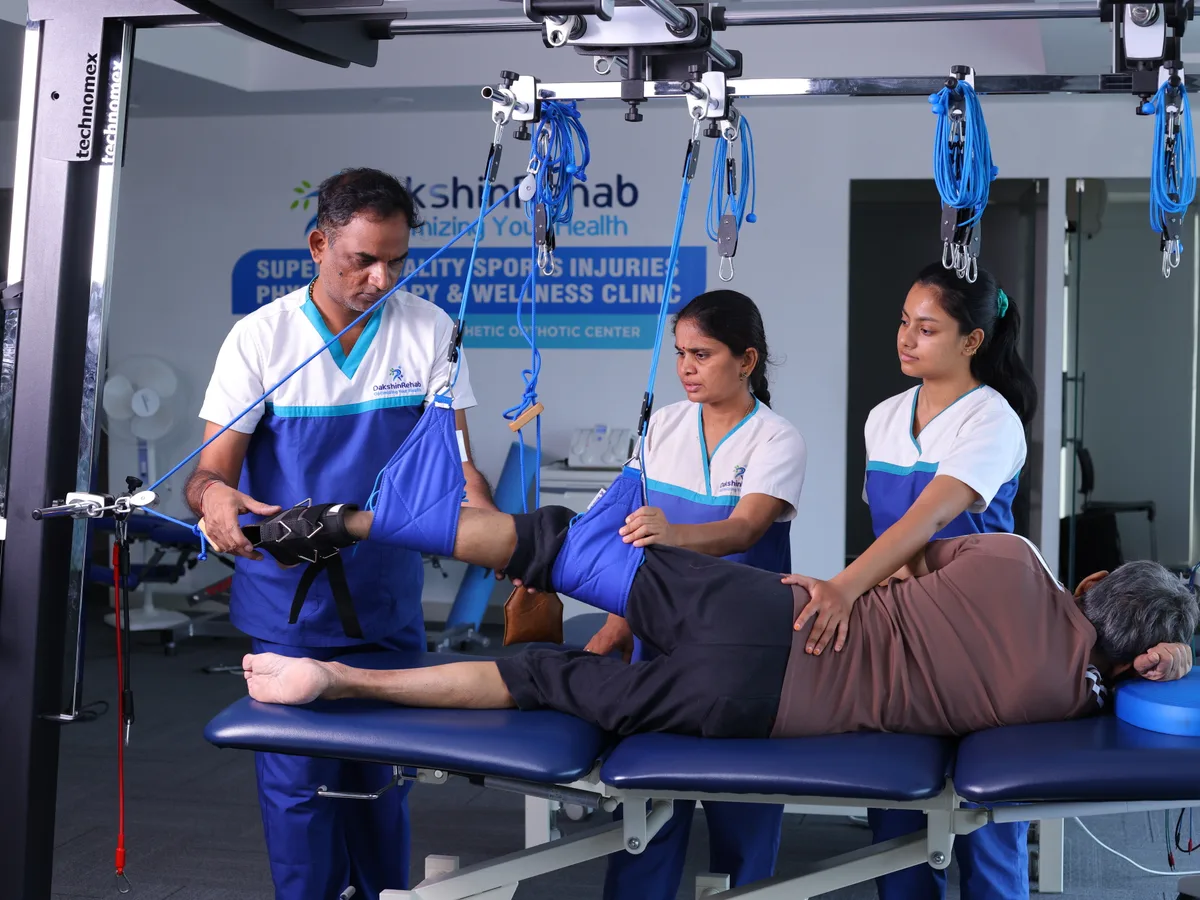
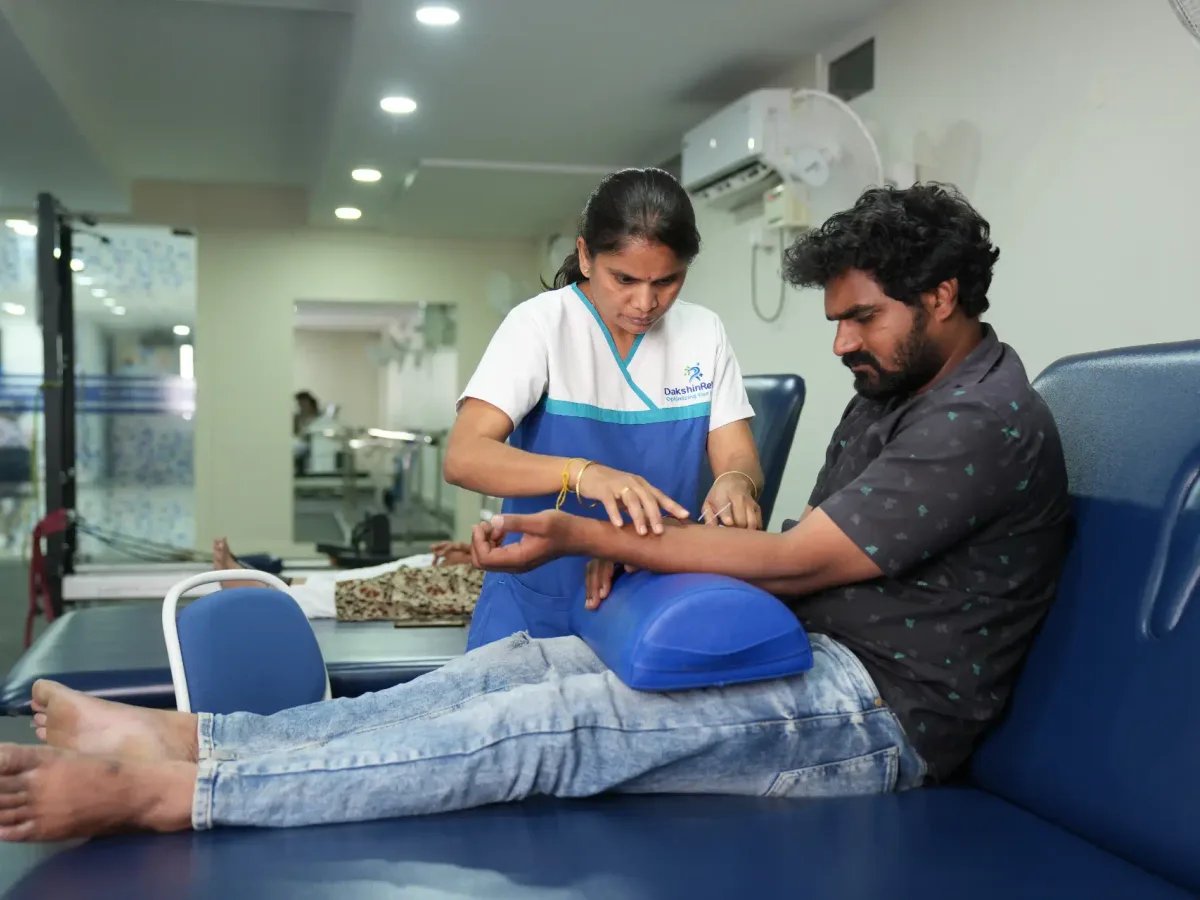
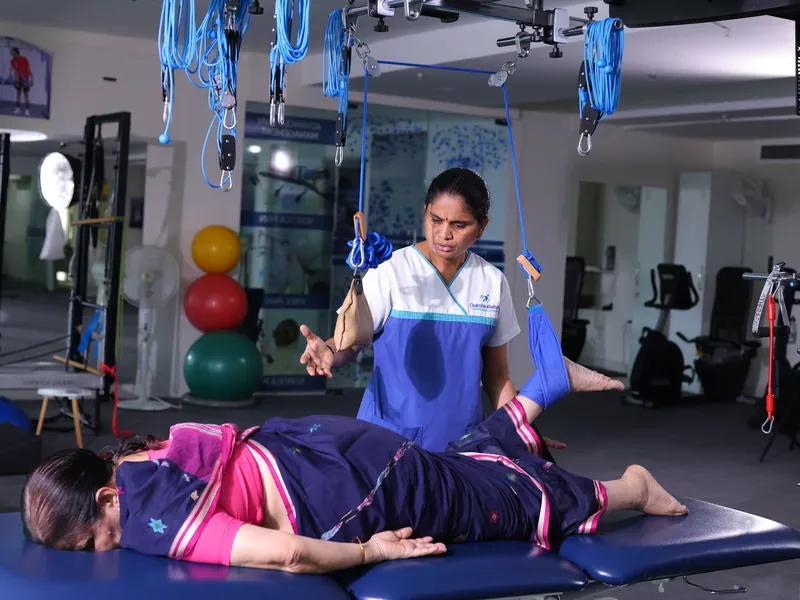
Suspension-based Neurac retraining increases range of motion and rebuilds the deep stabilising muscles, balance, and control in a gravity-assisted, implant-safe setting.
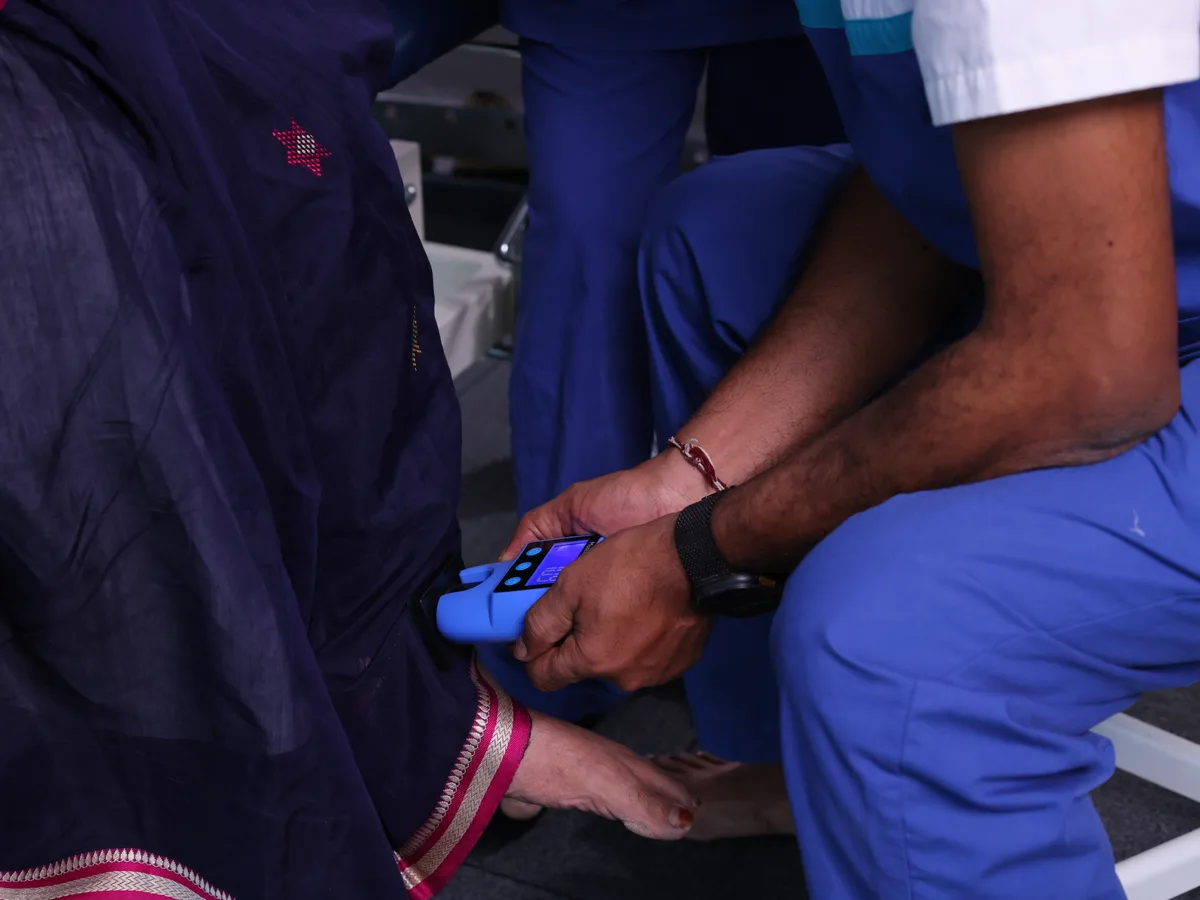
Every post-op knee at DakshinRehab starts with a 45-minute objective audit. Instead of judging recovery by feel or the calendar, we measure muscle mass, range, gait, weight-bearing, and force — and track them session by session against a Limb Symmetry Index (LSI) benchmark.
Quantifies muscle loss in the operated thigh versus the healthy limb, so strengthening is targeted precisely where the atrophy is.
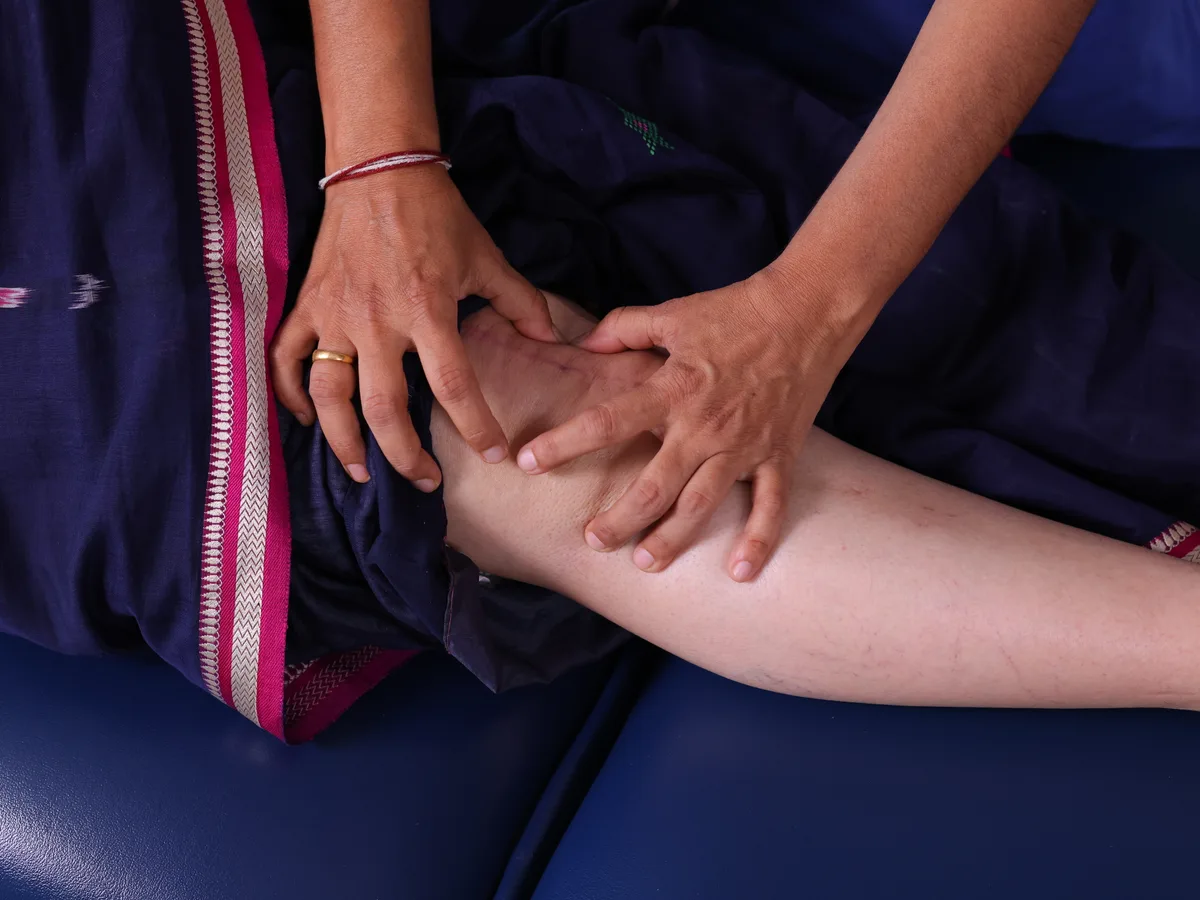
Measures exact flexion and extension angles and pinpoints tight restrictions in the hamstrings, hip flexors, and scar layers.
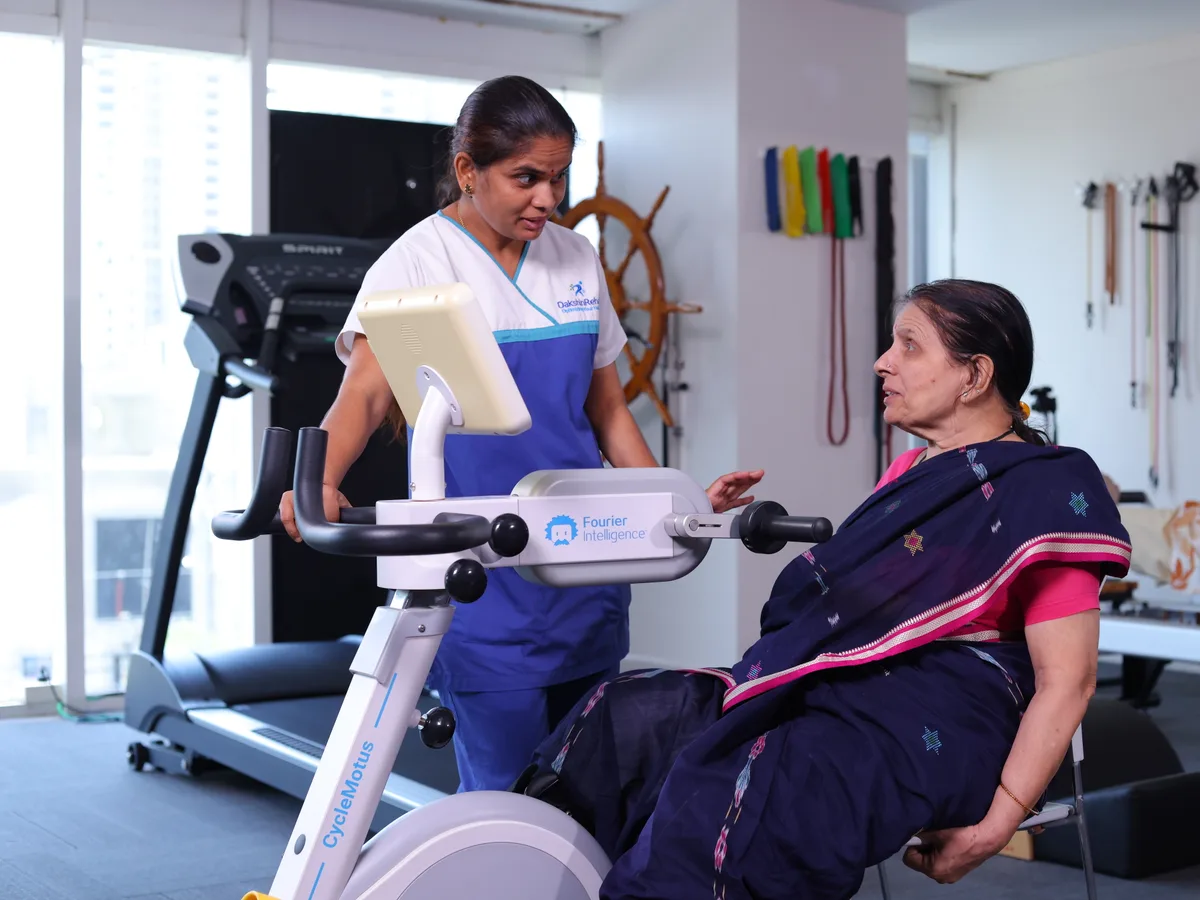 DakshinRehab clinical pathway
Digitally maps pelvic drop, knee-extension velocity, and stride symmetry in later phases to remove the limp, not just mask it.
Shows exactly how weight is distributed, revealing how much load you are still avoiding on the new joint so we can correct it.
Clinical comparison
A knee can feel “fine” while the surgical leg is still 30% weaker than the other — the exact gap that causes limping, falls, and overload of the healthy joints. Objective measurement catches what feel misses, so treatment targets the real deficit and graduation is earned, not assumed. Your LSI, range of motion, and gait symmetry are re-measured throughout, so every stage is unlocked by data.
Safe isometric quad and hamstring force testing computes your LSI — the graduation benchmark is ≥ 90% versus the healthy leg.
Located in Moosapet, Hyderabad — serving Kukatpally, KPHB, Miyapur, and Gachibowli. Easy access during the critical early recovery phase.
A home programme or a visiting physiotherapist can keep you moving — but they cannot bring the cryotherapy and pressotherapy, muscle stimulation, robotic leg trainer, suspension retraining, or the objective strength and gait measurement that actually drive a knee replacement forward. At DakshinRehab Moosapet, guided, technology-tracked rehabilitation rebuilds strength, motion, and confident walking faster and more safely than home exercises alone — and every step is measured, not guessed, in coordination with your surgeon.
“We do not discharge a knee because twelve weeks have passed. We discharge it when the numbers — limb symmetry, full extension, and even weight-bearing — prove it is genuinely ready.”
Credentials: BPT, MPT, IAP Registered
The clinical content on this page is written and independently reviewed by qualified physiotherapists at DakshinRehab, Moosapet, Hyderabad, in coordination with the operating surgeon.
How and when we rebuild your knee — from an objective first assessment, through three measured clinical phases, to a graduation earned by your numbers, not the calendar.
A rehabilitation plan built on your actual numbers — not a template — with clear targets to unlock each phase.
Swelling controlled, knee straightens fully, and the quadriceps begins firing — the foundation for everything that follows.
Walking becomes smoother and more independent, bending approaches 115°, and strength symmetry climbs into the on-track range.
Bending past 125°, symmetrical strength, and steady balance on stairs and uneven ground — the knee is nearly ready for discharge.
Discharge is earned, not assumed — you leave with objective proof the new knee is genuinely ready.
The strength and control you rebuilt are maintained — protecting your knee replacement for the years ahead.
A knee replacement is only as good as the recovery that follows it. These are the common paths patients take after surgery — and where a structured, technology-tracked programme makes the biggest difference.
A leaflet of exercises with no supervision. Works for some, but swelling, stiffness, and quadriceps weakness often plateau — the most common reason a good surgery ends with a disappointing knee.
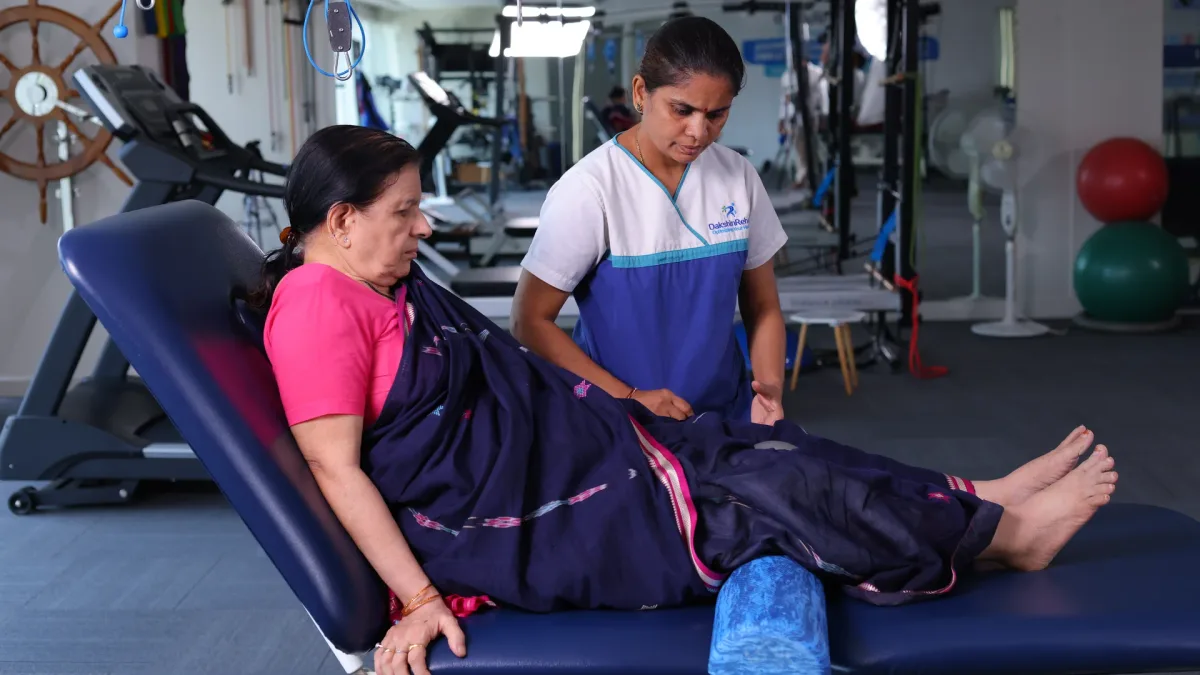
Supervised sessions that restore basic movement and strength. Helpful, but without objective measurement it can be hard to know whether the knee is truly on track.
A phased programme combining cryotherapy, NMES, gait analysis, and strength testing — progress measured objectively at each stage and coordinated with your surgeon.
Some situations need medical, not physiotherapy, attention. We screen for warning signs and coordinate a prompt surgeon referral whenever your recovery calls for it.
Not sure which path fits you? Book a post-operative assessment and we will map your recovery stage, measure where you are, and recommend the safest next step.
Book a Post-Op Assessment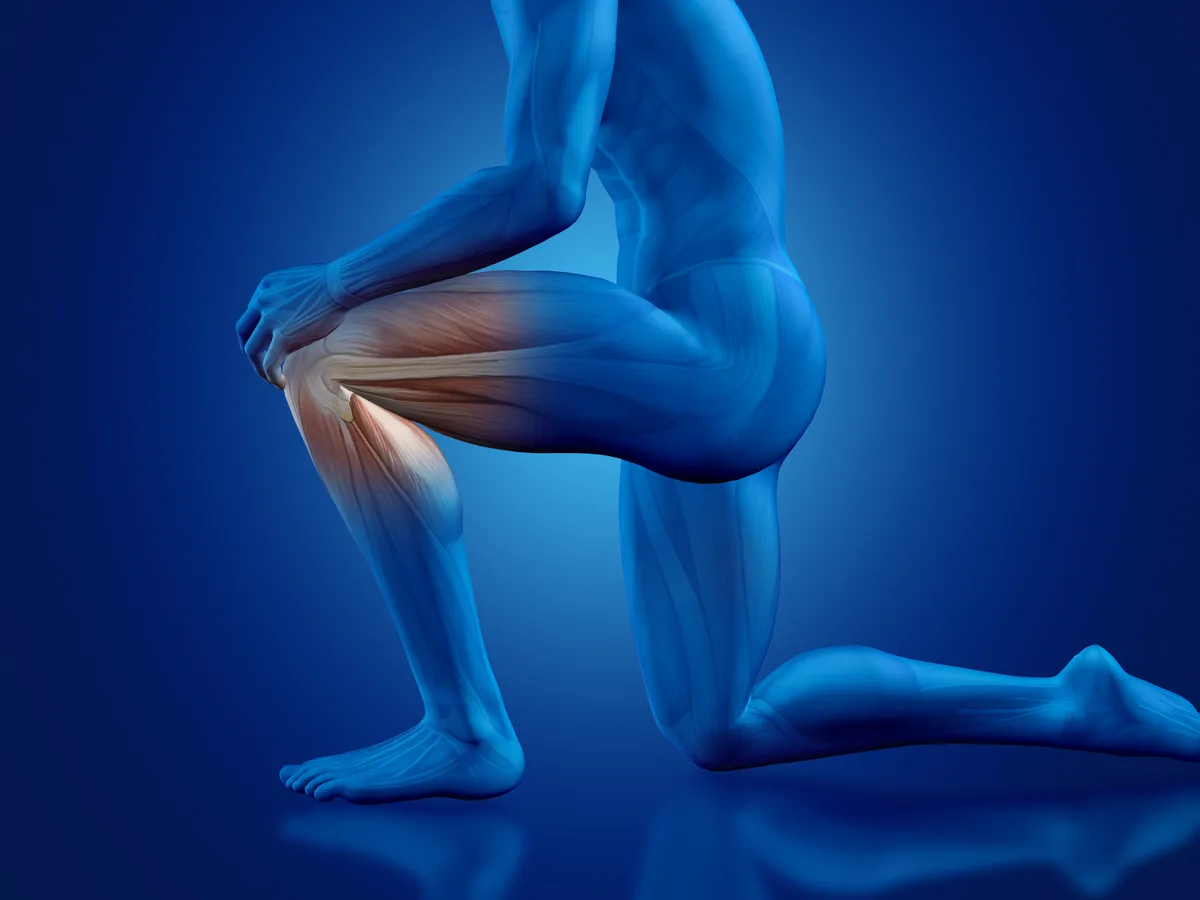
Physiotherapy after knee replacement is essential — that part is a given. What matters is knowing the symptoms that are NOT part of normal recovery. Some need emergency care; others, like pain that returns long after surgery, need a prompt surgeon review. Do not wait these out.
Fever (≥101.5°F / 38.6°C) — sign of infection; contact your surgeon immediately
Calf pain, swelling, warmth, or redness — possible deep vein thrombosis (DVT); medical emergency
Wound drainage, redness, opening, or odor — signs of infection requiring urgent care
Chest pain, severe shortness of breath, or fainting — a possible blood clot in the lungs; call 108 or go to the nearest emergency room immediately
Sudden loss of knee motion, a locked knee, or inability to bear weight — may indicate a blood clot or mechanical problem
Persistent, worsening, or new knee pain — even months or years after surgery — can signal implant loosening, wear, or late infection; see your surgeon
Find DakshinRehab on Google Maps to read reviews shared by patients.
Our expert physiotherapists and rehabilitation specialists at DakshinRehab bring decades of combined experience to your recovery.
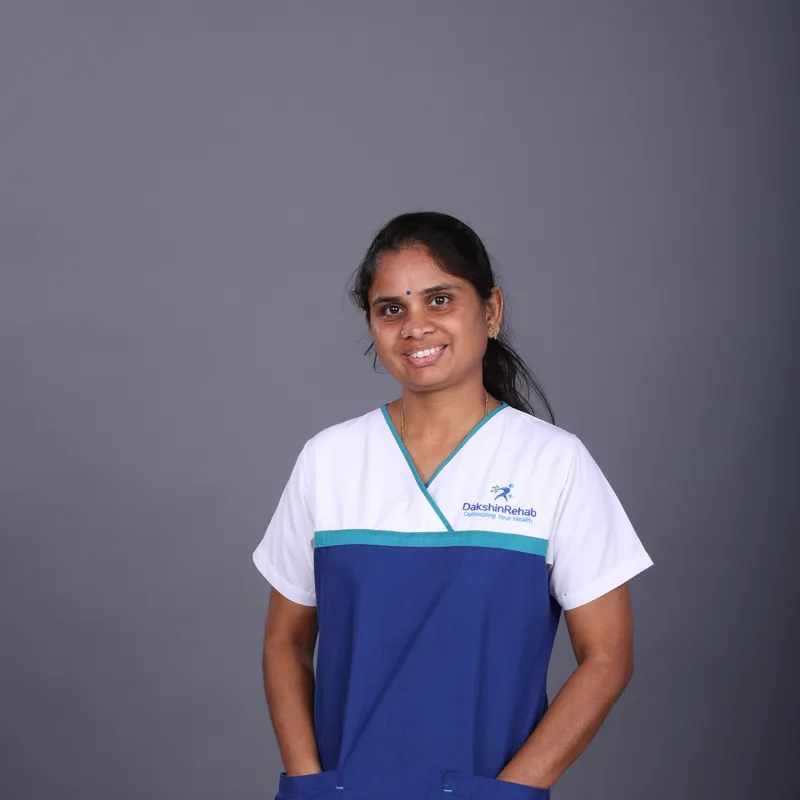
BPT, MPT, IAP Registered
Director, Human Movement Specialist, Physiotherapist
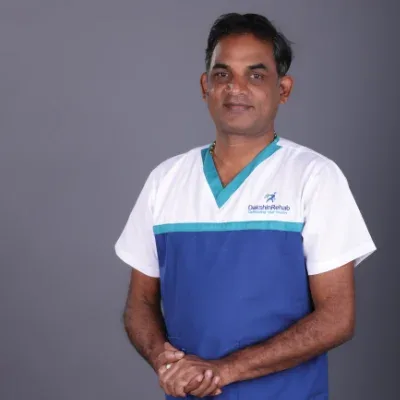
CPO
Consultant Rehabilitation Specialist, CPO | Founder, DakshinRehab
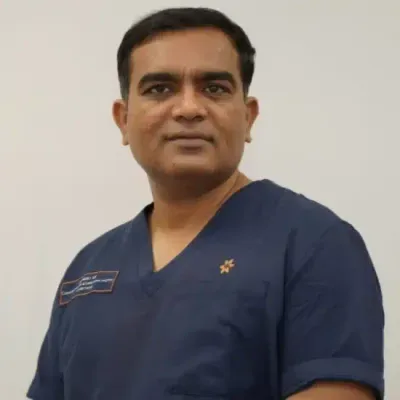
MS (General Surgery), DNB (Vascular Surgery)
Sr. Consultant Vascular & Endovascular Surgeon | Diabetic Foot & Wound Care
Learn more about this condition and treatment options from our expert team.
Common questions from patients in the critical first weeks and months after total knee replacement surgery.
Still have questions?
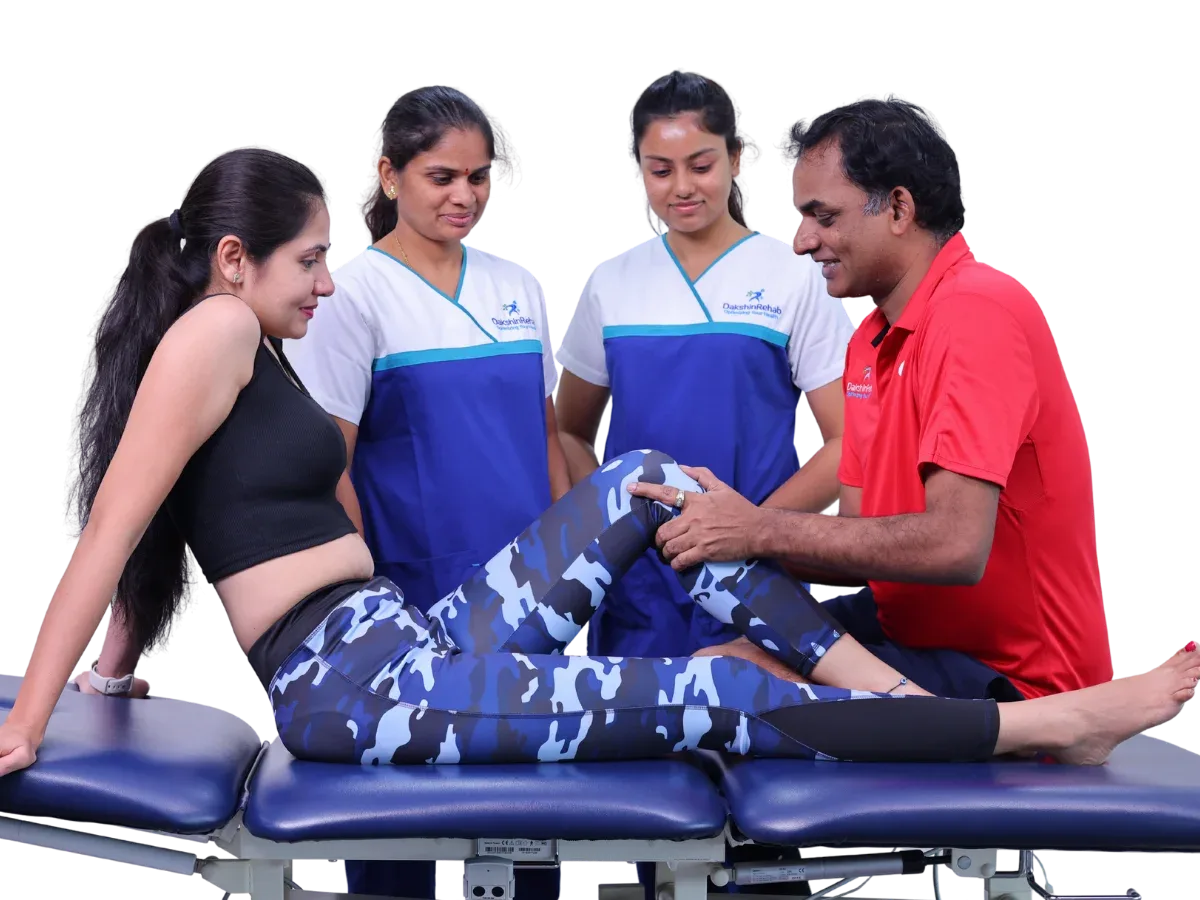
Your next step
We have treated approximately 20,000 patients. Your initial assessment is free only when you book an appointment online and attend your confirmed time slot. Treatment charges are explained before treatment begins.
Book an Appointment