If you have been through months of physiotherapy, gym sessions, yoga classes — and your lower back, neck or knee pain still keeps coming back — the issue is almost never "weak muscles" in the way people imagine. It is almost always a weak neuromuscular signal. Your deep stabilisers (multifidus, transversus abdominis, deep neck flexors, gluteus medius, rotator cuff) have quietly switched off after pain, injury, pregnancy or years of desk work. At DakshinRehab in Moosapet, Hyderabad, we use Levitas Redcord Neurac suspension therapy — the Norwegian gold-standard system for deep stabiliser reactivation — to wake those muscles up and keep pain from coming back.
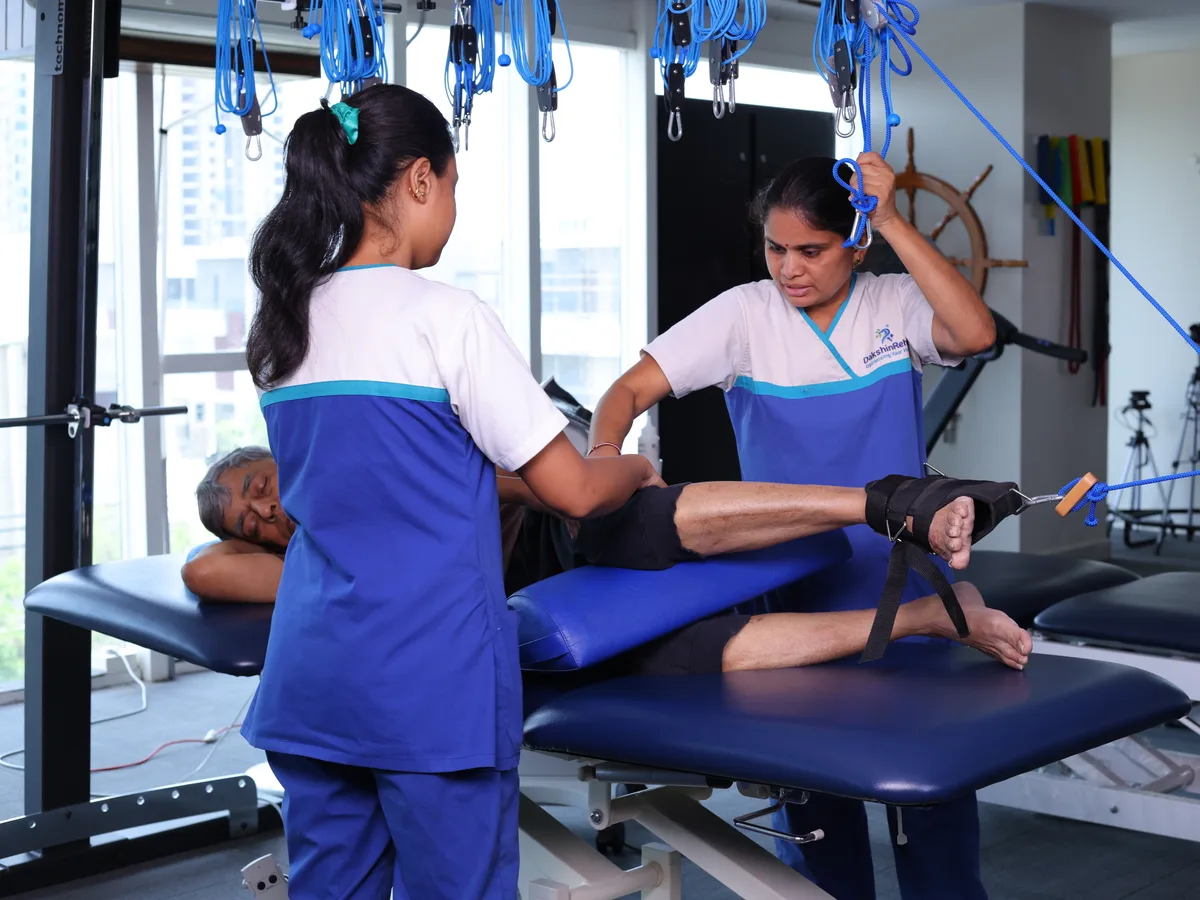
What is Levitas Neurac therapy? Levitas is the premium clinical platform of the Redcord suspension system from Norway, combining height-adjustable ropes, slings, bungee cords and Redcord Stimula vibration. Neurac stands for Neuromuscular Activation — an evidence-based treatment protocol that identifies weak links in your movement chain and reactivates them in pain-free, functional positions. DakshinRehab is among the very few physiotherapy clinics in Kukatpally, KPHB, Miyapur and wider Hyderabad to offer a dedicated Levitas Neurac suite with certified therapists.
Why your deep core still feels weak after hundreds of crunches. Crunches, planks, gym cables and Pilates mat work train the global muscles — rectus abdominis, external obliques, erector spinae. These are the power muscles. But your spine is actually stabilised segment-by-segment by tiny, deep, slow-twitch muscles — multifidus, transversus abdominis, diaphragm, pelvic floor. These muscles do not respond to effort. They respond to instability and surprise. The moment a surface becomes unstable, your nervous system has no choice but to recruit them — because the big muscles alone cannot hold the spine. This is exactly what Levitas Neurac exploits.
The "weak-link" problem we see every day at DakshinRehab Moosapet. After a disc bulge, ACL surgery, shoulder injury, C-section, prolonged desk work or even a single bad episode of back pain, the nervous system inhibits specific deep muscles — a protective reflex called arthrogenic muscle inhibition. Over months, the big muscles take over. You look strong. You can lift. You can run. But your spine, knee or shoulder has a silent weak link. Every squat, every run, every long meeting at Hitec City or KPHB loads that weak link — until pain comes back, usually years later, and no amount of strengthening seems to fix it.
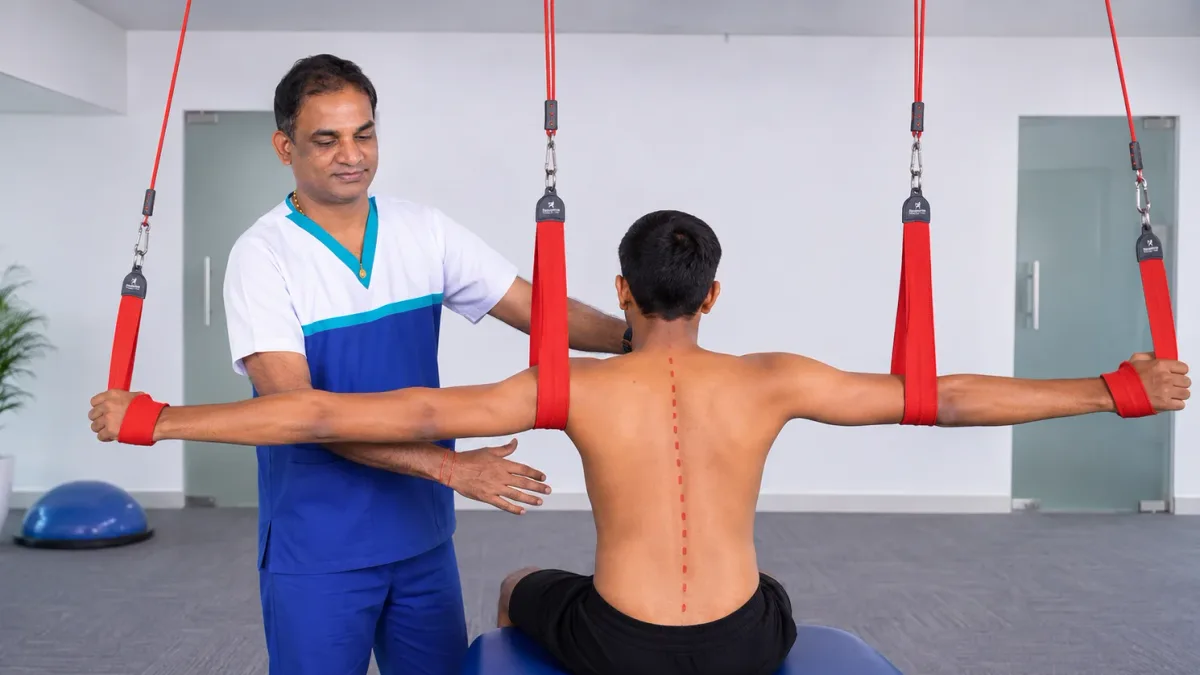
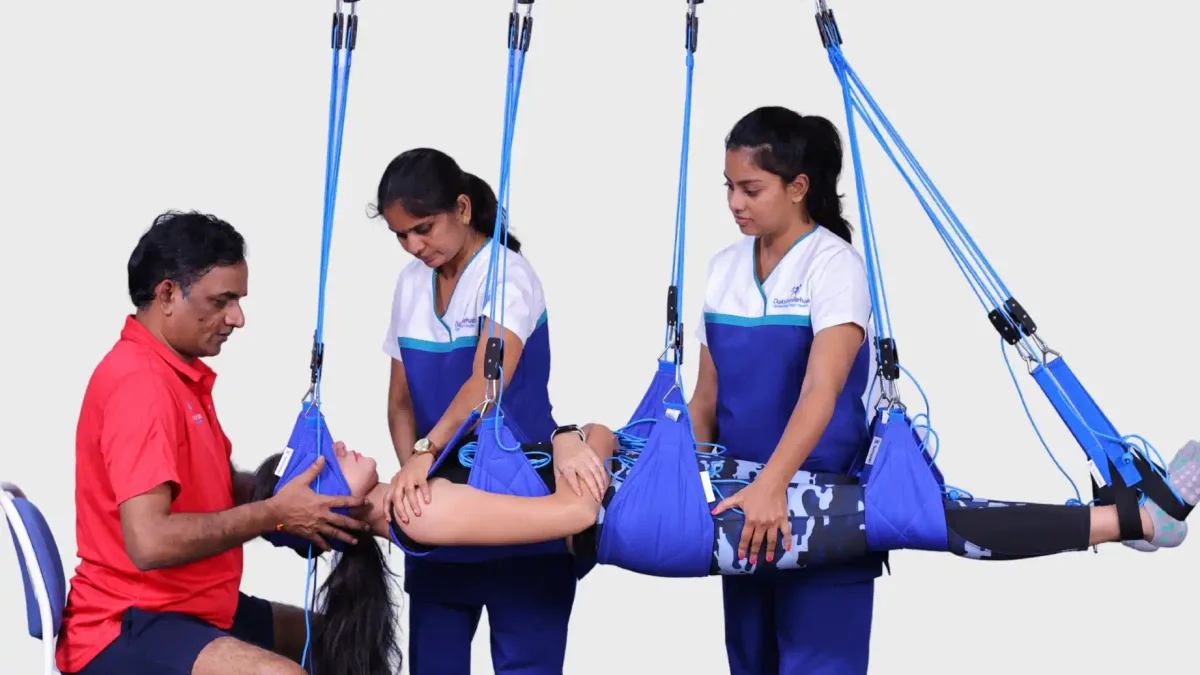
How Levitas Neurac finds and fixes the weak link. A Levitas Neurac session at DakshinRehab follows a strict three-step clinical logic. First, Testing — your therapist suspends specific body segments and looks for loss of control, shaking, compensations and pain. Within 15 minutes we can pinpoint whether your back pain is coming from a silent left multifidus, a dormant gluteus medius, or a lazy deep neck flexor. Second, Treatment — we hold you in suspension at a graded unloading level where you feel zero pain, then add Redcord Stimula vibration (40–50 Hz) to force the sleeping muscle to fire. Third, Retesting — the same test is repeated. Patients routinely report a drop in pain and visible return of control within the same session.
Conditions where Levitas Neurac makes the biggest difference. We prescribe Levitas Neurac most aggressively for: chronic low back pain that has failed conventional physio and gym rehab, post-disc-surgery or post-microdiscectomy rehabilitation, persistent neck pain and cervicogenic headaches in IT professionals from Madhapur and Gachibowli, post-natal deep core and pelvic floor reactivation (6 weeks onwards), rotator cuff and shoulder impingement cases where traditional strengthening flares the pain, ACL and meniscus post-surgical rehab where joint loading must stay controlled, hip and gluteal weakness in runners and cricketers, and neurological rehabilitation after stroke where motor relearning needs high-intensity stimulation without fall risk.
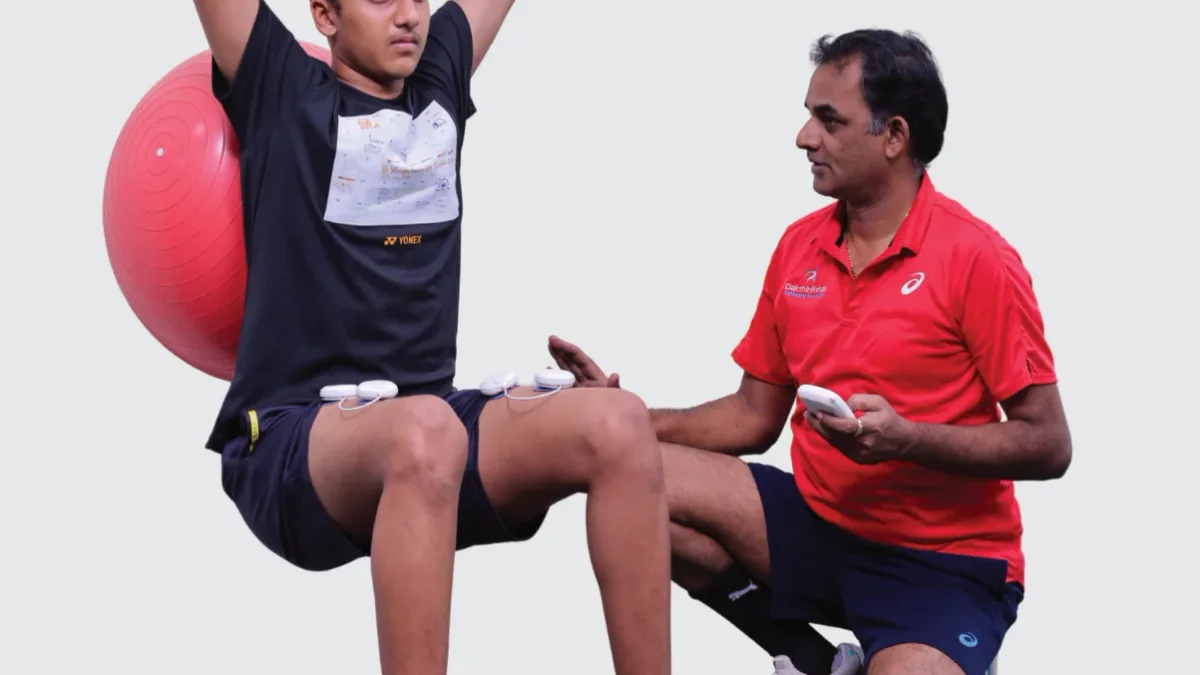
Why Levitas works when traditional physio and the gym do not. Four clinical reasons. Pain-free loading — suspension unloads the painful structure so the nervous system stops guarding. You can train hard without triggering pain, something impossible on a gym floor. Closed-chain instability — your hands or feet are suspended, forcing deep stabilisers to fire reflexively. This is neurologically impossible on a Swiss ball or BOSU. Vibration recruitment — Redcord Stimula vibration at 40–50 Hz directly activates Type I (slow-twitch stabiliser) fibres that voluntary effort cannot easily reach. High-level stimulation in functional positions — you train in supine, prone, side-lying, quadruped, sitting and standing positions that mirror your real life, not isolated machine angles.
A typical Levitas Neurac programme at DakshinRehab. Week 1–2: Weak-link testing, pain-free baseline activation, 3 sessions per week, 45 minutes each. Week 3–4: Graded unloading reduced, vibration parameters progressed, 2 sessions per week. Week 5–8: Functional chain integration — the deep muscles learn to fire in sequence with the big muscles during real movements like sit-to-stand, squat, reach, gait. Week 9–12: Sport-specific or work-specific loading — desk ergonomics for IT professionals, return-to-cricket for sports patients, return-to-running for recreational athletes. Maintenance: 1 session every 2–3 weeks for 3 months to lock in neuromuscular patterns.
What patients feel — and do not feel — during Levitas Neurac. You will not feel pain. That is the first rule of Neurac — if it hurts, the therapist changes the unloading level immediately. You will feel specific muscles working in ways you have never felt before. Post-natal women routinely say "I can feel my lower abdominals for the first time in two years." Post-disc patients say "My back feels held." IT professionals with chronic neck pain say "my head feels lighter on my neck." A mild, next-day muscle soreness in the deep muscles is normal and usually gone within 48 hours. Unlike gym soreness, it is localised, quiet and functional — not a barrier to your daily life.
Who Levitas Neurac is not suitable for. Honesty matters. We do not prescribe Levitas Neurac during acute spinal fractures, acute cauda equina, uncontrolled severe osteoporosis, uncontrolled cardiac conditions, recent orthopaedic surgery where the surgeon has restricted any loading, severe vertigo where suspension itself is unsafe, or first-trimester pregnancy (second and third trimester protocols exist with modifications). If any of these apply, the DakshinRehab team will route you to an alternative pathway — often Spinal Decompression Therapy, manual therapy, or medical co-management.
Levitas Neurac vs a regular Redcord system — does it matter? Yes, and here is why. The Redcord entry-level system gives you ropes and slings. The Levitas configuration adds motorised height adjustment (so graded unloading is precise to the millimetre), integrated Redcord Stimula vibration (so we hit Type I recruitment without effort), and a clinical rail system that lets your therapist keep both hands free to cue your movement rather than manage equipment. For deep stabiliser work — which is entirely about precision, not brute effort — these three upgrades are the difference between a good outcome and a transformative one. DakshinRehab runs the full Levitas platform in our Moosapet clinic.
How Levitas Neurac fits into the wider DakshinRehab protocol. Levitas is rarely used in isolation. For a chronic low back pain patient, we usually combine it with Spinal Decompression Therapy to create disc decompression, manual therapy to release the joint restrictions, Redcord Neurac to reactivate the stabilisers, and a home exercise programme to lock in the gains. For a post-stroke patient, we pair Levitas Neurac with robotic gait training and virtual rehabilitation — the suspension removes fall risk while the nervous system relearns movement. For a post-natal patient, we integrate pelvic floor biofeedback, diaphragm training and Levitas deep core activation in a single integrated protocol.
What the evidence actually says. Norwegian studies on Redcord Neurac for chronic low back pain show superior pain and function outcomes at 3, 6 and 12 months compared to general exercise. Shoulder impingement trials show faster scapular control restoration. Post-ACL surgery studies report earlier return-to-sport and reduced re-injury rates when suspension-based neuromuscular training is added. None of this is a miracle — it is biomechanics, applied with precision. At DakshinRehab, we track outcomes with validated tools (Oswestry Disability Index for back, DASH for shoulder, Lysholm for knee) so your progress is measurable, not anecdotal.
Cost and sessions at DakshinRehab Moosapet. Levitas Neurac is a specialist-only treatment — every session is delivered by a Neurac-trained physiotherapist, not a trainee or an assistant. Per-session pricing is higher than general physiotherapy but lower than most fitness-studio personal training, and dramatically lower than the long-term cost of repeated flare-ups, painkillers, imaging and lost workdays. Package options for 6, 12 and 24 sessions bring the per-session cost down. Most private health insurance plans in Hyderabad reimburse physiotherapy when medically prescribed — our front-desk team helps with pre-authorisation and claim documentation.
Is Levitas Neurac right for you? The simplest filter is this: if you have been strong in the gym but your pain still keeps coming back, your weak link is neuromuscular, not muscular — and Levitas is built exactly for that problem. If you have been told your disc is "fine" on MRI but you still have back pain, your weak link is neuromuscular. If you are a post-natal mother whose tummy still feels "disconnected" despite months of core work, your weak link is neuromuscular. If you are an IT professional in Madhapur or Financial District who gets neck pain every week no matter how ergonomic your chair, your weak link is neuromuscular. For all these patients, Levitas Neurac is not an add-on — it is the primary intervention.
How to get started. Every Levitas Neurac pathway at DakshinRehab starts with a 60-minute Movement Assessment in Moosapet. Our therapist takes a detailed history, performs a full Neurac weak-link test, and gives you an honest prognosis — including the sessions required, expected outcomes, and whether Levitas is genuinely the right fit or whether a different protocol would serve you better. If it is not the right fit, we will say so. If it is, you will leave that first session already feeling the difference. Book directly, WhatsApp us on +91 80192 99888, or call +91 80192 99888.
Final word. The patients who make the deepest, longest-lasting recoveries at DakshinRehab are rarely the ones with the most dramatic MRIs. They are the ones whose weak link got found and fixed. Levitas Neurac is the fastest, most precise tool we have for doing exactly that. If your pain has outlasted your patience, it is probably time to stop training harder and start training smarter. See Levitas Neurac in action at DakshinRehab Moosapet →