Advanced Neurological Rehabilitation in Hyderabad | DakshinRehab
At DakshinRehab Moosapet, we rebuild the brain–body connection after neurological injury and disease. From post-stroke hemiplegia to Parkinson's disease, spinal cord injury to traumatic brain injury — our specialist neuro physiotherapy team uses evidence-based protocols, advanced technology, and intensive task-specific training to maximise your recovery. Serving Kukatpally, KPHB, Gachibowli, Miyapur and Secunderabad.
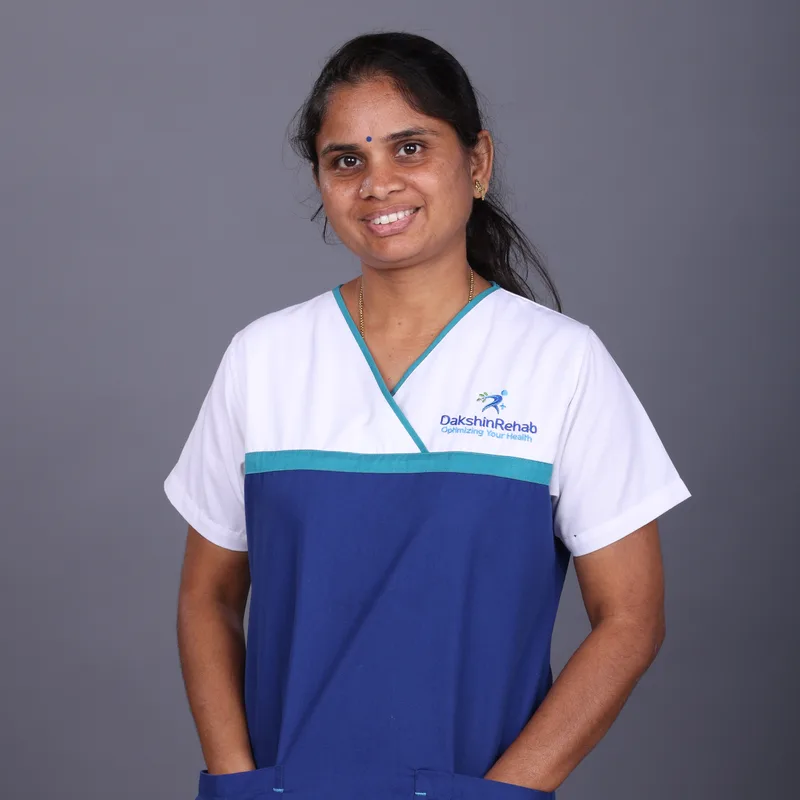
Specialist neuro physiotherapists — MPT certified with advanced neuro training
At DakshinRehab Moosapet, we rebuild the brain–body connection after neurological injury and disease. From post-stroke hemiplegia to Parkinson's disease, spinal cord injury to traumatic brain injury — our specialist neuro physiotherapy team uses evidence-based protocols, advanced technology, and intensive task-specific training to maximise your recovery. Serving Kukatpally, KPHB, Gachibowli, Miyapur and Secunderabad.
Specialist neuro physiotherapists — MPT certified with advanced neuro training
Assessment-led care explained through 4 clinically relevant steps.
Your Brain Can Rewire. Here Is the Science Behind Your Recovery. · Moosapet, Kukatpally, Hyderabad
Your Brain Can Rewire. Here Is the Science Behind Your Recovery.
Neuroplasticity — the brain's lifelong capacity to reorganise in response to practice — is the foundation of every neurological rehabilitation programme at DakshinRehab.
Stroke Rehabilitation & Traumatic Brain Injury
Post-stroke hemiplegia, upper limb weakness, drop foot, balance dysfunction, and TBI recovery.
Spinal Cord Injury Rehabilitation
From ASIA A complete injuries to ASIA D incomplete injuries — locomotor training, FES-assisted ambulation, wheelchair rehabilitation, and independence maximisation across all levels of spinal cord injury.
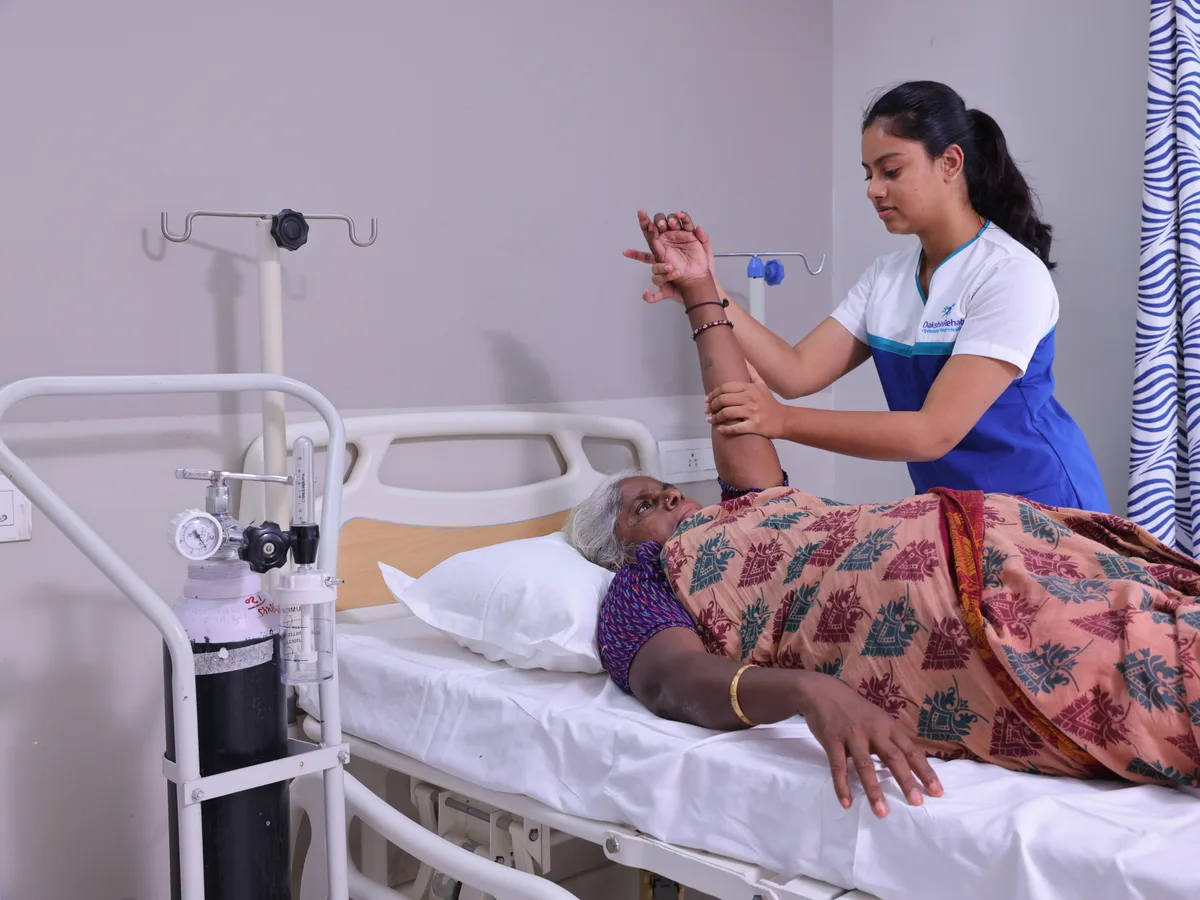
Post-stroke hemiplegia, upper limb weakness, drop foot, balance dysfunction, and TBI recovery. Evidence-based protocols include constraint-induced movement therapy (CIMT), FES, mirror therapy, and dual-task gait retraining.
Spinal Cord Injury
Spinal Cord Injury Rehabilitation
From ASIA A complete injuries to ASIA D incomplete injuries — locomotor training, FES-assisted ambulation, wheelchair rehabilitation, and independence maximisation across all levels of spinal cord injury.
Progressive Conditions
Parkinson's Disease & Multiple Sclerosis
LSVT BIG, rhythmic auditory cueing, dual-task training, and fall prevention for Parkinson's. Fatigue management, aquatic therapy, and resistance training for MS. Evidence-based, individualised programmes that slow functional decline.
Three Principles That Drive Every Neurological Recovery at DakshinRehab
Our neuro rehabilitation programmes are built on the same evidence base that underpins international guidelines — not generic exercises, but science-directed recovery.
Step01
Precision Assessment — Know Exactly Where You Are Starting
Every neuro rehabilitation programme at DakshinRehab begins with a comprehensive specialist assessment using validated outcome measures — Berg Balance Scale, Fugl-Meyer Assessment, Timed Up and Go, 3D Gait Analysis, Muscle Strength Testing, and Foot Pressure Analysis. We assess motor function, spasticity, balance, gait, sensory function, and where relevant, cognitive and functional independence. This is not a 15-minute intake. It is a clinical baseline that guides every decision in your programme.
High-Repetition, Task-Specific Training — The Science of Neuroplasticity
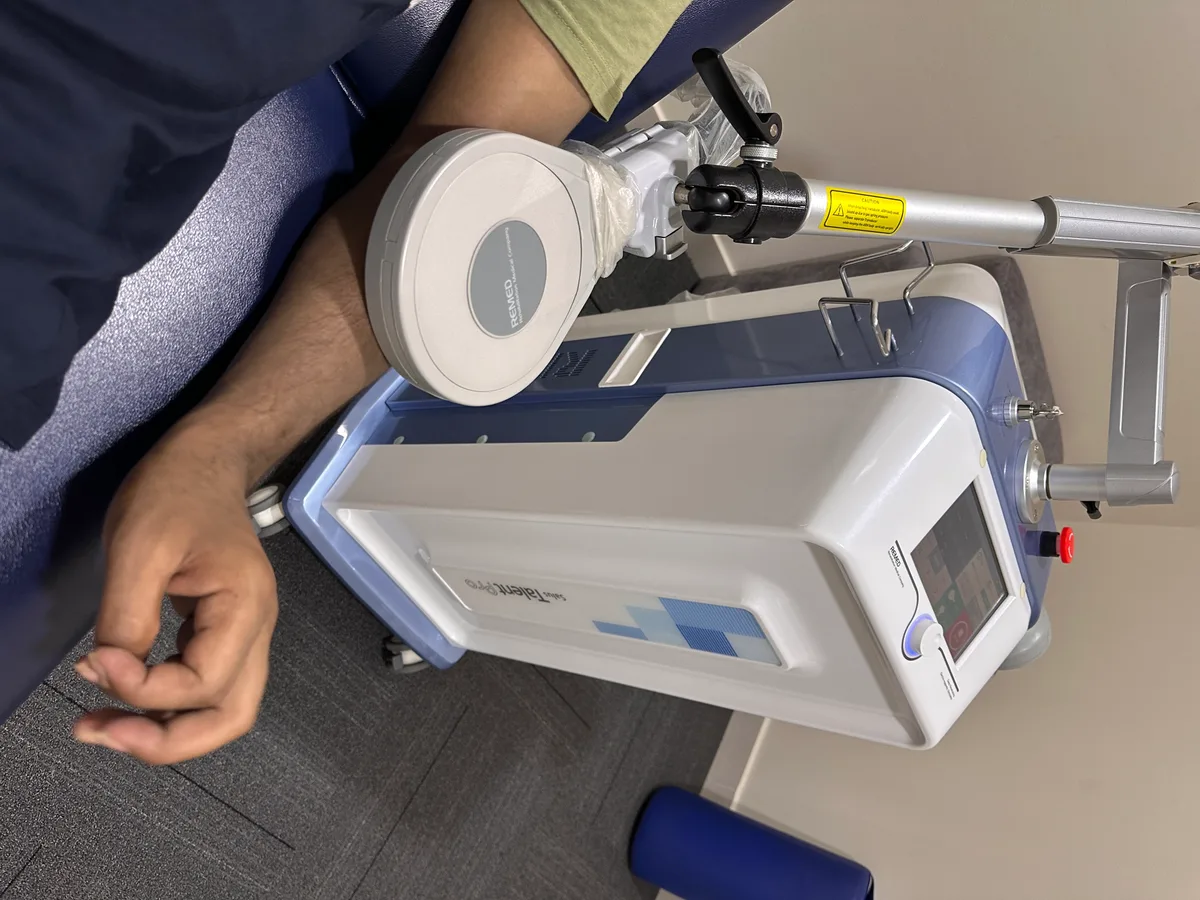
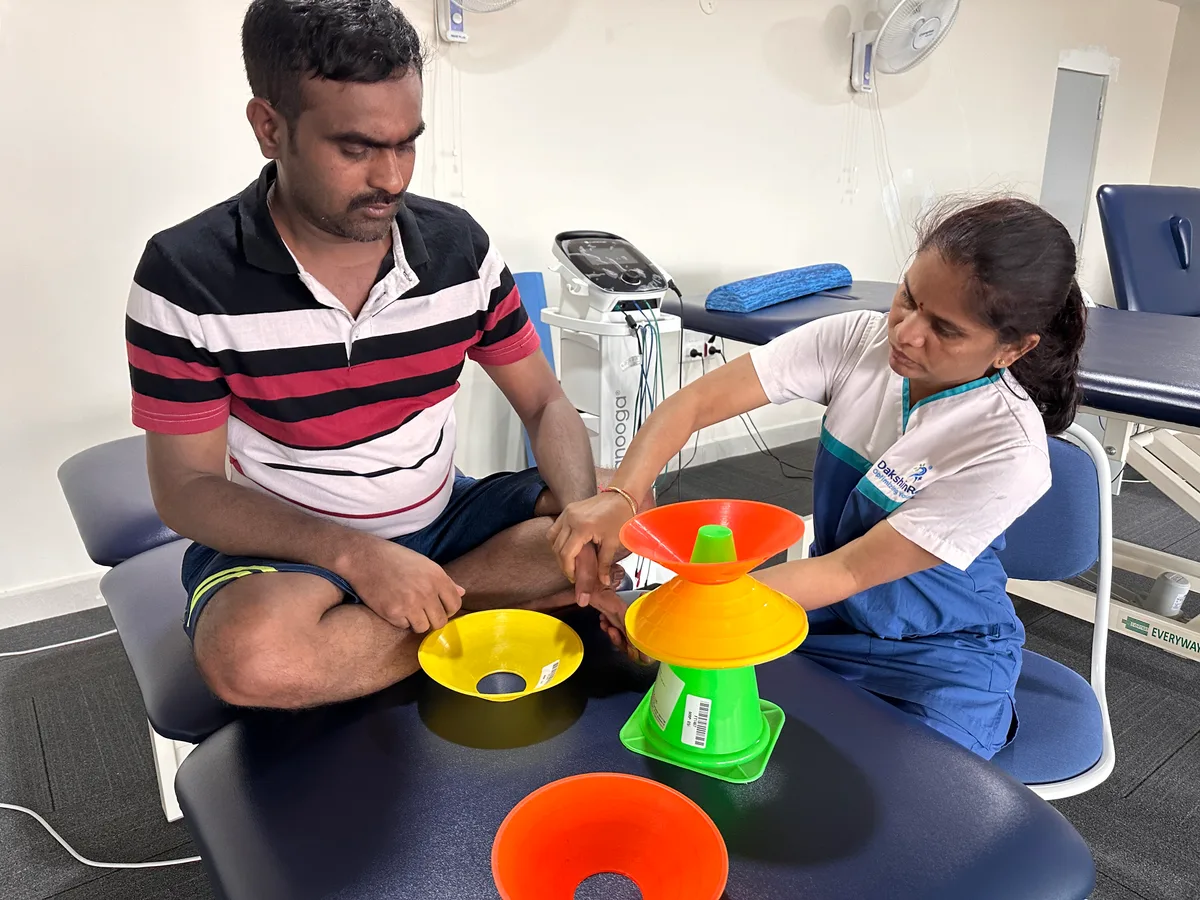
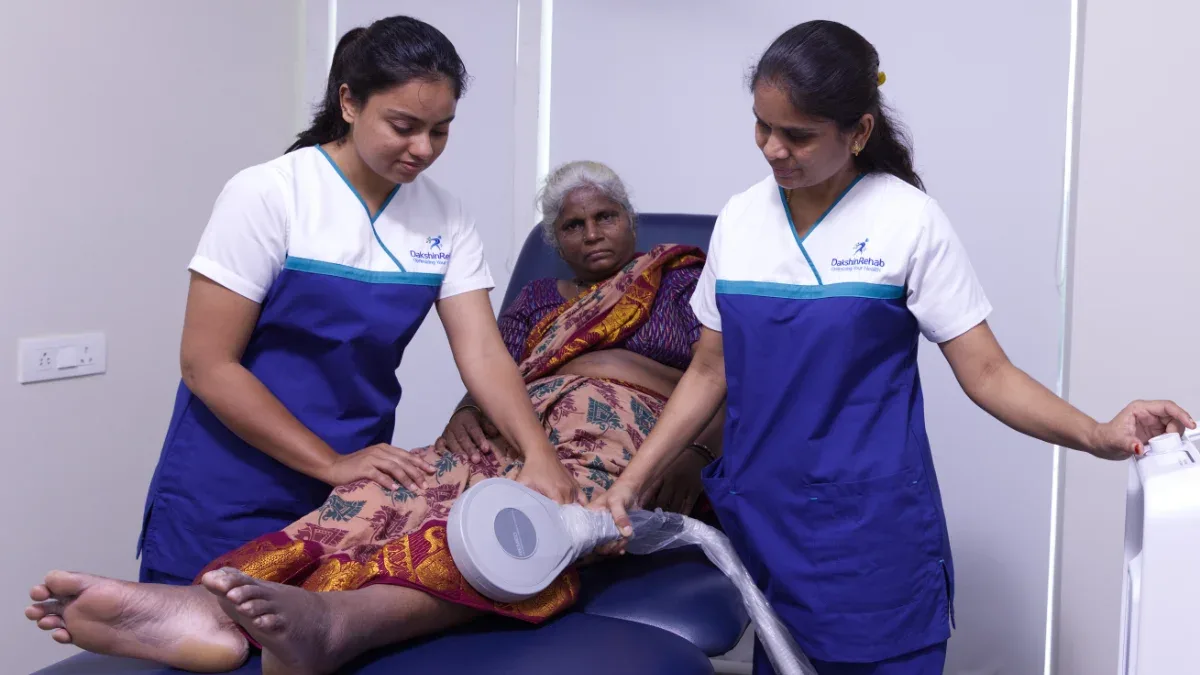
Neuroplasticity research is unambiguous: recovery requires 300–400 task-specific repetitions per session to drive meaningful cortical reorganisation. We use EMG Biofeedback, Chattanooga Wireless Pro FES (intent-driven NMES), Redcord Neurac suspension therapy, Cyclomotus Robotic Trainer, and Clinical Pilates to achieve the therapeutic intensity that general physiotherapy alone cannot deliver. Every repetition is purposeful. Every session is measurable.
Recovery is measured in milestones, not just sessions. We reassess formally at regular intervals using the same outcome measures from day one. When progress plateaus, we change the programme — not just wait. Every patient's family receives structured caregiver education: safe transfers, home exercise delivery, warning signs, and emotional support resources. At discharge, you receive a comprehensive maintenance plan and long-term outpatient follow-up pathway.
Technology That Serves Recovery — Not the Other Way Around
At DakshinRehab, every technology in our neuro rehabilitation programme is selected for a clinical reason — based on published evidence, applied at the right stage of recovery, and explained transparently to every patient and family. We don't use technology for its own sake. We use it because the research shows it works.
3D Gait & Posture Analysis
Objectively measures your walking pattern — where deviations occur, which muscles are underperforming, and what specific changes are needed. Strong evidence as a diagnostic and outcome-monitoring tool across stroke, Parkinson's, SCI, CP, and spinal disorders. Guides AFO prescription and tracks measurable progress.
Chattanooga Wireless Pro FES / NMES
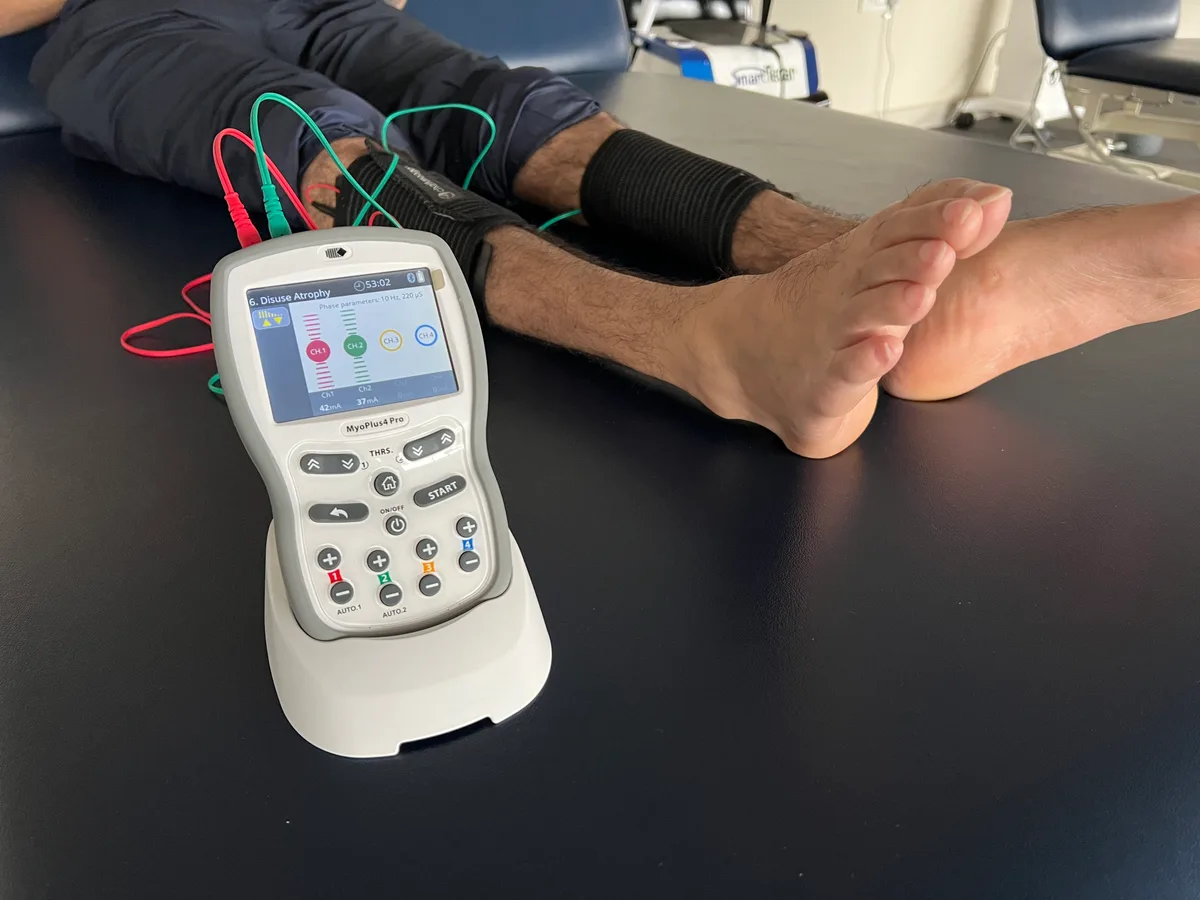
Intent-driven functional electrical stimulation activates muscles that cannot yet move voluntarily — for drop foot, shoulder subluxation, spasticity management, and upper limb re-education. EMG-controlled FES (where your voluntary effort triggers stimulation) produces the strongest neuroplastic carry-over effects. Strong evidence: systematic review of 18 studies (n=1,472) for drop foot.
DakshinRehab clinical pathway
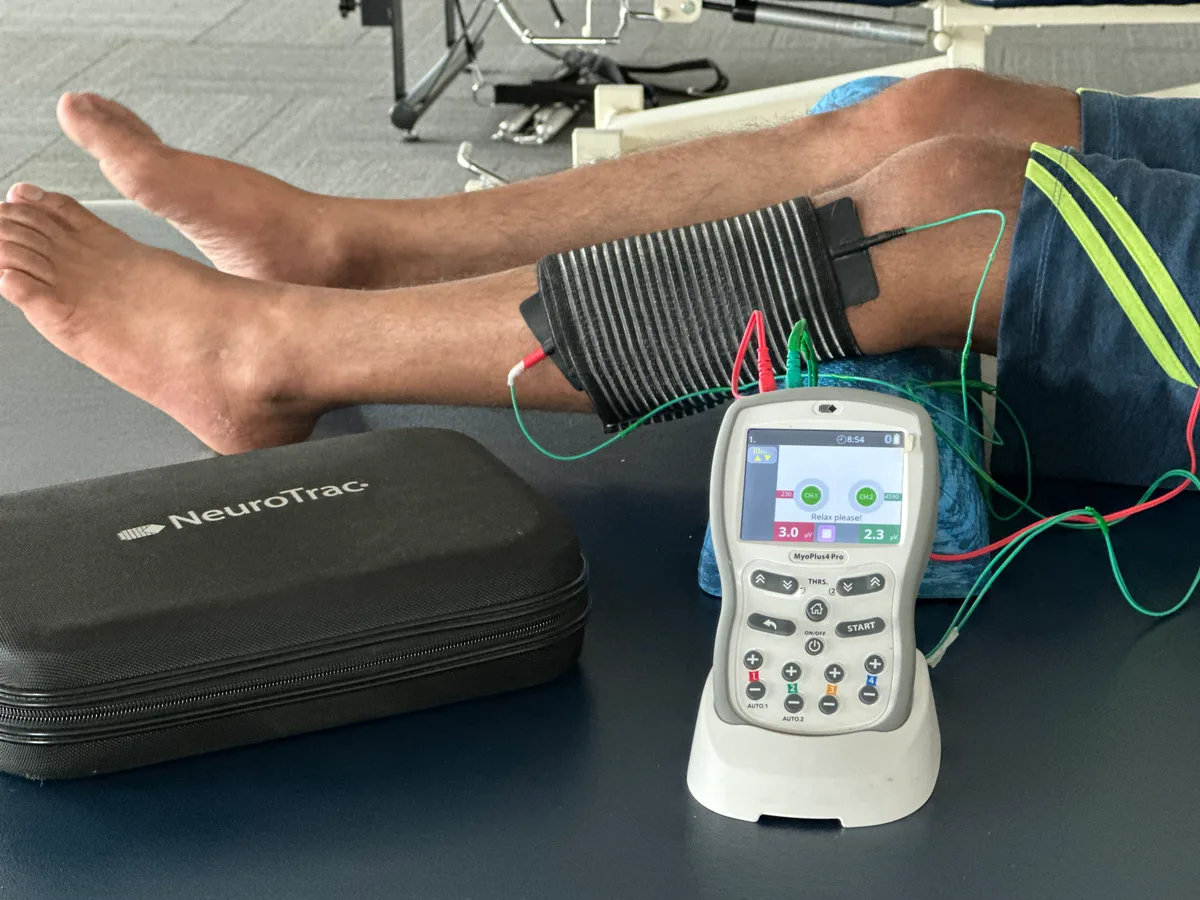
EMG Biofeedback (Myoplus)
Detects invisible muscle electrical signals and feeds them back in real time as visual or auditory information. Enables the nervous system to practise motor output below normal perception — error-based learning with augmented sensory feedback. Moderate evidence for short-term upper limb function gains in stroke rehabilitation.
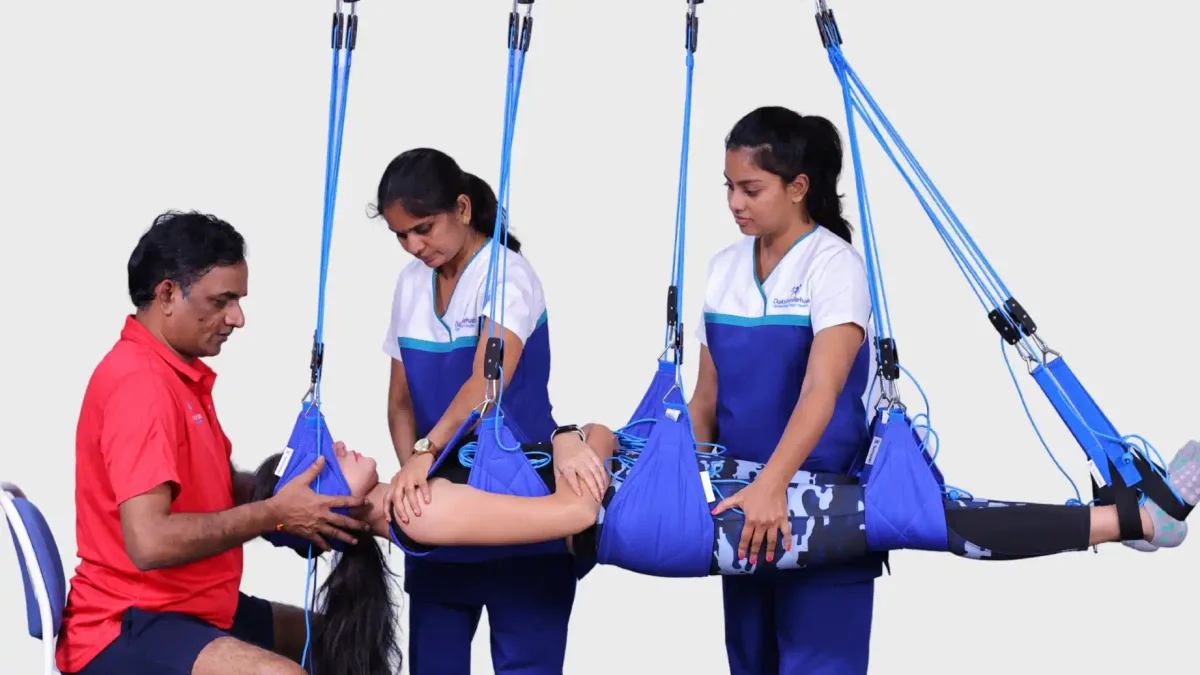
Redcord Levitas Neurac
Suspension-based neuromuscular re-education that reduces body weight and eliminates compensatory movement patterns. Retrains correct muscle firing and gait mechanics for stroke, Parkinson's, incomplete SCI, and ataxia. Moderate evidence for neuromuscular activation and balance improvement.
Clinical comparison
Why Neuro Rehabilitation Is Different from General Physiotherapy
General physiotherapy focuses on range of motion, strength, and pain relief. Neurological rehabilitation targets the brain–muscle connection itself. We use FES (functional electrical stimulation) to activate muscles the patient cannot yet recruit voluntarily, EMG biofeedback to make invisible muscle activity visible so the nervous system can learn from it, suspension therapy to retrain movement patterns without the interference of compensation, and robotic training to deliver the volume of repetition that drives cortical reorganisation. This is not physiotherapy applied to neurological patients. It is a fundamentally different clinical discipline.
Insight 1
Cyclomotus Robotic Trainer
Motor-assisted cycling for upper and lower limbs — delivers the high-repetition, task-specific practice that drives neuroplasticity in early recovery when voluntary movement is limited. Used for stroke, SCI, and TBI patients with limited active range of motion.
Insight 2
Pedobarography & Custom AFOs / KAFOs
Foot pressure analysis maps weight distribution during walking, identifying loading asymmetry and guiding evidence-based orthotic prescription. Custom ankle-foot orthoses (AFOs) and knee-ankle-foot orthoses (KAFOs) selected and fitted based on individual gait analysis — hinged for ambulatory patients, rigid where maximum support is needed.
“The brain rewires in response to what you practise. Our job is to give it the right signal, the right repetition, and the right environment to learn.”
Constraint-Induced Movement Therapy (CIMT) where indicated
Mirror therapy for upper limb recovery
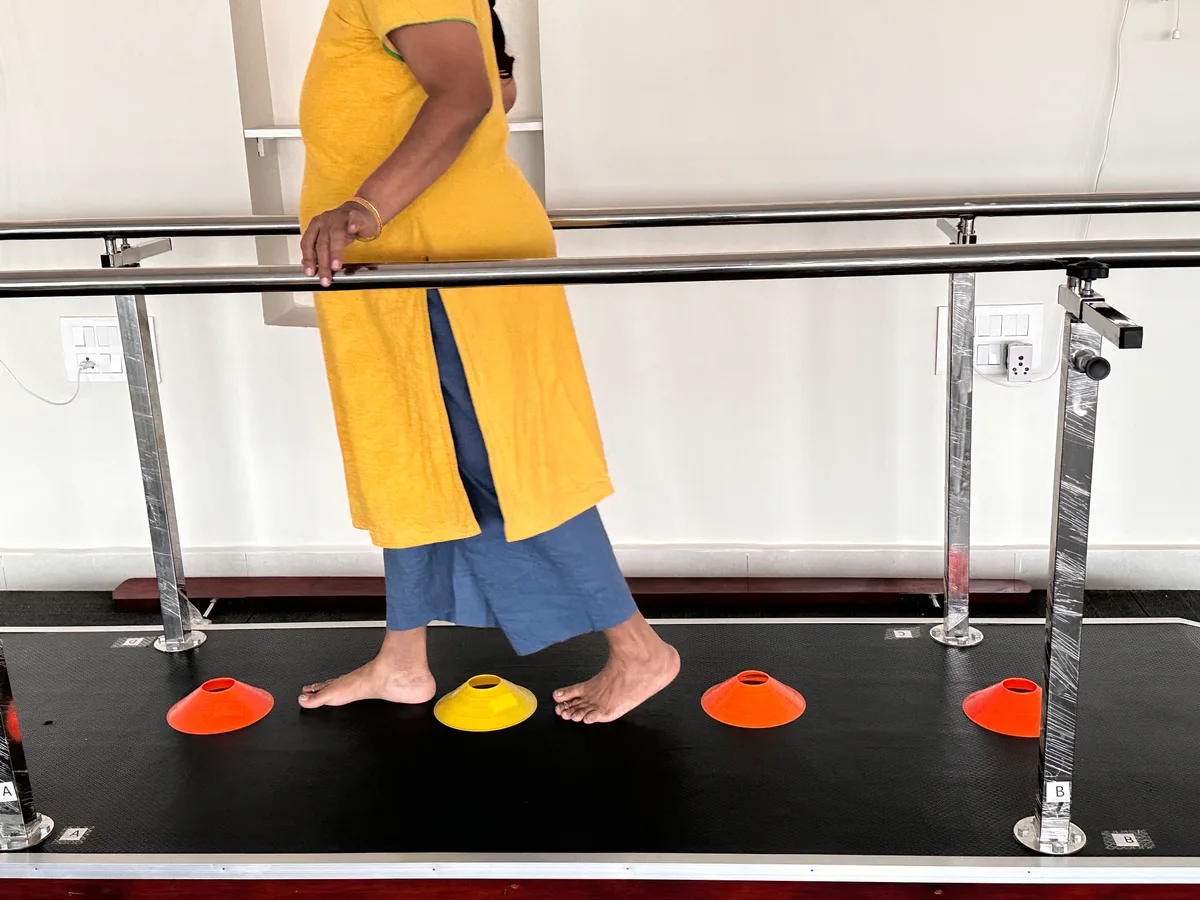
Dual-task balance and gait training
AFO / KAFO fitting based on pedobarography findings
ADL retraining — transfers, stairs, self-care
Spasticity management — shockwave or manual adjuncts where indicated
Walking pattern improves. Upper limb function recovers. Transfers become safer. The patient achieves measurable progress on validated outcome measures.
PHASE 5
Functional Strengthening & Community Preparation(Week 11–20)
Final outcome measure assessment — Fugl-Meyer, Berg, 6MWT, TUG
Functional independence in community settings. The patient is equipped for real-world participation, not just clinic performance.
PHASE 6
Discharge Planning, Home Programme & Long-Term Maintenance(Ongoing)
Comprehensive discharge assessment with outcome data
Personalised home exercise programme
Caregiver exercise delivery training
Assistive equipment and orthotic review
Outpatient follow-up schedule
Re-admission pathway if regression occurs
Long-term maintenance programme for progressive conditions
You leave DakshinRehab with a clear plan, a trained support system, and the knowledge to sustain and build on your gains long-term.
Neuroplasticity Has a Window — Early Rehabilitation Matters
When to Start Neurological Rehabilitation — Do Not Wait
The first weeks and months after a neurological event represent the period of highest neuroplasticity — when the brain is most receptive to reorganisation. Early, intensive, targeted rehabilitation during this window produces significantly better long-term outcomes. If you or a family member has any of the following presentations, contact DakshinRehab for an immediate assessment.
Recent Stroke (Within 3 Months) — The window of heightened neuroplasticity is now. Early FES, task-specific training, and gait retraining significantly improve 6-month and 12-month outcomes.
New Spinal Cord Injury — Prompt locomotor training prevents secondary complications, maximises remaining pathway function, and prevents muscle atrophy.
Recent Traumatic Brain Injury or Post-Neurosurgical Recovery — Early cognitive-physical integration and vestibular rehabilitation reduce recovery time and improve long-term independence.
Progressive Neurological Condition (Parkinson's, MS) — LSVT BIG and exercise-based interventions slow functional decline most effectively in the early-to-mid stages. Do not wait until function is severely impaired.
Worsening Spasticity or Increasing Falls — Unmanaged spasticity progressively limits mobility and increases injury risk. Worsening falls indicate the need for immediate balance rehabilitation.
Plateau in Recovery — A plateau does not mean recovery is finished. It means the programme needs to change. A new assessment and updated protocol can restart progress.
Child with Developmental Delay or Cerebral Palsy — Early intervention during the developmental window produces the greatest functional gains. Assessment at any age is appropriate.
Caregiver Injury Risk — If safe transfers are not possible, both patient and caregiver are at risk. Transfer training should begin immediately after discharge from hospital.
DakshinRehab provides specialist neurological rehabilitation across the full spectrum of neurological movement disorders — each with an evidence-based, individually designed programme.
“Every treatment page should help patients understand what is safe, what is urgent, and what care path fits their condition. Clinical review keeps that advice practical and trustworthy.”
Credentials: BPT, MPT, IAP Registered · 22+ Years Clinical Experience
The clinical content on this page is written and independently reviewed by qualified physiotherapists at DakshinRehab, Moosapet, Hyderabad.
Neurological Rehabilitation FAQs
Your Questions About Neuro Rehabilitation — Answered Honestly
Direct answers from the specialist neuro physiotherapy team at DakshinRehab Moosapet, Hyderabad.
When should neurological rehabilitation begin after a stroke or brain injury?
Neurological rehabilitation should begin as soon as you are medically stable — ideally within 24–48 hours for gentle positioning and low-intensity mobilisation, progressing to intensive task-specific training within the first 2–4 weeks. The first weeks after a neurological event represent the period of highest neuroplasticity, when the brain is most responsive to reorganisation. Delaying rehabilitation delays recovery. At DakshinRehab, we can begin assessment while you are still in hospital and plan your outpatient or inpatient programme for the day you are discharged.
Will my family member walk again after a stroke?
The honest answer is: it depends on the stroke severity, the brain area affected, and when intensive rehabilitation begins. Published data shows that approximately 80% of stroke survivors who cannot walk initially regain functional walking within 6 months with appropriate intensive rehabilitation. Patients with moderate hemiplegia who start early, intensive FES and gait retraining typically achieve independent or assisted walking within 8–16 weeks. We cannot promise a specific outcome — but we can promise an honest assessment, a programme designed to maximise your recovery, and a team that stays with you through every stage.
What is the difference between neuro rehabilitation and regular physiotherapy?
Regular physiotherapy addresses pain, range of motion, strength, and function in musculoskeletal conditions. Neurological rehabilitation addresses the brain–muscle connection itself — the neural pathways that control voluntary movement. We use functional electrical stimulation to activate muscles the patient cannot yet recruit, EMG biofeedback to make invisible muscle activity visible so the nervous system can learn from it, and task-specific high-repetition training to drive cortical reorganisation (neuroplasticity). The goal is not to strengthen existing movement — it is to rebuild movement that has been lost.
How long does neurological rehabilitation take?
Recovery timelines vary significantly by condition and severity. As a general guide: mild stroke with good voluntary movement — functional improvement in 4–8 weeks; moderate stroke with hemiplegia — meaningful milestones over 12–24 weeks; spinal cord injury (incomplete) — progress over 6–18 months; Parkinson's disease — ongoing maintenance with LSVT BIG intensive blocks every 6–12 months; cerebral palsy — lifelong programme with intensive blocks at key developmental stages. Every programme is individually assessed and the timeline discussed honestly at your first appointment.
What is FES therapy and how does it help neurological patients?
FES — Functional Electrical Stimulation — uses low-level electrical pulses to stimulate peripheral nerves, causing muscles to contract that the patient cannot yet activate voluntarily. At DakshinRehab we use the Chattanooga Wireless Pro NMES/FES system with EMG-triggered intent-driven stimulation — meaning the patient's own voluntary effort triggers the stimulation. This cognitive engagement with the movement is what produces neuroplastic carry-over effects — improvements that persist even when the stimulator is removed. Strong evidence: a systematic review of 18 studies (n=1,472) confirmed FES effectiveness for stroke-related drop foot.Learn About Our Technology
Can Parkinson's disease progression be slowed with physiotherapy?
Physiotherapy cannot stop Parkinson's disease progression, but high-quality evidence shows it can significantly slow functional decline and maintain independence longer. LSVT BIG — 16 intensive 1-hour sessions over 4 weeks — is among the highest-quality evidence interventions for Parkinson's motor disability (2024 Cochrane network meta-analysis). It produces significant improvements in balance, gait speed, and daily activities. Rhythmic auditory stimulation reduces freezing of gait. Dual-task training maintains cognitive-motor integration. Tai Chi reduces falls (NEJM-level evidence). Starting early in the disease course produces the greatest and most durable benefits.
What happens when a recovery plateau is reached?
A plateau — a period when progress appears to slow or stop — is not the end of recovery. It is a signal that the programme needs to change. At DakshinRehab, when we identify a plateau at formal reassessment, we modify the programme: increasing intensity, changing the task-specific activities, introducing a different technology combination, or adding a new modality such as constraint-induced movement therapy. Evidence shows that neuroplasticity continues throughout life — the capacity to recover is not exhausted. What sometimes needs to change is the approach.
Does DakshinRehab assist with insurance claims for neurological rehabilitation?
DakshinRehab provides comprehensive medical documentation, detailed clinical reports, and itemised invoices to support your insurance claim for neurological rehabilitation. While we are not an insurance provider and coverage depends entirely on your individual policy, our team assists with the paperwork and documentation your insurer requires. We recommend contacting your insurance provider directly to confirm what neuro rehabilitation services are covered under your policy. Our front desk team is happy to guide you through what documentation we can provide.Contact Our Team
What should families and caregivers expect during rehabilitation?
Caregivers are an essential part of the neurological rehabilitation team at DakshinRehab — not passive observers. You will receive structured training in safe patient transfers, home exercise delivery, positioning, and what warning signs require immediate clinical review. We understand that caring for a family member after a neurological event is emotionally and physically demanding. Caregiver education sessions are built into every neurological rehabilitation programme, and our team remains accessible between sessions for questions and concerns. Evidence consistently shows that caregiver involvement improves patient outcomes.
How do I refer my patient to DakshinRehab for neurological rehabilitation?
Neurologist and physician referrals are welcome. Call +91 80192 99888 or WhatsApp our clinical team — we respond within 4 hours on working days. We accept referrals for outpatient and inpatient neurological rehabilitation and can arrange a joint case discussion for complex presentations. We provide formal discharge summaries and outcome reports back to referring clinicians.Refer a Patient
How much does physiotherapy cost at DakshinRehab?
Sessions at DakshinRehab Moosapet start from ₹600, which also covers your initial consultation, and range up to ₹2,500 per session depending on your condition and the technologies your plan needs. Most patients opt for a treatment package, which brings the per-session cost down — you get an exact quote after your first assessment, with no hidden charges.Get your exact quote on WhatsApp
Do I need a doctor's referral to start physiotherapy at DakshinRehab?
No referral is needed — you can book directly with our physiotherapists at DakshinRehab Moosapet. If you already have scans, reports or a prescription, bring them along so we can factor them into your plan, but they are not required to start treatment.Book your assessment directly
We have treated approximately 20,000 patients. Your initial assessment is free only when you book an appointment online and attend your confirmed time slot. Treatment charges are explained before treatment begins.