Neck pain has become the defining musculoskeletal condition of the modern workforce. Across Hyderabad's IT corridors — from Hitec City and Gachibowli to Madhapur and Kondapur — professionals spend 8 to 10 hours daily with their heads tilted forward over screens, unknowingly placing up to 27 kilograms of force on their cervical spine. The result is an epidemic of cervical spondylosis, disc herniation and chronic neck pain that painkillers and soft collars cannot fix. At DakshinRehab in Moosapet, Hyderabad, the overwhelming majority of our neck pain patients avoid cervical surgery through a targeted programme of cervical decompression, 3-Tesla EMTT nerve healing, deep cervical stabiliser retraining with Redcord Neurac, and corrective posture work.
What cervical spine problems actually look like on a spectrum
At the mild end is tech neck or forward head posture — the chronic muscular strain caused by holding your head in front of your shoulders for prolonged periods. Every centimetre the head shifts forward adds roughly 4.5 kg of effective cervical load. Over months and years this overload causes muscle fatigue, tension headaches and upper back pain. Next is cervical spondylosis — age-related degenerative changes in the cervical discs and facet joints. Once considered a condition of patients over 50, we now see it routinely in professionals in their 30s and 40s due to postural stress. Cervical disc herniation is the most serious non-emergency presentation — a damaged disc compresses a nerve root, causing radiating pain, tingling or weakness into the arm and hand. Cervical stenosis, where the spinal canal itself narrows, can affect the spinal cord and produce balance problems, hand clumsiness and leg weakness — this subset needs urgent surgical review.
Why neck collars and painkillers actively make recovery worse
Two of the most commonly prescribed interventions for neck pain actually hinder long-term recovery. Cervical collars restrict movement, which feels protective initially but weakens the deep cervical stabilisers (longus colli, longus capitis) that support the spine. Research shows that even short-term collar use causes measurable cervical muscle atrophy. When the collar comes off, the neck is weaker than before — more vulnerable, not less. Painkillers — NSAIDs, muscle relaxants, opioids — change how the brain perceives pain. They do nothing to retract a herniated disc, decompress a pinched nerve or strengthen a weakened cervical spine. They mask the symptom while the underlying structural problem continues to progress. The DakshinRehab approach is fundamentally different — we address the mechanical cause using targeted technology and progressive rehabilitation.
How we assess neck pain properly at DakshinRehab Moosapet
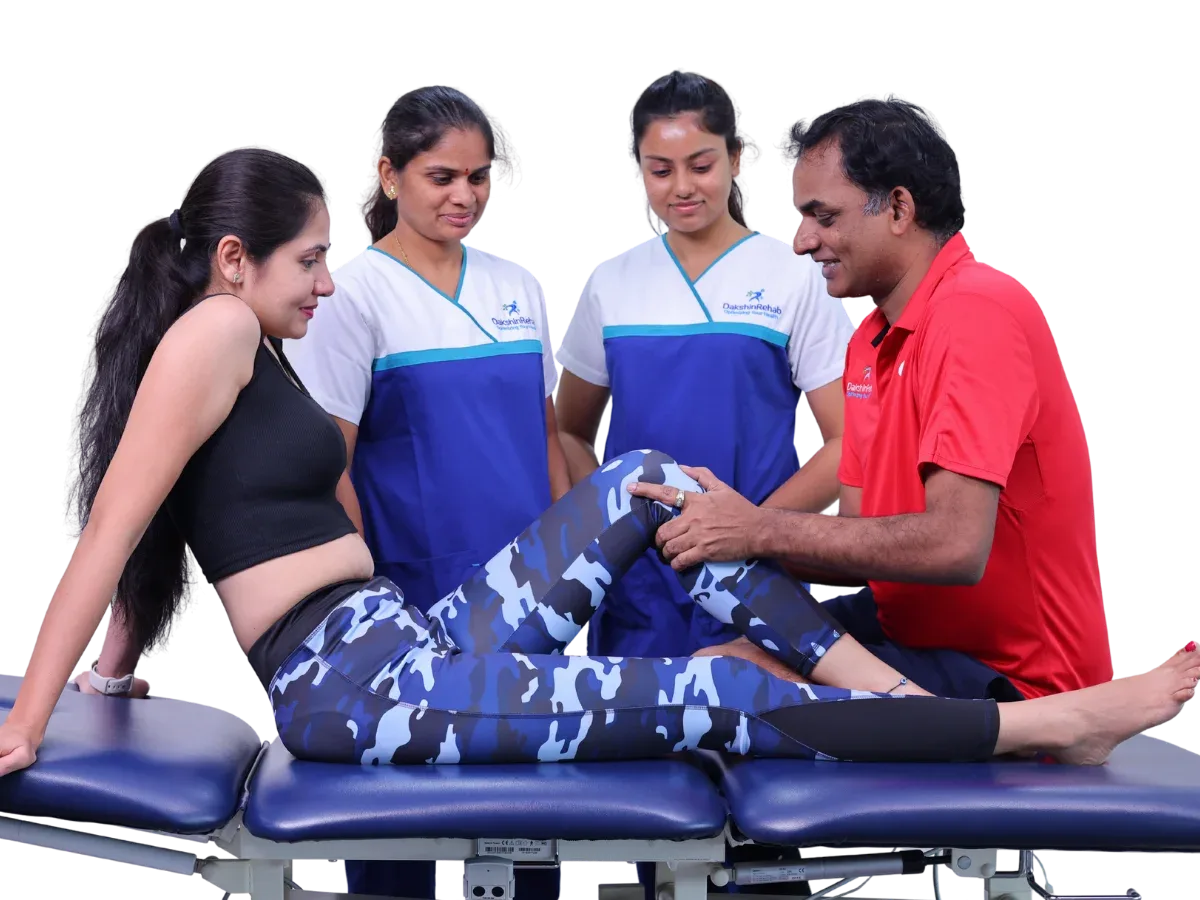
A first visit runs 60 to 90 minutes and is unlike any brief orthopaedic consultation. We take a detailed pain history (location, radiation to arm/hand, quality, aggravating postures, sleep position, stress and screen time). We perform a full cervical clinical examination — active and passive range of motion, segmental tenderness, neurological screening for C5 through T1 (dermatomal sensation, myotomal strength, deep tendon reflexes), special tests for radiculopathy (Spurling's test, upper limb tension tests) and myelopathy screening (Hoffman's, tandem gait) where indicated. We run 3D posture analysis to measure forward head position, cervical lordosis, thoracic kyphosis and pelvic tilt — because neck posture is determined by the entire spinal chain, not just the neck. Where imaging is needed but missing, we coordinate same-week MRI through our partner radiology centres.
How cervical decompression works as our first-line tool for disc and radiculopathy patients
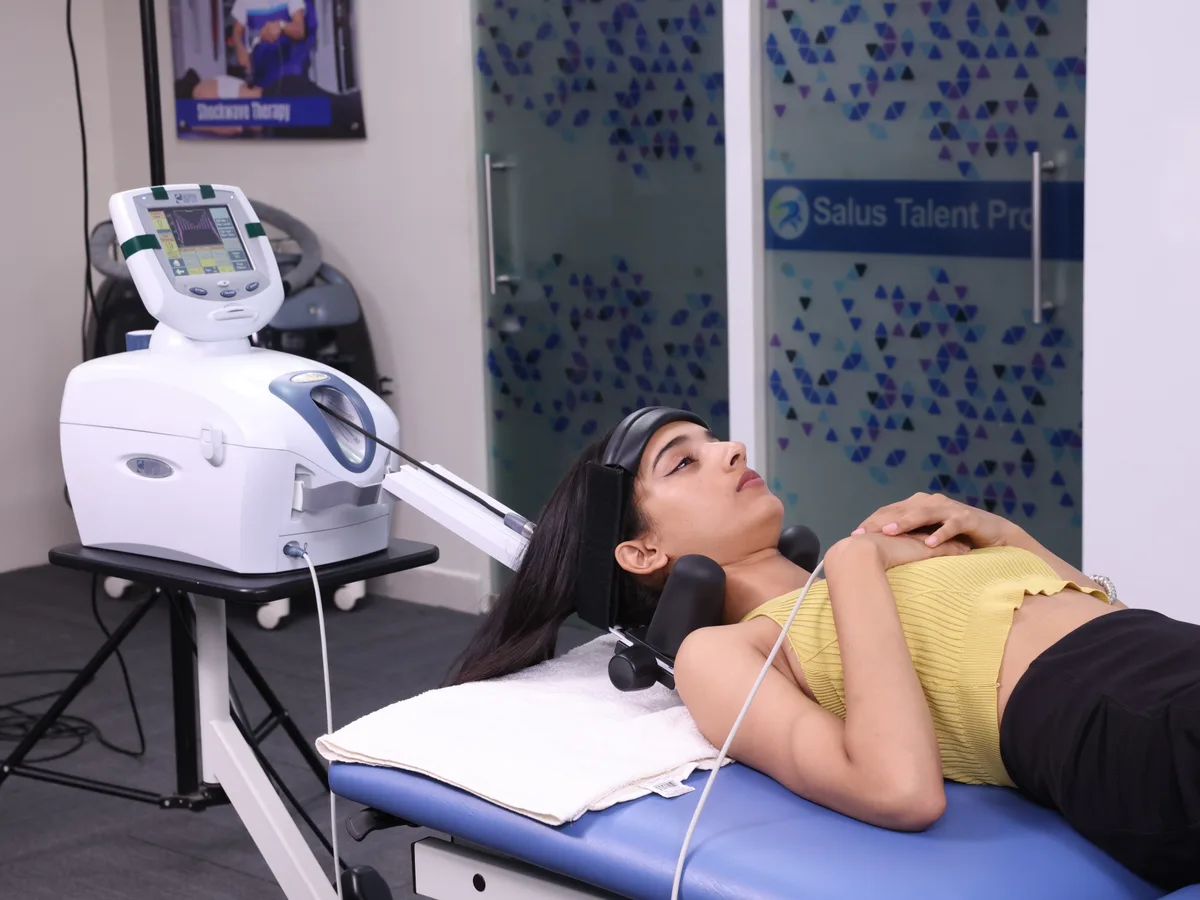
For cervical disc herniation and spondylosis with nerve compression, the foundation of treatment is Chattanooga DTS cervical decompression. The system's cervical mode applies precisely calibrated, oscillating distraction forces to the specific cervical segment identified on MRI — typically C4-C5, C5-C6 or C6-C7. The negative intradiscal pressure created during treatment encourages herniated disc material to retract and draws healing nutrients into the dehydrated disc — an area that does not normally receive blood supply in adults. Unlike simple manual cervical traction, DTS uses computer-controlled pressure waveforms that prevent the protective muscle spasm which renders traction ineffective. Most patients feel measurable relief by session 4 to 6; a typical cervical course is 20 sessions over 4 to 6 weeks.
How 3-Tesla EMTT accelerates cervical nerve healing
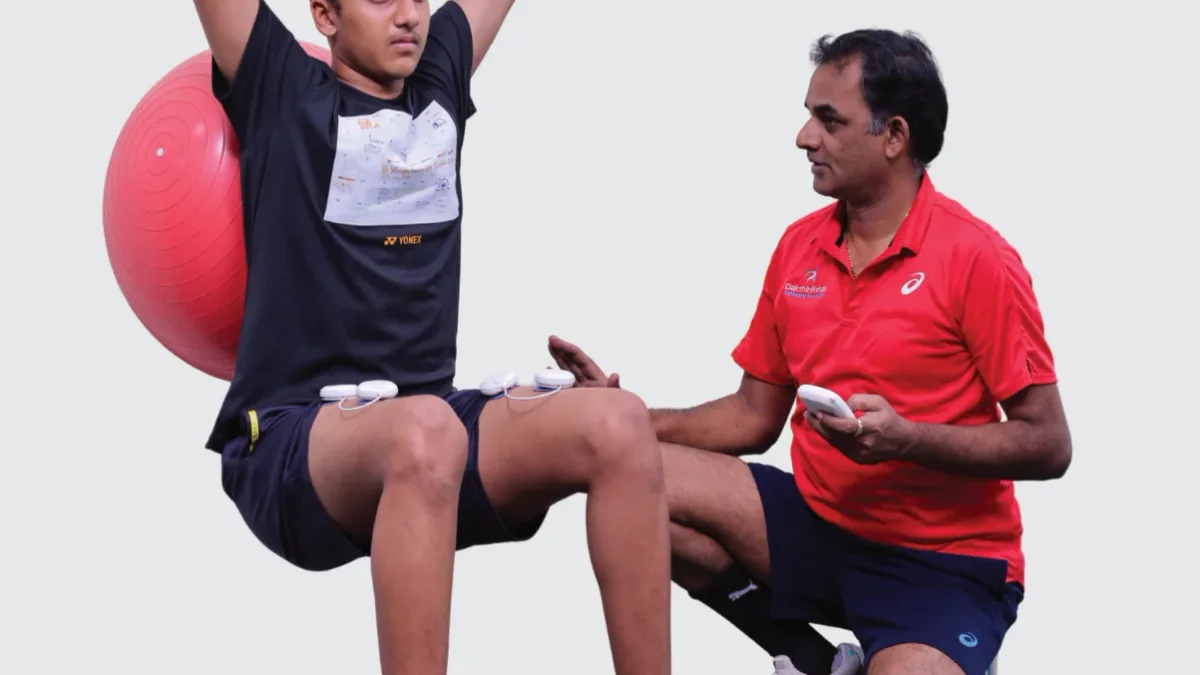
Compressed cervical nerves develop inflammation and hypersensitisation that can persist even after mechanical compression is reduced. 3-Tesla EMTT delivers high-intensity electromagnetic pulses deep into the cervical region — reaching nerve structures that surface-level ultrasound and TENS cannot access. The electromagnetic field activates the Gate Control pain mechanism, triggers endogenous opioid release and promotes Schwann-cell activity that supports natural nerve regeneration. For patients with arm pain, tingling or numbness from cervical radiculopathy, EMTT often produces noticeable improvement within the first 3 to 4 sessions — sometimes in the same session, with reduced arm symptoms lasting hours immediately after treatment. It is given concurrently with decompression in a single clinical visit.
How TECAR therapy and posture analysis complete the early phase
TECAR radiofrequency therapy provides deep endogenous heating to the cervical musculature and facet joints, reducing chronic muscle tension, improving blood flow and accelerating tissue healing. This is particularly effective for cervical spondylosis and facet-mediated neck pain that is driving tension-type headaches and upper-back referred pain. Our 3D posture analysis provides objective baseline measurements — cervical lordosis angle, forward head distance in centimetres, thoracic kyphosis, scapular protraction — and is repeated every 4 weeks so both therapist and patient can see structural change, not just feel it. For IT professionals who respond to visual, quantified evidence, this is often the most motivating part of the programme.
Why deep cervical flexor retraining is the phase that changes long-term outcomes
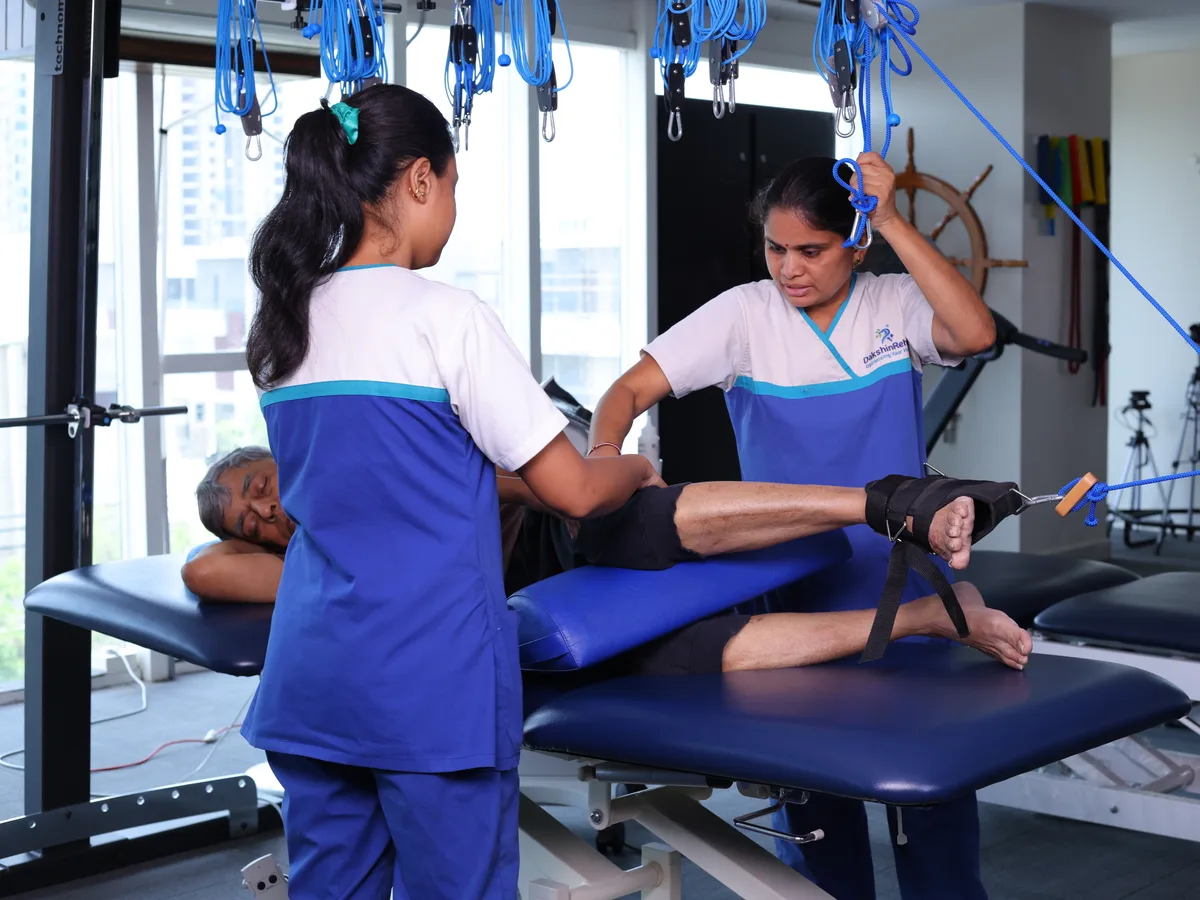
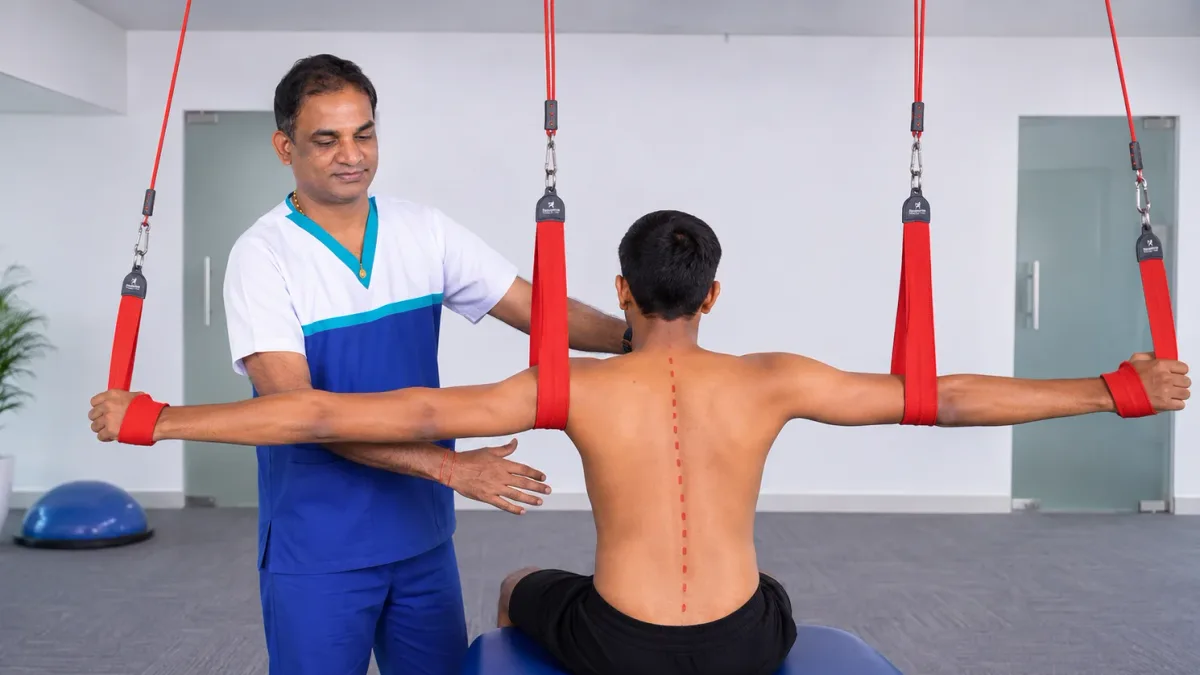
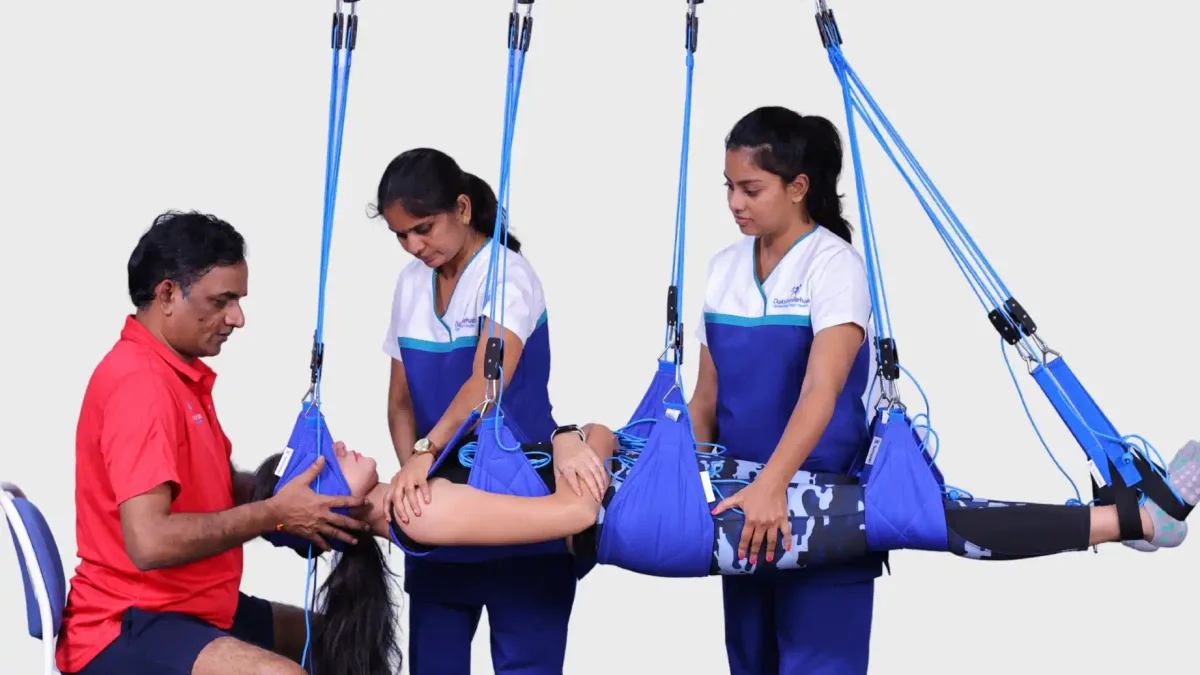
The most important phase of neck pain rehabilitation is one most clinics never reach — retraining the deep cervical flexors. These small, deep muscles (longus colli, longus capitis) are the primary segmental stabilisers of the cervical spine. Research consistently shows they become inhibited and atrophied in patients with neck pain and do not automatically reactivate when pain resolves. They require specific, low-load, precision re-education. At DakshinRehab we use pressure-biofeedback-guided deep cervical flexor protocols combined with Redcord Neurac for scapular and upper-thoracic stability. Stimula vibration during Neurac closed-chain positions reactivates the deep cervical chain reflexively — a level of recruitment that voluntary effort alone cannot match.
What a typical neck pain recovery timeline looks like at DakshinRehab
Postural neck pain and tech neck typically respond within 4 to 6 weeks of targeted rehabilitation, with significant improvement often felt within the first 2 weeks. Cervical spondylosis with chronic facet pain requires 6 to 10 weeks for full recovery, depending on severity and duration. Cervical disc herniation with radiculopathy follows a timeline of 8 to 12 weeks, with pain relief typically beginning within the first 3 weeks of decompression therapy. Cervical stenosis responds more slowly and sometimes requires ongoing maintenance. We track progress objectively using numeric pain scores, range-of-motion measurements, grip and pinch strength testing (for patients with arm involvement) and repeat 3D posture analysis at regular intervals — so you can see structural improvement, not just trust that you feel better.
Who is particularly at risk — IT professionals and students in Hyderabad
If you work in Hyderabad's technology sector — Hitec City, Gachibowli, Madhapur, Financial District, Kondapur — your cervical spine is under daily occupational stress that 20 years ago would have been considered pathological. The same is true for medical students, chartered accountants, architects and anyone working with laptops on their lap for hours. We have developed specific workplace ergonomic protocols and micro-break exercise programmes that complement in-clinic treatment — structured movement breaks every 30 to 45 minutes, monitor height at eye level, external keyboard and mouse, and specific suboccipital-release and chin-tuck drills scheduled into the working day. Prevention is cheaper than cure, and for tech professionals a proactive neck health programme can prevent the progression from tension to disc degeneration.
Evidence and expected outcomes from the published literature
Cervical physiotherapy literature consistently supports multimodal care — manual therapy plus exercise plus patient education — as superior to passive modalities alone. Clinical practice guidelines from the Academy of Orthopaedic Physical Therapy, NICE and the American College of Physicians recommend manipulation, mobilisation and targeted exercise as first-line treatment for mechanical neck pain. Spinal decompression trials document symptom resolution in cervical disc herniation with radiculopathy. EMTT has European trials supporting its use in musculoskeletal and neuropathic pain. Deep cervical flexor retraining (Jull et al.) has high-quality trials showing reduced pain and disability at 6 and 12 months. DakshinRehab tracks every patient against these validated benchmarks.
When does neck pain actually need urgent medical attention — the red flags
While most neck pain is mechanical and benign, certain symptoms demand immediate evaluation. Progressive arm or hand weakness, not just pain, indicates worsening nerve compression. Balance problems, hand clumsiness (dropping objects, difficulty with buttons) and leg weakness suggest cervical myelopathy — a surgical condition. Severe neck pain after major trauma needs fracture screening. Unexplained weight loss, fever or night pain unrelieved by rest may indicate infection or tumour. Sudden severe neck pain with headache, vision change or altered consciousness can be vascular and needs emergency workup. DakshinRehab screens for all these red flags at every assessment and refers promptly to partner neurosurgical and spine centres across Hyderabad when indicated.
How we integrate neck care with the wider DakshinRehab spine pathway
Neck pain rarely exists in isolation. We commonly co-manage it with chronic low back pain (the postural drivers are shared), cervical spondylosis, tension-type headache, temporomandibular joint dysfunction, upper-limb tendinopathies (a stiff neck drives abnormal scapular mechanics and downstream shoulder problems) and even dizziness of cervicogenic origin. For IT professionals, a full posture correction programme is included. For Gulf patients travelling for advanced care, we schedule 2 to 3 week intensive blocks with daily sessions so progress fits the travel window. For pregnant and post-natal patients, we modify protocols to exclude contraindicated cervical techniques.
Conclusion — fix the load, not the symptom, at DakshinRehab Moosapet
Neck pain is not an inevitable consequence of modern life or ageing. Whether you are dealing with the chronic tension of tech neck, the degenerative changes of cervical spondylosis or the radiating arm pain of disc herniation, non-surgical treatment can resolve the root cause — not just mask the symptom. At DakshinRehab in Moosapet, Hyderabad, we combine cervical decompression, 3-Tesla EMTT, TECAR therapy, Redcord Neurac and deep cervical flexor retraining to deliver lasting results. We serve patients from Moosapet, Kukatpally, KPHB, Miyapur, Madhapur, Gachibowli, Hitec City, Kondapur and Gulf patients travelling for advanced spine care. Book your cervical assessment, WhatsApp us on +91 80192 99888, or call +91 80192 99888. Your neck is holding up the most important thing you own.