The Growth Spurt
Adolescent Idiopathic
The most common form, developing during puberty without a known cause. The growth window (Risser 0–2) is when bracing and exercise matter most.
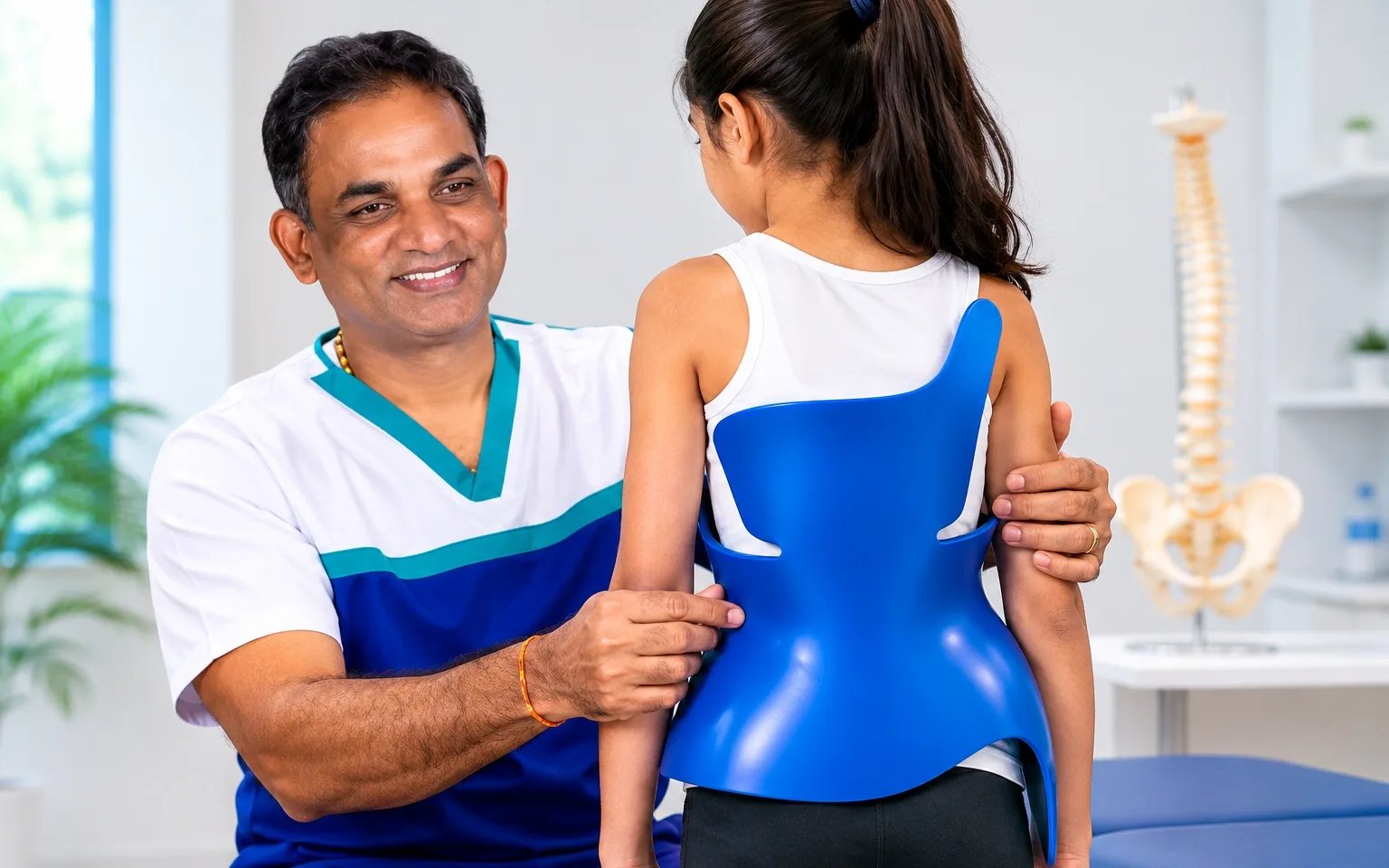
At DakshinRehab in Moosapet, Hyderabad, we bring scoliosis assessment, custom cast-based bracing, scoliosis-specific physiotherapy and long-term growth monitoring together under one roof. Technology assists us — but the corrective strategy comes from clinical expertise, cast rectification and in-brace X-ray verification.
Personalised, technology-driven rehabilitation in Moosapet, Hyderabad.
The most common form, developing during puberty without a known cause.
The Cobb angle grades the sideways curve; the ATR measures the twist behind the rib hump.
The most common form, developing during puberty without a known cause. The growth window (Risser 0–2) is when bracing and exercise matter most.
The Cobb angle grades the sideways curve; the ATR measures the twist behind the rib hump. Both guide whether we monitor, brace, or refer.
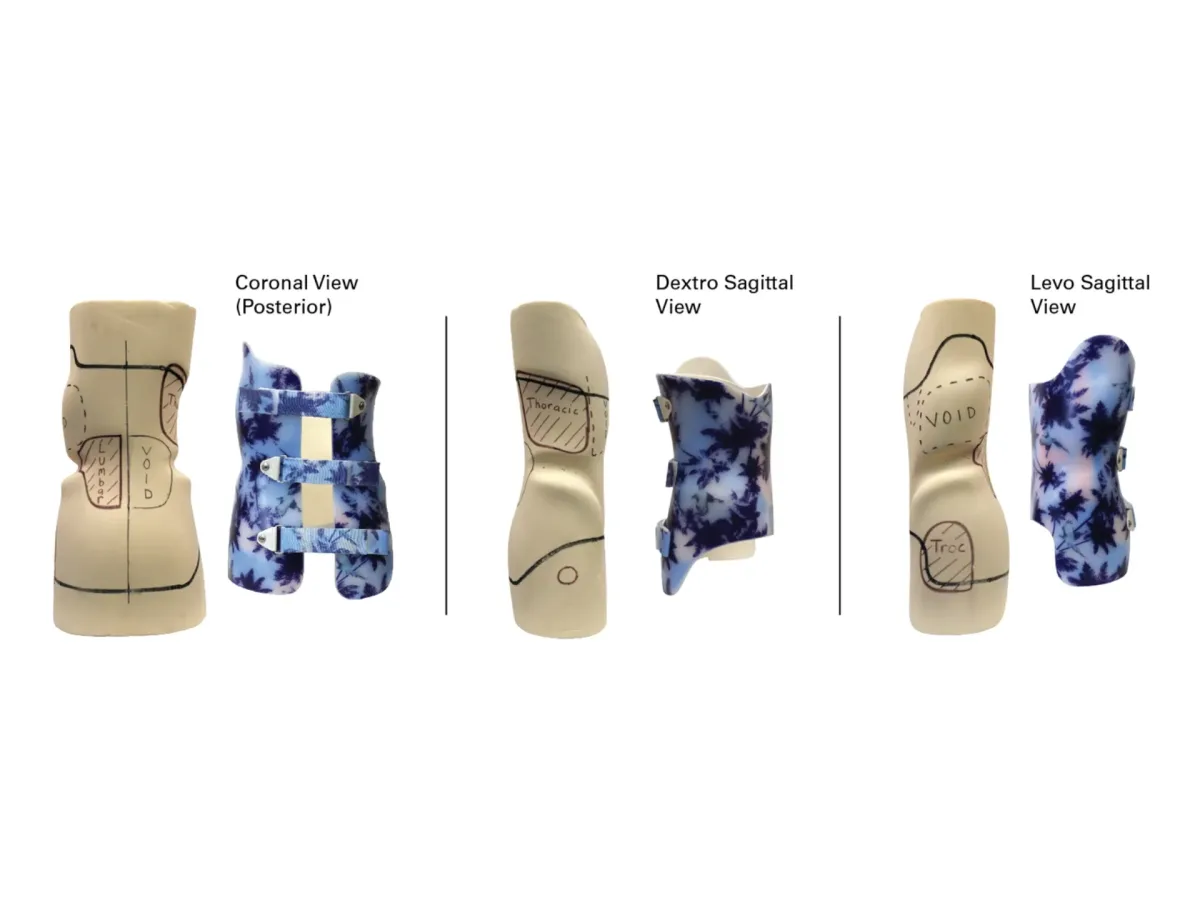
From a synthetic cast, our orthotist builds the corrective zones, expansion areas and rotational control — the step that largely determines brace effectiveness.
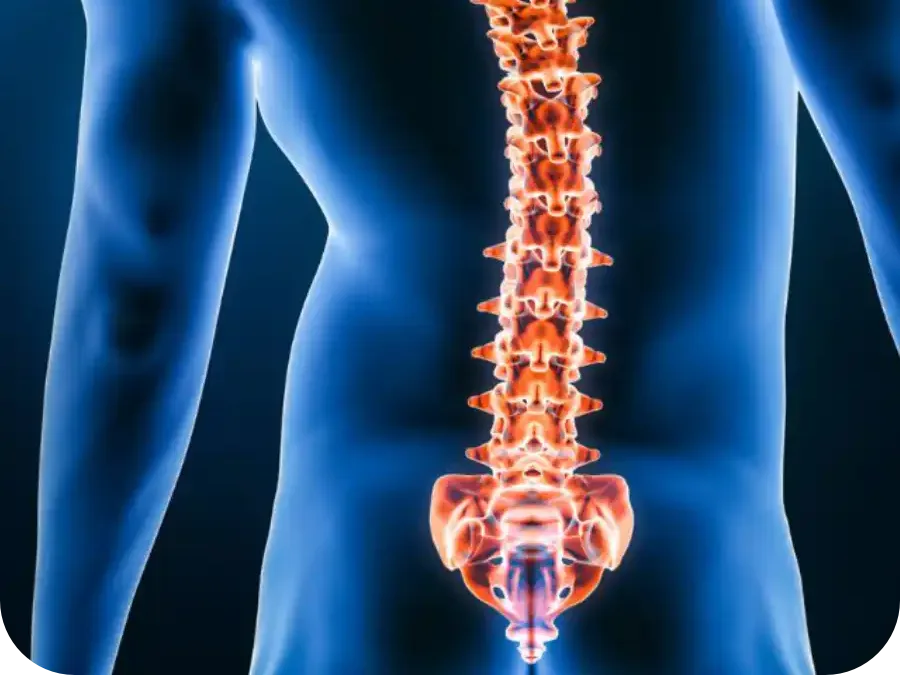
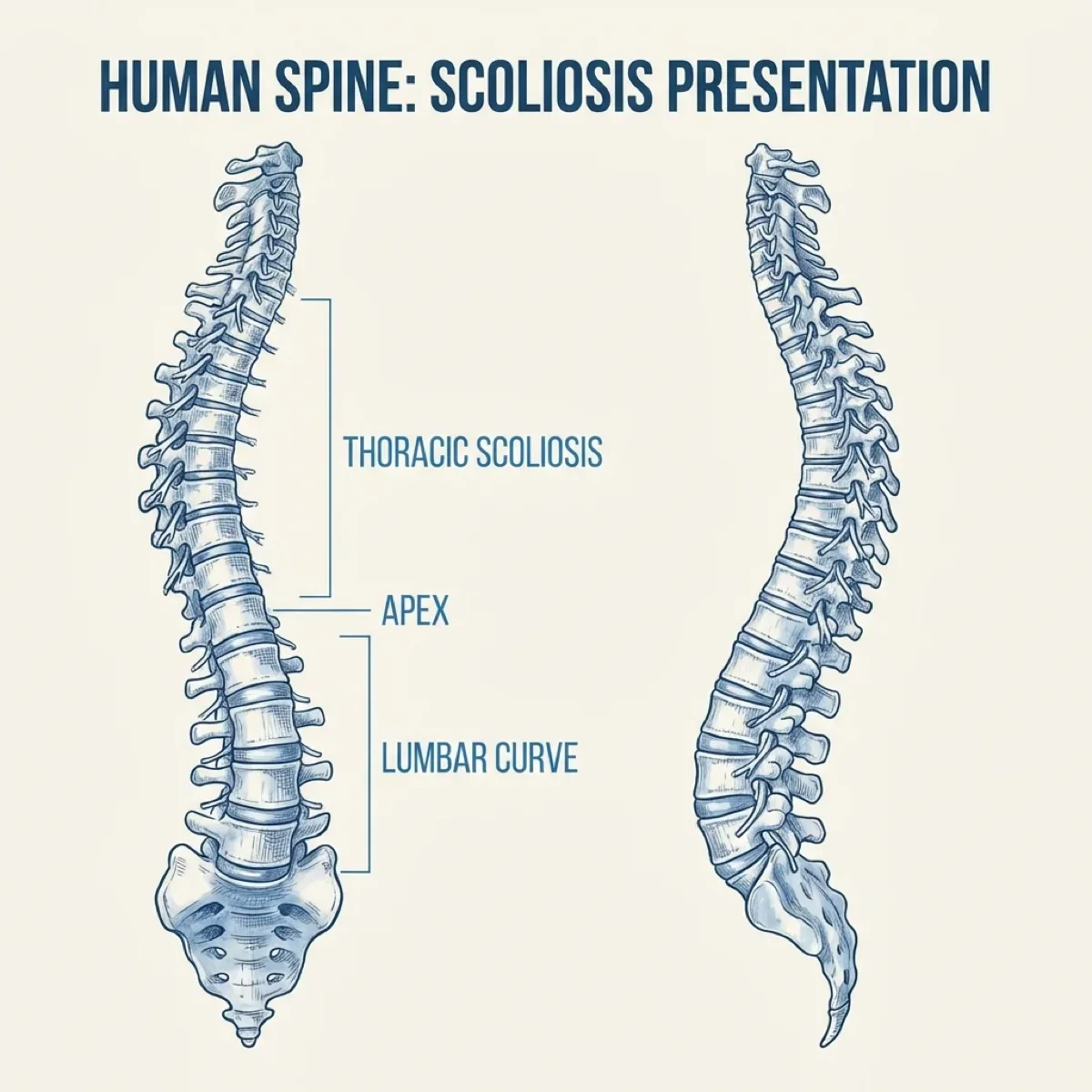
Scoliosis is confirmed when the Cobb angle exceeds 10° on X-ray.
Scoliosis is a sideways curvature of the spine in which the spine also twists, or rotates — making it a three-dimensional deformity rather than a simple bend. A healthy spine runs straight when viewed from behind; in scoliosis it forms a C- or S-shaped curve. Doctors confirm scoliosis when the Cobb angle measures more than 10 degrees on a standing X-ray.
For most children the cause is unknown, and the curve often appears during the rapid growth of the teenage years. The good news for parents: not every scoliosis needs surgery. Picking it up early — while the spine is still growing — gives the widest range of gentle, non-surgical options. At DakshinRehab in Moosapet, Hyderabad, assessment combines a clinical examination, posture and movement analysis, Cobb-angle monitoring, and — when it helps — a bracing consultation and a personalised rehabilitation plan.
Scoliosis is not simply a side bend. The spine curves sideways while also rotating, creating a true three-dimensional deformity that affects posture and trunk shape.
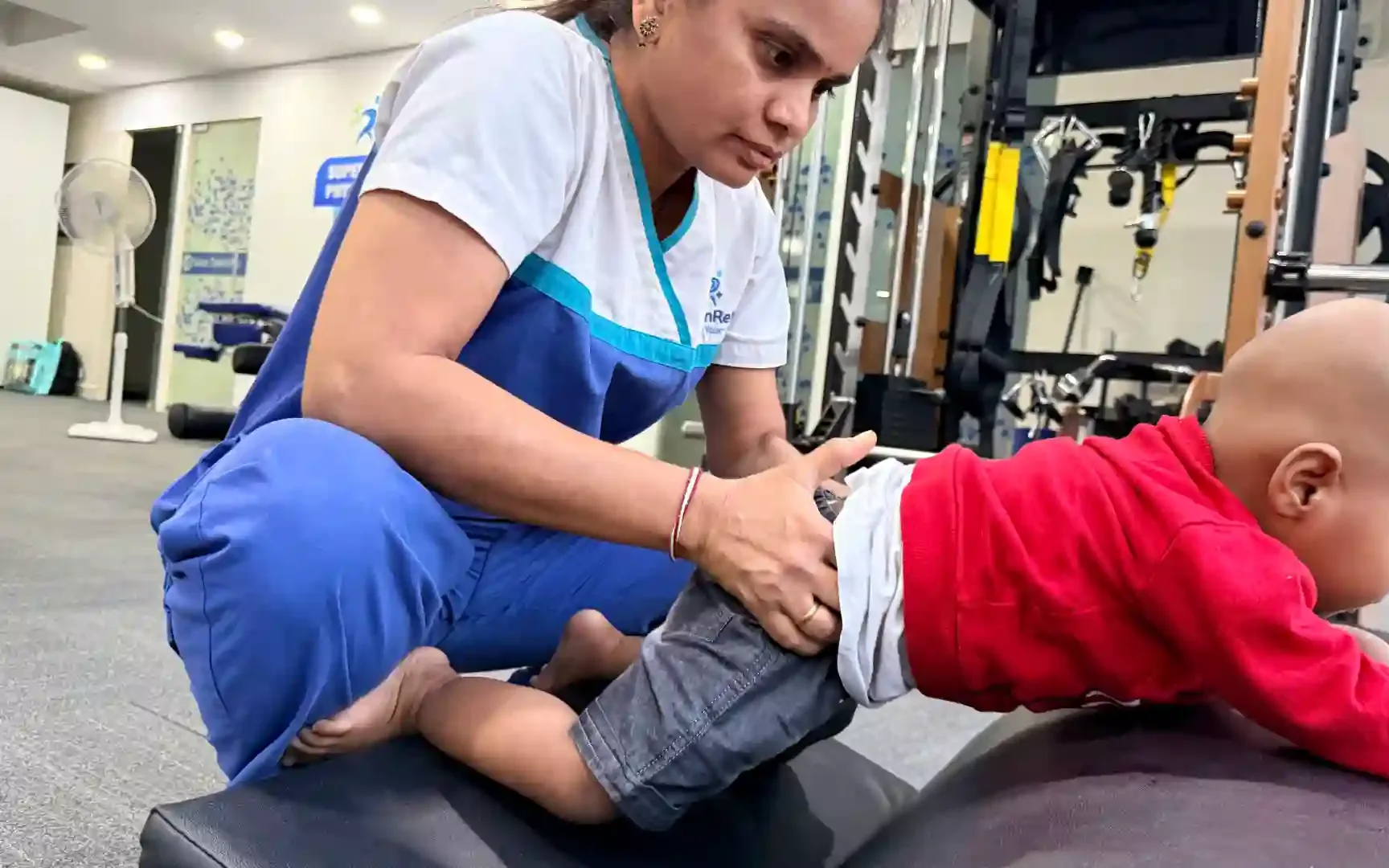
Identifying scoliosis during the growth years allows timely monitoring, scoliosis-specific exercise, and bracing when appropriate — improving long-term outcomes.
Curve pattern, location, rotation, age, remaining growth potential and Cobb angle all influence what treatment is recommended. No two curves are managed the same way.
Many scoliosis cases are managed without surgery — through observation, scoliosis-specific rehabilitation, bracing during growth, and regular follow-up to track the curve.
Scoliosis is grouped by what causes it and when it appears. Idiopathic scoliosis is by far the most common form, while congenital, neuromuscular and degenerative scoliosis make up the major secondary categories.
The most common type. Appears between ages 10–18 during the growth spurt, and the cause is unknown.
Present at birth, caused by abnormal development of the vertebrae during pregnancy. Often needs early review.
Linked to conditions like cerebral palsy, muscular dystrophy or spina bifida, and can progress more quickly.
Develops later in life from age-related wear of the spine, and is often accompanied by back pain.
Whatever the type, the first step is a proper assessment. Explore our pediatric physiotherapy, spine rehabilitation and Schroth-based Neurac rehabilitation programmes to see how DakshinRehab tailors care to each curve.
Book a Scoliosis AssessmentEvery scoliosis curve is unique. Our treatment pathway combines advanced assessment, movement science, rehabilitation, orthotic expertise and long-term monitoring to help patients manage scoliosis with confidence — without surgery.
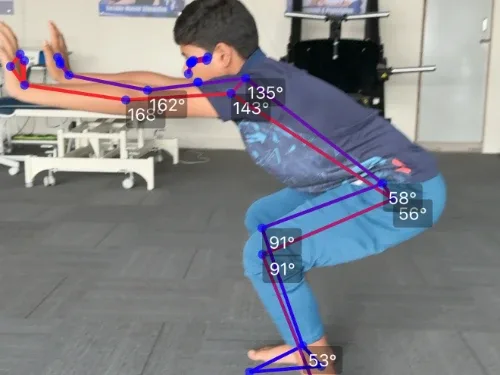 Assessment
Posture, spinal asymmetry, trunk rotation, growth status and curve characteristics, measured first to shape the whole plan.
Learn About Assessment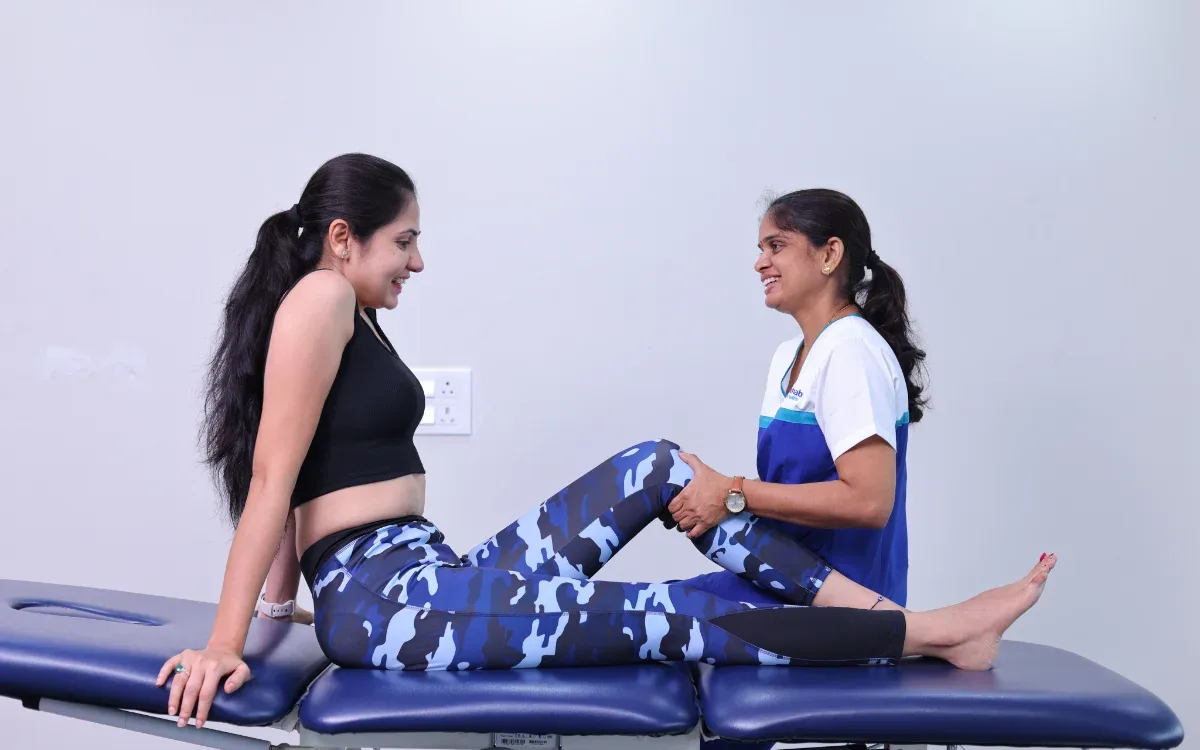 Analysis
Movement Assessment Technology helps identify muscular imbalances, movement compensations, postural asymmetries and functional limitations that may influence spinal loading and overall movement efficiency.
Explore MAT Assessment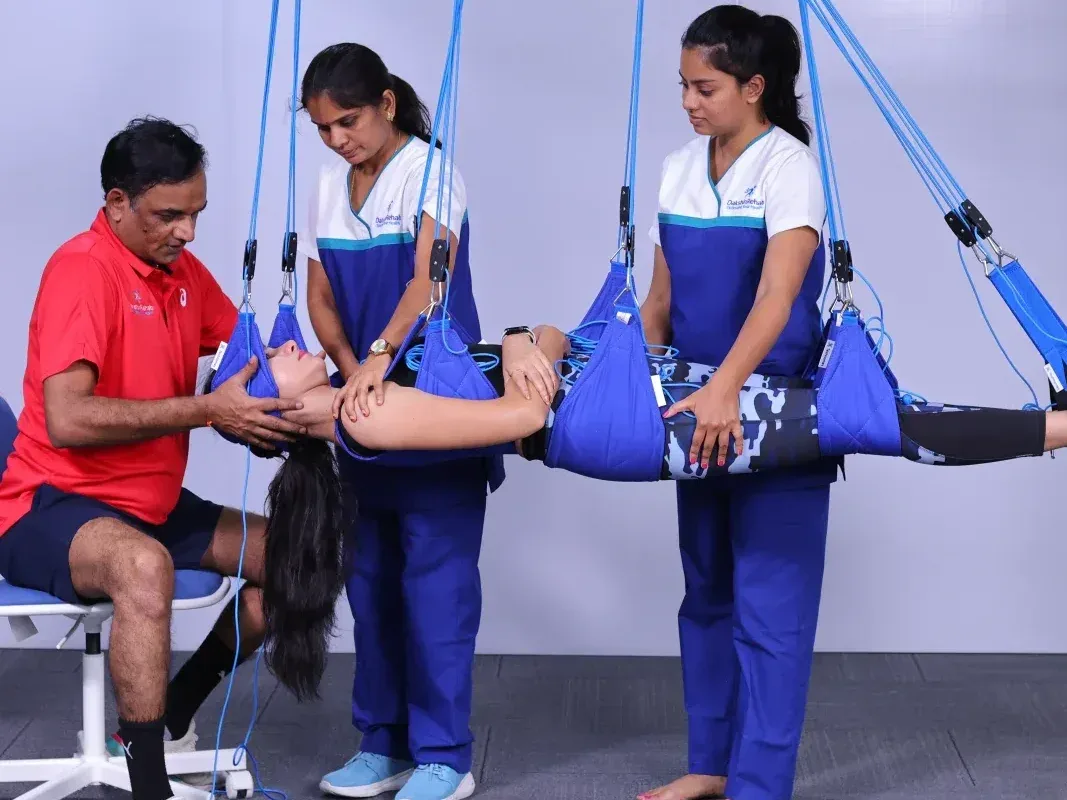 Rehabilitation
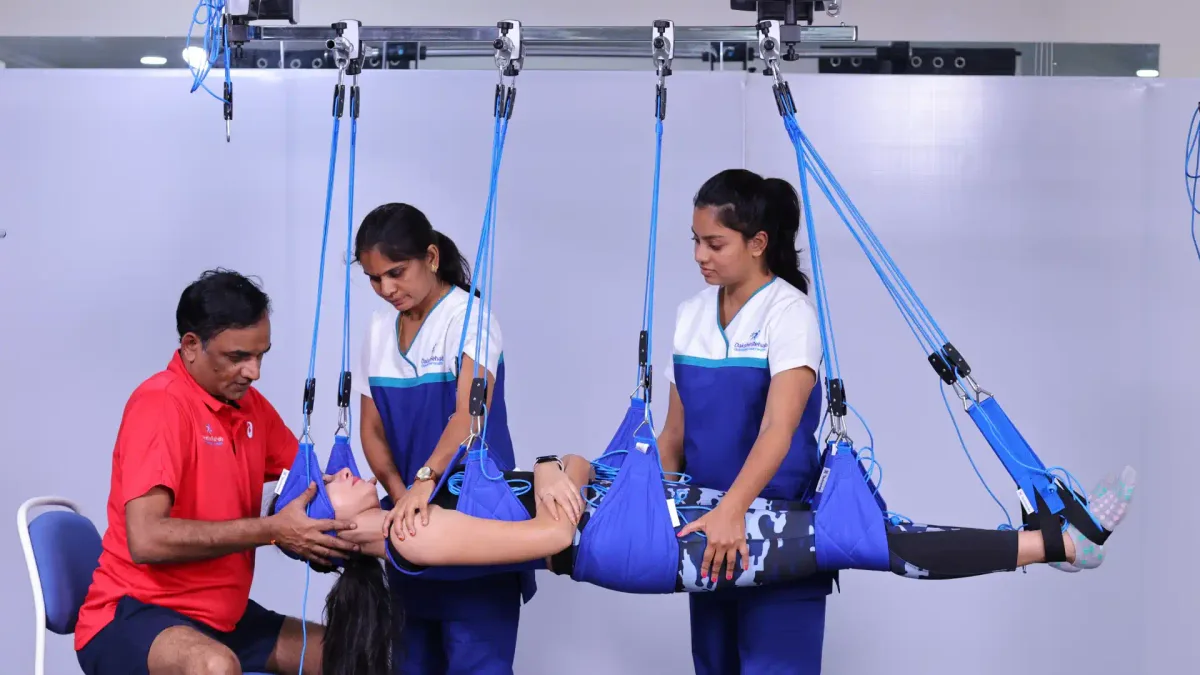
Suspension-based rehab that trains deep stabilizers, neuromuscular control and postural awareness.
Discover Redcord Therapy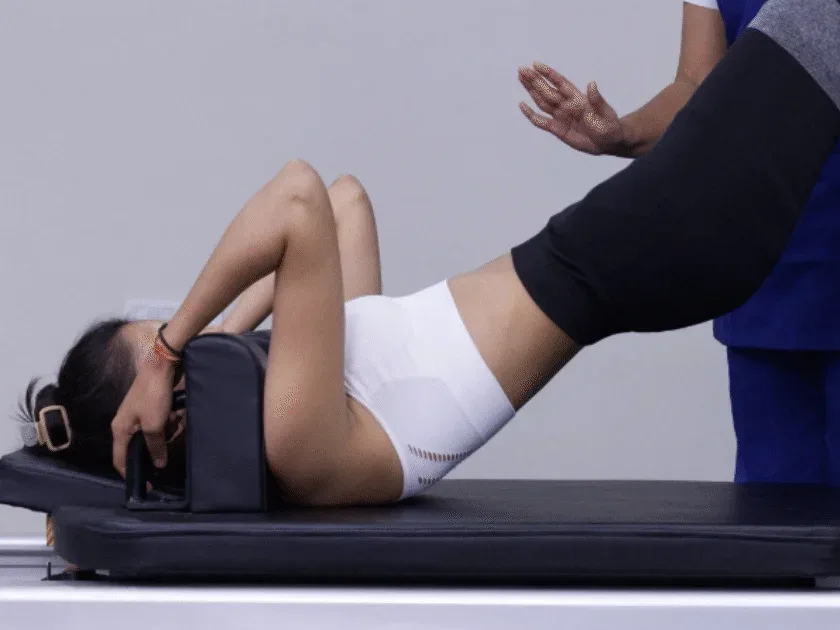 Clinical Pilates
Clinical Pilates — applied in line with Physiotherapeutic Scoliosis-Specific Exercises (PSSE) — focuses on core stability, breathing control, body awareness, postural alignment and movement quality, helping patients develop better control of spinal and pelvic positioning.
View Clinical Pilates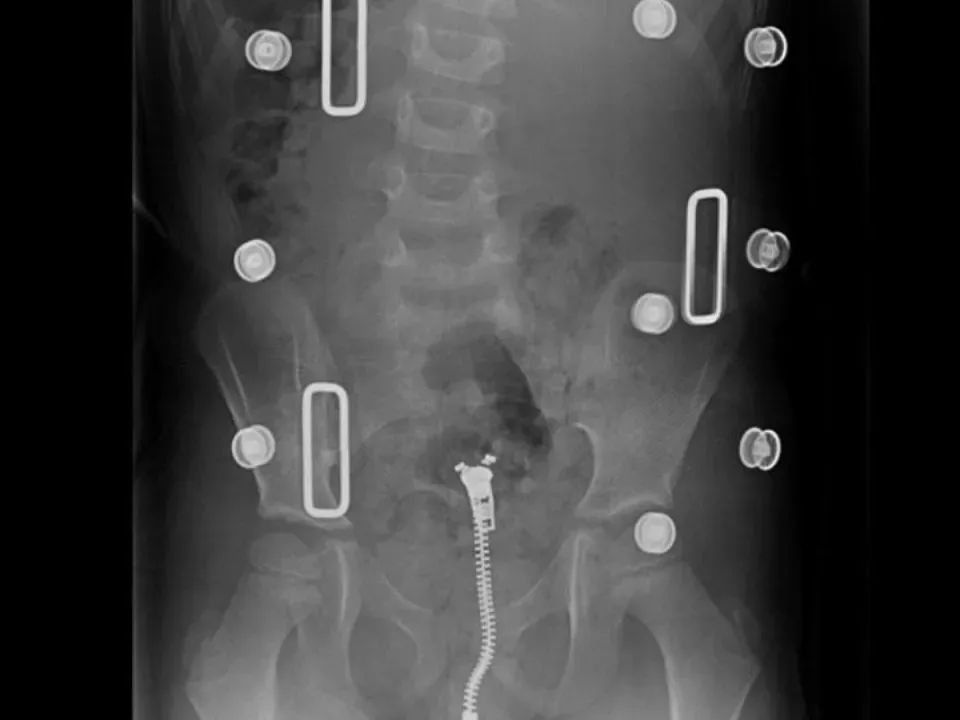 Bracing
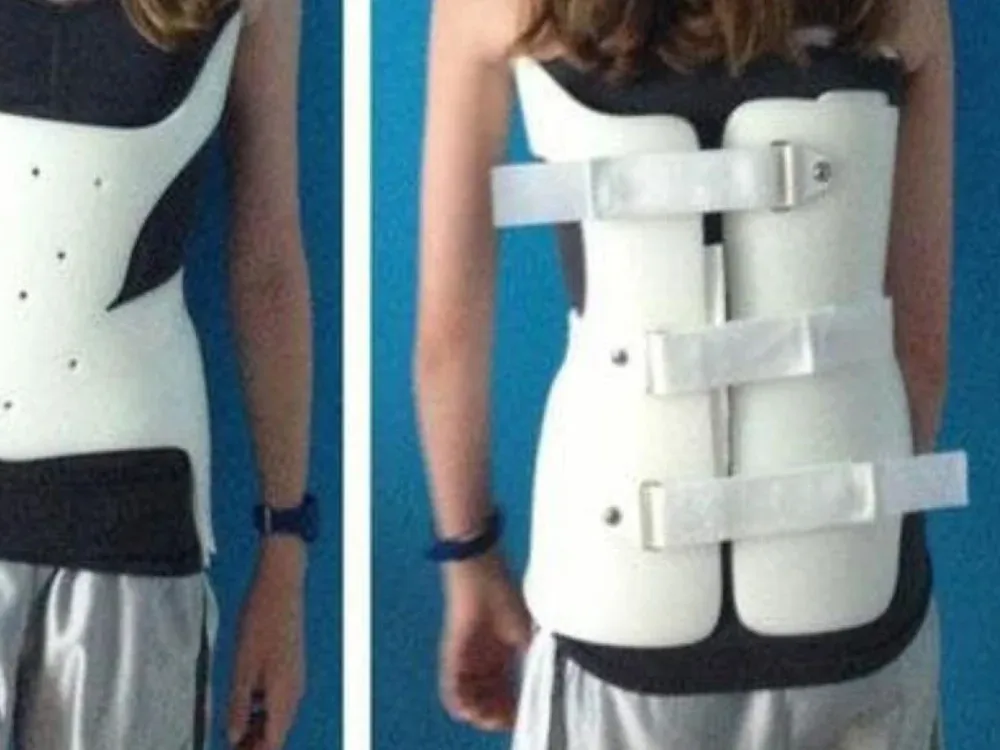
Custom bracing considered for selected growing children based on curve size, progression risk and skeletal maturity, with fitment and follow-up.
Learn About Scoliosis Bracing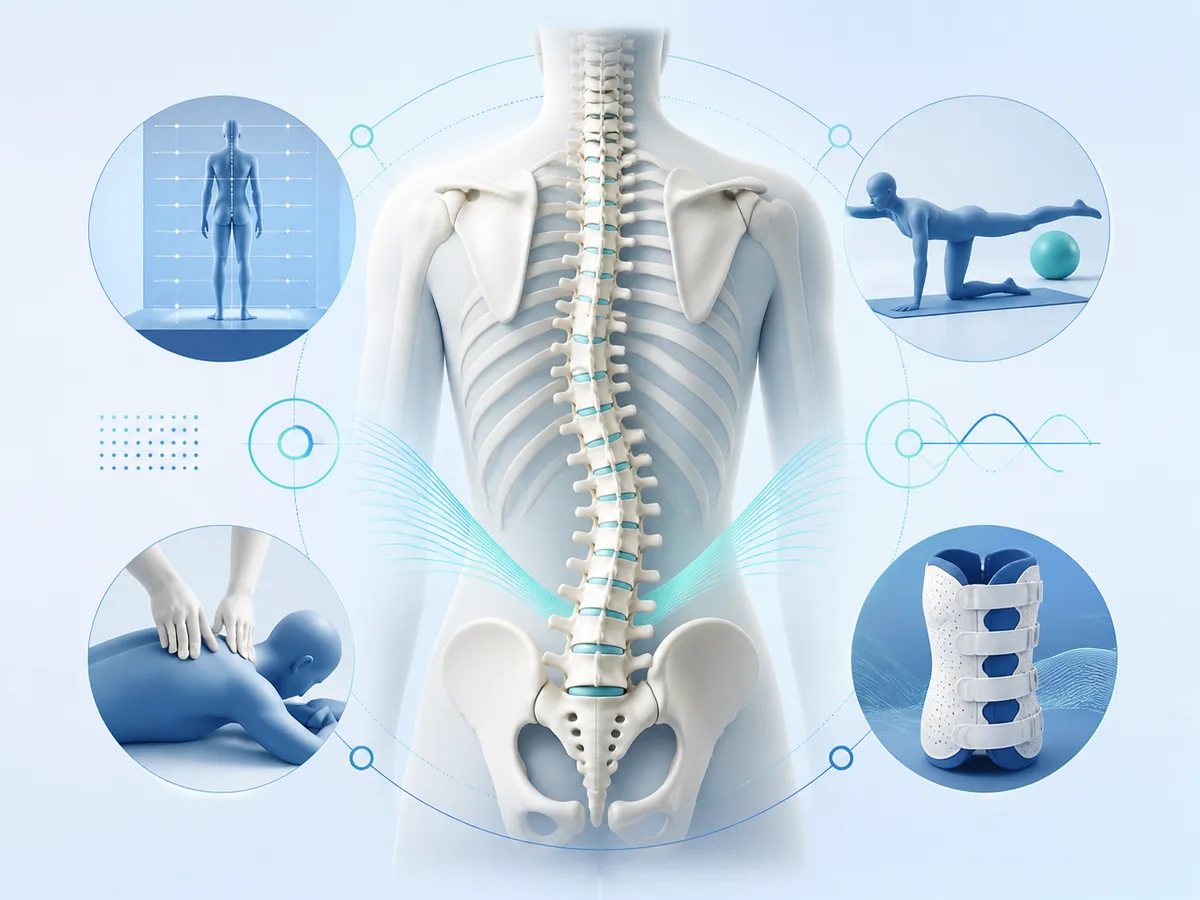 Monitoring
Scoliosis management is a long-term journey. Regular reviews allow monitoring of posture, movement quality, curve progression, growth-related changes, rehabilitation outcomes and overall functional improvement.
See Rehabilitation PathwayThe same pathway supports pediatric physiotherapy, spine rehabilitation and gait & posture analysis — so care is matched to each patient’s curve, age and goals.
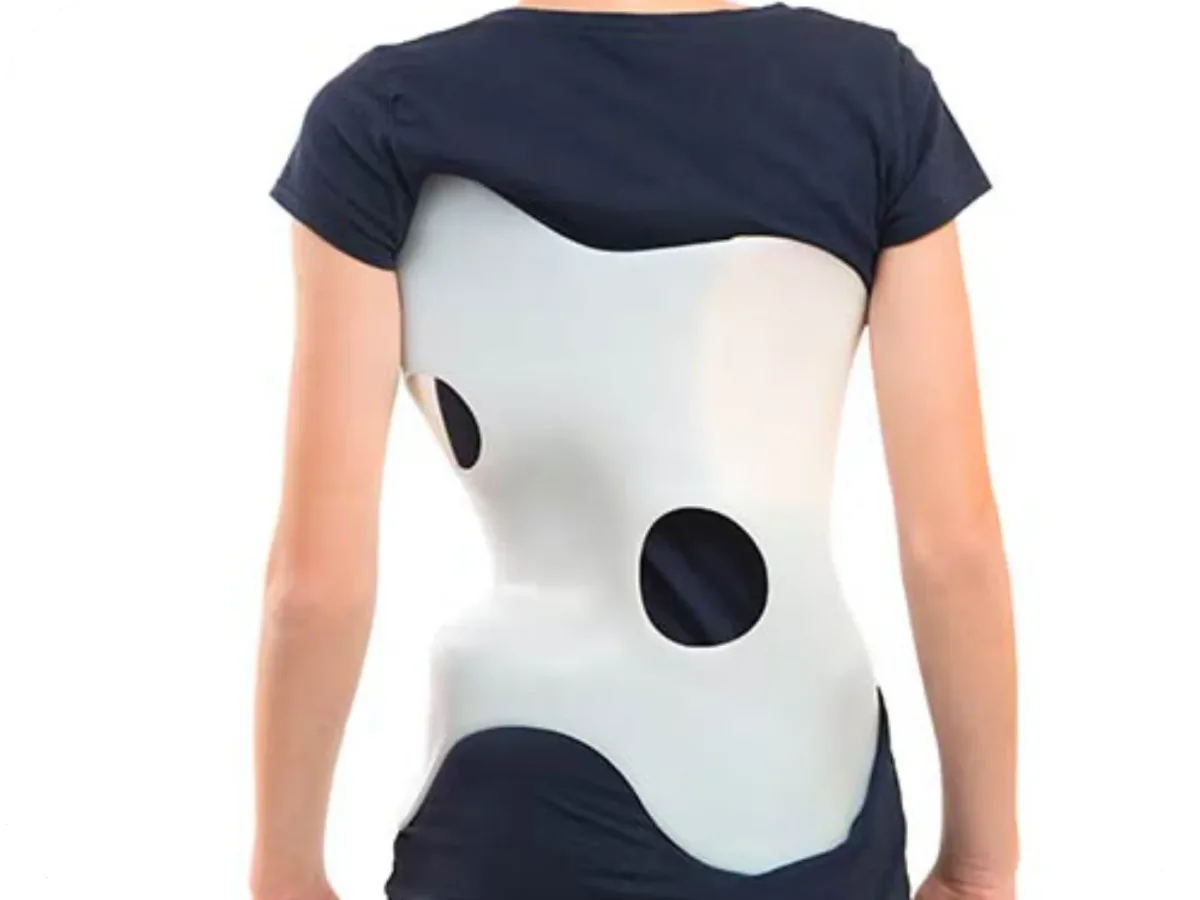
A scoliosis brace is a custom-made support worn during growth to stop a spinal curve from getting worse. At DakshinRehab Moosapet, when a curve measures roughly 25°–40° in a child who is still growing, we fit and monitor a brace to hold the curve steady — its job is to prevent progression, not to undo the curve already there.
A brace keeps the curve from worsening while the spine is still growing. For children whose curves are likely to progress, the Scoliosis Research Society reports bracing prevents most curves from getting worse when it is worn as prescribed — the benefit depends on the brace and the daily wear hours.
Bracing works best during active growth. Once the skeleton is nearly mature, or a curve is already large (often beyond 40–50°), a brace is generally less effective — and it is not used for adult scoliosis, where a surgical opinion may be advised. Your specialist confirms what fits your curve.
A truly corrective scoliosis brace is teamwork, not a gadget. Scanning and software only capture or modify body shape; they do not decide how a curve should be corrected. That decision comes from clinical assessment, X-ray interpretation, curve classification, growth evaluation, expert cast rectification and in-brace verification. DakshinRehab Moosapet's core strength is that an orthotist and a scoliosis-trained physiotherapist work together under one roof: the orthotist builds correction into the brace, and physiotherapy trains the body to hold it. Technology supports this clinical team; it never replaces it.
Standing posture, growth stage, Cobb angle, rotation (ATR) and full-spine X-ray review: the foundation every brace decision is built on.
Our orthotist hand-builds corrective zones, expansion areas and rotational-control regions into the cast: the step that largely determines how corrective the brace will be.
 DakshinRehab clinical pathway
A standing X-ray taken while wearing the trial brace objectively confirms curve correction, rotational response and trunk balance before the final brace is made.
Led by our scoliosis-trained physiotherapist and coordinated with the orthotist: scoliosis-specific exercise, rotational breathing, core stabilisation and postural re-education that help the correction hold.
Clinical comparison
The orthotist decides where corrective forces go, where to create expansion areas, how to achieve rotational control and how to accommodate growth, then verifies it on an in-brace X-ray. Alongside, a scoliosis-trained physiotherapist uses Schroth-inspired exercise, rotational breathing and core stabilisation so your child can actively hold the corrected posture, both in the brace and during brace-free hours. The brace controls the curve from the outside; physiotherapy builds the control from within. Together they give a more complete result than either approach alone, and having both specialists in one Moosapet clinic keeps the plan coordinated as your child grows.
Regular local reviews, brace adjustments and repeat imaging keep the brace corrective as your child grows, with no travel or shipping delays.
Located in Moosapet, Hyderabad: long-term scoliosis bracing and management for families in Kukatpally, KPHB, Miyapur and Gachibowli.
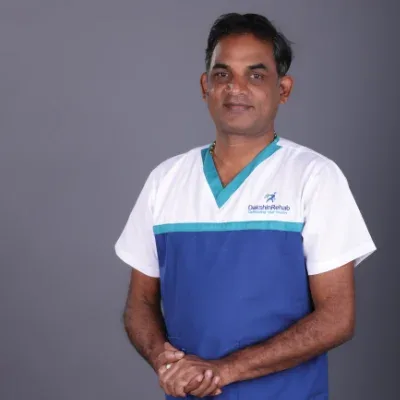
“A scanner captures shape; software edits a model. Neither knows where your child's spine needs to be pushed. That judgement, and the cast rectification that delivers it, is what makes a brace actually correct a curve.”
Parents often ask which brace is 'best'. Both are proven design philosophies; they simply correct in different ways. Here is the honest difference, with DakshinRehab's pattern-specific custom approach explained below.
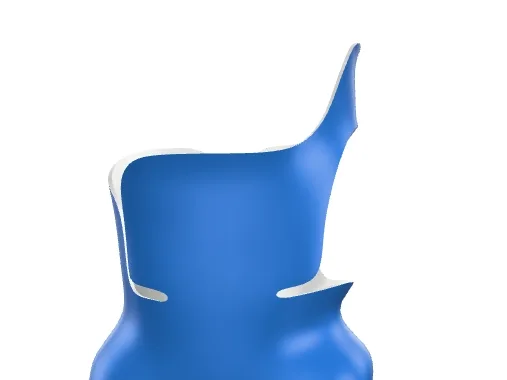
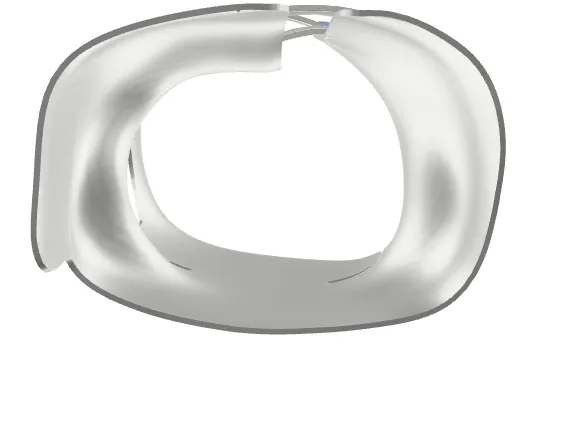
A well-established, modular thoracolumbosacral orthosis (TLSO). It works mainly in the coronal plane — holding the trunk and applying three-point corrective pressure to stop a curve worsening.
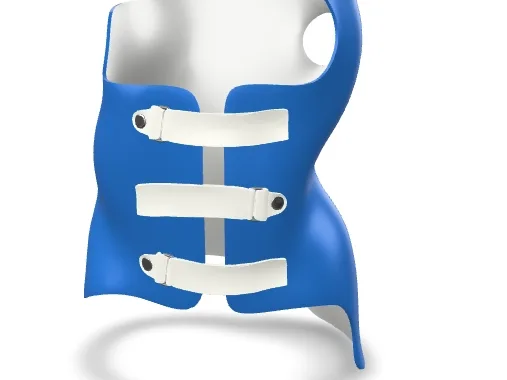
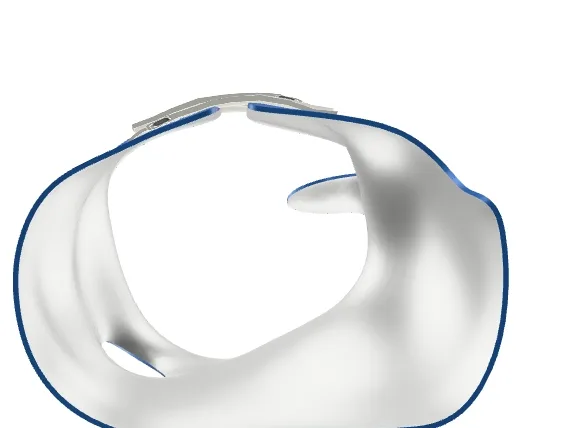
An asymmetric, three-dimensional design. It pairs firm pressure zones with deliberate expansion voids, so the trunk and ribcage are guided to breathe and move into the open spaces — actively de-rotating the spine.
The brace name matters less than the hands that shape it. At DakshinRehab we are not tied to a single system — we select and build a pattern-specific custom bracebased on your child's curve, then prove it works with an in-brace X-ray. Correct assessment, expert cast rectification and verified correction decide the outcome — not the label on the brace.
Here is what published scoliosis research shows about different braces — in plain terms. It is exactly why we make a custom brace for each child and check that it is working with an X-ray.
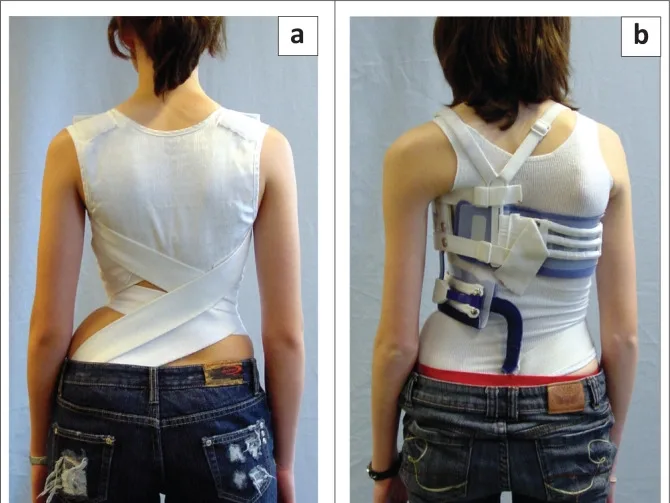
Flexible braces (like SpineCor and TriaC) are easy to wear, but research shows they don’t actually correct a stiffer curve. So when the goal is to straighten the spine, we don’t use them.
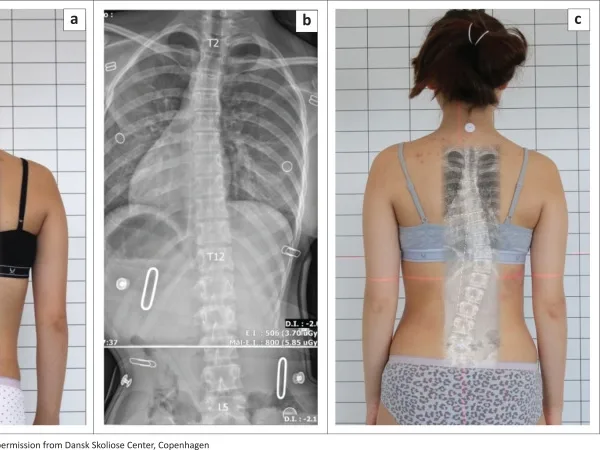
On a generic brace, this child’s curve actually grew — from 31° to 41° in just six months. It improved only after switching to a custom-made brace. The brace has to match each child’s exact curve, and we recheck it regularly.
Left: the curve before bracing. Middle: the same child with the spine much straighter inside a custom brace. Right: how they look nine months later. We confirm this straightening on an X-ray — with the brace on — for every child.
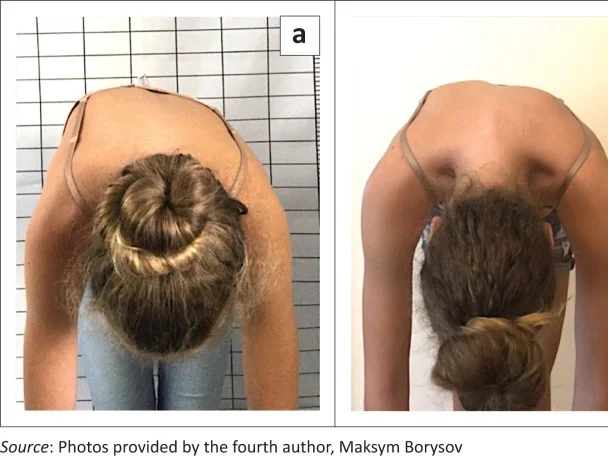
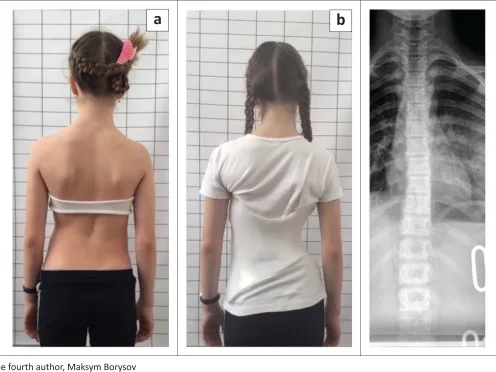
Left: a clear rib hump — the bump on the back that parents usually notice first. Right: much smaller after twelve months in a custom brace. A good brace gently un-twists the spine, not just bends it back.
The brace must fit your child's exact curve, and we must prove it is working. So we measure the curve, hand-shape a custom brace, and confirm it straightens the spine on an X-ray before your child takes it home.
Weiss H‑R, Borysov M, et al. Bracing scoliosis — state of the art. South African Journal of Physiotherapy. 2021;77(2):1573. DOI: 10.4102/sajp.v77i2.1573. Published by AOSIS under the Creative Commons Attribution License (CC BY 4.0). Figures adapted (cropped / re-captioned) for educational use.
Redcord Neurac therapy is a suspension-based rehabilitation method that helps people with scoliosis train the deep muscles that control posture and spinal movement. At DakshinRehab in Moosapet, Hyderabad, we use Redcord Neurac as an active, non-surgical part of conservative scoliosis care — it does not cure scoliosis or replace medically indicated bracing, but it can play an important role in improving neuromuscular control, posture and movement quality.
For patients already in a brace, Redcord adds active postural and neuromuscular control to complement the brace’s passive support; for those not bracing, it offers a structured, non-surgical way to train stability. It pairs naturally with Clinical Pilates and orthotic & bracing care.
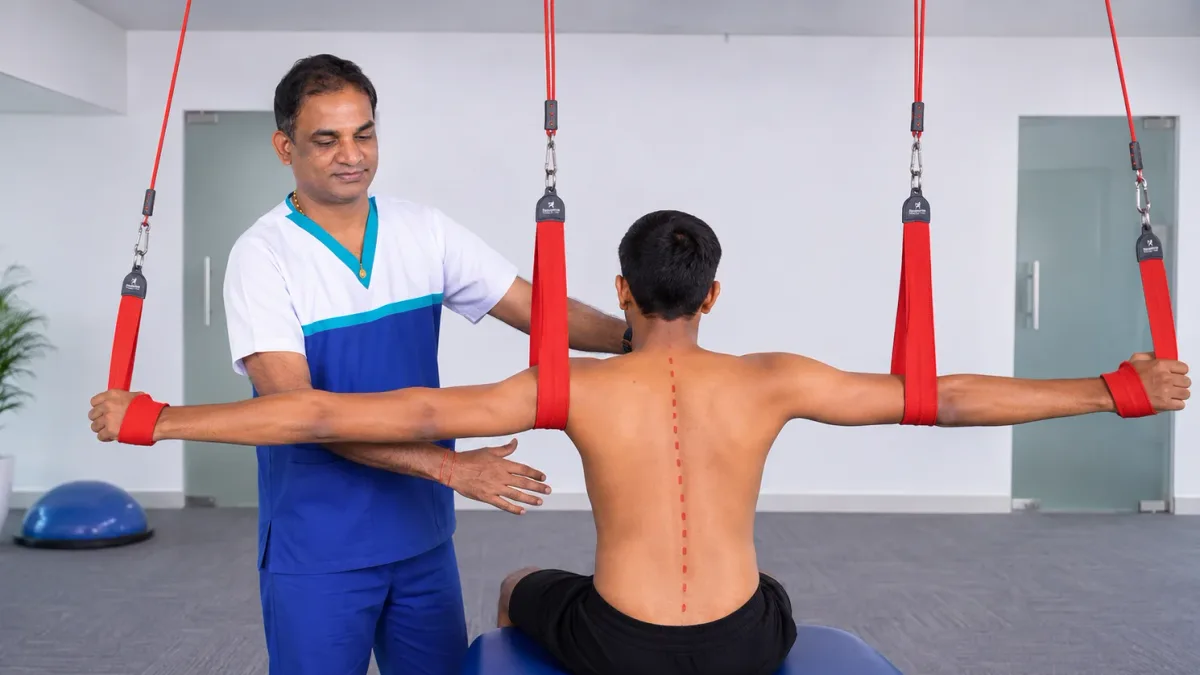 Active Correction
A note on expectations: Redcord rehabilitation does not cure scoliosis, permanently straighten the spine, or replace medically indicated bracing. It is an advanced rehabilitation intervention that supports posture, neuromuscular control and function within an individualized, evidence-informed scoliosis management plan.
Redcord addresses the functional, neuromuscular side of scoliosis — how the spine is controlled and held — through five linked rehabilitation strategies.
Exercises in ropes and slings unload body weight, so deep muscles can be trained pain-free in precise, scoliosis-relevant positions.
Targeted, low-threshold loading wakes up the deep spinal and core stabilizers that often switch off around an asymmetric curve.
Patients learn to find and hold a more symmetrical, self-corrected posture — and to sense when they drift out of it.
Controlled instability challenges balance and coordination, improving how the spine and trunk are controlled in everyday movement.
Curve-specific, individualized exercises — often paired with breathing work — reinforce better alignment and trunk control over time.
“Scoliosis weakens and lengthens the muscles on the outside of the curve while the inside stays tight. Redcord Neurac uses gravity-reduced suspension to wake up the deep stabilising muscles and train that weaker, elongated side in a pain-free setting — helping your child actively hold the corrected posture the brace and Schroth exercises are working toward.”
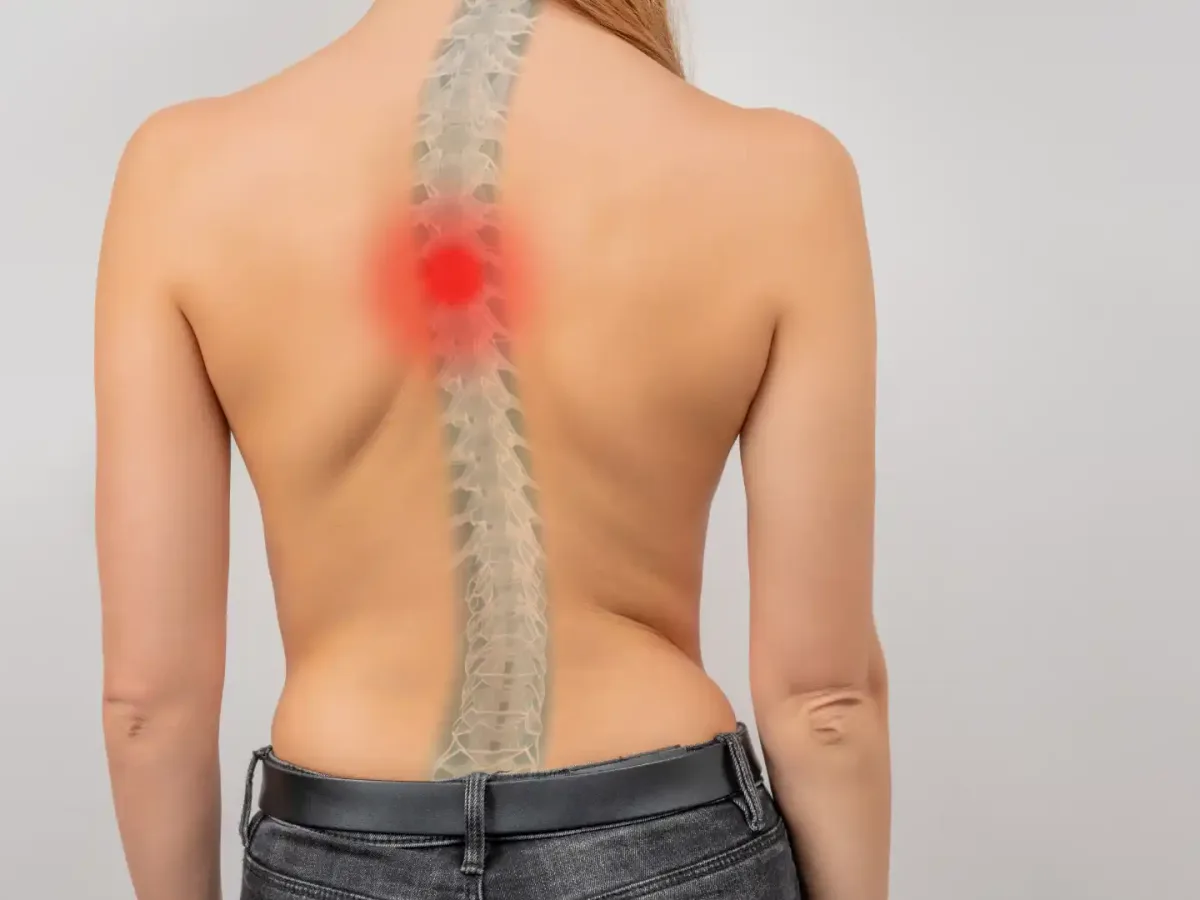
Bracing is for flexible, progressing curves in a still-growing spine. Some situations need a paediatric orthopaedic surgical opinion rather than a brace. At DakshinRehab in Moosapet we assess honestly and refer promptly when these signs appear.
Large curve at presentation — a Cobb angle commonly around 45–50° or above usually warrants a surgical opinion rather than bracing alone.
Progression despite good bracing — if a curve keeps worsening even with a well-fitted brace and strong compliance, escalate for review.
Skeletal maturity reached — in a child at Risser 4–5 the growth window has closed and bracing is generally no longer effective.
Neurological signs — leg weakness, numbness, or any change in bladder or bowel control, balance or walking needs urgent evaluation.
Severe or night pain, fever or weight loss — pain that is severe, constant or worse at night (with fever or unexplained weight loss) points away from typical idiopathic scoliosis.
Rapid change in trunk shape — a rib hump or asymmetry that visibly worsens over a few months during a growth spurt needs prompt review.
Find DakshinRehab on Google Maps to read reviews shared by patients.
Our expert physiotherapists and rehabilitation specialists at DakshinRehab bring decades of combined experience to your recovery.
BPT, MPT, IAP Registered
Director, Human Movement Specialist, Physiotherapist
CPO
Consultant Rehabilitation Specialist, CPO | Founder, DakshinRehab
MS (General Surgery), DNB (Vascular Surgery)
Sr. Consultant Vascular & Endovascular Surgeon | Diabetic Foot & Wound Care
Learn more about this condition and treatment options from our expert team.
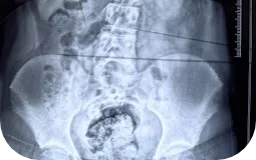 Scoliosis Care
June 9, 2026
A scoliosis brace does not correct because of a scanner or fancy software. It corrects because of clinical judgement: assessment, expert cast rectification, in-brace X-ray verification and scoliosis-specific physiotherapy. Here is exactly how DakshinRehab Moosapet builds one.
Read MoreScoliosis CareJune 8, 2026
Scoliosis is a three-dimensional problem of the spine — and of the deep stabilising muscles that should hold it upright. Discover how Redcord NEURAC suspension therapy at DakshinRehab Moosapet wakes up the multifidus and transversus abdominis to make bracing and Schroth work better, in children and adults.
Read More“Every treatment page should help patients understand what is safe, what is urgent, and what care path fits their condition. Clinical review keeps that advice practical and trustworthy.”
- MohanagandhiConsultant Rehabilitation Specialist, CPO — Founder, DakshinRehab
Credentials: CPO
The clinical content on this page is written and independently reviewed by qualified physiotherapists at DakshinRehab, Moosapet, Hyderabad.
Direct, honest answers from the scoliosis bracing and physiotherapy team at DakshinRehab Moosapet.
Still have questions?
Your next step
We have treated approximately 20,000 patients. Your initial assessment is free only when you book an appointment online and attend your confirmed time slot. Treatment charges are explained before treatment begins.
Book an Appointment