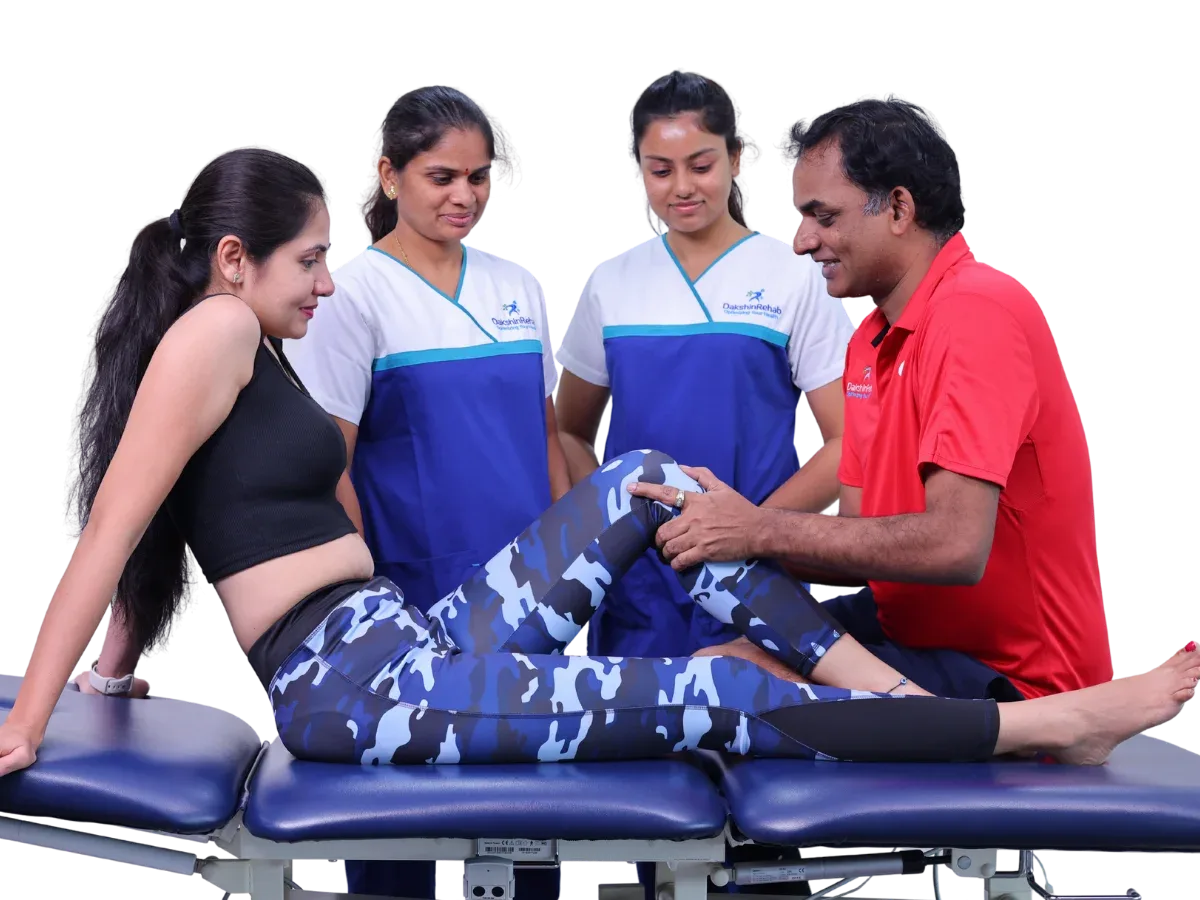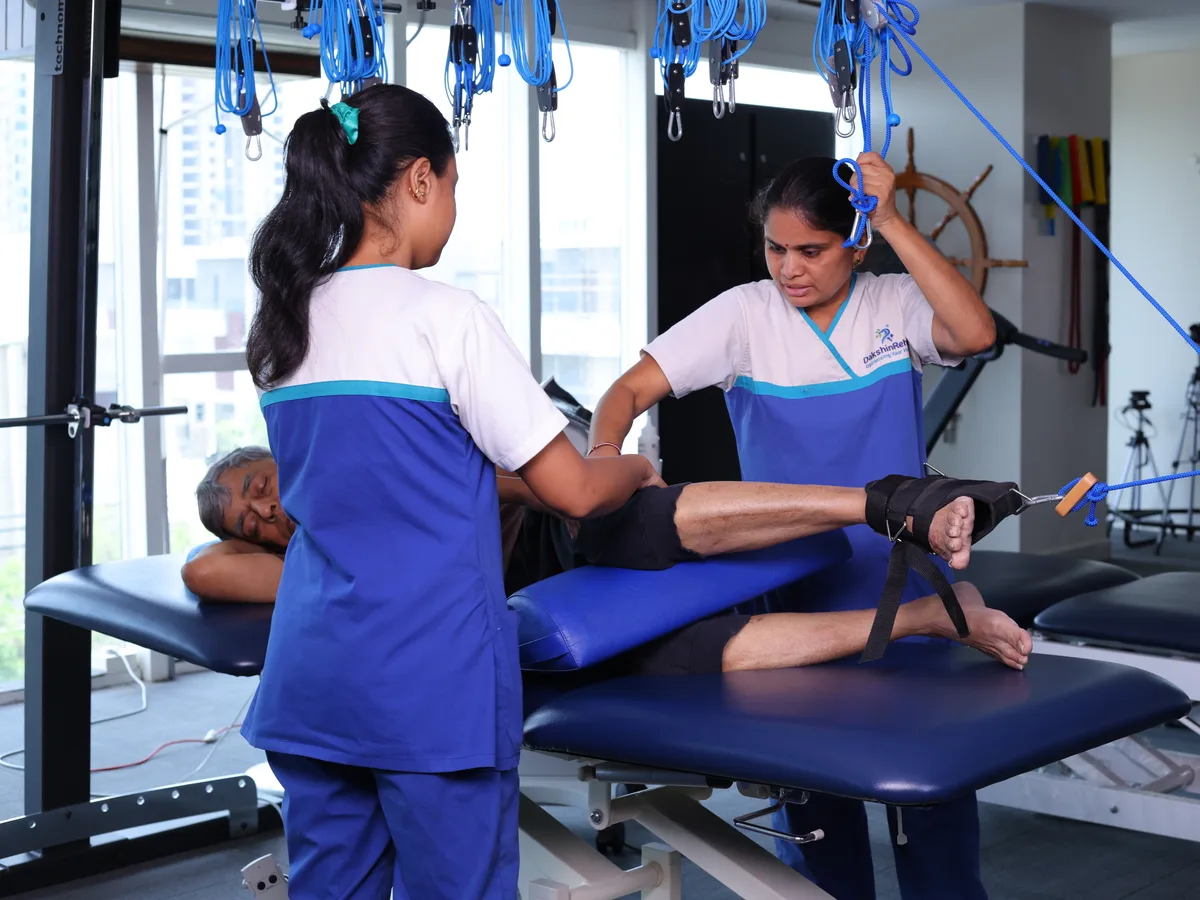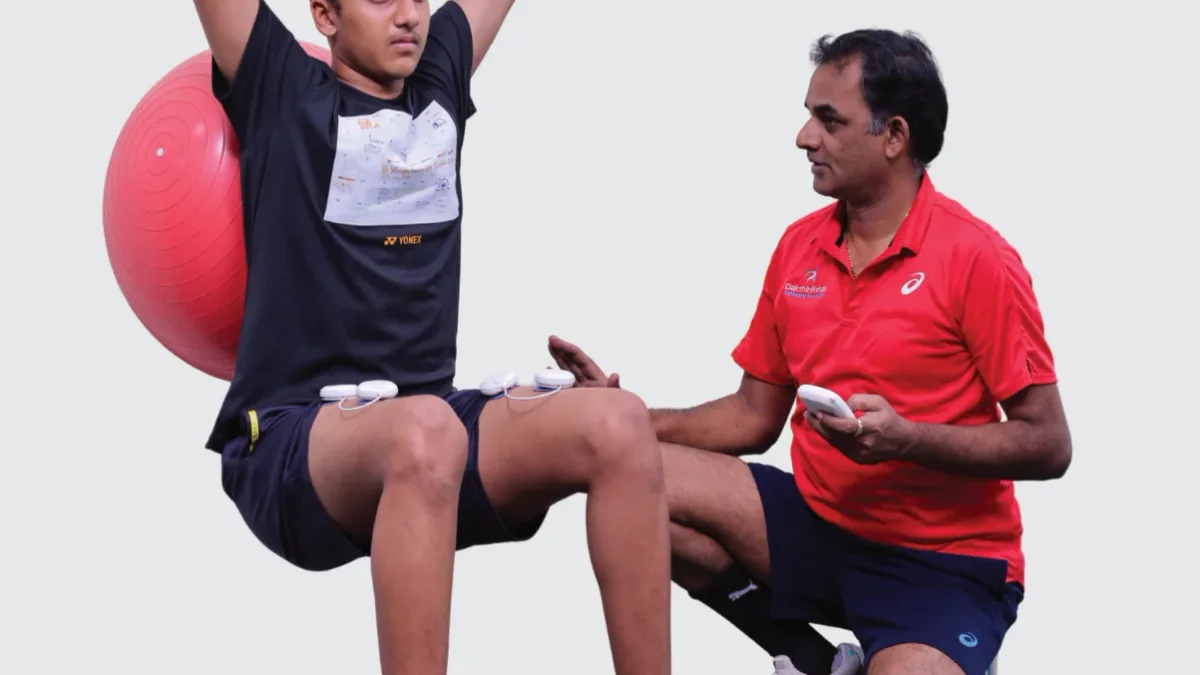
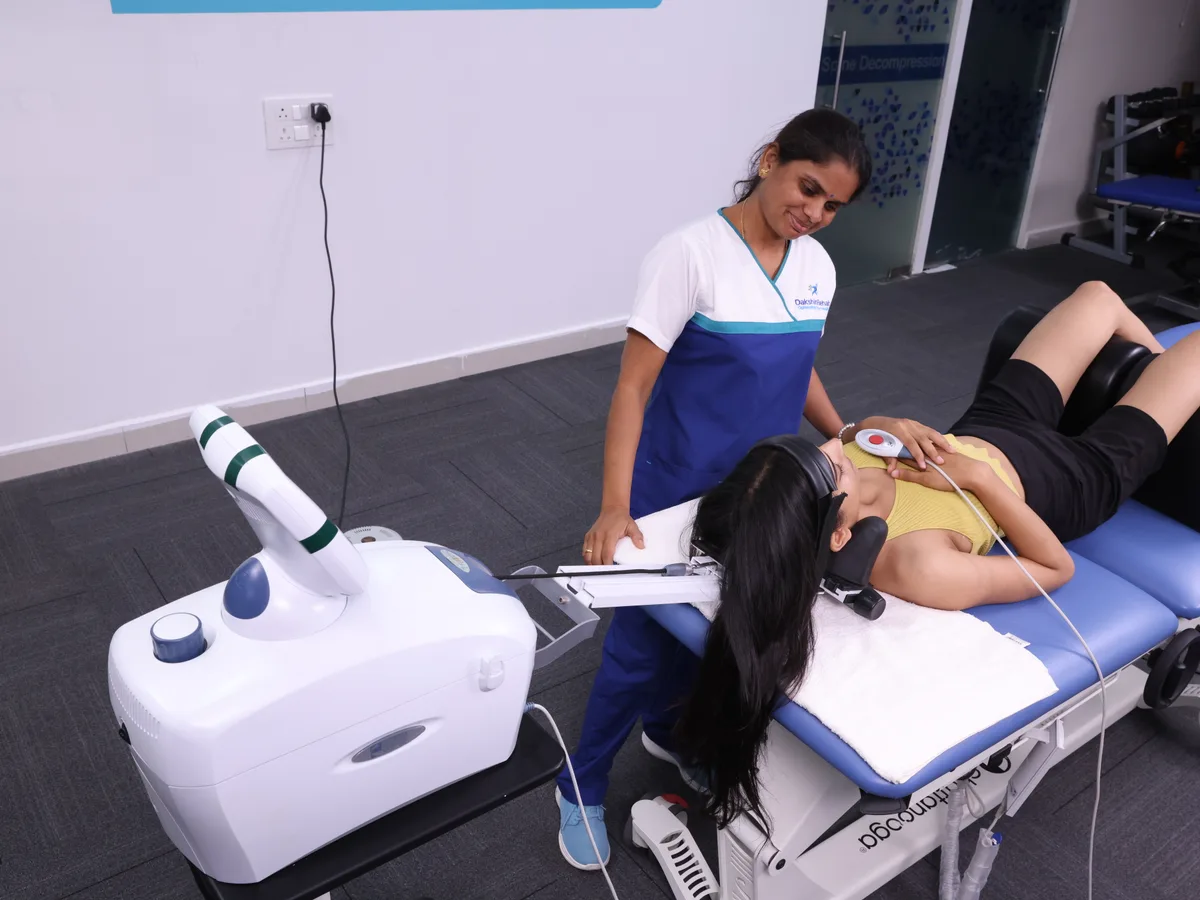
If you have been told you have a herniated disc, bulging disc, or degenerative disc disease, you have probably been offered two options: painkillers or surgery. At DakshinRehab in Moosapet, Hyderabad, we offer a third option that most patients never hear about — computer-controlled Chattanooga DTS spinal decompression therapy. This FDA-cleared system creates negative pressure within the damaged disc, encouraging herniated material to retract, decompressing the trapped nerve root and rehydrating a starved disc. It is the gold standard in non-surgical disc treatment, and we are one of the very few clinics in Kukatpally, KPHB and Miyapur equipped to deliver it alongside disc-specific physiotherapy and sciatica-focused rehabilitation.
What actually happens inside a herniated disc — and why painkillers cannot fix it
Your spinal discs are gel-filled cushions between each vertebra that absorb shock, allow spinal movement and maintain spacing for the nerve roots that exit the spine. When a disc herniates, the gel-like nucleus pushes through a weakened outer wall (the annulus fibrosus) and presses on a nearby nerve root — causing pain, numbness, tingling or weakness that can radiate into the arm in cervical disc disease or down the leg in lumbar disc sciatica. Bulging discs represent an earlier stage where the annulus deforms outward but has not ruptured. Degenerative disc disease involves progressive loss of disc height and hydration over time. All three conditions share a common mechanism: the disc is under excessive positive mechanical pressure, that pressure has displaced its contents, and that pressure must be reversed for healing to occur. Painkillers mask the pain signal — they do nothing to change the pressure inside the disc.
How spinal decompression therapy reverses the pressure that damaged the disc
Unlike traditional traction — which applies a constant pull, triggers protective muscle spasm and actually prevents decompression — the Chattanooga DTS system uses precisely calibrated, oscillating cycles of distraction and relaxation. The system targets a specific spinal segment identified through MRI and clinical assessment, and applies a controlled distractive force that gradually separates the vertebrae above and below the damaged disc. This separation creates negative intradiscal pressure — essentially a vacuum effect inside the disc itself. That negative pressure produces two critical therapeutic effects. First, it creates a 'suction' that encourages the herniated nuclear material to retract back toward the centre of the disc, reducing nerve compression. Second, the pressure differential draws oxygen, water and nutrient-rich fluids into the disc — a dehydrated, nutrient-starved disc cannot heal itself, and decompression reverses this deficit. It is physics, not magic.
What a spinal decompression session at DakshinRehab actually feels like
Each session lasts approximately 25–35 minutes. You lie comfortably on the DTS table, secured with a pelvic harness or, for cervical decompression, a contoured cervical cradle. The physiotherapist programs the exact spinal level, distraction force and oscillation pattern based on your MRI findings and clinical presentation. The system then cycles through gradual pull-and-release phases — you may feel a gentle stretching sensation, but the treatment should not be painful. Most patients find it comfortable and many fall asleep during sessions. A typical treatment course involves 15–20 sessions over 5–7 weeks, combined with our complementary technologies. Patients commuting from Gachibowli, Hitec City and Kondapur usually book three sessions per week to keep travel manageable.
Why decompression alone is not enough — and what we layer on top
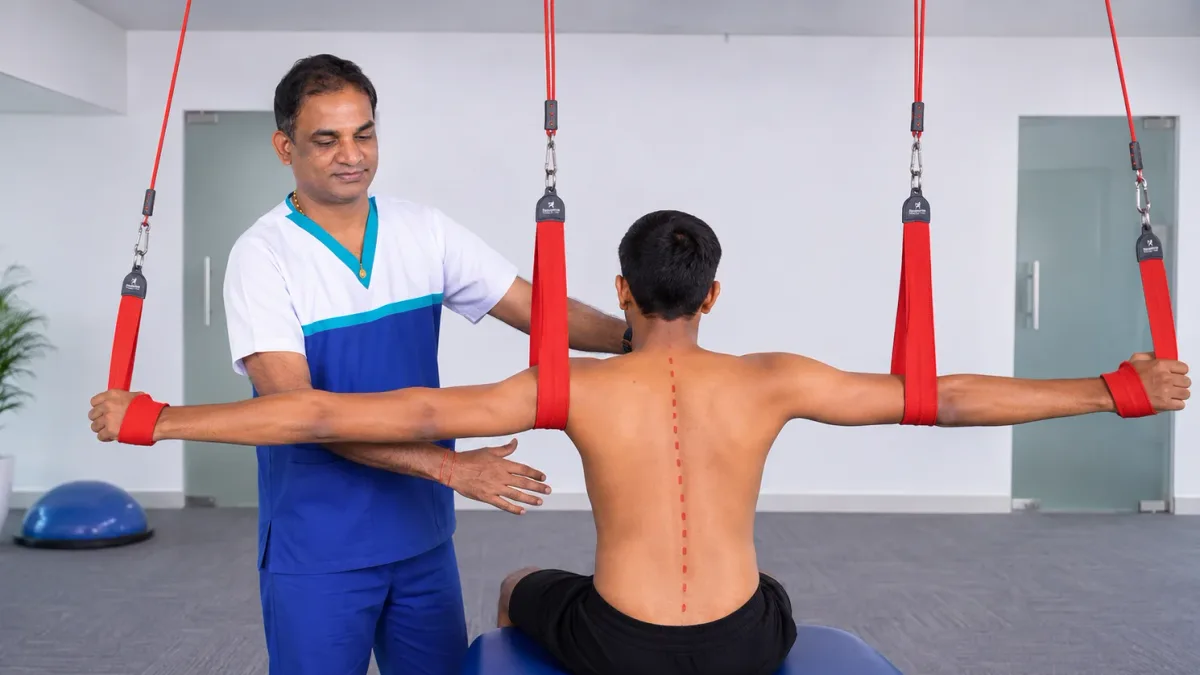
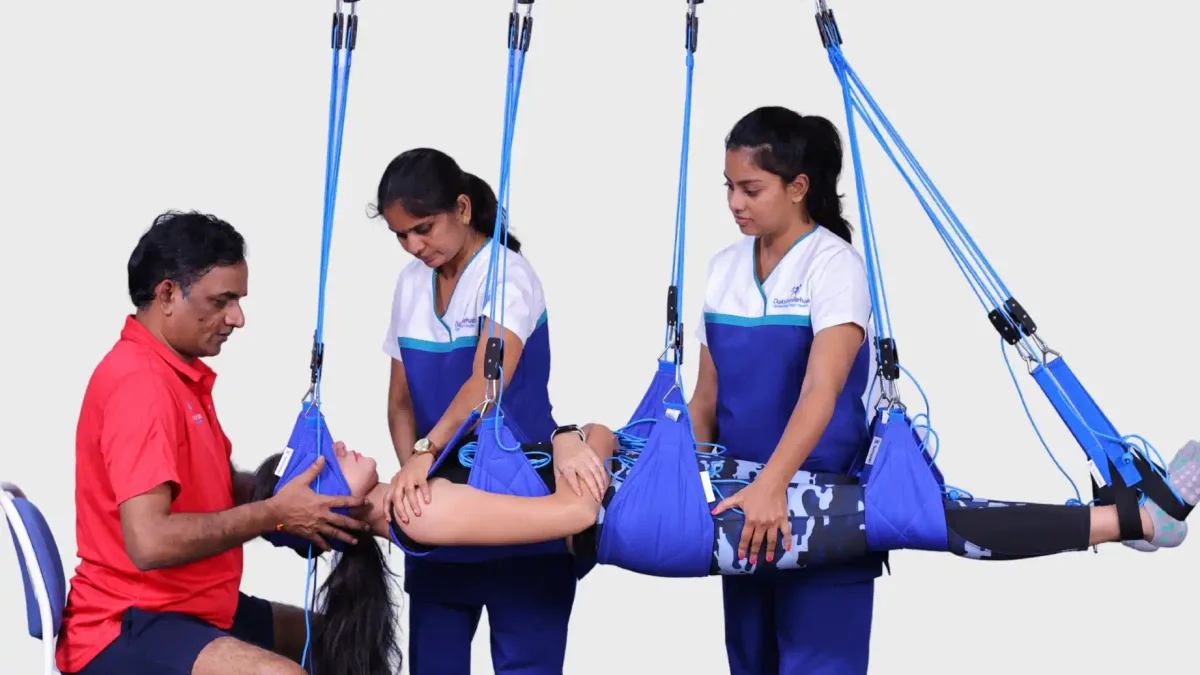
At DakshinRehab, spinal decompression is the foundation of disc treatment, but it is never the only component. We combine it with 3-Tesla EMTT magnetic stimulation to accelerate nerve healing and reduce inflammation around the compressed nerve root. Redcord Neurac suspension therapy retrains the deep spinal stabilisers — the multifidus and transversus abdominis — that protect the disc from re-herniation once mechanical compression has been resolved. Movement assessment technology identifies the specific lifting pattern, sitting posture or hip-flexor restriction that loaded the disc in the first place, so we can fix the cause and not just the consequence. This multi-modal approach is essential because decompression addresses the disc pathology, but without restoring the neuromuscular stability and movement quality that protect the spine, the same disc can herniate again under the same mechanical stresses six months later.
How lumbar and cervical decompression differ — and why both matter in Hyderabad
The Chattanooga DTS system at DakshinRehab treats both lumbar and cervical disc conditions. For lumbar disc herniation — the most common presentation, producing sciatica and chronic low back pain — the system targets L3-L4, L4-L5 or L5-S1 segments depending on MRI findings and the dermatomal distribution of leg symptoms. For cervical disc disease, the DTS cervical mode specifically targets the C4-C7 levels most commonly affected by disc degeneration. The cervical decompression protocol is particularly valuable for the IT workforce in Hitec City, Madhapur and Kondapur who have developed cervical disc dehydration from prolonged forward head posture — an increasingly common presentation we manage every week, often alongside tech-neck rehabilitation.
Who is a candidate for non-surgical spinal decompression — and who is not
Ideal candidates include patients with MRI-confirmed disc herniation or bulging disc with radiculopathy (arm or leg symptoms), degenerative disc disease with chronic back or neck pain, foraminal stenosis (narrowing where nerves exit the spine), failed conservative care after 4–6 weeks of conventional physiotherapy, and patients seeking to avoid or postpone surgery. Decompression is also valuable post-surgery for patients who developed adjacent-segment disease above or below a previous fusion. It is not suitable, however, for patients with acute spinal fractures, severe osteoporosis, active spinal tumours, spinal infection, abdominal aortic aneurysm, surgical hardware at the target level, or during pregnancy. Our clinical assessment screens every patient against these contraindications before treatment begins.
When a herniated disc actually needs urgent surgical evaluation — the red flags we watch for
Most disc herniations heal without surgery — but a small subset of patients require immediate surgical assessment, not physiotherapy. Cauda equina syndrome is the most important: any patient with new bowel or bladder dysfunction, saddle-area numbness (the inner thighs and perineum), or rapidly progressive bilateral leg weakness requires emergency MRI and spinal surgical opinion within hours. Other red flags include sudden severe weakness in a foot (foot drop) appearing over hours, unrelenting night pain that is unresponsive to position change, fever or unexplained weight loss with back pain, and severe pain following high-impact trauma. We screen every spine patient for these features at intake — and if any are present, we refer to a spine surgeon the same day rather than starting decompression therapy.
Evidence and expected outcomes from non-surgical decompression
Based on our clinical experience and the published literature on motorised spinal decompression, non-surgical decompression therapy delivered as part of a multi-modal protocol can produce meaningful pain relief in disc herniation. Full recovery — defined as pain resolution, restored nerve function and return to normal activities — typically occurs within 8–12 weeks for disc herniation and 6–8 weeks for bulging discs without nerve compression. We track progress objectively using validated pain scales (Numeric Pain Rating Scale, Oswestry Disability Index for lumbar disease, Neck Disability Index for cervical disease), functional movement tests and segmental neurological screening at 2-weekly intervals. If a patient is not responding as expected after 6–8 sessions, we reassess, repeat imaging if indicated and adjust the protocol — or, where appropriate, refer for spinal opinion.
How spinal decompression integrates with the rest of your DakshinRehab spine programme
A typical disc patient at DakshinRehab follows a phased pathway. Phase 1 (weeks 1–2) focuses on pain control and inflammation reduction — decompression sessions plus 3-Tesla EMTT around the nerve root. Phase 2 (weeks 3–5) layers in deep stabiliser activation through Redcord Neurac and graded core retraining. Phase 3 (weeks 6–8) progresses to functional movement training, lifting mechanics and posture correction tailored to your job — whether that is desk-based IT work in Madhapur, fieldwork around Kukatpally or domestic lifting demands. Phase 4 (weeks 9–12 and beyond) is maintenance: a tapered home programme of 3–4 spine-protective exercises that you continue indefinitely, with quarterly reviews to catch problems before they become flare-ups. This staged structure is why the result is durable — and why we publish more details in our non-surgical spine pain management guide and sciatica without surgery pillar.
Where we serve from — Moosapet to the Gulf
DakshinRehab is located in ARD Magnum on Green Hills Road, Moosapet, Kukatpally — a single spine clinic that draws disc patients from across Hyderabad including KPHB, Miyapur, Madhapur, Hitec City, Gachibowli, Kondapur, Manikonda, Bachupally and Pragathi Nagar. Our spinal decompression unit is also a recognised destination for international patients travelling from the Gulf — UAE (Dubai, Abu Dhabi, Sharjah), Saudi Arabia (Riyadh, Jeddah, Dammam), Qatar (Doha), Kuwait, Bahrain and Oman — who specifically choose Hyderabad over surgical pathways closer to home. For Gulf patients we coordinate accommodation, daily transport and accelerated treatment schedules so that 5–7 weeks of decompression therapy fits inside a single visit.
Conclusion — your disc can heal, given the right conditions
A herniated disc diagnosis does not have to mean living with chronic pain or facing spinal surgery. Computer-controlled spinal decompression at DakshinRehab Moosapet offers a scientifically grounded, non-invasive pathway to disc healing — and when combined with nerve-level magnetic stimulation, deep core stability retraining and movement correction, the results are durable. We bring this technology to patients across Hyderabad and to international patients travelling from the Gulf. Book your spine assessment, WhatsApp us on +91 80192 99888, or call +91 80192 99888 — because your disc can heal, given the right conditions, and the right conditions are exactly what we engineer.